✨ VS Analyze · VacuumSpain comparison technology. AI-generated explanation based on verified technical data.
Introduction
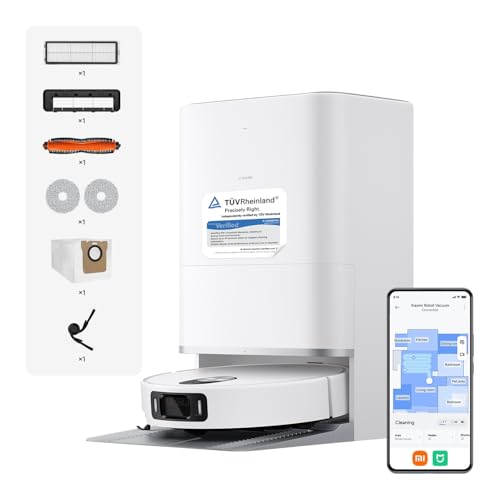
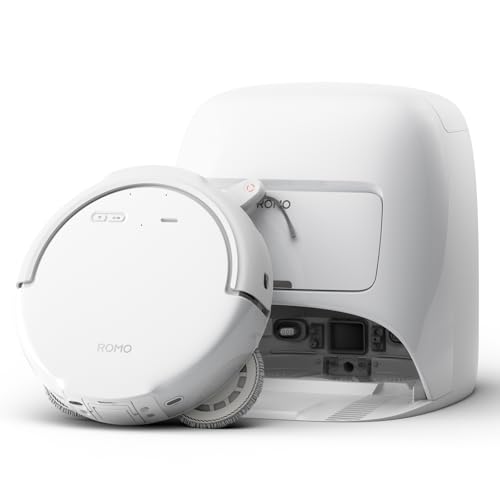
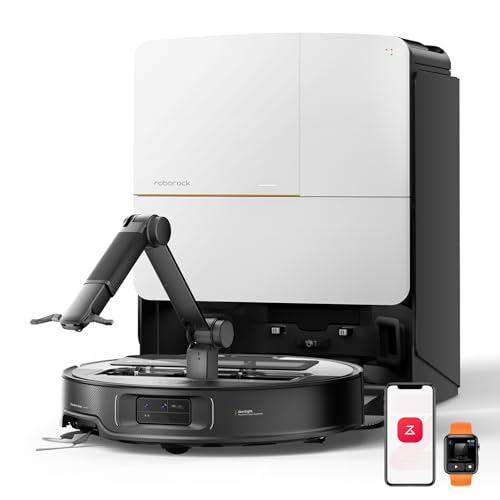
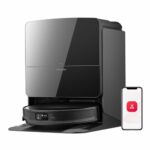
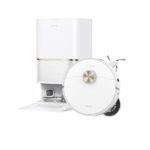
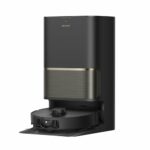
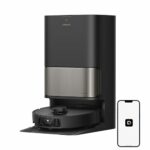
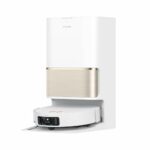
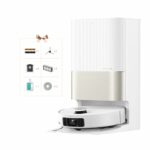
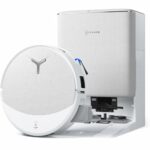
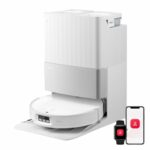
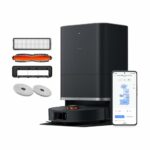
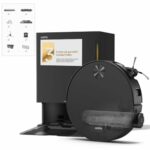
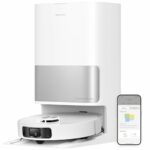
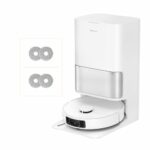
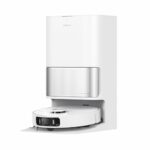
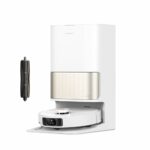
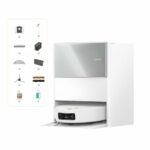
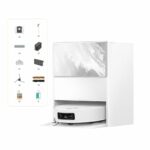
We're looking at three 2025 proposals that represent the most advanced in domestic robotics. The Xiaomi Robot Vacuum 5 Pro arrives with the TriCut 3.0 system and a 5,200 mAh battery that promises 140 minutes of autonomy. The DJI Romo S (Blanco) marks DJI's debut in this sector with 25,000 Pa of suction and 180 minutes of continuous operation. The Roborock Saros Z70 opts for extreme innovation with OmniGrip robotic arm and the largest battery capacity in the group: 6,400 mAh.
All three models integrate multifunction bases with mop washing and drying, advanced laser navigation and rotating mopping systems. They're designed for users seeking complete automation in medium to large-sized homes, with the capacity to manage carpets, pets and different types of flooring without constant manual intervention.
Power and Suction
The suction power shows notable differences. The DJI Romo S leads with 25,000 Pa, followed by the Roborock Saros Z70 with 22,000 Pa and the Xiaomi Robot Vacuum 5 Pro with 20,000 Pa. In practice, those 5,000 Pa of difference between the DJI and the Xiaomi can make a distance on long-pile carpets or when there's accumulated ingrained dirt.
The brushing systems present different philosophies. The Xiaomi mounts the TriCut 3.0, which combines bristles with blades to cut tangled hair. The DJI opts for a DuoDivide-type brush that pushes hair towards the central gap to facilitate suction. The Roborock equips an anti-tangle brush designed to minimise manual maintenance.
All three lift the main brush during mopping, preventing it from getting unnecessarily wet. The extendable side brush is present in all to improve corner cleaning, but only the Roborock Saros Z70 also lifts it during mopping. This prevents the side brush from dragging dirty water through already mopped areas or wetting wooden skirting boards. All three models incorporate anti-tangle technology in the side brush; the DJI specifies dual side brush.
Mopping
All three robots mop with a system of two rotating mops that extend towards the edges. Mop lifting varies: the Xiaomi reaches 15 mm, the Roborock between 12 and 22 mm depending on the obstacle, and the DJI lifts without specifying exact millimetres. This function is fundamental for climbing onto carpets without wetting them.
Water temperature marks an important difference. The Roborock Saros Z70 mops the floor with warm water, which helps to better dissolve grease and adhered dirt. The Xiaomi and DJI use cold water for floor mopping.
Regarding mop maintenance, the Xiaomi and Roborock wash with hot water at the base, more effective for eliminating bacteria and residue. The DJI washes the mops without specifying temperature. For drying, the Xiaomi and Roborock use hot air, whilst the DJI also applies hot air. Hot air drying speeds up the process and reduces the risk of bad odours.
Only the Roborock Saros Z70 automatically removes the mops at the base when you only want to vacuum, avoiding having to bend down to remove them manually. All three detect dirt both on the mops and on the floor to adjust cleaning intensity or repeat passes.
Navigation System
The Xiaomi uses retractable LiDAR, the DJI mounts solid-state LiDAR and the Roborock integrates the StarSight 2.0 system. All three combine laser with front camera and artificial intelligence to avoid obstacles. The Xiaomi recognises up to 200 types of objects, the Roborock identifies 108, and the DJI doesn't specify quantity.
The Roborock's camera is dual, which widens the field of vision and improves detection in low-light conditions. Only the Saros Z70 specifically recognises pets, useful for avoiding them or creating personalised routines. All three allow remote camera access and feature LED for night vision.
The Roborock specifies the RR Mason 12.0 processor to manage all sensor and camera information. All three models incorporate intelligent cleaning with AI and stain recognition to intensify cleaning in specific areas.
Autonomy and Battery
Battery capacity varies considerably. The Roborock Saros Z70 leads with 6,400 mAh, followed by the Xiaomi with 5,200 mAh and the DJI with 5,000 mAh. However, the DJI declares 180 minutes of autonomy compared to the Xiaomi's 140 minutes, which suggests more efficient energy management despite having lower capacity. The Roborock doesn't specify autonomy in minutes.
For large homes, the DJI's autonomy proves advantageous by allowing more surface area to be cleaned without returning to the base. The Xiaomi, with its 140 minutes, covers flats of up to 120-150 m² without problems. The Roborock's battery, being the largest, should translate into superior autonomy, although that specific data is missing.
Smart Functions
All three overcome obstacles of 20 mm in height, sufficient for transitions between rooms or small level changes. The Roborock Saros Z70 specifies capacity for simple steps, which could be interpreted as some additional versatility on irregular terrain.
The big difference lies in the Roborock Saros Z70's OmniGrip robotic arm, absent in Xiaomi and DJI. This arm allows picking up small objects from the floor, moving light obstacles or even interacting with home elements. It represents a functional leap that goes beyond traditional cleaning.
The Roborock also integrates its own voice assistant, in addition to Alexa and Google Home compatibility shared by all three models. This allows controlling the robot with voice commands without depending on external assistants.
Multifunction Cleaning Base
All three bases auto-empty the dust bin, wash and dry the mops. The dust bag has 2.5 litres in Xiaomi and Roborock, compared to 2.4 litres in the DJI. The clean water tank is 4 litres in all three cases. Dirty water is stored in 3.8 litres (Xiaomi), 3.2 litres (DJI) or 3 litres (Roborock).
The DJI and Roborock incorporate a detergent tank in the base to dispense product during mop washing. The Xiaomi doesn't include this function, requiring the use of water only. This can affect the effectiveness of washing mops with greasy dirt.
All three systems self-clean the tray where the mops are washed. The Xiaomi and Roborock stand out in this aspect: the Roborock mounts the 2.0 self-cleaning system and the DJI uses a specific nozzle. None offers UV disinfection or direct connection to plumbing, although there's no optional kit for this either.
Dimensions
The diameter barely varies: 350 mm for the Xiaomi, 351 mm for the DJI and 353 mm for the Roborock. Height does present relevant differences. The Roborock Saros Z70 measures 79.8 mm, the lowest of the three, followed by the Xiaomi at 88 mm and the DJI at 98 mm. Those 18 mm of difference between the Roborock and the DJI can determine whether the robot fits under certain furniture or beds.
The bases also differ in size. The DJI has the widest base (453 mm) but the least tall (440 mm), occupying more horizontal space. The Xiaomi measures 360 mm wide and 572 mm tall, being the tallest. The Roborock sits in the middle ground with 381 mm wide and 488 mm tall. Depth ranges between 425 mm for the DJI and 475 mm for the Roborock.
Real-world experience
For homes with pets, the Roborock Saros Z70 offers specific animal recognition and its anti-tangle brush minimises maintenance. The Xiaomi's TriCut 3.0 system also handles hair well thanks to the integrated blades. The DJI, with its DuoDivide brush and greater suction power, is equally valid although it doesn't specify pet detection.
In large houses, the DJI Romo S's 180 minutes of autonomy marks a clear advantage. The Xiaomi, with 140 minutes, covers medium surfaces without problem. The Roborock, despite its large battery, doesn't provide autonomy data to assess it precisely.
If you're looking to fit under low furniture, the Roborock at 79.8 mm is the best option. The Xiaomi at 88 mm also accesses most spaces. The DJI, at 98 mm, may encounter more limitations with low-height sofas or beds.
For intensive mopping, the Roborock mops with warm water and washes the mops with hot water, an ideal combination for greasy dirt. The DJI and Roborock's detergent tank improves the final result; the Xiaomi depends only on hot water to wash the mops.
Conclusion: Which to choose?
Choose the Xiaomi Robot Vacuum 5 Pro if you're looking for a balanced option without needing extras like robotic arm or automatic detergent. Its 88 mm height allows access under most furniture, the TriCut 3.0 system manages hair well and hot water washing of the mops offers good results. Ideal for medium-sized homes where 140 minutes of autonomy is sufficient and you prefer to invest less whilst forgoing some advanced functions.
Choose the DJI Romo S (Blanco) if suction power and autonomy are priorities. Its 25,000 Pa and 180 minutes of operation make it the most capable for large houses or with thick carpets. The detergent tank adds value to mop maintenance. Although it's the tallest (98 mm), its performance compensates if you don't have very low furniture. Good choice for those who value DJI's technological innovation and want maximum power.
Choose the Roborock Saros Z70 if you want the most advanced on the market. The OmniGrip robotic arm, warm water mopping, pet recognition and automatic mop removal place it in another category. Its 79.8 mm height facilitates access under any furniture and the 6,400 mAh battery promises great autonomy. Perfect for homes with pets, users seeking total automation and those who value Roborock's innovation as a sector benchmark.