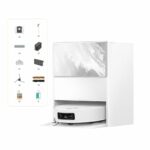
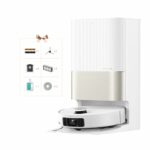
✨ VS Analyze · VacuumSpain comparison technology. AI-generated explanation based on verified technical data.
Introduction
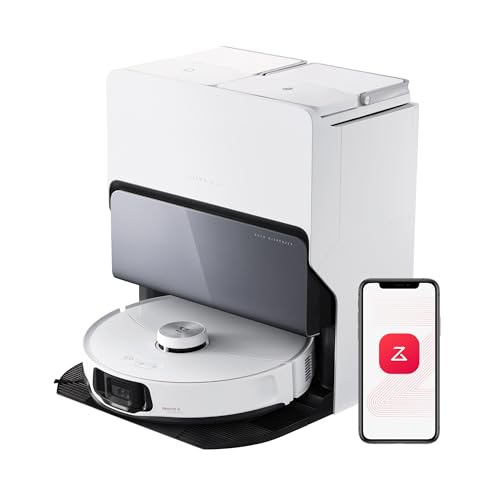
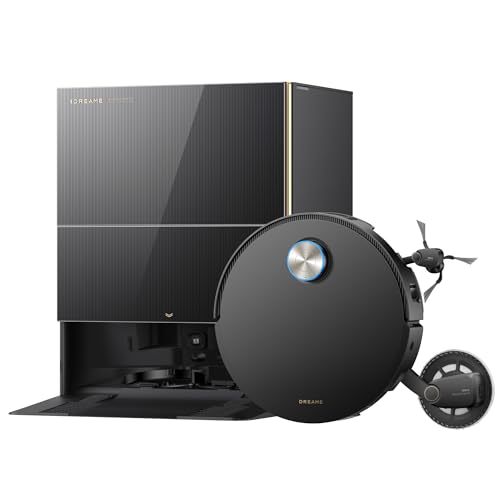
The Roborock S8 MaxV Ultra and Dreame X60 Pro Ultra represent two distinct approaches to premium robot vacuum technology. The Roborock model launched in 2024, whilst the Dreame arrived in May 2026, bringing with it a suite of features that push the boundaries of what these devices can achieve.
Both are flagship models equipped with multifunctional bases that handle everything from dust collection to mop washing and drying. They\'re designed for users who want minimal intervention in their cleaning routines, particularly those with larger homes or multiple floor types. The differences between them, however, are substantial enough to make the choice far from straightforward.
Power and Vacuuming Performance
Here\'s where the comparison gets interesting. The Dreame X60 Pro Ultra\'s 42,000 Pa suction represents a massive leap over the Roborock S8 MaxV Ultra\'s 10,000 Pa. In practical terms, this translates to significantly better performance on carpets and when dealing with embedded dirt or pet hair ground into fibres.
Both models feature dual silicone brush systems designed to minimise hair tangles. The Roborock uses its DuoDivide design, whilst the Dreame employs HyperStream 2.0 technology. These anti-tangle approaches work differently but achieve similar results: less maintenance and fewer interruptions to cut away wrapped hair.
The side brush setup reveals a clear advantage for the Dreame. It extends up to 12 cm to reach into corners more effectively, lifts during mopping to avoid spreading dirt, and incorporates anti-tangle features. The Roborock\'s side brush extends but doesn\'t lift and lacks the anti-tangle design. The Dreame also includes a dedicated skirting board brush, which helps clean along wall edges more thoroughly.
Both robots can raise their main brushes when mopping, preventing cross-contamination between vacuuming and wet cleaning tasks.
Mopping Systems
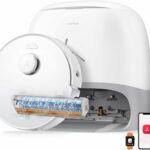
The mopping philosophies differ fundamentally. The Roborock S8 MaxV Ultra uses a vibrating mop pad with VibraRise 3.0 technology, scrubbing at high frequency with a mini side mop to extend reach. The Dreame X60 Pro Ultra takes a different path with dual rotating mops spinning at 280 RPM under 15N of downward pressure, combined with an 18 cm robotic extension for edge coverage.
Mop lift height shows the Roborock achieving 20 mm, whilst the Dreame manages 10.5 mm standard or up to 21.5 mm when combined with chassis elevation. This matters when transitioning onto thicker rugs or carpets.
The Dreame heats water to 40°C for floor mopping, which helps dissolve stubborn marks and grease more effectively than the Roborock\'s cold water approach. Both systems detect dirt on mops and on floors, triggering additional passes when needed.
A significant practical difference: the Dreame can automatically remove its mops at the base, allowing pure vacuuming sessions without any mop pads attached. The Roborock requires manual removal if you want to vacuum without mops.
Navigation and Intelligence
Both robots employ advanced navigation combining LiDAR and dual cameras. The Roborock uses a traditional 360° LiDAR turret, whilst the Dreame features a retractable LiDAR system that contributes to its lower profile. Both include 3D laser sensors at the front for obstacle detection.
Object recognition capacity differs dramatically. The Dreame X60 Pro Ultra can identify 320 different objects compared to the Roborock\'s 73. This expanded database means the Dreame can make more nuanced decisions about how to navigate around unfamiliar items.
The Dreame includes proactive lighting for obstacle avoidance and can detect and clean behind curtains, something the Roborock doesn\'t specifically address. Both offer remote camera access, LED lighting for night vision, and pet recognition.
The Roborock runs RR Mason 11.0 processing with SmartPlan 1.0 intelligence, whilst the Dreame uses CleanGenius 3.0. Both systems learn room layouts, suggest cleaning schedules, and adapt to different floor types.
Battery and Autonomy
Battery capacity sits close: 5,200 mAh in the Roborock versus 5,000 mAh in the Dreame. Despite the slightly smaller battery, the Dreame achieves 232 minutes of runtime compared to the Roborock\'s 180 minutes. This efficiency likely stems from the retractable LiDAR and optimised power management.
Both support fast charging. The Dreame\'s PowerMaster technology specifically restores 24% battery capacity in just 5.5 minutes, which proves useful when the robot needs to resume cleaning mid-session.
For larger homes, that extra autonomy on the Dreame could mean the difference between completing a full clean in one go or requiring a recharge break.
Advanced Features
Obstacle climbing reveals perhaps the most dramatic difference in this robot aspirador comparison. The Dreame X60 Pro Ultra can mount single steps up to 52 mm and navigate double steps reaching 100 mm in total height. The Roborock S8 MaxV Ultra manages 20 mm obstacles. In practical terms, the Dreame can handle substantial thresholds, transitions between rooms with different floor heights, and even small staircases within split-level areas that would completely block the Roborock.
Both robots include their own voice assistants and work with external systems like Alexa and Google Home. Matter compatibility features on both models, ensuring integration with smart home ecosystems.
Multifunctional Base Station
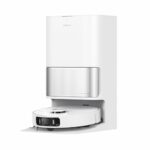
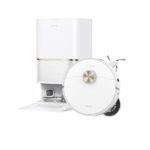
Both bases automatically empty dust, wash mops, and dry them with heated air. The differences lie in temperatures and maintenance requirements.
Mop washing temperature reaches 60°C on the Roborock base and 100°C on the Dreame. That higher temperature on the Dreame provides more thorough sanitisation and better removal of grease or sticky residues. Mop drying uses 60°C air on the Roborock and 50°C on the Dreame, both sufficient to prevent odours and bacterial growth.
The Dreame includes automatic washing of its own base tray at 100°C, keeping the station itself hygienic without manual intervention. The Roborock lacks this self-cleaning function, requiring occasional manual cleaning of the wash tray.
Dust bag capacity: 3.2 litres on the Dreame versus 2.5 litres on the Roborock. Clean water tanks hold 4.2 litres and 4 litres respectively, whilst dirty water capacity measures 3 litres on the Dreame and 3.5 litres on the Roborock. These differences are marginal in daily use.
The Dreame offers an optional kit for permanent plumbing connection, eliminating the need to refill clean water or empty dirty water manually. This kit requires separate purchase. The Roborock doesn\'t provide this option.
Dimensions and Fit
Height proves crucial for accessing spaces beneath furniture. The Dreame X60 Pro Ultra measures 89 mm when its LiDAR is retracted, allowing it to slip under lower sofas, beds, and cabinets. The Roborock S8 MaxV Ultra stands 103 mm tall, which may prevent access to tighter spaces.
Diameter is nearly identical: 350 mm on the Dreame, 353 mm on the Roborock. Dust capacity in the robots themselves: 310 ml versus 270 ml. Water tanks: 80 ml on the Dreame, 100 ml on the Roborock, though this matters less given both return frequently to their bases during mopping.
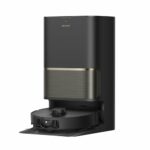
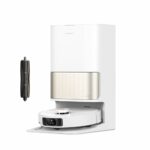
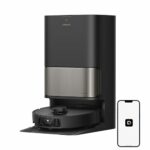
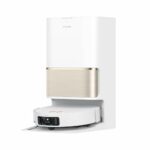
Base dimensions differ slightly. The Dreame measures 390 mm wide, 499 mm tall, and 456 mm deep. The Roborock spans 409 mm wide, 470 mm tall, and 419 mm deep. The Dreame base is taller but narrower and slightly deeper. Consider your available floor space when positioning these stations.
Real-World Usage Experience
For homes with thick carpets or multiple rugs, the Dreame\'s 42,000 Pa suction provides noticeably better deep cleaning. The Roborock\'s 10,000 Pa handles hard floors and low-pile carpets adequately but may struggle with deeply embedded debris.
Pet owners will appreciate both models\' anti-tangle brush systems. The Dreame\'s additional suction power and higher object recognition count help it navigate around pet toys, bowls, and unexpected messes more reliably.
The Dreame\'s ability to climb substantial obstacles makes it suitable for homes with varied floor levels, high thresholds, or split-level layouts. The Roborock works best in homes with minimal height transitions.
Low furniture access favours the Dreame thanks to its 89 mm profile. If you have beds, sofas, or storage units with limited clearance, this becomes a deciding factor.
Maintenance effort differs slightly. The Dreame\'s self-cleaning base tray and removable mops reduce manual intervention. The Roborock requires periodic tray cleaning but otherwise demands similar upkeep.
Larger homes benefit from the Dreame\'s extended battery life and larger dust bag. Smaller flats won\'t notice these capacity differences as much.
Conclusion: Which to Choose?
Choose the Roborock S8 MaxV Ultra if: you want proven reliability from the leading robot aspirador brand, your home has relatively flat floors without significant thresholds, and you don\'t need the absolute highest suction power. It\'s a solid choice for apartments or single-level homes with standard furniture clearances, offering excellent build quality and a refined app experience.
Choose the Dreame X60 Pro Ultra if: you need maximum suction for thick carpets or heavy pet hair, your home has challenging thresholds or split levels, or you have low-clearance furniture requiring a slimmer profile. The hot water mopping, self-cleaning base tray, removable mops, and vastly superior object recognition make it the better option for complex homes or users wanting the most advanced features available. The optional plumbing kit also appeals to those seeking ultimate convenience, though it requires additional investment.
This comparativa de robots aspiradores reveals two excellent machines with distinct strengths. The mejor robot aspirador for your home depends on your specific layout, floor types, and how much you value cutting-edge features versus established brand reputation.