✨ VS Analyze · VacuumSpain comparison technology. AI-generated explanation based on verified technical data.
Introduction
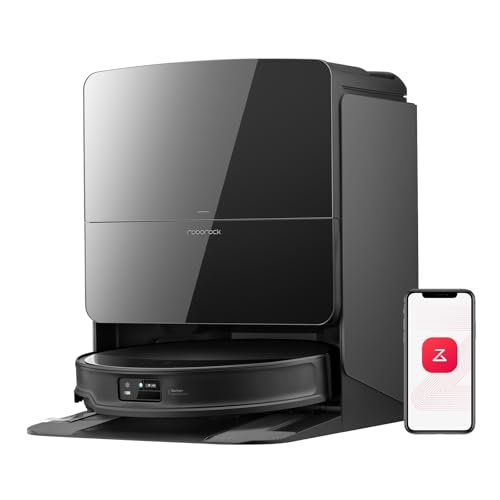
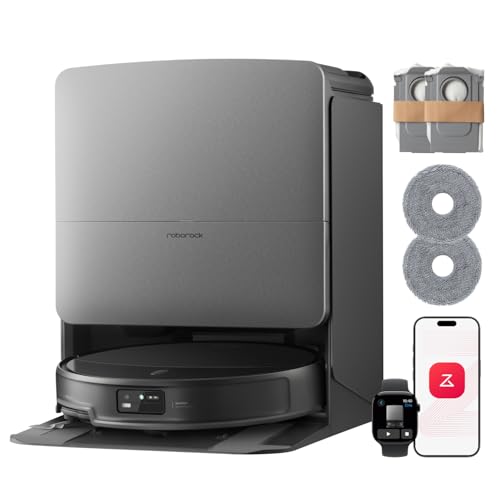
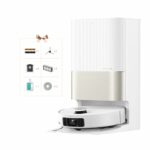
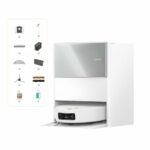
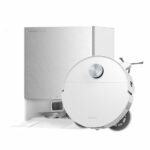
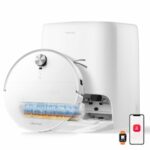
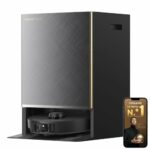
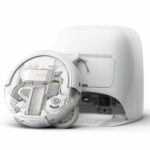
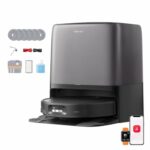
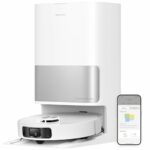
Roborock presents three models from its Saros series that share the same architecture but differ in key features. The Saros 10R and the Saros Z70 arrived on the market in 2025, whilst the Saros 20 was launched in February 2026. All three units integrate a multifunctional base with mop washing and hot air drying, as well as the ability to mop with warm water, characteristics that place them in the manufacturer's premium range.
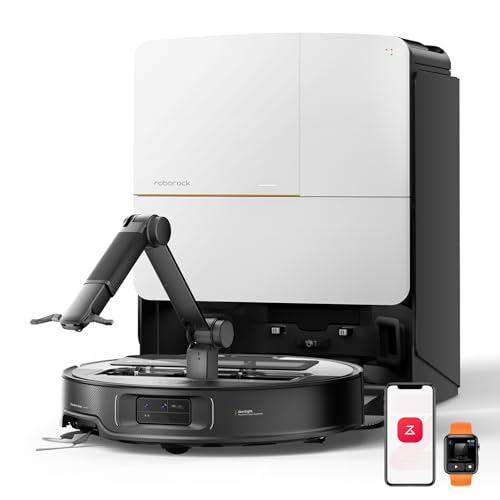
These Roborock robot vacuum cleaners are designed for users seeking complete autonomy in home maintenance. The combination of suction powers ranging from 18,500 Pa to the Saros 20's 36,000 Pa, together with anti-tangle brushing systems and extendable mopping, makes them particularly interesting for homes with pets or mixed surfaces. The Saros Z70 adds an OmniGrip robotic arm that marks a functional difference compared to its range siblings.
Power and Suction
The most striking difference between these three Roborock robots lies in their suction power. The Saros 20 reaches 36,000 Pa, a figure that practically doubles the Saros 10R's 18,500 Pa and clearly exceeds the Z70's 22,000 Pa. This difference is particularly noticeable on medium or long pile carpets, where the ability to extract embedded dirt improves significantly.
Regarding the brushing system, the Saros 10R and the Saros 20 feature the DuoDivide Anti-Tangle brush, a design that pushes hairs towards the central gap to facilitate suction and reduce tangles. The Saros Z70 is equipped with a conventional anti-tangle brush, effective but without the dual division system. All three models raise the main brush during mopping and feature an extendable, liftable and anti-tangle side brush, which guarantees effective corner sweeping without interfering with the mops when working in mopping mode.
For homes with long-haired pets, the DuoDivide on the Saros 10R and 20 represents a practical advantage in daily maintenance.
Mopping
All three Roborock robot vacuum cleaners use a two rotating mop system with edge extension, which allows skirting boards and corners to be cleaned with greater precision. Mop lift reaches between 12 and 22 mm on all models, sufficient to pass over thin carpets without wetting them. Additionally, all three mop with warm water, a feature that improves the dissolution of greasy stains or sticky residue.
Dirt detection works on both the mops and the floor. When the robot identifies a particularly dirty area, it goes over the area again or returns to the base to wash the mops before continuing. This function is useful in kitchens or high-traffic areas. All three models can automatically remove the mops at the base to perform vacuum-only tasks, avoiding dampening surfaces where it isn't necessary.
The multifunctional bases of all three units wash the mops with hot water and dry them with hot air, which speeds up drying and prevents bad odours. The Saros 20 incorporates tray self-cleaning with hot water, whilst the Saros 10R and the Z70 use the standard 2.0 system. This difference may be noticeable in long-term maintenance, especially if mopping frequently.
Navigation System
All three robots integrate Roborock's StarSight 2.0 system, which combines a dual front camera with 3D laser sensor and LED for night vision. This configuration allows precise mapping and obstacle avoidance even in low-light conditions. Remote camera access is available on all models, a function that can serve for basic home monitoring.
The most relevant difference appears in the number of recognised obstacles. The Saros 20 identifies up to 300 different objects, compared to 108 on the Saros 10R and the Z70. In practice, this translates to greater precision in dodging toys, cables, slippers or small objects that may appear on the floor. The Saros 20 also detects curtains, avoiding getting tangled in them during cleaning, something the 10R and Z70 don't do.
All three recognise pets and adjust their behaviour according to context, useful for homes with dogs or cats that may move around rooms during cleaning.
Autonomy and Battery
Battery capacity is identical across all three models: 6,400 mAh. The Saros 10R declares 180 minutes of autonomy, data that isn't specified for the Saros 20 or the Z70. In any case, with that battery capacity, all three robots can cover large surfaces without needing intermediate recharges, provided they don't work constantly at maximum power.
Energy management will depend on the level of dirt, the type of floor and whether simultaneous mopping is activated. In large homes, it's advisable to programme cleaning by zones to optimise battery use.
Smart Functions
All three models overcome simple steps, a capability that facilitates transit between rooms with small level changes or door thresholds. The most notable difference is marked by the Saros Z70, the only one in the series that incorporates the OmniGrip robotic arm. This arm allows light objects to be moved or interaction with environmental elements, a function that expands usage possibilities beyond conventional cleaning.
Regarding processors, the Saros 10R features the RR Mason 11.0 and the Z70 the RR Mason 12.0, which suggests greater processing capacity in the latter. All three units include their own voice assistant and compatibility with Alexa or Google Home, allowing voice command control without needing to open the app.
SmartPlan intelligent cleaning is present on all three robots, adjusting routes and power according to surface type and detected dirt level.
Multifunctional Cleaning Base
All three multifunctional bases share dimensions (381 mm width, 488 mm height, 475 mm depth) and tank capacities: 2.5-litre dust bag, 4 litres of clean water and 3 litres of dirty water. All include a detergent tank, wash the mops with hot water and dry them with hot air.
The main difference lies in the washing tray self-cleaning system. The Saros 20 uses hot water for this task, which improves base hygiene and reduces residue accumulation. The Saros 10R and the Z70 use the 2.0 system, effective but without the hot water reinforcement. None of the three includes UV disinfection or integrated plumbing connection, nor an optional kit for it.
Base maintenance is straightforward in all three cases, although the Saros 20 may require fewer manual interventions thanks to its reinforced self-cleaning system.
Dimensions
All three robots share exact dimensions: 353 mm diameter and 79.8 mm height. This means that any of them can access under furniture with a clearance of at least 8 centimetres, a common characteristic in sofas, beds or wardrobes with legs. The bases are also identical in size, occupying the same space in any corner designated for the cleaning station.
There are no dimensional advantages between them, so the choice won't depend on the ability to slip under low furniture.
Real-World Usage Experience
In homes with pets, the Saros 10R and the Saros 20 offer a clear advantage thanks to the DuoDivide brush, which reduces hair tangles. The Saros 20, with its 36,000 Pa, is particularly effective on carpets where dog or cat hair accumulates. The Saros Z70, despite its conventional anti-tangle brush, maintains good performance although it may require slightly more manual maintenance.
For large houses, the 6,400 mAh battery capacity on all three models guarantees extensive coverage. The Saros 20, with its recognition of 300 obstacles, navigates with greater precision in cluttered spaces or those with lots of furniture. The Saros Z70 provides the added value of the robotic arm, useful if interaction beyond basic cleaning is sought.
Mopping with warm water and extendable mops works well on hard floors such as tiles, stoneware or treated parquet. Mop lift allows coexistence with carpets without problems. The multifunctional base with washing and hot air drying significantly reduces maintenance, especially if mopping several times a week.
The Saros 20 stands out in curtain detection, avoiding tangles that can interrupt cleaning. The Saros Z70 offers the most advanced processor (RR Mason 12.0) and the OmniGrip arm, but sacrifices some capacity in the robot's dustbin (180 ml compared to its siblings' 270 ml).
Conclusion: Which One to Choose?
Choose the Roborock Saros 10R if you're looking for a balance between features and price in a Roborock robot vacuum cleaner with a complete multifunctional base. Its DuoDivide brush and 18,500 Pa power cover the needs of medium-sized homes with or without pets well. The 270 ml robot tank allows long sessions without frequent emptying. It's a solid option for those wanting advanced technology without reaching the top of the range.
Choose the Roborock Saros 20 if you need maximum suction power (36,000 Pa) and the most complete obstacle recognition (300 objects). Its curtain detection and tray self-cleaning with hot water make it the best robot vacuum cleaner in the series for large houses, with thick carpets or complex spaces. Ideal for those seeking the most autonomous and precise experience, without compromises.
Choose the Roborock Saros Z70 if you value differential functions such as the OmniGrip robotic arm and the RR Mason 12.0 processor. Although its dustbin is smaller (180 ml) and it doesn't include the DuoDivide brush, its interaction capability and advanced processing make it interesting for profiles seeking innovation beyond conventional cleaning. Suitable for tech-savvy homes wanting to explore new possibilities in domestic robotics.
In any case, all three models share a multifunctional base with washing and hot air drying, mopping with warm water and StarSight 2.0 navigation, guaranteeing a professional cleaning level in this Roborock robot vacuum cleaner comparison.