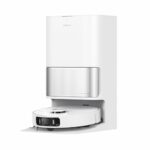
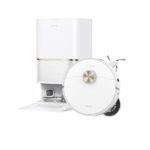
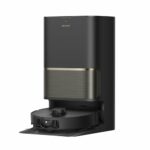
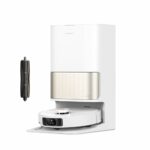
✨ VS Analyze · VacuumSpain comparison technology. AI-generated explanation based on verified technical data.
Introduction
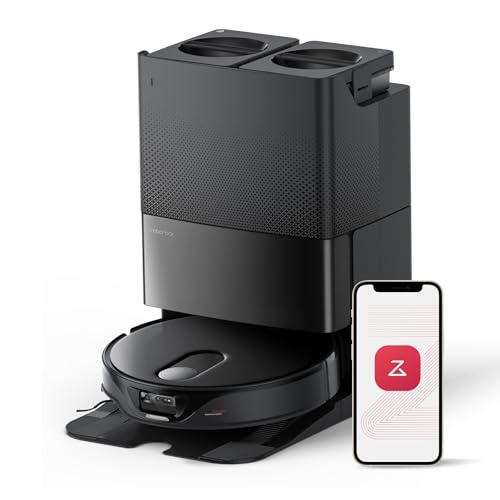
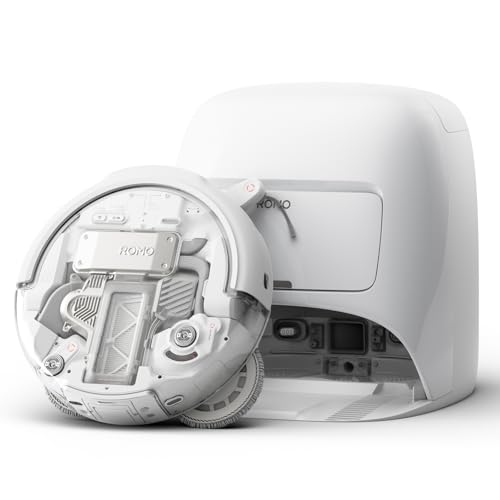
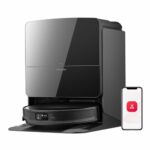
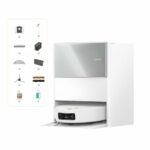
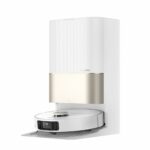
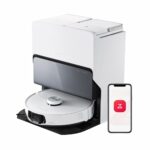
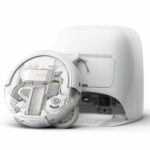
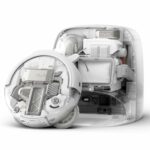
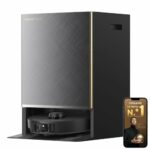
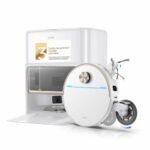
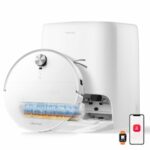
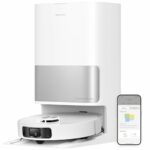
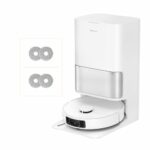
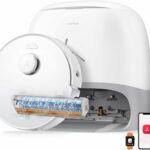
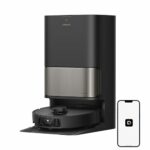
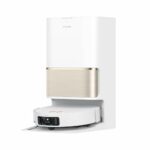
The DJI Romo A (Robot Transparente) represents DJI's entry into the robot vacuum market during 2025, whilst the Roborock Qrevo Slim arrived in 2024 as a compact offering from the world's leading brand in this sector. We're looking at two units with complete multifunction bases that wash and dry the mops, designed for those seeking automated cleaning in both vacuuming and mopping.
The main visible difference between these models lies in their suction power and height. DJI's robot opts for more aggressive vacuuming figures, whilst the Qrevo Slim focuses on an especially low design that facilitates access under furniture. Both include advanced navigation technology with camera and artificial intelligence, albeit with different approaches.
Power and Suction
The most striking difference in this robot vacuum comparison is found in the suction power. The DJI reaches 25,000 Pa, more than double the 11,000 Pa of the Roborock Qrevo Slim. This figure suggests that DJI's model may prove more effective on dense carpets or when dealing with ingrained dirt, although in practice the Qrevo Slim's 11,000 Pa is more than sufficient for most homes with hard floors and low-pile carpets.
Regarding the brushing system, the DJI Romo A incorporates a split brush designed to reduce tangles, whilst the Qrevo Slim features Roborock's characteristic DuoDivide dual brush system, which pushes hair towards the centre for better suction. Both raise the main brush during mopping to avoid soiling the mops.
The side brush presents a clear advantage on the DJI robot vacuum: it includes a dual anti-tangle design that reduces maintenance, especially in homes with long hair or pets. The Qrevo Slim doesn't specify this feature on its side brush, although both have side extension to improve corner cleaning.
Mopping
Both models employ a system of two rotating mops with extension capability to better reach edges. Mop lifting is present on both, with the Qrevo Slim specifying 10 mm height, which allows it to pass over thin carpets without wetting them.
Where a relevant difference appears is in the washing of mops at the base. The Roborock Qrevo Slim washes the mops with hot water, which helps to better remove grease and adhered dirt. The DJI Romo A performs washing with cold water, although it compensates with an automatic nozzle system for self-cleaning the tray, just like the Qrevo Slim with its 1.0 version.
Both dry the mops with hot air, essential for preventing bad odours and bacterial growth. Dirt detection on both the mops and the floor is present on both units, allowing them to repeat mopping in especially dirty areas. Hot air drying makes the difference compared to more basic models that only use ambient air.
Navigation System
The DJI robot vacuum uses solid-state LiDAR, a more modern and compact technology than traditional laser systems. The Roborock Qrevo Slim integrates StarSight 1.0, its navigation system that combines laser with cameras. Both include a front 3D laser sensor to detect low obstacles and avoid collisions.
Regarding cameras, the DJI features an AI camera, whilst the Qrevo Slim incorporates dual cameras. Roborock specifies that it recognises up to 73 different types of obstacles and confirms specific pet recognition. Remote camera access is available on both models, along with LED for night vision.
An exclusive function of the DJI Romo A is stain recognition using artificial intelligence, which allows it to identify especially dirty areas and adjust cleaning. The Qrevo Slim compensates with SmartPlan 1.0 and the RR Mason 11.0 algorithm, the result of Roborock's accumulated experience in the sector.
Autonomy and Battery
Battery capacity is practically identical: 5,000 mAh on the DJI versus 5,200 mAh on the Roborock. Both offer 180 minutes of autonomy, sufficient to cover large homes in a single charge. This figure proves especially useful in houses over 150 square metres where the robot needs to complete several rooms without interruptions.
With equivalent autonomies, the choice between one or the other shouldn't be based on this aspect. In practice, the 180 minutes allow for cleaning considerable surfaces before returning to the base to recharge.
Smart Functions
The obstacle-crossing capability is 20 mm on both models, which allows them to overcome thick cables, rugs and small level changes without getting stuck. This figure has become standard on mid-to-high-range robots.
The Roborock Qrevo Slim confirms the integration of its own voice assistant, in addition to compatibility with Alexa and Google Home. The DJI Romo A includes compatibility with external assistants, although it's not specified whether it has its own integrated assistant.
Multifunction Cleaning Base
Here we find interesting differences between these two robot vacuums. The DJI Romo A incorporates a detergent tank in the base, allowing cleaning product to be added which is dispensed during mop washing. The Qrevo Slim doesn't include this function, although its hot water washing partially compensates for this absence.
The dust bag has greater capacity on the Roborock: 2.7 litres versus the DJI's 2.4 litres. Both figures guarantee several weeks without needing to change the bag in medium-sized homes. The clean water tanks are identical at 4 litres, whilst dirty water is stored in 3.5 litres on the Qrevo Slim and 3.2 litres on the Romo A.
Neither offers direct connection to plumbing nor an optional kit for it, which means you'll need to refill and empty the tanks manually periodically. Self-cleaning of the washing tray is present on both, facilitating maintenance.
Dimensions
The Roborock Qrevo Slim lives up to its name with a height of just 82 mm, 16 mm less than the DJI Romo A's 98 mm. This difference can prove decisive if you have low furniture, sofas with little clearance from the floor or beds without sufficient space underneath. In practice, those 16 mm mark the difference between whether the robot can or cannot access certain areas.
The diameter is practically identical: 353 mm on the Qrevo Slim versus 351 mm on the Romo A. Both can manoeuvre in similar spaces without problems.
The base dimensions present notable differences. The DJI has a wider base (453 mm) and less deep (425 mm), whilst the Roborock is narrower (340 mm) but deeper (487 mm) and taller (521 mm versus 440 mm). It's advisable to measure the available space before deciding, especially if you plan to place the base in a specific gap or corner.
Real-World Usage Experience
For homes with pets, the DJI Romo A offers clear advantages: its dual anti-tangle side brush reduces maintenance and the 25,000 Pa power proves more effective for vacuuming hair embedded in carpets. The robot's dust container is slightly larger at 260 ml versus the Qrevo Slim's 220 ml, although both self-empty at the base.
If you need the robot to pass under low furniture, the Qrevo Slim has an evident advantage with its 82 mm height. This characteristic can be decisive in living rooms with low-design sofas or bedrooms with beds without sufficient clearance underneath.
The Roborock's hot water washing proves more effective for kitchen floors with grease or areas with adhered dirt. The DJI compensates with the detergent tank, which adds cleaning product during mop washing. The choice depends on your preferences: hot water for deeper cleaning or detergent for greater degreasing power.
In large houses, the identical 180-minute autonomy makes both equivalent. The DJI's superior power may slightly speed up the cleaning process, although on hard floors the difference will be less noticeable than on carpets.
Conclusion: Which to Choose?
Choose the DJI Romo A (Robot Transparente) if: You prioritise maximum suction power and have thick carpets or pets that shed a lot of hair. The dual anti-tangle side brush reduces maintenance and the detergent tank in the base provides an extra benefit for mopping. Its greater power makes it a solid option for those seeking the best possible vacuuming, especially if you don't have height restrictions under furniture.
Choose the Roborock Qrevo Slim if: You need a robot that passes under low furniture thanks to its 82 mm height. Hot water mop washing offers better results on floors with grease, and Roborock's experience as the world's leading brand is reflected in the system's reliability. Its narrower base may fit better in tight spaces, and the confirmed recognition of 73 obstacles and pets provides peace of mind in homes with animals and various objects on the floor.
Both represent advanced options with complete multifunction base, intelligent navigation and automated cleaning functions. The final decision will depend on whether you value more the raw power and integrated detergent of the DJI, or the compact height and hot water washing of the Roborock.