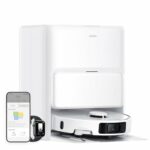
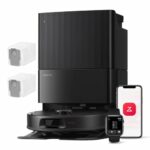
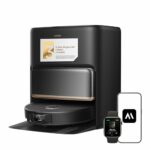
✨ VS Analyses · VacuumSpain comparison technology. Explanation created with AI from verified technical data.
Introduction
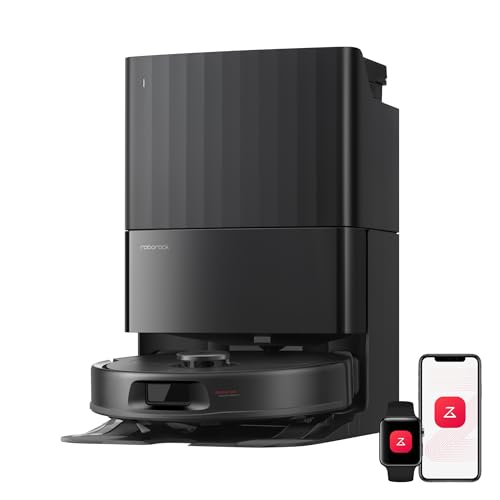
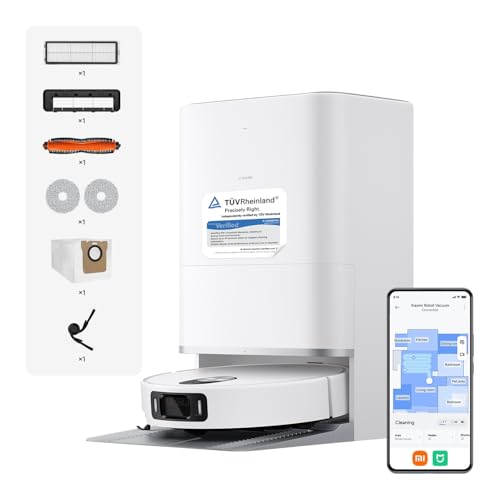
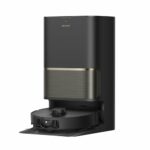
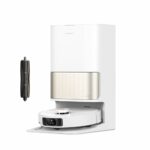
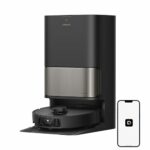
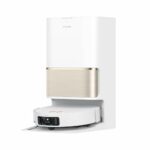
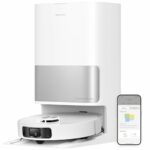
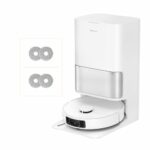
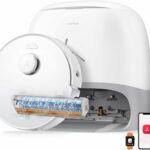
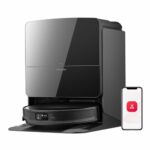
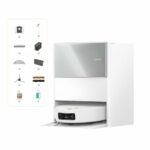
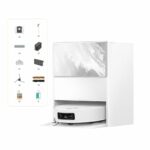
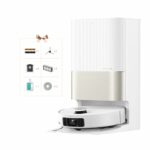
The Roborock Qrevo S Pro and the Xiaomi Robot Vacuum 5 Pro represent two different propositions within the robot vacuum segment with multifunction base. The Roborock model will arrive on the market in 2026, whilst the Xiaomi was launched in 2025. Both units are designed for homes seeking to fully automate household cleaning, both in vacuuming and mopping, with mop washing and drying systems using water and hot air.
Although they share many characteristics typical of the high-end range, there are relevant technical differences in navigation, brushing systems and intelligent functions that define distinct usage profiles. The Xiaomi opts for greater integration of artificial intelligence and advanced sensors, whilst the Roborock focuses on autonomy and a more traditional design with visible laser turret.
Power and Suction
The Xiaomi Robot Vacuum 5 Pro develops 20,000 Pa of suction power, exceeding the Roborock Qrevo S Pro by 1,500 Pa. This difference can be particularly noticeable on medium-pile carpets or when there is accumulated ingrained dirt. In practice, both figures are within the current high range, but the Xiaomi starts with an advantage in this area.
More relevant is the difference in the main brush. The Xiaomi integrates the TriCut 3.0 system, which combines bristles with blades designed to cut tangled hair during brushing. The Roborock is equipped with a simple silicone brush, which reduces tangles but does not actively eliminate them. For homes with pets or people with long hair, the TriCut 3.0 means less maintenance.
The Xiaomi's main brush can be lifted during mopping, preventing it from getting unnecessarily wet. The Roborock does not have this capability. The Xiaomi's side brush also extends to better sweep corners, something the Roborock model does not offer. Both units include an anti-tangle side brush, but neither lifts it during mopping.
Mopping
Both robots use a dual rotating mop system, the current standard for effective mopping. The main difference lies in the mop extension: the Xiaomi deploys them to better reach edges and skirting boards, whilst the Roborock keeps the mops in a fixed position. This makes the Xiaomi cover corners better during mopping.
Mop lifting also varies. The Xiaomi raises them up to 15 mm when it detects carpets or rugs, compared to the Roborock's 10 mm. Those additional 5 mm can make the difference on high-pile carpets or thick doormats.
The Xiaomi incorporates dirt detection both on the mops and on the floor. When it identifies dirtier areas, it automatically re-mops those zones. The Roborock lacks this function, executing mopping uniformly without adapting to the level of dirt. For homes with children or high-traffic areas, the Xiaomi's detection provides an extra level of real cleaning.
Both models wash the mops with hot water and dry them with hot air in the base, guaranteeing hygiene and preventing bad odours. Neither automatically removes the mops in the base to perform vacuuming only, so they will need to be removed manually if you wish to vacuum without mopping.
Navigation System
Here we find one of the most significant differences. The Roborock Qrevo S Pro uses a visible LiDAR 3.0 turret on the top, a traditional and reliable system that maps the home with precision using a rotating laser. The Xiaomi mounts a retractable LiDAR that hides in the chassis, reducing the robot's overall height.
The Xiaomi adds an artificial intelligence camera, front 3D laser sensor and capability to recognise up to 200 different types of obstacles. The Roborock does not integrate a camera or front 3D sensor, limiting itself to the laser system for navigation and basic obstacle avoidance. In practice, the Xiaomi can identify specific objects (shoes, cables, toys) and adapt its behaviour, whilst the Roborock detects the presence of obstacles without classifying them.
The Xiaomi includes night vision LED and allows remote access to the camera, functions the Roborock does not offer. This can be useful for occasional home surveillance or to visually check which obstacle has stopped the robot.
Both units feature AI intelligent cleaning. The Roborock uses its SmartPlan 2.0 system, although without a camera its adaptation capability is lower. The Xiaomi can visually recognise stains thanks to the camera, something the Roborock does not do.
Autonomy and Battery
Both robots mount 5,200 mAh batteries, but the autonomy differs notably. The Roborock achieves 180 minutes of continuous operation, compared to the Xiaomi's 140 minutes. This 40-minute difference can be decisive in large homes or when performing complete cleaning at high power.
The Roborock's greater autonomy partly compensates for its lower suction power and more limited functions. For homes over 150 m², the ability to complete cleaning without intermediate recharges makes a difference in ease of use.
Intelligent Functions
Both robots can overcome obstacles up to 20 mm in height, sufficient for most transitions between rooms and medium-thickness carpets. Neither incorporates a robotic arm nor its own voice assistant, although both are compatible with Alexa and Google Home for voice control via external assistants.
Multifunction Cleaning Base
Both bases perform auto-emptying of the dust bin, mop washing with hot water and drying with hot air. The Roborock's dust bag has a capacity of 2.7 litres, slightly larger than the Xiaomi's 2.5 litres. The clean water tanks are identical at 4 litres, but the dirty water tank varies: 3.5 litres in the Roborock compared to 3.8 litres in the Xiaomi.
The most relevant difference is in the self-cleaning of the washing tray. The Xiaomi's base automatically cleans the tray where the mops are washed, reducing manual maintenance. The Roborock's base does not include this function, requiring periodic cleaning by the user to prevent accumulation of dirt and bad odours.
Neither base integrates a detergent tank, UV disinfection nor connection to plumbing. There is also no optional kit for plumbing connection in these models.
Dimensions
The Xiaomi measures 88 mm in height thanks to its retractable LiDAR, which allows it to access under furniture with less than 9 cm of clearance. The Roborock reaches 96.5 mm due to its visible laser turret, limiting its access under low furniture. For homes with sofas, beds or low-height furniture, the Xiaomi has a clear advantage.
The diameter is practically identical: 353 mm in the Roborock and 350 mm in the Xiaomi, with no appreciable functional differences.
The bases differ in dimensions. The Roborock's measures 340 mm wide, 519 mm high and 487 mm deep. The Xiaomi's is wider (360 mm) and taller (572 mm), but less deep (470 mm). It is advisable to measure the available space before deciding, especially if the base will be located in cupboards or tight spaces.
Real-world usage experience
The Roborock Qrevo S Pro is more suitable for large homes where the 180-minute autonomy allows cleaning to be completed without interruptions. Its traditional laser navigation system is reliable, although less sophisticated than the Xiaomi's. The absence of camera and 3D sensors makes it less intelligent in object detection, but sufficient for tidy homes without many obstacles on the floor.
The Xiaomi Robot Vacuum 5 Pro stands out in homes with low furniture thanks to its 88 mm height. Its AI camera and front 3D sensor make it the best option for homes with children, pets or many objects on the floor, identifying and avoiding up to 200 types of obstacles. The TriCut 3.0 brush notably reduces maintenance in homes with pet hair or people with long hair.
For mopping, the Xiaomi offers better edge coverage thanks to mop extension and greater adaptation capability with dirt detection. The Roborock mops more uniformly but less customised. The tray self-cleaning in the Xiaomi's base reduces weekly maintenance.
Both units require the user to manually remove the mops if they wish to perform vacuuming only, as neither removes them automatically in the base.
Conclusion: Which to choose?
Choose the Roborock Qrevo S Pro if: You live in a large house that requires more than 140 minutes of autonomy to complete cleaning. You prefer a traditional laser navigation system without a camera. You do not need brush or mop extension for edges. You are looking for a slightly larger dust bag (2.7 L). You do not mind manually cleaning the base's washing tray. You value the reliability of Roborock as a world-leading brand in robot vacuums.
Choose the Xiaomi Robot Vacuum 5 Pro if: You have low furniture and need a robot of only 88 mm in height. You want the highest available suction power (20,000 Pa). You value artificial intelligence with camera, 3D sensor and recognition of 200 obstacles. You live with pets and need the TriCut 3.0 anti-tangle brush. You are looking for better edge coverage with mop and side brush extension. You prefer dirt detection for automatic re-mopping of dirtier areas. You want self-cleaning of the washing tray in the base. You are interested in remote access to the camera with night vision.