✨ VS Analyses · VacuumSpain comparison technology. Explanation created with AI from verified technical data.
Introduction
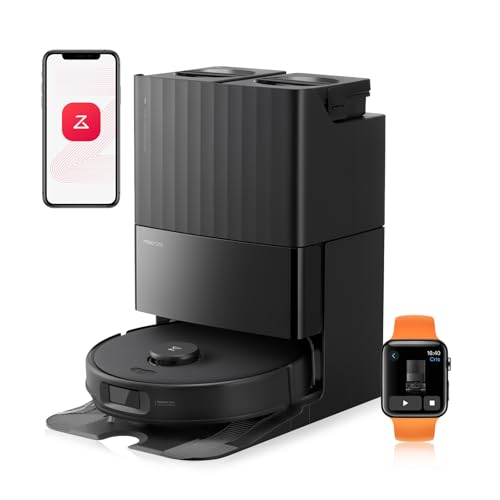
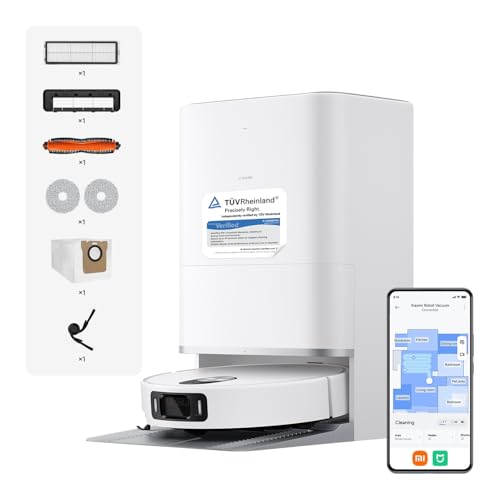
When looking at premium robot vacuum cleaners, the Roborock Qrevo Edge S5A and Xiaomi Robot Vacuum 5 Pro represent two compelling approaches to automated home cleaning. The Roborock model arrived in 2024, whilst the Xiaomi variant launched in 2025, each bringing distinct technical solutions to the table. These are comprehensive cleaning systems with multifunctional bases that handle both vacuuming and mopping, designed for users who want minimal intervention in their daily cleaning routines.
The Roborock Qrevo Edge S5A comes from the market-leading brand in robot vacuum technology, known for reliability and sophisticated software. The Xiaomi Robot Vacuum 5 Pro, manufactured by a brand that shares manufacturing ties with Dreame, offers advanced AI features and camera-based navigation. Both models suit medium to large homes with mixed flooring, though their technical differences make them better suited to different user priorities.
Power and vacuuming performance
The Xiaomi Robot Vacuum 5 Pro delivers 20,000 Pa of suction, edging ahead of the Roborock Qrevo Edge S5A's 18,500 Pa. Whilst this difference exists on paper, both figures represent high-end performance capable of extracting embedded dirt from carpets and handling varied debris types across hard floors.
Where the main brush design diverges significantly is in approach. The Roborock uses its DuoDivide anti-tangle system, which pushes hair towards the central suction channel to prevent wrapping around the brush roller. The Xiaomi employs TriCut 3.0, combining bristles with integrated cutting blades that slice through tangled hair. The Xiaomi model can also elevate its main brush during mopping operations, preventing the roller from interfering with wet cleaning—a feature the Roborock lacks.
Both robots feature extendable side brushes that reach into corners more effectively, and both include anti-tangle technology for these lateral brushes. Neither offers elevation for the side brush during mopping. For homes with pets or long-haired occupants, the combination of high suction and anti-tangle brush systems in both models proves valuable, though the Xiaomi's ability to lift the main brush adds flexibility when transitioning between cleaning modes.
Mopping system
Both models use dual rotating mop pads and include mop extension mechanisms to reach edges and skirting boards more thoroughly. The Xiaomi Robot Vacuum 5 Pro can lift its mops 15 mm when encountering carpets or rugs, compared to 10 mm on the Roborock Qrevo Edge S5A. This extra clearance helps prevent moisture contact with floor coverings, particularly useful for homes with varied flooring types.
Each robot detects dirt on both the mop pads themselves and the floor surface, allowing for adaptive cleaning that refocuses on soiled areas. The multifunctional bases wash mop pads with hot water and dry them using heated air, preventing odours and bacterial growth between cleaning sessions. The Roborock includes its 2.0 version of automatic base tray cleaning, whilst the Xiaomi also features tray self-cleaning without version specification.
Neither model automatically removes mops at the base when switching to vacuum-only mode, requiring manual intervention if you want to avoid dragging dry mops across carpeted areas during pure vacuuming sessions. Both clean floors with cold water from the robot's onboard tank—hot water washing applies only to the mop pad cleaning process at the base.
Navigation system
The navigation technologies differ considerably between these robots. The Roborock Qrevo Edge S5A uses a traditional 3D LiDAR turret that protrudes from the top surface, mapping spaces with laser precision. The Xiaomi Robot Vacuum 5 Pro employs retractable LiDAR, which lowers the profile when not actively scanning, combined with an AI camera and frontal 3D laser sensor for enhanced obstacle detection.
The Xiaomi recognises up to 200 different obstacle types, whereas the Roborock doesn't specify this metric. Only the Xiaomi provides remote camera access, allowing users to view live feeds through the app, supported by an LED for night vision capability. This transforms the robot into a mobile home monitoring device beyond its cleaning function.
The Roborock runs its RR Mason 11.0 processing system with SmartPlan 2.0 intelligent cleaning, whilst the Xiaomi offers AI-driven cleaning intelligence including specific stain recognition algorithms. In practical terms, the Xiaomi's camera-based approach provides richer visual data for obstacle avoidance, whilst the Roborock's proven LiDAR turret delivers reliable spatial mapping. Neither robot offers pet recognition or curtain detection specifically.
Battery and autonomy
Both models carry identical 5,200 mAh batteries, yet runtime differs markedly. The Roborock Qrevo Edge S5A achieves 180 minutes of operation, compared to 140 minutes for the Xiaomi Robot Vacuum 5 Pro. This 40-minute difference likely stems from the Xiaomi's additional camera processing and higher suction power drawing more energy.
For larger properties, the Roborock's extended runtime means fewer interruptions and charging breaks during whole-home cleaning cycles. The Xiaomi's shorter battery life remains adequate for most dwellings, though homes exceeding 150 square metres might see the robot returning to recharge before completing a full clean in one session.
Smart features
Both robots manage 20 mm obstacle climbing capability, allowing them to traverse door thresholds, thick rugs, and minor floor level changes without assistance. Neither includes a robotic arm attachment, and neither features a proprietary voice assistant built into the robot itself. Both do integrate with external voice assistants like Amazon Alexa and Google Home for hands-free control.
Multifunctional base station
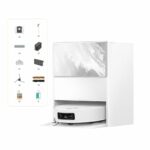
The base stations share many capabilities: automatic dust bin emptying, hot water mop washing, heated air drying, and self-cleaning wash trays. The Roborock's dust bag holds 2.7 litres versus the Xiaomi's 2.5 litres—a marginal difference affecting replacement frequency only slightly. Clean water tanks match at 4 litres, whilst dirty water capacity favours the Xiaomi at 3.8 litres against 3.5 litres.
Neither base offers UV disinfection, detergent dispensing reservoirs, or automatic mop pad changing systems. Neither supports plumbing connection kits, requiring manual refilling of clean water and emptying of dirty water. The bases handle the repetitive maintenance tasks—washing and drying mops, emptying dust—but stop short of full water management automation.
Dimensions
The Xiaomi Robot Vacuum 5 Pro stands 88 mm tall, making it 10 mm lower than the Roborock Qrevo Edge S5A at 98 mm. This difference proves meaningful for furniture clearance: the Xiaomi navigates beneath lower-profile sofas, bed frames, and cabinets that might block the Roborock. Diameter measurements are nearly identical at 350 mm and 352 mm respectively.
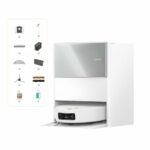
Base station footprints vary slightly. The Roborock base measures 340 mm wide, 521 mm tall, and 487 mm deep. The Xiaomi base is 360 mm wide, 572 mm tall, and 470 mm deep—wider and taller but less deep. Consider available floor space and vertical clearance when positioning these stations, as both require permanent placement with access to power.
Real-world usage considerations
For homes with predominantly hard flooring and minimal carpeting, both robots perform admirably. The Xiaomi's 15 mm mop lift provides better carpet protection, whilst the Roborock's longer battery runtime suits expansive single-level homes or properties where the robot covers multiple rooms in sequence.
Pet owners benefit from the anti-tangle brush systems in both models, though the Xiaomi's TriCut 3.0 with cutting blades may require less frequent manual hair removal. The Roborock's DuoDivide system channels hair efficiently but might accumulate wrapped strands over extended periods with heavy shedding.
The Xiaomi's lower profile makes it the practical choice for homes with low-clearance furniture, avoiding the frustration of inaccessible areas. Its camera and night vision LED add security monitoring capabilities, though this requires comfort with an internet-connected camera moving through your home. The Roborock offers a more traditional privacy-focused approach without visual recording.
Maintenance routines remain similar: both require periodic dust bag replacement, water tank refilling, and occasional filter cleaning. The heated mop drying prevents odour issues that plague cheaper mopping systems, making these suitable for humid climates or homes where the robot operates daily.
Conclusion: which to choose?
Choose the Roborock Qrevo Edge S5A if: you prioritise maximum battery runtime for large homes, prefer proven LiDAR navigation without cameras, value the brand's reputation for reliability and app quality, or need the slightly larger dust bag capacity. This model suits users who want straightforward, effective cleaning without additional smart home integration beyond basic voice control.
Choose the Xiaomi Robot Vacuum 5 Pro if: your home has low-clearance furniture requiring the slimmer 88 mm profile, you want remote camera access for security monitoring, advanced AI object recognition matters to you, or you prefer the higher 20,000 Pa suction specification. The 15 mm mop lift also makes this the better option for homes mixing hard floors with area rugs. Users comfortable with camera-equipped smart devices will appreciate the additional functionality this model provides.
Both represent excellent choices in the premium robot vacuum segment. The Roborock leans towards traditional reliability and extended operation, whilst the Xiaomi pushes technological boundaries with visual AI and versatile hardware. Your decision ultimately rests on whether you value runtime and brand heritage or prefer cutting-edge sensors and lower clearance capability.