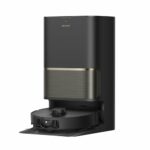
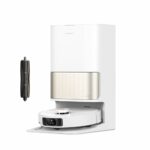
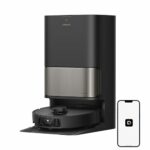
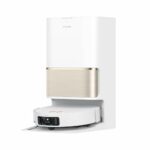
✨ VS Analyses · VacuumSpain comparison technology. Explanation created with AI from verified technical data.
Introduction
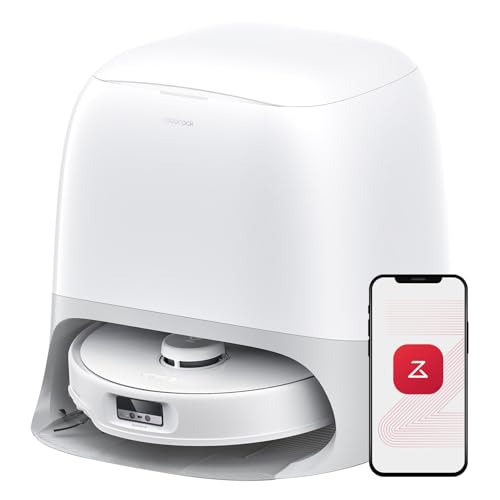
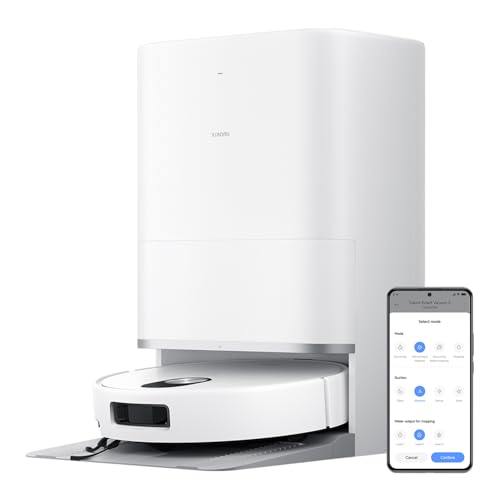
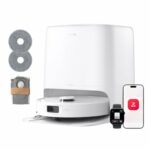
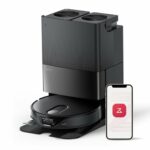
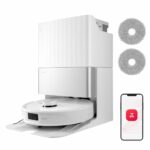
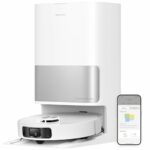
The Roborock Qrevo Curv and the Xiaomi Robot Vacuum 5 represent two high-end offerings launched in consecutive years, 2024 and 2025 respectively. We're looking at two robot vacuum cleaners with complete multifunction bases, capable of vacuuming, mopping, washing their own mops with hot water and drying them with hot air as well. Both models are designed for users seeking to maximise home cleaning automation without having to worry about daily maintenance.
The Roborock model stands out particularly for its advanced navigation system with dual camera and recognition of up to 62 different objects, whilst the Xiaomi unit opts for more powerful suction and a more compact design in height. The choice between one or the other will depend on each household's priorities: autonomy and navigation technology versus raw power and ability to slip under low furniture.
Power and Suction
In terms of suction power, the Xiaomi Robot Vacuum 5 positions itself slightly ahead with 20000 Pa compared to the Roborock Qrevo Curv's 18500 Pa. This difference may be particularly noticeable on medium-pile carpets or when there's significant dirt accumulation, although in daily practice both values guarantee outstanding results on any surface.
The brushing systems differ notably. The Qrevo Curv features Roborock's DuoDivide anti-tangle brush, designed to push hairs towards the central suction gap preventing them from wrapping around. The Xiaomi opts for the TriCut 3.0, which combines bristles with blades to cut hairs that might become tangled. Both are anti-tangle, but the approach is different.
A clear advantage of the Roborock model is that its main brush automatically raises during mopping, preventing it from getting unnecessarily wet and reducing maintenance. The Xiaomi doesn't have this function. As for the side brushes, both models include an extendable design to better reach corners and are anti-tangle, matching features in this area.
Mopping
Both units use two rotating mops for mopping, a system that offers superior results to traditional drag mops. The Roborock Qrevo Curv can raise its mops between 10 and 20 mm, whilst the Xiaomi Robot Vacuum 5 reaches 15 mm. This elevation is fundamental for the robot to be able to move over carpets without wetting them during mopping.
Both models incorporate mop extension to better reach edges and skirting boards. In the case of the Qrevo Curv, Roborock calls this technology FlexiArm. This allows for more complete mopping in areas that traditionally remained uncleaned.
Mop washing in the base is carried out with hot water in both cases, although at different temperatures: the Xiaomi reaches 80°C and the Roborock 75°C. Both temperatures are sufficient to eliminate grease and effectively disinfect the mops. Drying also uses hot air in both models, being 45°C in the Qrevo Curv. This hot air drying speeds up the process and prevents the appearance of bad odours and bacteria.
Where the Roborock makes an important difference is in dirt detection. The Qrevo Curv detects dirt both on the mops themselves and on the floor, which allows it to automatically re-mop the dirtiest areas or wash the mops again if it detects they're still dirty. The Xiaomi doesn't include these intelligent detection functions.
Navigation System
Here we find one of the most significant differences in this robot vacuum comparison. The Roborock Qrevo Curv integrates a Lidar 3D turret along with dual AI camera capable of recognising up to 62 different objects. Additionally, it allows remote camera access for home surveillance and features night vision LED. It specifically recognises pets, which allows it to adapt its behaviour.
The Xiaomi Robot Vacuum 5 features a retractable Lidar and front 3D laser sensor to avoid obstacles, but doesn't incorporate a camera. This means its object recognition capability is more limited and doesn't offer video surveillance functions. For homes where privacy is a priority, this can be considered an advantage; for those who value remote surveillance, it's a shortcoming.
The Qrevo Curv's navigation system is supported by the RR Mason 11.0 processor and the SmartPlan 2.0 platform, which optimises cleaning routes according to the type of dirt and the home's layout. The Xiaomi also features intelligent AI cleaning, although processor details aren't specified.
Autonomy and Battery
Autonomy is a point where the Roborock robot vacuum clearly stands out. With a 6400 mAh battery, the Qrevo Curv reaches 240 minutes of continuous operation. The Xiaomi Robot Vacuum 5, equipped with 5200 mAh, offers 140 minutes of autonomy.
This 100-minute difference is decisive in large homes or with complex layouts. The Qrevo Curv can complete cleaning of large surfaces without needing intermediate recharges, whilst the Xiaomi might need to return to the base in homes over 100-120 square metres if performing complete vacuuming and mopping.
For standard flats of 70-90 square metres, both models perform without problems. The Roborock's advantage is really appreciated in homes over 150 square metres or with multiple floors.
Intelligent Functions
In obstacle-overcoming capability, the Roborock Qrevo Curv can overcome height differences between 30 and 40 mm, which allows it to pass without problems over thick carpets, sliding door guides or small steps. The Xiaomi Robot Vacuum 5 reaches 20 mm, sufficient for most domestic carpets and transitions between rooms, but more limited with higher obstacles.
The Qrevo Curv includes its own voice assistant, although simple in functionality. The Xiaomi doesn't incorporate this feature. Neither model has a robotic arm, a technology still reserved for higher ranges or very specific models.
Multifunction Cleaning Base
The bases of both robots offer very complete functionalities. Both include self-cleaning of the washing tray, an important detail for reducing manual maintenance. Roborock calls its system Autolimpieza 2.0.
The dust bag capacity is identical: 2.5 litres in both cases, sufficient for several weeks without changes. The clean water tanks also match at 4 litres. The difference is in the dirty water tank: the Xiaomi offers 3.8 litres compared to the Roborock's 3 litres, which may translate to one less emptying per month in large homes.
Neither includes a detergent tank, UV disinfection nor connection to water pipes, features that are starting to appear in some high-end models but aren't yet standard. They also don't offer an optional kit for pipe connection.
Dimensions
The diameter is practically identical: 352 mm for the Qrevo Curv and 350 mm for the Xiaomi Robot Vacuum 5. The important difference is in height: the Xiaomi measures 88 mm, whilst the Roborock reaches 103 mm. Those 15 millimetres can make the difference in homes with sofas, beds or low furniture.
If your home has furniture with little separation from the floor, the Xiaomi will have more ease slipping underneath and cleaning those areas. The Roborock, with its more prominent Lidar turret, may find limitations in very tight spaces.
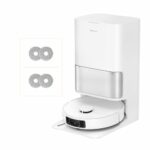
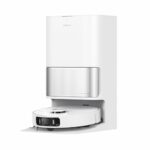
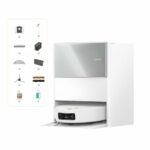
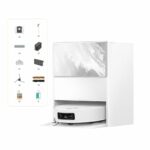
As for the bases, the Roborock has a more square base of 450 x 450 x 450 mm, whilst the Xiaomi is narrower (360 mm wide) but taller (572 mm) and deeper (470 mm). It's advisable to measure the available space before deciding, especially if you're planning to place the base in a cupboard or specific recess.
Real-World Usage Experience
For large homes or multiple floors, the Roborock Qrevo Curv offers clear advantages thanks to its 240-minute autonomy. It can complete extensive cleaning without interruptions and its ability to overcome obstacles up to 40 mm gives it greater versatility in homes with thick carpets or height differences.
In homes with pets, the Qrevo Curv's specific animal recognition allows the robot to adapt its behaviour, avoiding unnecessarily disturbing them. Its DuoDivide brush is especially effective with hair, although the Xiaomi's TriCut 3.0 also offers good results thanks to the blades that cut tangles.
If you have low furniture, the Xiaomi Robot Vacuum 5 with its 88 mm height will access more spaces. Its 20000 Pa power can also be decisive if you have long-pile carpets or if you're seeking the maximum suction capacity available.
The Qrevo Curv's dirt detection provides a superior level of automation: the robot decides for itself when to re-mop an area or when its mops need an additional wash. This reduces the need for manual intervention and guarantees more consistent results.
For those who value privacy, the Xiaomi eliminates concerns by not including a camera. For those seeking remote home surveillance or wanting to check what the robot is doing in real time, the Roborock's camera access is very practical.
Conclusion: Which to Choose?
Choose the Roborock Qrevo Curv if: You have a large home over 120 square metres and need extended autonomy. Also if you value intelligent navigation with advanced object recognition, remote camera access for surveillance, or if you have pets and want the robot to recognise them specifically. Its ability to overcome obstacles up to 40 mm makes it ideal for homes with thick carpets or height differences. The dirt detection system provides an automation bonus that reduces maintenance.
Choose the Xiaomi Robot Vacuum 5 if: You're seeking the maximum suction power available in this comparison (20000 Pa) and have low furniture under which you need the robot to access easily thanks to its 88 mm height. It's an excellent option for medium-sized flats where the 140-minute autonomy is sufficient. If privacy is important to you, the absence of a camera can be considered an advantage. Its narrower base (360 mm) facilitates placement in reduced spaces, and the 80°C mop washing guarantees optimal disinfection.