✨ VS Analyses · VacuumSpain comparison technology. Explanation created with AI from verified technical data.
Introduction
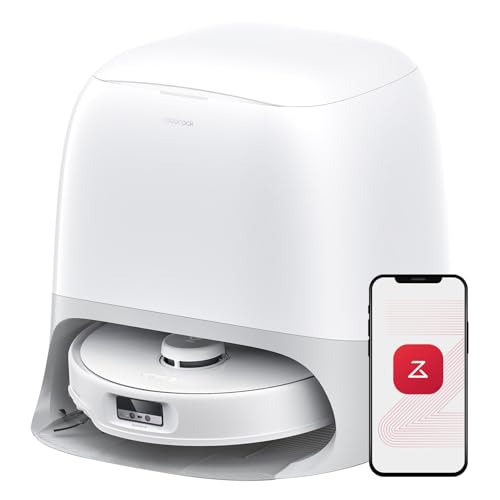
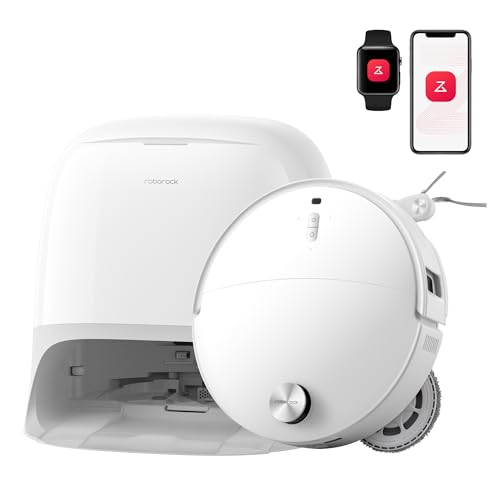
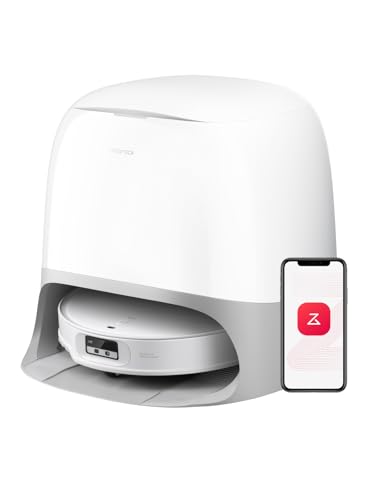
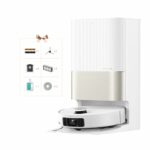
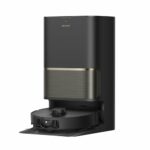
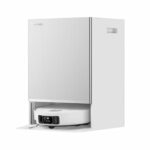
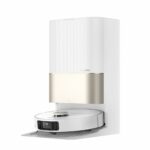
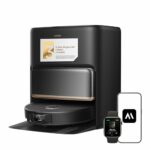
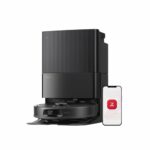
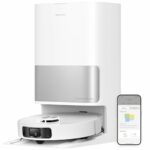
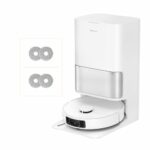
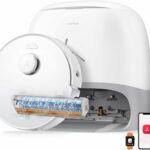
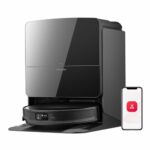
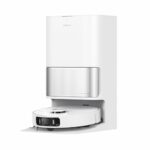
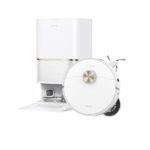
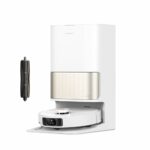
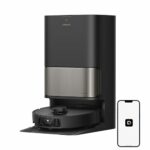
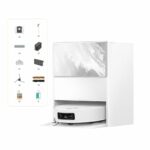
The Roborock Qrevo Curv, Qrevo Curv 2 Pro, and Qrevo CurvX represent three generations of premium robot vacuum cleaners from the world's leading manufacturer in this segment. The original Qrevo Curv launched in 2024, whilst the Curv 2 Pro and CurvX arrived in 2025 with refinements to the formula. All three share Roborock's signature DuoDivide anti-tangle brush system and dual rotating mop technology, but meaningful differences exist in suction power, navigation hardware, and intelligent features that make each suited to different household needs.
These aren't entry-level models. Each comes equipped with a multifunctional base station that washes mopas with hot water and dries them with heated air, dual AI cameras for obstacle recognition, and the ability to climb simple steps. The question isn't whether they're capable—it's which one matches your specific requirements.
Suction Power and Cleaning Performance
When it comes to raw suction capability, the Qrevo Curv 2 Pro dominates this comparison with 25,000 Pa—a substantial leap over the original Qrevo Curv's 18,500 Pa. The CurvX sits in the middle at 22,000 Pa. In practical terms, this translates to better deep-cleaning performance on carpets and more effective pickup of fine dust particles embedded in textile fibres.
All three models feature Roborock's DuoDivide anti-tangle brush system, which channels hair towards the central suction point rather than wrapping it around the roller. The main brush elevates when mopping to prevent wet carpet contact. Each robot also includes an extendable side brush with anti-tangle properties, allowing them to sweep right into corners without the maintenance headaches typical of traditional bristle designs.
The side brushes don't lift during mopping, but this matters less given the extendable mop design handles edge cleaning effectively.
Mopping System
Each model employs dual rotating mopas with extension capabilities to reach skirting boards. Mopa elevation differs slightly: the Qrevo Curv lifts between 10-20 mm, whilst both 2025 models manage 7-17 mm. This might seem like a step backwards, but in reality, 7 mm clearance suffices for most low-pile rugs, and the newer models compensate with improved intelligence elsewhere.
All three robots detect dirt on both the mopas themselves and the floor surface, triggering additional cleaning passes when needed. The base station washes mopas with hot water and dries them using heated air to prevent bacterial growth and odours—essential for maintaining genuinely hygienic mopping rather than just spreading dirty water around.
Here's where the Qrevo Curv 2 Pro pulls ahead: it can automatically detach its mopas at the base station when you only want vacuuming. The Qrevo Curv and CurvX require manual mopa removal for vacuum-only sessions. For households with mixed flooring—say, carpeted bedrooms and tiled living areas—this automation saves considerable hassle.
The base station's self-cleaning function has improved from version 2.0 in the original Qrevo Curv to 3.0 in both newer models, reducing the frequency of manual tray maintenance.
Navigation Intelligence
The navigation hardware reveals the most striking physical difference between these models. The Qrevo Curv uses a traditional LiDAR turret that protrudes from the top, contributing to its 103 mm height. The Qrevo Curv 2 Pro and CurvX feature retractable LiDAR systems that tuck away when not needed, slashing the profile to just 79.8 mm. This 23 mm reduction opens up access to furniture and spaces the original simply cannot reach—under low-clearance sofas, beneath kitchen cabinets, or under radiators.
All three carry dual AI cameras and frontal 3D laser sensors for obstacle avoidance, with LED illumination for night-time operation and remote camera access through the app. They recognise pets and can be monitored remotely, useful for checking on animals when you're away.
The object recognition database has expanded dramatically. The Qrevo Curv identifies 62 different obstacles, the CurvX knows 108, and the Qrevo Curv 2 Pro has been trained on 200 distinct objects. In practice, this means fewer stuck robots and better navigation around everyday household items like cables, shoes, or pet toys.
Only the Qrevo Curv 2 Pro includes dedicated stain recognition AI, allowing it to identify and target specific marks on hard floors without user intervention. Both the Qrevo Curv and CurvX run SmartPlan intelligent cleaning algorithms but lack this specific stain-detection capability.
Battery Life and Coverage
All three models share the same 6,400 mAh battery capacity, but runtime varies due to different efficiency profiles. The Qrevo Curv 2 Pro achieves 290 minutes of operation—enough for exceptionally large homes—whilst the original Qrevo Curv manages 240 minutes and the CurvX reaches 220 minutes. Despite its higher suction power, the Curv 2 Pro somehow extracts more runtime from the identical battery, likely through optimised power management.
For most households under 200 square metres, even the CurvX's 220-minute runtime proves more than adequate. The difference becomes relevant in sprawling properties or commercial spaces where maximising coverage per charge matters.
Smart Features
Each robot can climb simple steps, useful for transitioning between rooms with slight elevation changes or crossing over door thresholds without getting stranded. All three include Roborock's own voice assistant alongside compatibility with external systems like Alexa and Google Home, allowing voice control integration into existing smart home ecosystems.
The dual camera setup enables remote viewing, turning your robot into a mobile security camera of sorts—handy for checking whether you left the iron on or seeing what the dog's up to.
Multifunctional Base Station
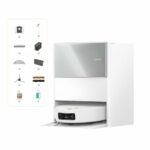
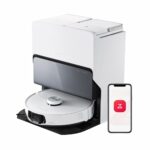
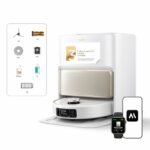
The base stations share identical dimensions—450 mm in each direction—and the same tank capacities: 2.5 litres for dust collection, 4 litres of clean water, and 3 litres for dirty water. All three automatically empty the robot's dustbin, wash mopas with hot water, and dry them using heated air.
The key distinction lies in the base cleaning system version. The Qrevo Curv uses generation 2.0, whilst both 2025 models feature the upgraded 3.0 system. This newer iteration does a more thorough job keeping the washing tray itself clean, reducing the maintenance burden on the user.
None of these models offer UV disinfection, detergent dispensers, or integrated plumbing connections. There's no optional plumbing kit available either, so you'll be manually refilling water tanks and emptying waste water as needed.
Physical Dimensions
Robot diameter remains virtually identical across all three—352-353 mm—but height tells a different story. The Qrevo Curv stands 103 mm tall due to its fixed LiDAR turret. The Qrevo Curv 2 Pro and CurvX measure just 79.8 mm thanks to retractable navigation hardware. That 23 mm difference determines whether the robot fits under your sofa or gets stuck outside it.
Dust bin capacity in the robot itself varies slightly: 325 ml (Qrevo Curv), 245 ml (Qrevo Curv 2 Pro), and 258 ml (CurvX). Given that all three automatically empty into the 2.5-litre base station bag, this difference rarely matters in practice. The onboard water tanks follow a similar pattern: 80 ml, 67 ml, and 69 ml respectively—negligible variations when the base holds 4 litres of clean water.
Real-World Usage Scenarios
For homes with low-clearance furniture, the retractable LiDAR in the Qrevo Curv 2 Pro and CurvX makes them significantly more practical than the original Qrevo Curv. That 79.8 mm profile accesses spaces a 103 mm robot simply cannot reach, potentially cleaning 20-30% more floor area in furniture-heavy environments.
The Qrevo Curv 2 Pro's superior 25,000 Pa suction suits households with thick carpets, multiple pets, or high traffic that generates substantial debris. Its extended 290-minute runtime and 200-object recognition database make it the most capable option for large, complex homes with varied obstacles.
Pet owners benefit from the DuoDivide brush across all three models, but the Curv 2 Pro's higher suction extracts more embedded fur from carpets and upholstery edges. All three recognise pets as obstacles and can be monitored via camera.
The automatic mopa removal feature in the Qrevo Curv 2 Pro proves especially valuable in mixed-flooring homes. Set it to vacuum carpeted bedrooms whilst automatically mopping tiled bathrooms and kitchens without manual intervention between tasks.
Conclusion: Which Should You Choose?
Choose the Roborock Qrevo Curv if you have furniture with adequate clearance (above 105 mm) and want proven Roborock performance at what will likely be the most competitive price point of the three. Its 18,500 Pa suction handles normal household cleaning effectively, and the 240-minute runtime covers most homes comfortably. The traditional LiDAR turret is reliable, even if it limits access under low furniture.
Choose the Roborock Qrevo Curv 2 Pro if you want the absolute best robot aspirador Roborock currently offers. The combination of 25,000 Pa suction, 290-minute runtime, retractable LiDAR for low-profile access, 200-object recognition, AI stain detection, and automatic mopa removal makes this the most advanced option. It's ideal for large homes, households with pets, or anyone who wants maximum automation with minimal intervention. The improved base cleaning system 3.0 reduces maintenance further.
Choose the Roborock Qrevo CurvX if you prioritise the low 79.8 mm profile for furniture access but don't need the Curv 2 Pro's maximum suction or extended runtime. With 22,000 Pa and 220 minutes of operation, it handles most homes well whilst fitting under more furniture than the original Qrevo Curv. The 108-object recognition sits between the other two models, offering improved navigation over the original without the Curv 2 Pro's premium pricing.
For smaller homes under 100 square metres with standard furniture heights, the original Qrevo Curv delivers excellent value. Medium to large homes benefit from the CurvX's improved access and recognition. Sprawling properties, pet-heavy households, or those wanting cutting-edge automation should seriously consider the Qrevo Curv 2 Pro despite its premium positioning. The better robot aspirador ultimately depends on your specific floor plan, furniture configuration, and cleaning demands.