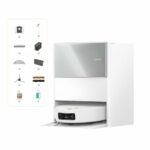
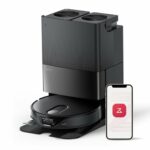
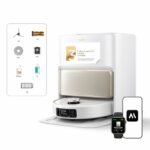
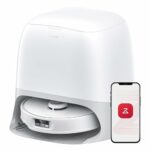
✨ VS Analyses · VacuumSpain comparison technology. Explanation created with AI from verified technical data.
Introduction
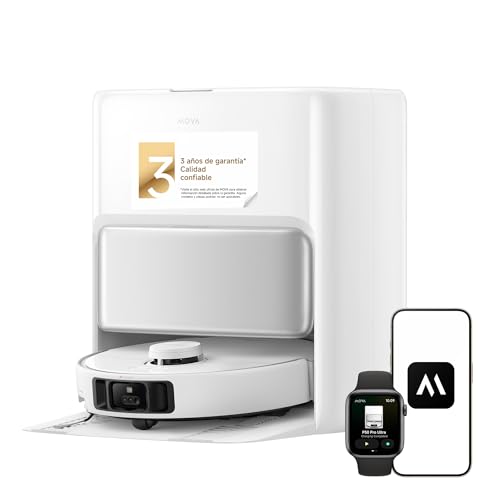
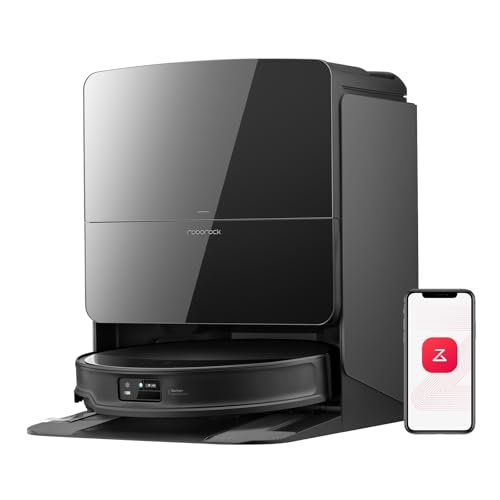
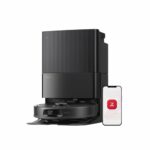
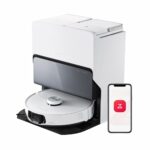
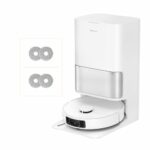
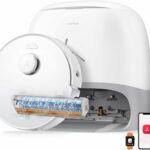
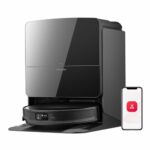
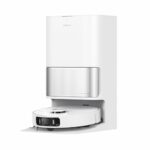
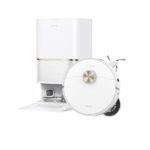
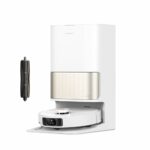
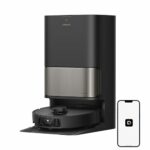
The Mova P50 Pro Ultra and the Roborock Saros 10R represent two high-end propositions within the robot vacuum market of 2025. Both units feature complete multifunction bases that wash and dry the mops with hot water and air, advanced navigation systems with dual cameras and 3D laser sensors, as well as artificial intelligence functions for obstacle recognition and cleaning planning. This level of equipment positions them as options designed for users seeking total automation in home cleaning, especially in medium or large homes with different types of flooring and the presence of pets.
The Mova robot vacuum stands out for its raw power and storage capacity, whilst the Roborock robot vacuum opts for greater battery autonomy and a more compact design in height. These technical differences mark distinct usage profiles that are worth analysing in detail.
Power and Suction
The suction power is slightly superior on the Mova P50 Pro Ultra, with 19,000 Pa compared to the 18,500 Pa of the Roborock Saros 10R. This difference of 500 Pa can translate into better pickup of ingrained dirt in carpets or tile joints, although in practice both values are situated in the highest range of the current market.
The brushing system presents different approaches. The Mova is equipped with a TriCut 3.0 brush, which combines bristles with blades to cut tangled hair during cleaning. The Roborock mounts the DuoDivide Antienredos system, designed to push hair towards the central suction gap and minimise tangles from the outset. Both main brushes can be lifted during mopping, which prevents dirtying the mops with residue from the brush.
The side brushes of both models are extendable, liftable and anti-tangle, a complete configuration that improves sweeping in corners and reduces maintenance. This similarity guarantees comparable performance at the edges of rooms for both units.
Mopping
Both robots use two rotating mop systems, but there are important differences in their implementation. The Roborock Saros 10R mops with warm water, which improves the dissolution of grease and adhered stains. The Mova P50 Pro Ultra uses cold water for floor mopping, although its base washes the mops with hot water.
Mop lifting reaches between 12 and 22 mm on the Roborock, exceeding the Mova's 10.5 mm. This greater height is especially useful when moving over medium-pile carpets or crossing raised thresholds without wetting unwanted surfaces.
The Mova incorporates mop extension with lateral movement (Roboswing type), whilst the Roborock also extends its mops to better reach edges. Both systems detect dirt both on the mops and on the floor, adjusting mopping intensity or repeating passes when necessary. Both models can automatically remove the mops at the base when only vacuuming is desired, avoiding unnecessarily wetting the floor.
Navigation System
The Mova P50 Pro Ultra integrates a LiDAR 3.0 turret together with a dual front camera and 3D laser sensor. This combination allows recognition of up to 160 different obstacles, including specific detection of curtains, a function that the Roborock Saros 10R does not incorporate. The Roborock's navigation system is called StarSight 2.0 and also combines a dual camera with a 3D laser sensor, identifying 108 types of obstacles.
Both units recognise pets, feature LED for night vision and allow remote access to the camera from the mobile application. The difference in the number of recognised obstacles can be noticed in homes with many small objects or complex configurations, where the Mova offers more detailed identification.
The Mova uses the CleanGenius system for intelligent cleaning with AI, whilst the Roborock employs SmartPlan 2.0. Both algorithms recognise stains and adjust cleaning patterns. The Roborock specifies its processor as RR Mason 11.0, although the Mova's data is not detailed.
Autonomy and Battery
The battery capacity of the Roborock Saros 10R is notably superior, with 6,400 mAh compared to the Mova P50 Pro Ultra's 5,200 mAh. However, the Mova achieves 210 minutes of autonomy, exceeding the Roborock's 180 minutes. This apparent contradiction is explained by differences in energy efficiency and the consumption of their respective systems.
In practice, the Mova can cover more extensive surfaces in a single charge when working in standard vacuuming mode. The Roborock, with its greater battery capacity, can better maintain performance in high-power modes or during long intensive mopping sessions. For homes of up to 150-180 square metres, both units complete cleaning without the need for intermediate recharging.
Intelligent Functions
The Mova P50 Pro Ultra can overcome thresholds of up to 22 mm, whilst the Roborock Saros 10R overcomes simple thresholds without specifying exact height. This capability is useful for moving between different types of flooring or overcoming small level differences between rooms.
Both robots integrate their own voice assistant and are compatible with external assistants such as Alexa and Google Home. This dual option allows controlling the robot through voice commands both from its own system and from the home automation ecosystem that the user already has installed.
Multifunction Cleaning Base
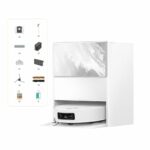
Both multifunction bases wash the mops with hot water and dry them with hot air, guaranteeing hygienic maintenance without bad odours. The Mova incorporates third-generation tray self-cleaning, whilst the Roborock mounts version 2.0 of this system. Both include a detergent tank, which is dispensed during mop washing.
The dust bag capacity is greater on the Mova, with 3.2 litres compared to the Roborock's 2.5 litres. This translates into less frequent bag changes, especially in homes with pets or high traffic. The clean water tanks are identical (4 litres), but the Mova offers 3.5 litres of capacity for dirty water compared to the Roborock's 3 litres.
The dust tank integrated in the robot measures 300 ml on the Mova and 270 ml on the Roborock. The robot's water tank is 80 ml on the Mova and 69 ml on the Roborock. These differences are small but favour the Mova in terms of total capacity.
Dimensions
The most significant difference is in height. The Roborock Saros 10R measures 79.8 mm, allowing it to access under low furniture, beds with little distance to the floor and reduced spaces where the Mova P50 Pro Ultra, with its 103.8 mm height, cannot enter. This difference of more than 2 centimetres marks a key point for homes with low furniture.
The diameter is practically identical: 350 mm on the Mova compared to 353 mm on the Roborock. Both robots have a standard size that allows them to manoeuvre without problems in typical domestic spaces.
The bases have similar dimensions, although with small variations. The Mova's measures 420 mm wide, 470 mm high and 458 mm deep. The Roborock's has 381 mm wide, 488 mm high and 475 mm deep. The Mova's base is wider but less tall, whilst the Roborock's is narrower and taller. It is advisable to measure the available space before installation to ensure a good fit.
Real-world usage experience
For large houses, the Mova P50 Pro Ultra offers greater effective autonomy (210 minutes) and greater storage capacity both in dust and dirty water. Its power of 19,000 Pa and the recognition of 160 obstacles make it a solid option for complex homes with many objects and different rooms.
In homes with pets, both models work well thanks to their anti-tangle brush systems and high suction power. The Mova has an advantage due to its greater dust bag capacity (3.2 litres), reducing maintenance frequency. The Roborock compensates with its DuoDivide brush, especially effective against long hair.
For homes with low furniture, the Roborock Saros 10R is the only viable option. Its height of 79.8 mm allows it to access spaces where the Mova simply does not fit. If most furniture has more than 11 cm distance to the floor, both robots can work without restrictions.
The Roborock's warm water mopping is more effective in kitchens with grease or adhered stains. The greater lifting of its mops (up to 22 mm) also better protects carpets during mopping. The Mova offers curtain detection, avoiding wetting them during cleaning, something that can be valued in living rooms with long curtains.
Conclusion: Which to choose?
Choose the Mova P50 Pro Ultra if: You seek maximum cleaning autonomy in a single charge (210 minutes), need greater storage capacity in the base (3.2 litres of dust bag and 3.5 litres of dirty water), value extended obstacle recognition (160 types) and specific curtain detection, or have a large home without height restrictions under furniture. Its power of 19,000 Pa and the lateral mop extension system with movement make it especially suitable for houses with many corners and complex spaces.
Choose the Roborock Saros 10R if: You need a robot that passes under low furniture (only 79.8 mm in height), prefer mopping with warm water for better stain dissolution, value greater mop lifting (12-22 mm) to protect medium-pile carpets, or seek the reliability of an established brand as a world reference in robot vacuums. Its 6,400 mAh battery better maintains performance in high-power modes, and its compact design in height opens cleaning possibilities in spaces that other robots cannot reach.