✨ VS Analyze · VacuumSpain comparison technology. AI-generated explanation based on verified technical data.
Introduction
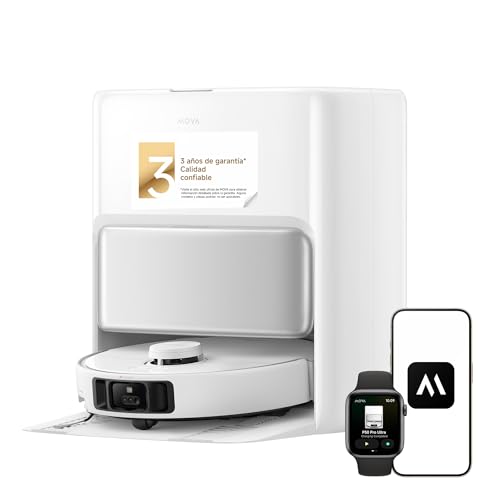
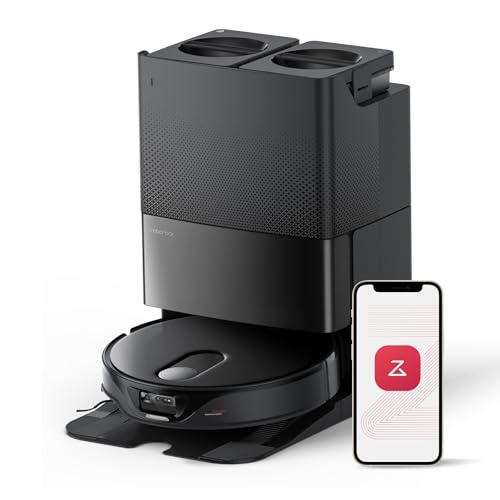
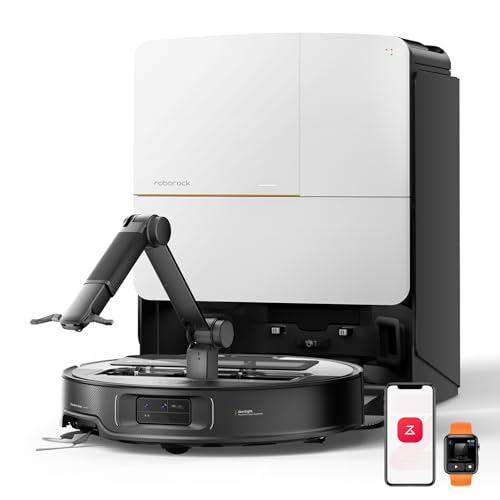
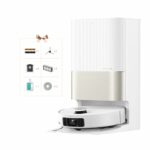
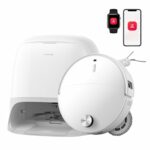
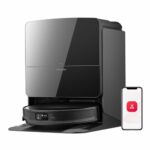
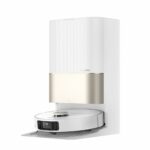
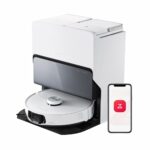
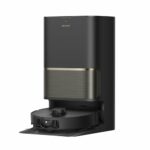
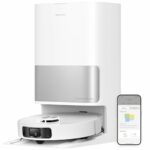
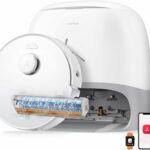
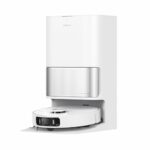
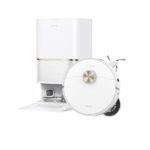
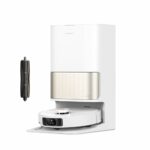
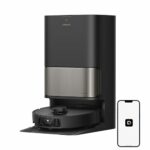
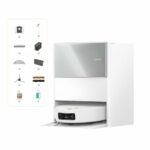
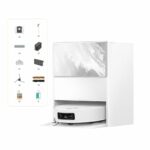
The Mova P50 Pro Ultra, the Roborock Qrevo Slim and the Roborock Saros Z70 represent three distinct propositions within the high-end range of robot vacuum cleaners for 2025. Whilst the first arrives as Mova's offering with cutting-edge technology, the two Roborock models differ clearly in their approach: the Qrevo Slim prioritises reduced height to access under furniture, and the Saros Z70 incorporates innovations such as the robotic arm and greater battery capacity.
We're talking about devices designed for medium and large homes seeking complete automation of mopping and vacuuming. All three feature a multifunction base that washes and dries the mops, advanced navigation systems with camera and AI, and the ability to avoid obstacles with precision. However, differences in power, height, intelligent functions and technical details mark quite distinct usage profiles.
Power and Suction
The difference in suction power is notable. The Roborock Saros Z70 leads with 22,000 Pa, followed by the Mova P50 Pro Ultra with 19,000 Pa. The Roborock Qrevo Slim remains at 11,000 Pa, practically half that of the Saros Z70. In practice, this translates to greater capacity for thick carpets and ingrained dirt in the first two models.
The type of main brush also varies. The Mova P50 Pro Ultra features the TriCut 3.0 system, which combines bristles with blades to reduce hair tangles. The Qrevo Slim uses a DuoDivide dual brush, designed to push hairs towards the centre and prevent them from tangling. The Saros Z70 opts for a new generation anti-tangle brush. All three raise the main brush during mopping, preventing it from getting unnecessarily wet.
As for the side brush, the Mova P50 Pro Ultra and the Saros Z70 raise it during mopping and feature anti-tangle technology, something the Qrevo Slim doesn't offer. All three have an extendable side brush to better reach corners, a particularly useful function for skirting boards and difficult corners.
Mopping
All three models mop with two rotating mops that extend to reach the edges. The Mova P50 Pro Ultra adds Roboswing movement, a system that allows the robot to perform a slight turn to get the mop under overhangs and furniture. This function doesn't appear on the two Roborock models.
Mop lifting varies slightly: the Qrevo Slim lifts 10 mm, the Mova P50 Pro Ultra reaches 10.5 mm, and the Saros Z70 goes up to 12-22 mm depending on the obstacle. This allows the Saros Z70 to climb thicker carpets without wetting them.
An important difference is water temperature. The Roborock Saros Z70 mops with warm water, which improves the dissolution of grease and adhered dirt. The Mova P50 Pro Ultra and the Qrevo Slim use cold water. All three bases wash the mops with hot water, but only the Saros Z70 heats the water for mopping the floor.
Automatic mop detachment at the base is present in the Mova P50 Pro Ultra and the Saros Z70, allowing the robot to vacuum without dragging the mops when mopping isn't necessary. The Qrevo Slim doesn't include this function. All three detect dirt both on the mops and on the floor, adjusting mopping as necessary.
Navigation System
The Mova P50 Pro Ultra uses a traditional LiDAR turret, whilst the two Roborock models employ the StarSight system: version 1.0 in the Qrevo Slim and 2.0 in the Saros Z70. All integrate dual camera with AI, front 3D laser sensor and LED for night vision.
Obstacle recognition capability marks significant differences. The Mova P50 Pro Ultra identifies 160 types of objects, the Saros Z70 recognises 108, and the Qrevo Slim remains at 73. This translates to greater precision for avoiding cables, toys, slippers or socks in the case of the Mova.
All three recognise pets and allow remote access to the camera for surveillance. However, only the Mova P50 Pro Ultra detects curtains, avoiding getting tangled with them during cleaning. The Mova incorporates CleanGenius AI, whilst the Roborock models use SmartPlan, each with its own intelligent cleaning approach.
AI stain recognition is present in the Mova P50 Pro Ultra and the Saros Z70, absent in the Qrevo Slim. This function allows the robot to identify particularly dirty areas and reinforce cleaning automatically.
Autonomy and Battery
The Roborock Saros Z70 features a 6,400 mAh battery, superior to the 5,200 mAh of the Mova P50 Pro Ultra and the Qrevo Slim. This should translate to greater autonomy, although we only have specific time data for two models: 210 minutes on the Mova P50 Pro Ultra and 180 minutes on the Qrevo Slim.
The half-hour difference may seem small, but in large homes or those with multiple floors it means being able to complete cleaning without intermediate recharges. The Saros Z70, with its larger battery, will probably exceed both figures, although the manufacturer hasn't specified the exact autonomy.
Intelligent Functions
The ability to overcome obstacles is similar: 22 mm on the Mova P50 Pro Ultra and 20 mm on the Qrevo Slim. The Saros Z70 can climb simple steps, an advanced function that allows it to change rooms by overcoming small level differences without assistance.
The differentiating element of the Roborock Saros Z70 is the OmniGrip robotic arm, capable of picking up small objects such as socks or light toys before cleaning. Neither the Mova P50 Pro Ultra nor the Qrevo Slim feature this technology. In practice, this reduces the need to prepare the floor before each cleaning.
All three models integrate their own voice assistant and compatibility with Alexa and Google Home, facilitating control by voice commands.
Multifunction Cleaning Base
All three bases wash the mops with hot water and dry them with hot air, preventing bad odours. The self-cleaning of the washing tray varies in generation: the Mova P50 Pro Ultra boasts third generation, the Saros Z70 features 2.0, and the Qrevo Slim 1.0. This implies greater automation and less manual maintenance on the Mova.
The detergent tank is present in the Mova P50 Pro Ultra and the Saros Z70, but not in the Qrevo Slim. This allows the base to dispense cleaning product automatically during mop washing, improving mopping results.
The dust bag capacity is greater in the Mova P50 Pro Ultra (3.2 litres) than in the Qrevo Slim (2.7 litres) and the Saros Z70 (2.5 litres). More capacity means changing the bag less frequently. The clean water tanks are identical (4 litres), but the dirty water tank varies: 3.5 litres in the Mova and Qrevo Slim, 3 litres in the Saros Z70.
None of the three includes connection to plumbing or an optional kit for it, so they require manual refilling of clean water and emptying of dirty water.
Dimensions
The Roborock Qrevo Slim stands out for its height of just 82 mm, clearly lower than the 103.8 mm of the Mova P50 Pro Ultra and the 79.8 mm of the Saros Z70. Although the Saros Z70 is slightly lower than the Qrevo Slim, the difference is minimal. The Mova, with its traditional LiDAR turret, is the tallest of the three and may have difficulties accessing under low furniture.
The diameter is practically identical: 350 mm on the Mova compared to 353 mm on both Roborock models. This 3 mm difference is irrelevant in daily use.
As for the bases, the Qrevo Slim is the narrowest (340 mm) but also the tallest (521 mm). The Mova measures 420 mm wide and 470 mm high, whilst the Saros Z70 sits at 381 mm wide and 488 mm high. It's advisable to measure the available space before deciding, especially if the base is going to be located in a cupboard or specific recess.
Real-World Usage Experience
For homes with pets, the Mova P50 Pro Ultra and the Saros Z70 offer clear advantages: greater suction power, anti-tangle brushes on both sides and advanced obstacle recognition. The Mova's TriCut 3.0 brush and the Saros Z70's anti-tangle system reduce maintenance when there's animal hair.
If the home has low furniture, sofas with little height or tatami-style beds, the Roborock Qrevo Slim is the most suitable option. Its 82 mm height allows it to access spaces where the other two wouldn't enter. The Saros Z70, at 79.8 mm, is also a good option for these cases.
In large houses, the 6,400 mAh battery of the Saros Z70 and the 210 minutes of autonomy of the Mova P50 Pro Ultra make the difference. The Qrevo Slim, with 180 minutes, may need intermediate recharges on surfaces exceeding 150 square metres.
For those seeking maximum quality mopping, the warm water of the Saros Z70 improves results on floors with grease or difficult stains. Automatic mop detachment on the Mova and the Saros Z70 adds convenience by allowing vacuuming without unnecessarily dragging wet mops.
The Saros Z70's robotic arm proves especially useful in homes with young children, where there are usually toys scattered on the floor. The robot can pick up light objects before cleaning, reducing interruptions.
Conclusion: Which to Choose?
Choose the Mova P50 Pro Ultra if you're looking for the greatest obstacle recognition (160 types), balanced power of 19,000 Pa, and the most advanced tray self-cleaning (3rd generation). It's ideal for homes with many objects on the floor, pets, and for those who value the 210 minutes of autonomy. The 3.2-litre dust bag also reduces maintenance frequency.
Choose the Roborock Qrevo Slim if the priority is to pass under low furniture thanks to its 82 mm height, and you don't need maximum suction power. It's a solid option for small or medium flats without thick carpets, where the reduced height compensates for the lower power. The narrower base also facilitates its placement in reduced spaces.
Choose the Roborock Saros Z70 if you want maximum power (22,000 Pa), the robotic arm to pick up objects, warm water for mopping and the largest battery (6,400 mAh). It's the most complete option for large homes, with pets, thick carpets and the need for minimal manual intervention. Its ability to climb simple steps adds versatility in houses with small level differences between rooms.