✨ VS Analyses · VacuumSpain comparison technology. Explanation created with AI from verified technical data.
Introduction
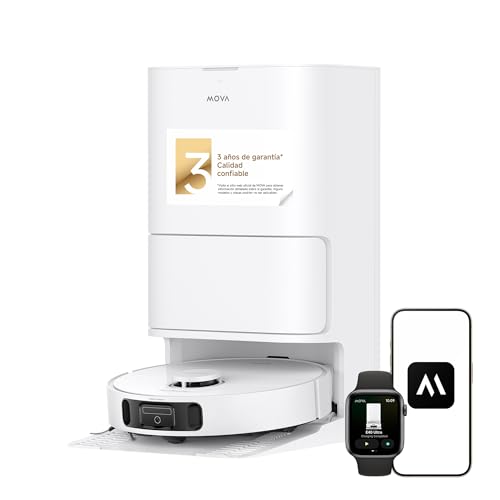
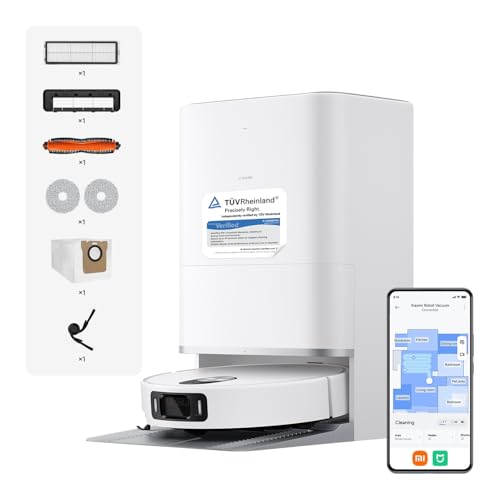
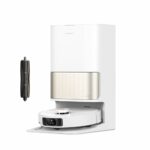
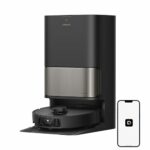
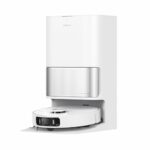
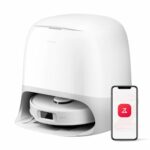
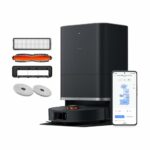
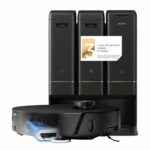
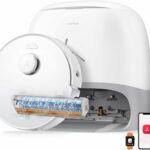
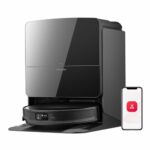
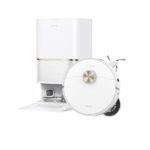
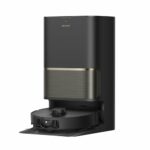
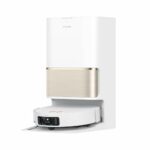
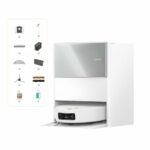
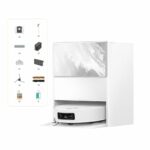
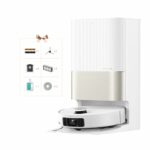
The Mova E40 Ultra and Xiaomi Robot Vacuum 5 Pro represent two compelling approaches to robot vacuum technology in 2025. Both models come equipped with multifunctional bases that handle mopping and drying alongside automatic dust emptying, positioning them as complete cleaning solutions rather than basic vacuum units. The Mova E40 Ultra arrives from Dreame's secondary brand, whilst the Xiaomi unit benefits from that manufacturer's extensive experience in the robot vacuum market.
These aren't entry-level machines. Each robot features rotating mopping pads, substantial battery capacity, and intelligent navigation systems designed to handle larger homes with multiple floor types. The question becomes which configuration suits specific household needs better, particularly when considering factors like pet hair management, runtime requirements, and the level of automation you're after.
Power and Suction Performance
The suction difference sits at 1,000 Pa in favour of the Xiaomi Robot Vacuum 5 Pro, reaching 20,000 Pa against the Mova's 19,000 Pa. In practical terms, this margin matters most on carpets and rugs where deeper pile requires stronger airflow to extract embedded debris.
Where the brush systems diverge more noticeably is in design philosophy. The Xiaomi employs its TriCut 3.0 brush, which combines bristles with integrated blades that actively cut through tangled hair during operation. The Mova E40 Ultra relies on a simpler brush design. For households with pets or long-haired residents, this distinction becomes relevant during maintenance routines.
The Xiaomi takes things further by elevating its main brush during mopping runs, preventing wet debris from being dragged across the roller. The Mova doesn't offer this feature, meaning the brush remains in contact with damp floors throughout mopping cycles.
Side brush configuration reveals another functional gap. The Xiaomi includes an extendable side brush that reaches further into corners and along skirting boards. The Mova's side brush maintains a fixed position. Both models feature anti-tangle side brushes, though neither elevates them when mopping begins.
Mopping Capabilities
Both robots use dual rotating mopas that spin against the floor rather than simply dragging fabric across surfaces. Each extends its mopas to reach edges more effectively, with the Mova adding a swing movement to push the mopa slightly under furniture edges and protruding obstacles.
Mopa elevation shows measurable differences. The Xiaomi lifts its pads 15 mm when crossing carpets or returning to base, whilst the Mova manages 10.5 mm. That extra clearance on the Xiaomi reduces the chance of damp mopas touching medium-pile rugs.
The base stations handle mopa maintenance quite differently. The Xiaomi washes its mopas with heated water, which proves more effective at breaking down greasy residues and dried-on marks. The Mova relies on cold water washing. Both dry their mopas with warm air afterwards to prevent odours and bacterial growth.
Intelligence during mopping separates these models significantly. The Xiaomi detects dirt levels on both its mopas and the floor itself, triggering additional passes or returning to the base for mopa cleaning when sensors register excessive soiling. The Mova E40 Ultra lacks these detection systems, following programmed cleaning patterns without adapting to actual dirt levels encountered.
The Xiaomi base also self-cleans its washing tray automatically, maintaining hygiene without manual intervention. The Mova requires periodic manual cleaning of this component.
Navigation Systems
Navigation architecture differs in complexity. The Mova E40 Ultra uses a traditional raised LiDAR turret for mapping and positioning, paired with a frontal 3D laser sensor for obstacle detection. This combination handles spatial awareness and object avoidance competently.
The Xiaomi Robot Vacuum 5 Pro employs a retractable LiDAR system alongside its 3D laser sensor, but adds an AI-powered camera to the mix. This camera enables several capabilities the Mova cannot match: remote access for checking on your home, LED illumination for navigating in darkness, and visual identification of specific objects.
The Xiaomi recognises up to 200 different object types, learning to avoid hazards like cables, shoes, and pet waste with greater precision. The Mova includes pet recognition specifically but doesn't specify its total object database. In homes with pets, the Mova's dedicated pet detection could prove useful, though the Xiaomi's broader object library and camera verification likely provides more comprehensive avoidance overall.
Neither model detects curtains specifically, something worth noting if you have floor-length drapes that robots might become tangled in.
Battery and Runtime
Both robots pack identical 5,200 mAh batteries, yet deliver markedly different runtimes. The Mova E40 Ultra achieves 210 minutes on a single charge, whilst the Xiaomi manages 140 minutes. That 70-minute difference translates to roughly 50% more coverage area before requiring a recharge.
For larger properties or those with complex layouts requiring multiple rooms and floor types, the Mova's extended runtime reduces interruptions. The Xiaomi's shorter duration matters less in smaller homes where 140 minutes proves sufficient for complete coverage. Both units handle 20 mm obstacles identically, climbing over typical door thresholds and carpet edges without difficulty.
Smart Features
Intelligence manifests differently across these models. The Xiaomi leverages its AI camera for spot recognition, identifying specific types of mess and adjusting cleaning intensity accordingly. This visual intelligence combines with its CleanGenius AI system to optimise cleaning patterns based on room type and dirt levels.
The Mova E40 Ultra includes its own CleanGenius AI implementation for intelligent cleaning routines, though without visual input from a camera. The system still adapts to usage patterns and room layouts, just without the object-specific recognition the Xiaomi provides.
Neither robot includes a proprietary voice assistant, though both integrate with Alexa and Google Home for voice control through existing smart home ecosystems.
Multifunction Base Station
Storage capacity favours the Mova across the board. Its dust collection bag holds 3.2 litres versus 2.5 litres in the Xiaomi base. Clean water capacity reaches 4.5 litres on the Mova compared to 4 litres on the Xiaomi, whilst dirty water tanks measure 4 litres and 3.8 litres respectively.
These differences mean less frequent emptying and refilling with the Mova, particularly valuable for larger homes or households running multiple cleaning cycles between maintenance sessions. The Xiaomi's slightly smaller capacities still handle substantial cleaning areas before requiring attention.
The Mova offers an optional detergent dispenser that can be purchased separately, though this isn't included as standard. The Xiaomi doesn't support detergent dispensing at all. Neither base connects to household plumbing, requiring manual water management regardless of model chosen.
UV disinfection doesn't feature on either base. Both dry mopas with warm air, which handles odour prevention adequately without additional sterilisation.
Physical Dimensions
Height becomes the most significant dimensional difference. The Mova E40 Ultra stands 97 mm tall, whilst the Xiaomi measures 88 mm. That 9 mm reduction allows the Xiaomi to navigate under lower furniture, potentially accessing spaces the Mova cannot reach. Both robots share a 350 mm diameter.
Base station footprints differ slightly. The Mova base measures 340 mm wide, 456.7 mm deep, and 590.5 mm tall. The Xiaomi base spans 360 mm wide, 470 mm deep, and 572 mm tall. The Xiaomi base sits lower but requires marginally more floor space. Neither presents particularly compact dimensions; both need dedicated corner placement with clearance for the robot to dock properly.
Real-World Usage Scenarios
The Mova E40 Ultra suits larger properties where extended runtime matters more than cutting-edge AI features. Its 210-minute battery life covers expansive floor plans without mid-clean recharging, whilst larger base capacities reduce maintenance frequency. The simpler brush system requires more frequent hair removal but costs less to replace.
For homes with pets that shed heavily, the Xiaomi's TriCut 3.0 brush provides tangible benefits during weekly maintenance. The extendable side brush improves corner cleaning where pet hair accumulates, whilst the elevated main brush during mopping prevents hair from matting into damp rollers.
The Xiaomi's AI camera and dirt detection deliver value in households with children or high-traffic areas where mess patterns vary unpredictably. The system adapts to actual conditions rather than following fixed schedules, potentially achieving better results with less water and energy consumption.
The Mova's lower profile matters when furniture clearance sits near that 88-97 mm threshold. Measuring under sofas and beds before choosing becomes worthwhile, as 9 mm determines whether a robot accesses those spaces or not.
Conclusion: Which Should You Choose?
Choose the Mova E40 Ultra if: you prioritise runtime above all else, particularly in homes exceeding 150 square metres where the 210-minute battery prevents interruptions. The larger base capacities suit households that prefer weekly rather than twice-weekly maintenance routines. Budget-conscious buyers who can manage without AI camera features will appreciate the likely lower price point, accepting the trade-off of more manual brush cleaning and simpler navigation.
Choose the Xiaomi Robot Vacuum 5 Pro if: you want the most advanced cleaning intelligence available, especially in homes with pets where the TriCut brush and dirt detection systems justify the investment. The AI camera adds genuine utility for remote home monitoring, whilst hot water mopa washing and automatic tray cleaning reduce maintenance effort. The lower 88 mm profile proves essential if you need the robot accessing beneath low-clearance furniture. Properties under 120 square metres won't miss the Mova's extended runtime, making the Xiaomi's superior features more relevant than battery capacity.