✨ VS Analyses · VacuumSpain comparison technology. Explanation created with AI from verified technical data.
Introduction
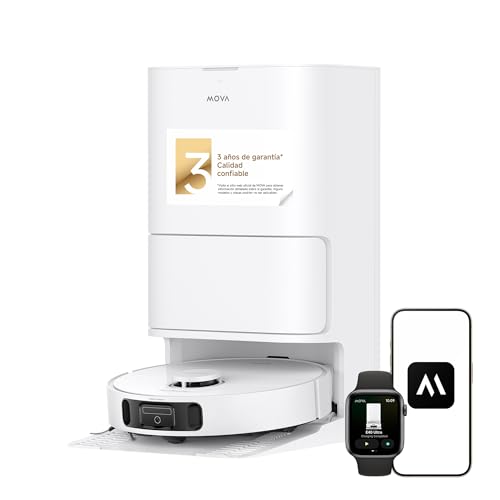
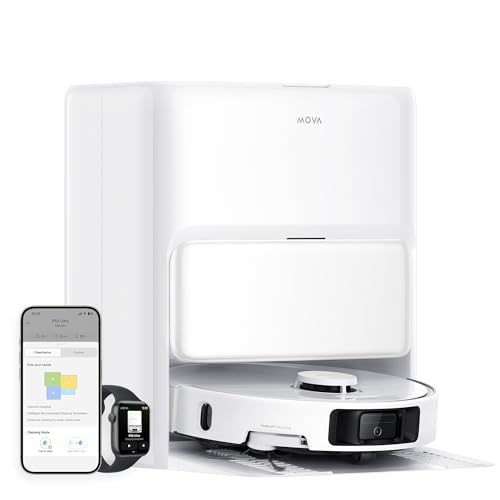
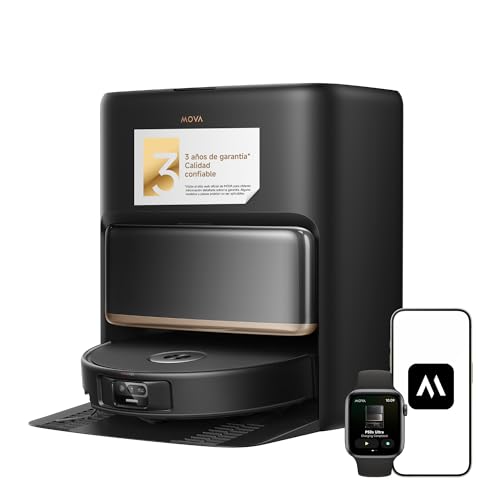
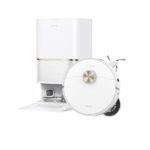
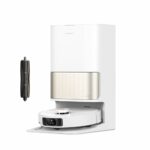
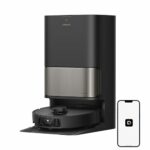
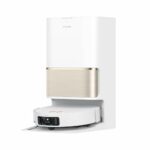
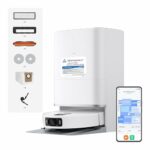
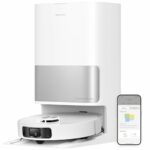
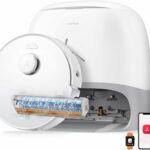
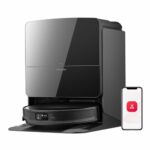
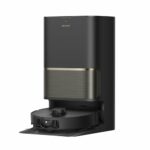
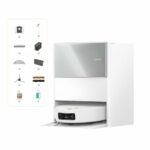
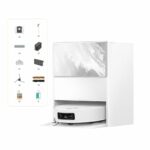
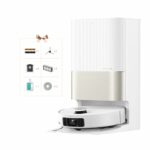
The Mova E40 Ultra, P50 Ultra and P50s Ultra represent three distinct approaches within the same manufacturer's 2025 lineup. Whilst all three share the same year of release and brand heritage, they've been designed with different user priorities in mind. The E40 Ultra sits as the entry point into Mova's multifunctional base ecosystem, delivering 19,000 Pa suction alongside essential automated cleaning features. The P50 Ultra builds upon this foundation with enhanced mechanical capabilities, maintaining the same suction power but introducing physical adjustments that affect how the robot handles different floor transitions and edges. The P50s Ultra takes a different path entirely, pushing suction to 24,000 Pa whilst incorporating dual AI cameras and a significantly lower profile that can make a real difference in homes with low-clearance furniture.
These aren't simply incremental upgrades. Each model targets specific household scenarios: the E40 Ultra suits those wanting reliable automated mopping and vacuuming without excessive complexity, the P50 Ultra appeals to homes with varied flooring where edge cleaning matters, and the P50s Ultra addresses environments demanding maximum suction, advanced obstacle recognition, and the ability to navigate beneath furniture most robots cannot reach.
Suction and brushing performance
The E40 Ultra and P50 Ultra share identical 19,000 Pa suction specifications, which handles everyday dust, pet hair and debris across hard floors and low-pile carpets without difficulty. The P50s Ultra steps up to 24,000 Pa, a meaningful increase when dealing with ground-in dirt on textured tiles or thicker rugs.
Where these models truly diverge is in brush configuration. The E40 Ultra and P50 Ultra employ a single SimpleCut brush design, which incorporates cutting elements to reduce hair tangles. The P50s Ultra switches to a dual HyperStream brush arrangement—two independently anchored brushes that actively prevent hair from wrapping around a central axle. In practice, this means less frequent manual cleaning of the main roller, particularly valuable in homes with long-haired occupants or shedding pets.
The P50 Ultra and P50s Ultra can elevate both main and side brushes during mopping runs. This prevents dirty water transfer from wet mops back onto cleaned carpets or rugs, and stops the side brush from flicking debris onto freshly mopped floors. The E40 Ultra lacks this capability, meaning you'll need to manually remove brushes or accept some cross-contamination when transitioning between floor types.
Side brush functionality shows similar differentiation. The E40 Ultra uses a fixed side brush with anti-tangle properties, adequate for general edge sweeping. The P50 Ultra and P50s Ultra add an extensible side brush that reaches further into corners and along skirting boards, combined with the ability to lift clear of the floor when not needed. For homes with intricate floor plans or furniture arrangements, this extension genuinely improves edge debris collection.
Mopping systems
All three models use dual rotating mops with extension mechanisms that push outward to reach baseboards and corners—what Mova terms their swing-out system. Each can lift mops 10.5 mm when encountering carpets or rugs, sufficient for low-pile surfaces but not enough for thick shag carpets. All three use cold water for floor mopping.
The key separation emerges in automation and intelligence. The P50s Ultra can automatically detach its mops at the base when you want vacuum-only cleaning, eliminating manual removal. The E40 Ultra and P50 Ultra require you to physically take the mops off if you're only vacuuming.
Dirt detection represents another P50s Ultra exclusive. This model monitors mop cleanliness and floor soil levels, adjusting cleaning intensity and triggering additional passes when sensors identify persistent grime. The E40 Ultra and P50 Ultra follow predetermined patterns without adaptive response to actual floor conditions.
All three wash mops with hot water at the base and dry them using warm air, preventing odour buildup and bacterial growth. This consistency across the range means mopping hygiene remains high regardless of model choice.
Navigation technology
The E40 Ultra and P50 Ultra rely on traditional LiDAR turret navigation combined with front-mounted 3D laser sensors for obstacle avoidance. This combination maps rooms accurately and detects objects in the robot's path, though without visual identification of what those objects actually are.
The P50s Ultra abandons the raised turret for a FlashPulse navigation system, contributing to its reduced 82.5 mm height. More significantly, it adds dual AI cameras capable of recognising up to 200 different objects. This visual intelligence allows the robot to identify specific items—shoes, cables, pet toys—and adjust behaviour accordingly rather than simply detecting "obstacle present".
Pet recognition appears on the E40 Ultra and P50s Ultra but not the P50 Ultra, allowing these models to detect animals and modify cleaning patterns to avoid startling them. Curtain detection works on the P50 Ultra and P50s Ultra, preventing the robot from becoming tangled in hanging fabric—a surprisingly common issue the E40 Ultra doesn't address.
Only the P50s Ultra offers remote camera access and LED night vision. You can view live camera feeds through the app and navigate the robot manually, useful for checking on pets or simply seeing what's blocking a cleaning run. The LED lighting enables this functionality even in dark rooms.
Battery capacity and runtime
The E40 Ultra and P50 Ultra use 5,200 mAh batteries, with the E40 Ultra specifically rated for 210 minutes of runtime. The P50 Ultra lacks published autonomy figures, though the identical battery suggests similar performance under equivalent conditions.
The P50s Ultra increases capacity to 6,400 mAh, a 23% boost that compensates for the higher power demands of 24,000 Pa suction and dual camera processing. Whilst specific runtime isn't listed, the larger battery should maintain cleaning sessions comparable to its siblings despite the increased power draw.
None of the models specify maximum recommended floor area, though 210-minute runtime on the E40 Ultra translates to substantial coverage—likely sufficient for homes up to 200 square metres depending on floor plan complexity and furniture density.
Smart features and obstacle handling
All three models incorporate CleanGenius AI for intelligent cleaning routines, though the implementation varies. The E40 Ultra manages 20 mm step climbing, the P50 Ultra improves to 22 mm, and the P50s Ultra handles simple steps without a specific millimetre rating—suggesting capability beyond the others' fixed thresholds.
The P50s Ultra includes AI-based stain recognition, identifying marks on floors and concentrating cleaning effort where actually needed. This works in conjunction with its dirt detection system to create a responsive cleaning approach the other models cannot match.
Voice control splits between built-in and external. The E40 Ultra and P50 Ultra support Alexa and Google Home integration but lack proprietary assistants. The P50s Ultra adds its own voice assistant alongside external platform compatibility, allowing direct interaction without relying on separate smart home ecosystems.
Multifunctional base capabilities
All three stations auto-empty dust into 3.2-litre bags, wash mops with hot water, and dry them with warm air. The E40 Ultra manages these core functions without automatic tray cleaning—you'll need to manually rinse the washing basin periodically to prevent buildup.
The P50 Ultra and P50s Ultra incorporate third-generation automatic tray cleaning, flushing the mop washing area after each cycle to maintain hygiene without user intervention. This seemingly minor addition significantly reduces maintenance frequency.
UV disinfection appears exclusively on the P50s Ultra, sterilising mops and internal surfaces to eliminate bacteria and odour-causing microorganisms. For households particularly concerned with hygiene—those with young children or allergy sufferers—this adds measurable value.
Detergent handling varies notably. The E40 Ultra and P50 Ultra require an optional add-on tank purchased separately, whilst the P50s Ultra integrates detergent dispensing as standard. This affects both initial cost and ongoing convenience.
Water tank capacities differ slightly: the E40 Ultra holds 4.5 litres clean and 4 litres dirty water, whilst the P50 Ultra and P50s Ultra reduce clean capacity to 4 litres and dirty to 3.5 litres. In practice, this rarely impacts cleaning sessions unless you're mopping exceptionally large areas in a single run.
Physical dimensions
The E40 Ultra and P50 Ultra both measure 350 mm diameter and 97 mm tall—standard proportions for robots with LiDAR turrets. The P50s Ultra maintains the 350 mm diameter but drops to 82.5 mm height, a reduction of 14.5 mm that opens access beneath furniture the others cannot reach. Low-profile beds, sofas with minimal clearance, and certain kitchen cabinets become cleanable rather than permanent exclusion zones.
Base footprints vary considerably. The E40 Ultra measures 340 mm wide, 590.5 mm tall, and 456.7 mm deep—a notably tall profile. The P50 Ultra and P50s Ultra share identical 420 mm width, 470 mm height, and 458 mm depth, trading vertical space for slightly increased width. The E40 Ultra's taller, narrower stance might suit tight spaces better, whilst the P50 Ultra and P50s Ultra's lower profile fits beneath wall-mounted cabinets more easily.
Real-world usage scenarios
The E40 Ultra suits homes prioritising automated mopping and vacuuming without requiring edge-cleaning perfection or advanced obstacle recognition. Its 210-minute battery handles substantial floor areas, and the 19,000 Pa suction manages typical household debris. The lack of automatic tray cleaning means slightly more hands-on maintenance, acceptable if you're already comfortable with periodic appliance upkeep.
The P50 Ultra targets users wanting better edge performance and reduced maintenance. The extendable side brush reaches corners more effectively, brush elevation prevents cross-contamination during mopping, and automatic tray cleaning reduces how often you need to intervene. The 22 mm step climbing handles slightly taller transitions than the E40 Ultra, useful in homes with varied flooring heights or raised doorway thresholds.
The P50s Ultra addresses demanding environments: homes with pets requiring visual recognition and gentle navigation, furniture arrangements needing the 82.5 mm profile to access beneath, or users wanting remote camera monitoring. The 24,000 Pa suction tackles embedded dirt more aggressively, the dual HyperStream brushes reduce hair maintenance, and automatic mop removal plus dirt detection create a genuinely hands-off experience. The integrated detergent tank and UV disinfection complete a package aimed at minimal user intervention.
For pet owners, the E40 Ultra and P50s Ultra's animal recognition helps, but the P50s Ultra's dual cameras and higher suction make it more capable with heavy shedding. The HyperStream brushes particularly matter here—less time pulling hair from rollers means more time the robot spends actually cleaning.
Conclusion: which model fits your needs?
Choose the Mova E40 Ultra if you want reliable automated cleaning without premium features, your home has standard furniture clearances above 97 mm, and you're comfortable with occasional manual tray cleaning. The 210-minute runtime handles large homes, and the 19,000 Pa suction manages everyday dirt effectively. This represents the most accessible entry into Mova's multifunctional base ecosystem.
Choose the Mova P50 Ultra if edge cleaning matters and you want reduced maintenance compared to the E40 Ultra. The extendable side brush improves corner coverage, brush elevation prevents mopping cross-contamination, and automatic tray cleaning cuts down on manual intervention. The 22 mm step climbing suits homes with varied floor transitions, whilst the base's lower height fits beneath more wall-mounted storage.
Choose the Mova P50s Ultra if you need maximum capability: the 82.5 mm height accesses furniture others cannot, 24,000 Pa suction handles stubborn dirt, and dual cameras with 200-object recognition navigate complex environments intelligently. Automatic mop removal, dirt detection, integrated detergent, and UV disinfection create the most hands-off experience. Pet owners benefit from visual recognition and reduced brush maintenance, whilst the remote camera access adds monitoring functionality beyond simple cleaning. This suits larger homes, households with multiple pets, or anyone prioritising minimal ongoing involvement in robot maintenance.