

Introduction
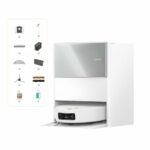
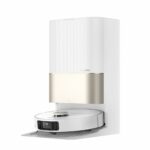
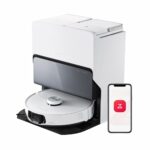
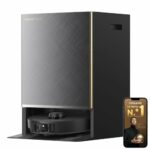
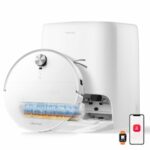
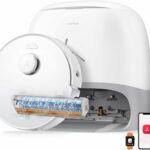
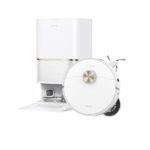
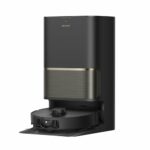
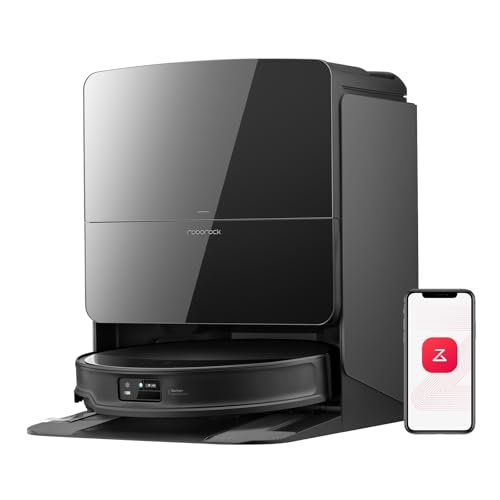
The Roborock Saros 10R and Dreame X50 Ultra Blanca represent the latest generation of premium robot vacuum cleaners launched in 2025. Both models sit firmly in the high-end segment, equipped with multifunctional bases that handle not just self-emptying but also mop washing and drying. These aren't entry-level devices; they're designed for users who want comprehensive automation without daily maintenance.
What sets these robots apart is their approach to cleaning intelligence. The Roborock model features the StarSight 2.0 navigation system paired with RR Mason 11.0 processing, whilst the Dreame relies on a retractable LiDAR system combined with AI Sage 13.0 Octa-core processing. Both share identical 6,400mAh batteries offering 180 minutes of runtime, making them suitable for larger properties where sustained cleaning power matters.
Suction Power and Brushing
The Dreame X50 Ultra Blanca delivers 20,000Pa of suction, edging ahead of the Roborock Saros 10R's 18,500Pa. In practical terms, this translates to slightly stronger pickup on carpets and better extraction of embedded dirt from textile surfaces. The difference isn't enormous, but homes with high-pile rugs or heavy pet traffic might notice the advantage.
Where things get more interesting is the main brush technology. The Roborock employs its DuoDivide anti-tangle system, which channels hair towards the central suction area to minimise wrapping around the brush bar. The Dreame takes a different route with dual HyperStream brushes—two independently anchored rollers designed to prevent hair entanglement from the outset. Both systems tackle the same problem using different engineering approaches.
Both robots lift their main brushes when mopping and feature extensible side brushes that reach into corners more effectively. The side brushes also elevate during wet cleaning and incorporate anti-tangle designs, making them equally capable when it comes to edge cleaning and hair management.
Mopping Performance
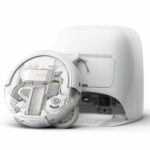
Each model uses dual rotating mops that extend to reach skirting boards and edges. The Dreame X50 Ultra Blanca adds Roboswing functionality, allowing the robot to perform subtle lateral movements that push the mop slightly beneath furniture overhangs and into tighter spaces. This can make a noticeable difference when cleaning around kitchen units or bathroom cabinets.
Mop lift capacity differs considerably. The Roborock Saros 10R raises its mops between 12mm and 22mm, offering greater clearance when transitioning onto carpets or rugs. The Dreame lifts to 10.5mm, which still prevents most floor coverings from getting wet but provides less margin for thicker textiles.
Temperature plays a role here too. The Roborock mops floors using warm water, which helps dissolve grease and stubborn marks more effectively than cold water. The Dreame sticks with cold water for floor mopping, though both models wash their mops at the base using hot water. This distinction matters if you're dealing with kitchen spills or sticky residues that benefit from heat during the actual cleaning process.
Both robots detect dirt on their mops and on the floor itself, triggering additional cleaning passes or mop washing cycles as needed. They also automatically detach their mops at the base when you want aspiration-only operation, removing the need for manual intervention.
Navigation Systems
The Roborock Saros 10R uses StarSight 2.0 navigation, combining dual AI cameras with 3D laser sensors to map spaces and avoid obstacles. It recognises 108 different object types, including pets, and provides remote camera access for monitoring your home whilst the robot operates.
The Dreame X50 Ultra Blanca counters with retractable LiDAR paired with dual AI cameras and frontal 3D sensors. Its object database extends to 200 recognised items, and it includes curtain detection—a feature the Roborock lacks. This means the Dreame can identify and navigate around hanging fabrics without getting tangled, useful for homes with floor-length drapes or room dividers.
Both models feature LED lighting for night vision, allowing them to navigate accurately in low-light conditions. They also integrate their own voice assistants alongside compatibility with Alexa and Google Home. The Dreame runs on AI Sage 13.0 Octa-core processing, whilst the Roborock relies on RR Mason 11.0—different platforms that deliver comparable real-world responsiveness.
Battery and Autonomy
Identical 6,400mAh batteries power both robots, each delivering 180 minutes of continuous operation. This runtime suits properties up to around 250-300 square metres, depending on floor type and cleaning mode intensity. Neither manufacturer specifies charging times in the available data, but the shared battery capacity suggests similar recharge durations.
In practice, this level of autonomy means both robots can handle multi-room cleaning sessions without needing to return to base mid-cycle, unless they're washing mops during a mopping run. For larger homes, the ability to resume cleaning after recharging ensures complete coverage regardless of property size.
Smart Features
Obstacle climbing capabilities differ between the two. The Roborock Saros 10R manages simple steps up to 4cm, whilst the Dreame X50 Ultra Blanca clears obstacles up to 6cm. This extra clearance helps the Dreame navigate thicker door thresholds, raised shower trays, or uneven flooring transitions more confidently.
Both robots include their own voice assistants, allowing you to issue commands directly without relying on external smart home ecosystems. They also integrate with Alexa and Google Home for broader automation possibilities.
Multifunctional Base Station
The Roborock base incorporates 2.0 self-cleaning technology for its wash tray, whilst the Dreame employs a third-generation system. Both wash mops with hot water and dry them using heated air to prevent odours and bacterial growth. The Dreame adds UV disinfection, providing an extra layer of hygiene that the Roborock doesn't offer.
Dust bag capacity favours the Dreame at 3.2 litres compared to the Roborock's 2.5 litres. This translates to fewer bag changes over time, particularly in homes with pets or high dust accumulation. Water tank sizes also lean towards the Dreame: 4.5 litres of clean water and 4 litres of dirty water versus 4 litres and 3 litres respectively. Larger tanks mean less frequent refilling and emptying, which matters during extended cleaning sessions.
The Dreame offers an optional plumbing connection kit, purchased separately, that allows direct connection to water and drainage pipes. This removes the need for manual tank maintenance entirely. The Roborock doesn't provide this option, keeping you tied to manual refills and emptying.
Both bases include detergent dispensers that add cleaning solution during mop washing, ensuring consistently fresh mops throughout operation.
Physical Dimensions
At 79.8mm tall, the Roborock Saros 10R sits lower than the Dreame X50 Ultra Blanca's 89mm height. This 9.2mm difference determines whether the robot can navigate beneath low-clearance furniture like sofas, beds, or kitchen units. If you have furniture with limited ground clearance, the slimmer Roborock profile provides better access.
Diameter measurements are nearly identical—353mm versus 350mm—so both robots navigate through doorways and around furniture legs with equal ease. The robot dust bins differ more noticeably: 270ml in the Roborock against 395ml in the Dreame. A larger onboard bin means the robot can collect more debris before triggering a return to base for emptying, though with auto-empty bases this becomes less critical.
Base station footprints diverge. The Roborock measures 381mm wide, 488mm tall, and 475mm deep. The Dreame is narrower at 340mm but taller at 590.5mm and slightly shallower at 456.7mm. The Roborock occupies more floor space but fits under lower shelving, whilst the Dreame needs more vertical clearance but claims less width.
Real-World Usage Considerations
For larger homes, the Dreame's bigger dust bag and water tanks reduce maintenance frequency. The 6cm obstacle climbing also helps in properties with varied flooring levels or substantial door thresholds. The wider object recognition database and curtain detection suit homes with complex layouts or abundant soft furnishings.
Homes with low furniture benefit from the Roborock's slimmer profile. The warm water mopping proves advantageous in kitchens or dining areas prone to grease and sticky spills. The higher mop lift offers better protection for thicker rugs or carpets during mixed-surface cleaning.
Pet owners will find both models capable, though the Dreame's higher suction and larger onboard dust bin provide a slight edge during heavy shedding periods. Both anti-tangle brush systems handle hair effectively, so the choice comes down to other factors rather than pet-specific performance alone.
If you prefer minimal intervention, the Dreame's optional plumbing kit and larger consumable capacities align better with hands-off operation. The UV disinfection also appeals to households prioritising hygiene, particularly with young children or allergy concerns.
Conclusion: Which to Choose?
Choose the Roborock Saros 10R if: you need a slimmer robot to access low-clearance furniture, value warm water mopping for better grease removal, want higher mop lift for thicker carpets, or prefer a more compact base footprint with adequate capacity for typical homes.
Choose the Dreame X50 Ultra Blanca if: you want maximum suction power and larger consumable capacities, need better obstacle climbing for uneven floors, value UV disinfection and advanced base self-cleaning, prefer the option of plumbing connection for zero manual tank maintenance, or have curtains and complex layouts that benefit from broader object recognition.
Both represent excellent choices within the premium segment. The Roborock excels through refined engineering and practical features like warm water mopping and superior mop lift. The Dreame counters with raw power, larger capacities, and future-proofing through optional plumbing integration. Your decision ultimately rests on whether you prioritise access to tight spaces and warm water cleaning, or prefer maximum automation with higher suction and extended maintenance intervals.