✨ VS Analyses · VacuumSpain comparison technology. Explanation created with AI from verified technical data.
Introduction
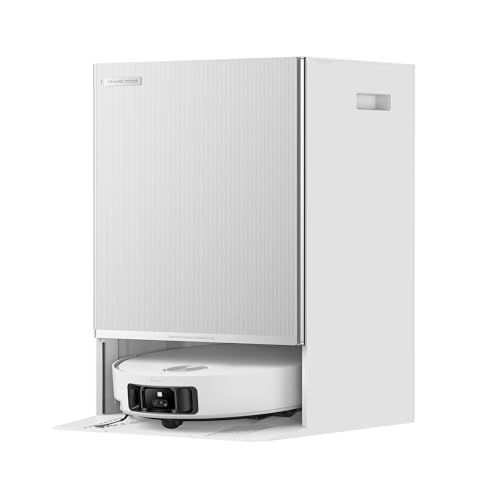
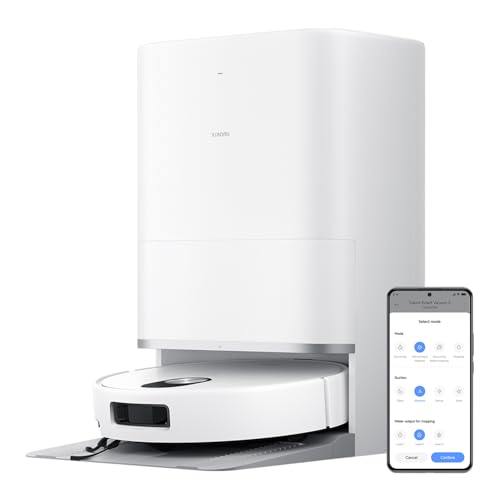
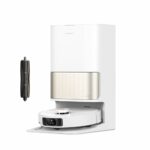
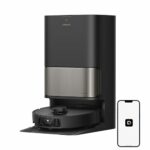
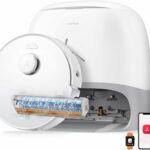
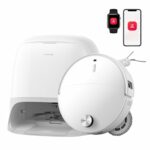
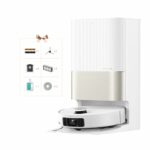
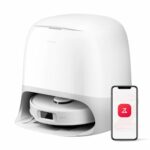
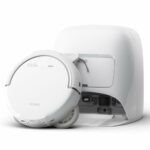
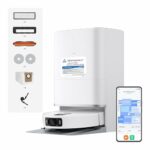
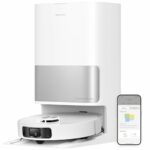
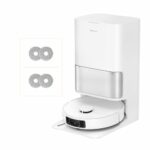
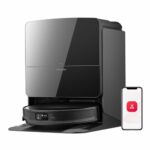
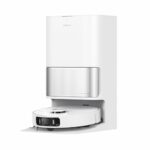
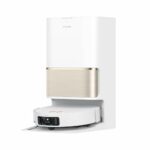
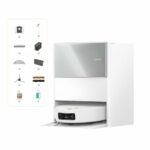
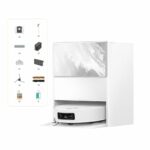
We're looking at two 2025 proposals that share a similar philosophy but with different approaches. The Dreame Matrix10 Ultra represents the brand's most ambitious technological offering, whilst the Xiaomi Robot Vacuum 5 seeks to provide a balance between performance and functionality. Both units feature multifunction bases that wash and dry the mops, a fundamental aspect for achieving real mopping results.
The Dreame model is designed for users seeking total automation and advanced technology, especially in homes with pets or surveillance needs. The Xiaomi, more compact in its base and with more straightforward functions, may appeal to those who prioritise efficiency without additional complications.
Power and Suction
The suction difference is notable: 30000 Pa from the Dreame Matrix10 Ultra against 20000 Pa from the Xiaomi Robot Vacuum 5. In practice, those additional 10000 Pa translate into better performance on carpets and picking up ingrained dirt. For homes with pets that shed a lot of hair or high-traffic areas, this advantage can make a difference.
The brushing system also differs. The Dreame opts for its dual HyperStream brush, specifically designed to reduce tangling of long hairs thanks to its anchoring at one end. The Xiaomi features the TriCut 3.0, which combines bristles with blades to cut hairs that become tangled. Both systems are anti-tangle, although they work differently.
An important detail: the Dreame's main brush rises during mopping, something the Xiaomi doesn't do. This prevents the brush from getting unnecessarily wet and allows cleaner mopping without dragging dry dust. Both units raise the side brush in mopping mode and feature side extension to better reach corners.
Mopping
Both models use two rotating mops, currently the most effective system. Mop lifting works differently: the Xiaomi reaches 15 mm, whilst the Dreame stays at 10.5 mm. Those extra millimetres on the Xiaomi can be useful for short-pile carpets, although neither is designed for thick carpets.
Hot water mop washing is present in both. The Dreame washes at 75°C and the Xiaomi goes up to 80°C, temperatures that help eliminate grease and bacteria from the mops during cleaning cycles. Drying is also with hot air in both cases, which speeds up the process and prevents bad odours.
Important differences appear here. The Dreame Matrix10 Ultra can leave the mops at the base automatically when you only want to vacuum, without having to remove them manually. The Xiaomi doesn't offer this function. Additionally, the Dreame detects the level of dirt both on the mops and on the floor, adjusting mopping intensity or going back over particularly dirty areas. The Xiaomi lacks these detection sensors.
Mop extension is present in both, although the Dreame adds its Roboswing 3.0 system, which makes lateral movements to get the mop under furniture and overhangs. This improves coverage in difficult areas.
Navigation System
Both robots feature retractable LIDAR to map the home and navigate precisely. They also incorporate front 3D laser sensor to detect obstacles at floor level. Up to here, similarities.
The big difference lies in the camera. The Dreame Matrix10 Ultra integrates dual RGB camera with artificial intelligence capable of recognising up to 240 different types of objects. It can identify pets, curtains, cables and other elements to adapt its behaviour. Additionally, it includes night vision LED and allows remote camera access from your mobile, functioning as a surveillance system when you're not at home.
The Xiaomi Robot Vacuum 5 doesn't have a camera. Its navigation is based exclusively on LIDAR and the 3D sensor, which work well for avoiding obstacles, but without the Dreame's level of intelligent recognition. For users who value the extra security of seeing what's happening at home or have pets they want to monitor, this absence may be relevant.
The Dreame also incorporates its own voice assistant, allowing you to give it commands directly without going through your mobile or smart speakers. The Xiaomi doesn't have this function.
Autonomy and Battery
The Dreame Matrix10 Ultra's battery has 6400 mAh compared to the Xiaomi's 5200 mAh. This translates into 260 minutes of autonomy against 140 minutes. We're talking about more than double the continuous operating time.
In large homes, this difference is noticeable. The Dreame can complete cleaning of large surfaces without needing to return to charge mid-cycle. The Xiaomi, with its 140 minutes, is still sufficient for medium-sized flats, but in houses over 120-150 m² it will probably need to pause to recharge.
Smart Functions
Neither features a robotic arm, but there is an important difference in obstacle-climbing capability. The Dreame Matrix10 Ultra can climb steps up to 8 cm, an exceptional figure that allows it to overcome significant level changes between rooms or access terraces with high thresholds. The Xiaomi stays at 20 mm, sufficient for thin carpets and small rises, but far from the Dreame's capability.
This characteristic of the Dreame model is especially useful in homes with different floor levels or outdoor access with steps. The Xiaomi will need manual assistance in these cases.
Multifunction Cleaning Base
Both bases are complete multifunction: they auto-empty dust, wash mops with hot water and dry them with hot air. They also feature self-cleaning of the washing tray, although the Dreame boasts its 3.5th generation system.
Tank capacity favours the Dreame: 5.5 litres of clean water and 4 litres of dirty water, compared to 4 litres and 3.8 litres in the Xiaomi. The dust bag is also larger in the Dreame, with 3.2 litres versus 2.5 litres. These differences mean fewer trips to empty and refill tanks, something appreciated in day-to-day use.
The Dreame incorporates triple detergent tank, allowing different products to be used depending on floor type or dirt level. The Xiaomi doesn't have an integrated detergent tank. Additionally, the Dreame offers automatic changing of three pairs of mops, rotating them to always maintain fresh mops during mopping. The Xiaomi doesn't have this function.
The plumbing connection kit is available for the Dreame as an optional accessory, eliminating the need to manually refill and empty tanks. The Xiaomi doesn't offer this possibility.
Dimensions
The robots have the same diameter: 350 mm. The Xiaomi's height is 88 mm with its retractable turret, whilst the Dreame also features a retractable turret but doesn't specify the exact height in retracted mode. In any case, both are designed to slip under low furniture.
The bases differ more. The Dreame's measures 416 mm wide, 590 mm high and 457 mm deep. The Xiaomi's is somewhat more compact: 360 mm wide, 572 mm high and 470 mm deep. The Xiaomi takes up less lateral space, although it's slightly deeper. It's advisable to measure the available space before deciding, especially if space is tight.
Real-world user experience
For large houses, the Dreame Matrix10 Ultra has a clear advantage. Its 260-minute autonomy and larger tanks allow complete cleaning without interruptions. The ability to climb 8 cm steps also opens up possibilities in homes with level changes or terrace access.
If you live with pets, the Dreame offers more. Its dual HyperStream brush handles long hairs better, the 30000 Pa power picks up more ingrained dirt and the camera with pet recognition avoids accidents with toys or food. Additionally, you can monitor them remotely through the camera.
The Dreame's mopping system is more sophisticated: it detects dirt to re-mop problem areas, can leave the mops at the base automatically and features triple detergent tank for different needs. Automatic changing of three pairs of mops also makes a difference in long cleaning sessions.
The Xiaomi Robot Vacuum 5 offers a more straightforward package. Its base is somewhat more compact, which may matter in limited spaces. The 15 mm mop lifting exceeds the Dreame's, useful for short-pile carpets. It doesn't have a camera or advanced AI functions, but its LIDAR navigation with 3D sensor works well for most homes.
In medium-sized flats without special complications, the Xiaomi performs perfectly. Its 140-minute autonomy is sufficient for 80-100 m² and maintenance is simple. That said, you'll have to remove the mops manually when you only want to vacuum and you won't have dirt detection or automatic mopping adjustments.
Conclusion: Which to choose?
Choose the Dreame Matrix10 Ultra if you're looking for the maximum level of automation and technology. It's the option for large houses where its 260-minute autonomy and ample tanks shine. If you have pets, its AI camera, object recognition and greater suction power justify the investment. The ability to climb 8 cm steps is decisive in homes with level changes. The mopping system with dirt detection, triple detergent and automatic mop changing offers superior results. It also gains points if you value remote surveillance through the camera or the optional plumbing connection kit to forget about tank maintenance.
Choose the Xiaomi Robot Vacuum 5 if you prefer an efficient solution without extra complications. Its more compact base fits better in reduced spaces and offers essential functions well executed: auto-emptying, washing with water at 80°C and hot air drying. The 15 mm mop lifting exceeds the Dreame's, interesting if you have short-pile carpets. For flats up to 100 m² without pets or significant level changes, it performs perfectly. It's a solid option if you don't need a camera, advanced dirt detection or automatic mop management, and you value the relationship between performance and price.