✨ VS Analyses · VacuumSpain comparison technology. Explanation created with AI from verified technical data.
Introduction
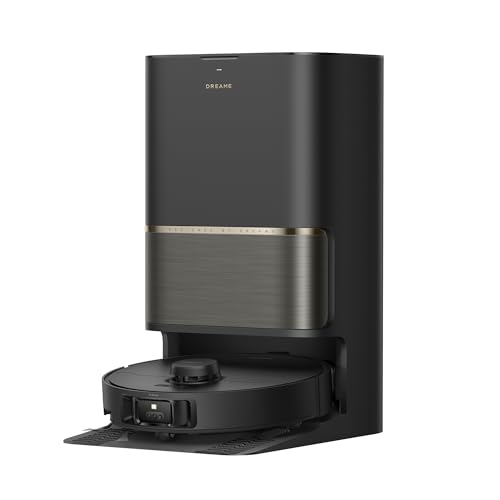
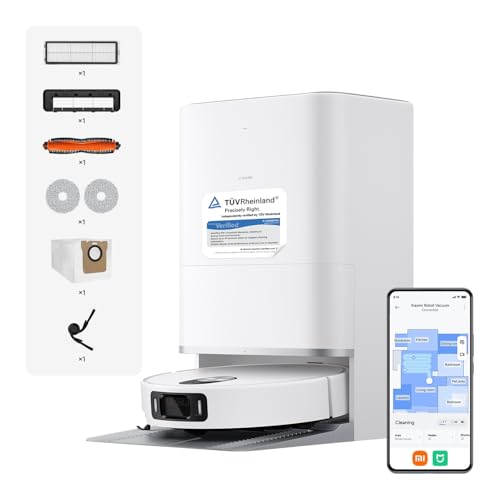
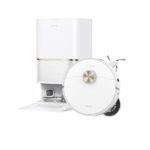
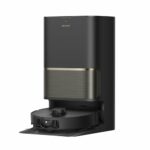
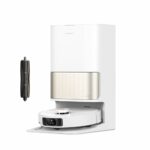
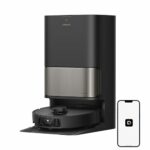
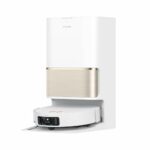
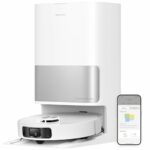
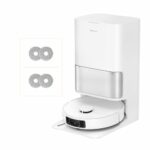
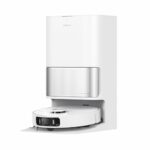
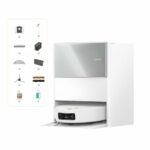
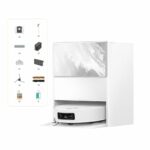
The Dreame L50s Pro Ultra and the Xiaomi Robot Vacuum 5 Pro represent two advanced propositions in the robot vacuum segment with multifunction base. The Dreame model arrives in 2026 as a technological evolution with notable improvements in power and versatility, whilst the Xiaomi unit, launched in 2025, positions itself as a solid alternative with well-balanced features.
Both units are designed for users seeking complete automation in home cleaning, with advanced mopping systems and bases that handle automatic maintenance. The main difference lies in each manufacturer's philosophy: Dreame opts for maximum power and additional functions, whilst Xiaomi offers a technical balance with some clever solutions of its own.
Power and Suction
The most evident difference between these models is in suction capacity. The Dreame L50s Pro Ultra develops 30,000 Pa, a figure that exceeds the Xiaomi Robot Vacuum 5 Pro by 10,000 Pa. In practice, this translates to greater capacity to extract ingrained dirt from carpets and vacuum heavier particles or those adhered to surfaces.
The brushing system also marks important differences. The Dreame incorporates dual HyperStream brush, a specific design that significantly reduces hair tangles by having two brushes anchored at one end. The Xiaomi, on the other hand, uses the TriCut 3.0 system, which combines bristles with blades to cut tangled hairs. Both are effective, but work differently: one prevents tangles from the design, the other cuts them once they've occurred.
Both models lift the main brush during mopping and feature an extendable, anti-tangle side brush. However, the Dreame adds an additional advantage: its side brush also lifts during mopping, something the Xiaomi doesn't offer. This can make a difference in mopping effectiveness, as it prevents the side brush from interfering with the wet mops or dragging wet dirt.
Mopping
Both robots mop with two rotating mops, but each one's approach presents interesting nuances. The Dreame L50s Pro Ultra includes mop extension with Roboswing movement, a system that makes the robot perform a specific movement to get the mop under furniture and edges. The Xiaomi also extends its mops to reach edges, although without that particular movement.
Mop lifting is an aspect where the Xiaomi takes the advantage: its mops lift up to 15 mm, compared to the Dreame's 10.5 mm. This difference can be relevant when passing over carpets or transitions between floors, where greater lifting ensures that wet mops don't touch surfaces that shouldn't get wet.
An exclusive function of the Dreame is automatic mop detachment at the base. This allows the robot to vacuum without the mops installed, something useful when you only need to vacuum without mopping. The Xiaomi doesn't offer this possibility, so the mops remain permanently installed, although lifted when not mopping.
The bases of both units wash the mops with hot water and dry them with hot air, which guarantees good maintenance and prevents bad odours. Both models detect dirt on both the mops and the floor to adjust cleaning. The difference is that the Dreame specifically mentions that its tray self-cleaning is third generation, suggesting improvements in this process, whilst the Xiaomi simply confirms that it also performs this self-cleaning.
Navigation System
The Dreame L50s Pro Ultra uses 3D LiDAR turret, whilst the Xiaomi incorporates retractable LiDAR. This design difference has implications for the robot's height, as we'll see later. Both systems are precise for mapping and navigating around the home.
Both models feature an artificial intelligence camera, front 3D laser sensor, LED for night vision and remote camera access. However, the Dreame incorporates dual AI camera, which can improve precision in object and environment recognition.
The Dreame recognises 220 different objects, exceeding by 20 those identified by the Xiaomi. Even more relevant: the Dreame model detects pets and curtains, two elements that the Xiaomi doesn't specifically recognise. This can translate into more adapted behaviours in homes with animals or in managing spaces with long curtains that might interfere with the robot.
Both units integrate intelligent cleaning via AI and stain recognition, although the Dreame specifies that it uses the CleanGenius AI system. Both are compatible with external voice assistants such as Alexa or Google Home, but only the Dreame includes its own voice assistant.
Autonomy and Battery
Both robots feature 5,200 mAh batteries, an identical capacity that should offer similar performance under equivalent conditions. The Xiaomi specifies an autonomy of 140 minutes, data that the Dreame doesn't detail in the available information.
Considering that the Dreame develops greater suction power, it's likely that its energy consumption is higher when working at maximum capacity, although this will also depend on the selected cleaning modes and type of surface.
Smart Functions
The Xiaomi Robot Vacuum 5 Pro can overcome obstacles up to 20 mm in height, a clearly specified capability. The Dreame mentions the ability to overcome simple steps, but without detailing the exact height. In practice, this function is useful for transitions between rooms, thick carpets or small level changes.
Neither model incorporates a robotic arm, a technology that's only present in some very high-end units and isn't common in these segments.
Multifunction Cleaning Base
Both bases perform the essential functions: auto-emptying of the dust container, washing mops with hot water and drying with hot air. Both feature self-cleaning of the washing tray, which reduces manual maintenance.
The most significant difference is in the detergent tank: the Dreame includes it as standard, allowing cleaning product to be added that's automatically dispensed during mop washing. The Xiaomi doesn't incorporate this tank, so it works solely with water.
In terms of capacities, the Dreame offers a 3.2-litre dust bag compared to the Xiaomi's 2.5 litres. The clean water tanks are 4.5 litres in the Dreame and 4 litres in the Xiaomi, whilst the dirty water tanks are 4 litres and 3.8 litres respectively. These differences can translate into slightly more spaced maintenance intervals in the Dreame model.
The Dreame includes the possibility of purchasing an optional plumbing connection kit, which is bought separately. The Xiaomi doesn't offer this option. Neither comes with factory-integrated plumbing connection nor UV disinfection.
Dimensions
Here we find one of the most relevant differences for certain types of dwelling. The Xiaomi Robot Vacuum 5 Pro measures 88 mm in height, whilst the Dreame L50s Pro Ultra reaches 103.8 mm. This represents almost 16 mm difference, which can determine whether the robot passes or not under certain low furniture, sofas or beds.
The diameter is identical in both: 350 mm. This uniformity in width means that both will navigate equally well through narrow spaces or between chair legs.
The bases have similar but not identical dimensions. The Dreame's measures 340 mm wide, 590 mm high and 457 mm deep. The Xiaomi's is somewhat wider (360 mm) and deeper (470 mm), but less tall (572 mm). In the end, they occupy similar space, although the distribution of that space varies slightly.
Real-World User Experience
For homes with pets, the Dreame L50s Pro Ultra offers clear advantages: greater suction power for ingrained hair, dual HyperStream brush system that minimises tangles, and specific animal recognition. The Xiaomi also handles hair well thanks to the TriCut 3.0 system, but lacks pet recognition.
In homes with low furniture, the Xiaomi has a decisive advantage thanks to its 88 mm height. The Dreame, at 103.8 mm, may have difficulties accessing under sofas or beds that the Xiaomi would reach without problem.
For those seeking maximum maintenance autonomy, the Dreame is more practical: larger dust bag, bigger water tanks, included detergent tank and ability to automatically detach the mops. This translates into fewer manual interventions.
In large houses or with lots of carpet surface, the Dreame's 30,000 Pa power makes a real difference compared to the Xiaomi's 20,000 Pa. For small flats or with predominantly hard floors, this difference is less determining.
Conclusion: Which to Choose?
Choose the Dreame L50s Pro Ultra if: you need maximum suction power, you have pets at home, you value the integrated detergent tank and the ability to automatically detach the mops, you prefer greater capacity in the dust bag and water tanks, or you're looking for the broadest recognition of objects and situations. Also if you're interested in having your own voice assistant and you're not concerned about the robot being somewhat taller.
Choose the Xiaomi Robot Vacuum 5 Pro if: you have low furniture and need a lower-height robot that accesses more spaces, you prefer greater mop lifting (15 mm compared to 10.5 mm), you're looking for a technically solid option without needing the Dreame's additional functions, or you simply value Xiaomi's balanced proposition with a probably more competitive price.