✨ VS Analyses · VacuumSpain comparison technology. Explanation created with AI from verified technical data.
Introduction
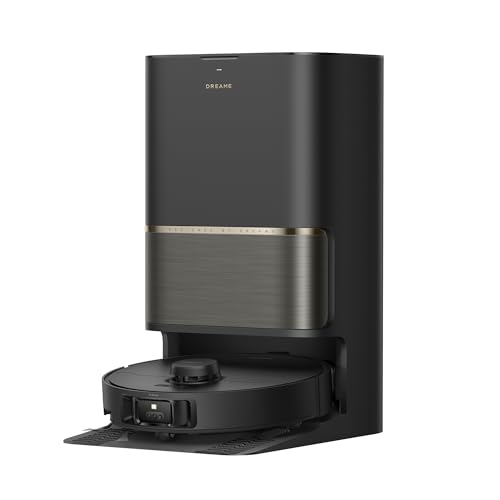
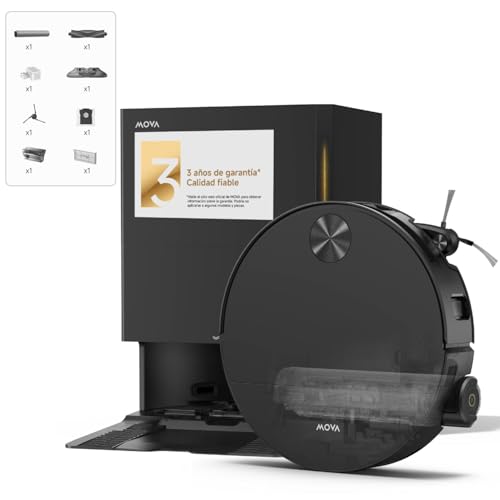
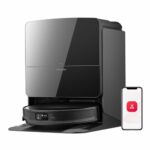
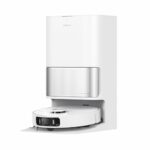
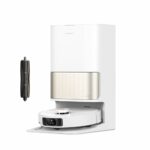
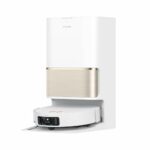
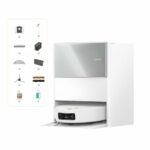
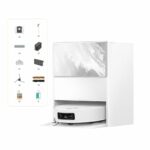
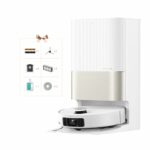
The Dreame L50s Pro Ultra and Mova S70 Roller represent two distinct approaches to premium robot vacuum cleaning from manufacturers within the same corporate family. Both models launched in 2026, though they target slightly different user priorities through their technical specifications and design philosophies.
The L50s Pro Ultra positions itself as a high-end solution with dual rotating mops and advanced artificial intelligence capabilities. The S70 Roller takes a different path with its 270mm roller mopping system, prioritising edge-to-edge coverage with a more compact base station footprint. Understanding which model suits your home depends on factors like cleaning preferences, available space for the base station, and whether you value advanced smart features over straightforward functionality.
Power and Suction
The Dreame L50s Pro Ultra delivers 30,000 Pa of suction power, giving it a 2,000 Pa advantage over the Mova S70 Roller's 28,000 Pa. In practice, this translates to slightly better performance on carpets and when dealing with embedded debris in textile fibres.
Where the models diverge significantly is in brush configuration. The L50s Pro Ultra employs a dual HyperStream brush system, which uses two counter-rotating brush elements anchored at one end. This design minimises hair tangles considerably. The S70 Roller opts for a single anti-tangle brush, effective but not quite matching the dual-brush approach for homes with long-haired occupants or pets.
The Dreame model can lift its main brush during mopping operations, preventing the brush from getting wet and ensuring it doesn't interfere with the mopping process. The Mova unit lacks this capability. Both robots feature extendable and liftable side brushes with anti-tangle properties, ensuring thorough edge cleaning without hair build-up on the side sweeper.
Mopping
This comparison reveals fundamentally different mopping philosophies. The L50s Pro Ultra uses dual rotating mops that extend outwards and incorporate RoboSwing technology, allowing the robot to wiggle slightly and push the mop pads under furniture edges and skirting boards. The S70 Roller employs a 270mm-wide roller that extends to reach edges through sheer width rather than movement.
Mop lift height differs slightly: 12mm on the S70 Roller versus 10.5mm on the L50s Pro Ultra. Both heights prove sufficient for most low-pile rugs and carpets, though the extra 1.5mm on the Mova model provides a marginal advantage with thicker floor coverings.
The Dreame robot automatically removes its mops at the base station when switching to vacuum-only mode, eliminating any need for manual intervention. The Mova model keeps its roller attached. For households that frequently alternate between mopping and vacuuming specific zones, this automation saves time.
Dirt detection sets the L50s Pro Ultra apart. It monitors both the cleanliness of the mop pads and the floor surface itself, triggering additional cleaning passes when necessary. The S70 Roller follows predetermined patterns without adaptive cleaning based on detected soil levels. This matters most in kitchens or high-traffic areas where spills and concentrated dirt accumulate unpredictably.
Navigation System
The L50s Pro Ultra incorporates a third-generation LiDAR turret combined with dual AI cameras, creating a comprehensive mapping and obstacle recognition system. It can identify 220 different object types, including pets and curtains, adjusting its behaviour accordingly. The front-facing LED provides night vision capabilities, and you can access the camera remotely to check on your home.
The Mova S70 Roller uses CovertSense dToF navigation with a frontal 3D laser sensor. Whilst effective for mapping and basic obstacle avoidance, it lacks the camera-based artificial intelligence and cannot recognise specific objects like pets or fabrics. There's no remote camera access, no LED lighting for low-light navigation, and no CleanGenius AI system for intelligent cleaning decisions.
For homes with pets, the Dreame model's ability to recognise animals and adjust cleaning patterns proves valuable. The curtain detection prevents the robot from getting tangled in hanging fabrics. These features simply don't exist on the S70 Roller, which treats all obstacles as generic objects to avoid.
Battery and Autonomy
Both models share identical 5,200 mAh battery capacity. Neither manufacturer provides specific runtime figures or recommended coverage areas in the available specifications, making direct autonomy comparisons impossible based solely on the data at hand.
Smart Features
The L50s Pro Ultra can climb obstacles up to 22mm when encountering simple steps or thresholds. The S70 Roller matches this 22mm climbing ability, ensuring both robots handle standard door thresholds and minor floor transitions without difficulty.
The Dreame model includes a built-in voice assistant, allowing direct voice control without external smart speakers. The S70 Roller supports external assistants like Alexa and Google Home but lacks its own integrated voice system. This built-in assistant can be convenient for quick commands without relying on separate devices.
Multi-Function Cleaning Base
Both base stations handle automatic dust emptying into 3.2-litre bags, wash mops with hot water, and dry them with heated air. The L50s Pro Ultra features third-generation automatic cleaning of the washing tray itself, whilst the S70 Roller also cleans its tray but without the generational designation.
The key difference lies in the detergent dispenser. The Dreame base includes a dedicated compartment for cleaning solution, automatically adding it during mop washing cycles. The Mova station lacks this feature, requiring you to add detergent manually to the water tank if desired.
Water tank capacities differ slightly. The S70 Roller holds 5 litres of clean water versus 4.5 litres on the L50s Pro Ultra, whilst dirty water capacity reverses: 4 litres versus 4.5 litres respectively. These differences prove negligible in real-world use for most homes.
A plumbing connection kit can be purchased separately for the L50s Pro Ultra, allowing permanent water supply and drainage connections. This option isn't available for the S70 Roller. Whilst convenient for those wanting minimal maintenance, it requires installation and isn't essential for standard operation.
Dimensions
The S70 Roller stands 90mm tall, considerably lower than the L50s Pro Ultra's 103.8mm height. This 13.8mm difference means the Mova robot fits under more furniture, particularly low-clearance sofas and beds common in modern furniture designs. Both share a 350mm diameter.
Base station dimensions tell an interesting story. Whilst width remains identical at 340mm and height differs moderately (503mm versus 590mm), the depth varies dramatically: 255mm for the S70 Roller base compared to 457mm for the L50s Pro Ultra station. The Mova base occupies significantly less floor space, particularly important in smaller homes or when wall space is limited. The Dreame station's extra depth accommodates the automatic mop removal mechanism and detergent dispenser.
Real-World Usage Experience
For homes with pets, particularly long-haired breeds, the L50s Pro Ultra's dual HyperStream brush and pet recognition capabilities provide tangible benefits. The brush design genuinely reduces maintenance time spent cutting away tangled hair, whilst the AI can identify pets and adjust cleaning patterns to avoid startling them or getting too close to feeding areas.
The S70 Roller's lower profile suits homes with low-clearance furniture. That 13.8mm height reduction opens up cleaning access to spaces the taller Dreame model simply cannot reach. This matters more than it might initially seem, as dust accumulates precisely in these hard-to-reach zones.
Smaller flats or homes with limited floor space benefit from the S70 Roller's compact base station. The 202mm difference in depth (255mm versus 457mm) can determine whether the base fits comfortably in a utility cupboard or corner without protruding awkwardly into living space.
The automatic mop removal on the L50s Pro Ultra streamlines operation for households that vacuum daily but mop less frequently. You can schedule vacuum-only sessions for bedrooms whilst maintaining mopping schedules for kitchens and bathrooms, all without manual mop attachment changes.
Conclusion: Which Should You Choose?
Choose the Dreame L50s Pro Ultra if: you want the most advanced AI navigation available, value automatic mop removal for flexible cleaning schedules, prefer the dual HyperStream brush for superior hair management, need dirt detection for adaptive cleaning in kitchens or high-traffic areas, want integrated detergent dispensing, or plan to use remote camera access. The higher suction power and RoboSwing technology also benefit homes with varied flooring and furniture arrangements.
Choose the Mova S70 Roller if: you have low-clearance furniture requiring a robot under 100mm tall, need to minimise base station footprint in a compact home, prefer the simplicity of a roller mopping system without complex mop removal mechanisms, or want slightly greater mop lift height for thicker rugs. The 270mm roller width provides excellent edge coverage, and the more compact base station won't dominate your utility space.
Pet owners with shedding animals will find the L50s Pro Ultra's dual brush system and pet recognition worth the investment. Those prioritising space efficiency and furniture access should seriously consider the S70 Roller's dimensions. The choice ultimately depends on whether advanced AI features and automated convenience outweigh the practical advantages of a lower profile and smaller base station for your specific home layout.