✨ VS Analyses · VacuumSpain comparison technology. Explanation created with AI from verified technical data.
Introduction
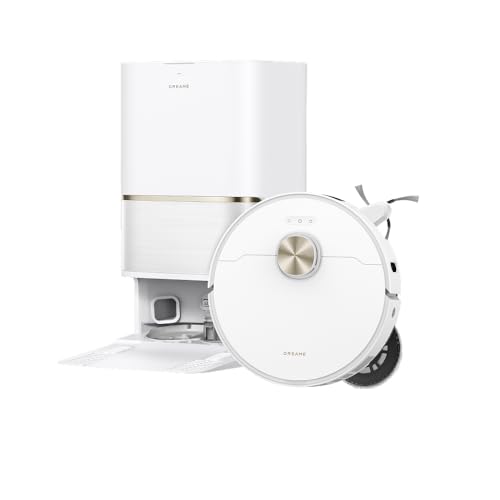
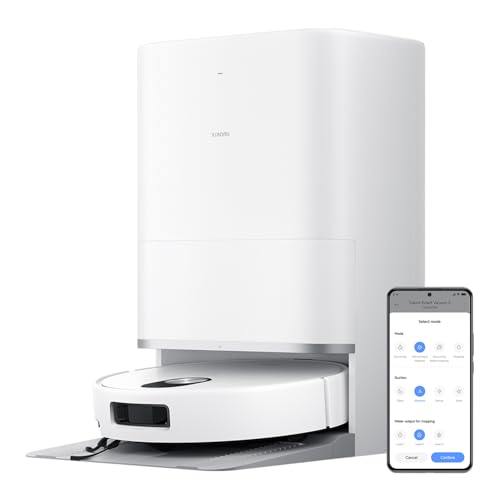
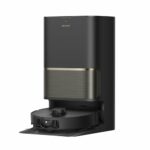
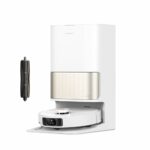
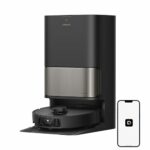
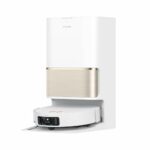
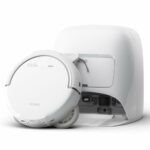
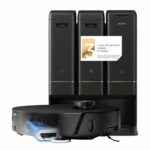
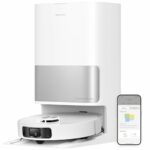
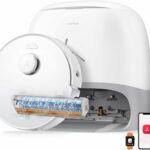
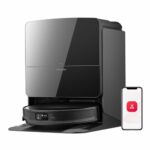
The Dreame L50 Ultra AE and the Xiaomi Robot Vacuum 5 represent two compelling options in the premium robot vacuum segment. The Dreame model, launching in March 2026, positions itself as one of the most powerful units on the market with 28,000 Pa of suction, whilst Xiaomi's 2025 offering delivers 20,000 Pa alongside some clever design choices. Both feature comprehensive docking stations with mopping maintenance capabilities, though they take different approaches to achieving thorough cleaning results.
These are high-specification machines designed for users wanting minimal intervention in their cleaning routines. The multifunctional bases handle most maintenance tasks automatically, making them suitable for larger homes where frequent manual emptying would become tedious.
Power and Vacuuming Performance
The suction difference here is substantial. At 28,000 Pa, the Dreame L50 Ultra AE generates considerably more airflow than the Xiaomi's 20,000 Pa. In practical terms, this translates to better performance on carpets and more effective pickup of embedded debris in textile fibres. The gap becomes especially noticeable when dealing with fine dust or pet hair ground into rugs.
Both models use the TriCut 3.0 brush system, which combines bristles with integrated cutting blades to slice through tangled hair. This design reduces the frequency of manual brush maintenance considerably compared to traditional bristle-only rollers.
Where they diverge is in brush management during mopping. The Dreame can elevate its main roller when the mops are deployed, preventing the brush from dragging water across floors or getting unnecessarily wet. The Xiaomi Robot Vacuum 5 doesn't offer this feature, so the brush remains in contact with the floor throughout mopping cycles.
The side brush configuration is identical: both extend outward to reach into corners and both incorporate anti-tangle technology. Neither model lifts the side brush during mopping, which is fairly standard at this price point.
Mopping System
Both robots deploy dual rotating mops that spin to scrub floors rather than simply dragging damp pads across surfaces. This active scrubbing delivers noticeably better results than static mopping systems.
The Dreame L50 Ultra AE extends its mops to reach edges and combines this with Roboswing—a movement pattern where the robot shifts its rear end slightly to push the mop further under furniture edges and skirting boards. The Xiaomi Robot Vacuum 5 also extends its mops for edge cleaning but doesn't incorporate the Roboswing motion.
Mop lift height differs between the two. The Xiaomi raises its pads 15 mm when transitioning to carpets or returning to the base, whilst the Dreame manages 10.5 mm. That extra clearance on the Xiaomi provides better protection for medium-pile rugs, though both heights handle standard floor-to-carpet transitions without issue.
A significant operational difference: the Dreame can automatically detach its mops at the base when you want vacuuming only, leaving them behind to dry. The Xiaomi keeps its mops attached throughout all cleaning sessions, so you'll need to remove them manually if you prefer vacuum-only runs.
Neither model heats the water used for mopping the floor itself—both use cold water during cleaning. There's no dirt detection in the mops or on the floor for either unit.
Navigation System
The Dreame employs a third-generation LiDAR turret for mapping and navigation, whilst the Xiaomi uses a retractable LiDAR system. The retractable design allows Xiaomi to achieve that notably lower 88 mm profile, which proves advantageous when squeezing under low-clearance furniture. The Dreame stands 97 mm tall—still reasonable, but that 9 mm difference can determine whether the robot fits beneath certain sofas or bed frames.
Both incorporate frontal 3D laser sensors for obstacle detection, helping them navigate around chair legs, cables, and other floor-level hazards. Neither includes a camera-based AI system, LED illumination for dark spaces, or remote camera access. There's no specific pet recognition or curtain detection on either model.
The Xiaomi Robot Vacuum 5 does feature AI-powered intelligent cleaning, which adjusts cleaning patterns based on room analysis. The Dreame L50 Ultra AE doesn't include this particular intelligence layer, relying instead on more conventional mapping and zone-based cleaning logic.
Battery and Runtime
Battery capacity is identical at 5,200 mAh for both machines. Xiaomi specifies 140 minutes of runtime, whilst Dreame hasn't published autonomy figures for the L50 Ultra AE. In real-world use, runtime varies considerably depending on suction levels, floor types, and whether mopping is active, so these figures represent maximum potential rather than typical performance.
Both robots return to base automatically when battery levels drop, recharge, and resume cleaning where they left off—essential for covering larger floor areas in a single session.
Smart Features
Both models can climb obstacles up to 20 mm high, allowing them to traverse door thresholds, thick rugs, and minor floor transitions without getting stuck. This capability is standard across premium robot vacuums now.
Neither robot includes a robotic arm or proprietary voice assistant. Both support external voice control through platforms like Amazon Alexa and Google Home, enabling hands-free operation through your existing smart home ecosystem.
Multifunctional Docking Station
The base stations handle the maintenance tasks that separate premium robots from basic models. Both automatically empty the robot's dustbin, wash the mops with hot water, and dry them using heated air to prevent odours and bacterial growth.
The Dreame station incorporates third-generation automatic tray cleaning, which maintains the washing area itself. The Xiaomi base also cleans its tray automatically, though without the generational designation. This self-maintenance reduces the frequency of manual station cleaning considerably.
Only the Dreame L50 Ultra AE includes a dedicated detergent dispenser, which adds cleaning solution during the mop washing cycles. This helps break down grease and grime more effectively than water alone. The Xiaomi station relies solely on hot water for mop cleaning.
Storage capacity favours the Dreame across the board. Its dust bag holds 3.2L compared to 2.5L in the Xiaomi—meaningful if you have a large home or pets that shed heavily. Clean water capacity is 4.5L versus 4L, and dirty water is 4L versus 3.8L. These differences translate to fewer refills and empties over time.
The Dreame offers an optional plumbing connection kit that you can purchase separately to link the station directly to water supply and drainage. The Xiaomi doesn't provide this option. Whilst convenient for those wanting truly hands-off operation, the kit is an additional purchase rather than an included feature.
Neither station includes UV disinfection or automatic mop pad replacement.
Dimensions
The Xiaomi Robot Vacuum 5 measures 88 mm tall, making it the lower-profile option compared to the Dreame's 97 mm height. That difference becomes relevant when you're trying to clean under furniture with limited clearance. Both share a 350 mm diameter, which is standard for this category.
Base dimensions vary slightly. The Dreame station measures 340 mm wide, 590 mm tall, and 457 mm deep. The Xiaomi base is 360 mm wide, 572 mm tall, and 470 mm deep. The Xiaomi station sits lower but requires more width and depth, whilst the Dreame is taller but narrower. Consider your available floor space when choosing between them.
Real-World Usage Considerations
For homes with pets, the Dreame L50 Ultra AE brings advantages. The higher suction power tackles embedded pet hair more aggressively, and the larger dust bag means less frequent emptying when dealing with shedding seasons. The detergent dispenser also helps when washing mops that have picked up paw prints and pet-related mess.
If you have furniture with tight clearances, the Xiaomi's lower profile becomes genuinely useful. That 88 mm height accesses spaces the taller Dreame simply cannot reach. The higher mop lift also provides better carpet protection if you have varied floor types.
The Dreame suits users wanting maximum automation. The ability to automatically detach mops for vacuum-only sessions, combined with the larger consumable capacities and detergent dispensing, reduces manual intervention. The optional plumbing kit takes this further, though at additional cost.
The Xiaomi appeals to those prioritising intelligent operation and space efficiency. The AI cleaning optimisation adapts to your home layout, whilst the compact height and retractable LiDAR enable access under low furniture.
Conclusion: Which Should You Choose?
Choose the Dreame L50 Ultra AE if you want maximum suction power for deep carpet cleaning, have pets that shed heavily, or prefer the convenience of automatic mop removal and detergent dispensing. The larger consumable capacities suit bigger homes where you'd rather not constantly maintain the station. If you're considering the plumbing connection for completely hands-off operation, this is your only option between the two.
Choose the Xiaomi Robot Vacuum 5 if you have low-clearance furniture where the 88 mm height makes a practical difference, want AI-optimised cleaning patterns, or need the higher 15 mm mop lift for better carpet protection. It delivers strong performance in a more compact package, and the lower price point typically associated with Xiaomi models makes it attractive for those seeking premium features without the absolute top-tier cost.