✨ VS Analyze · VacuumSpain comparison technology. AI-generated explanation based on verified technical data.
Introduction
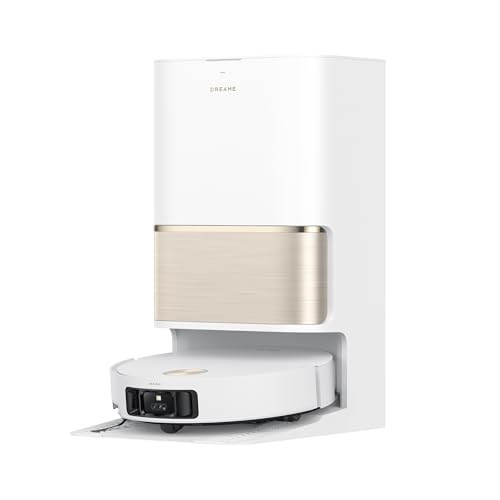
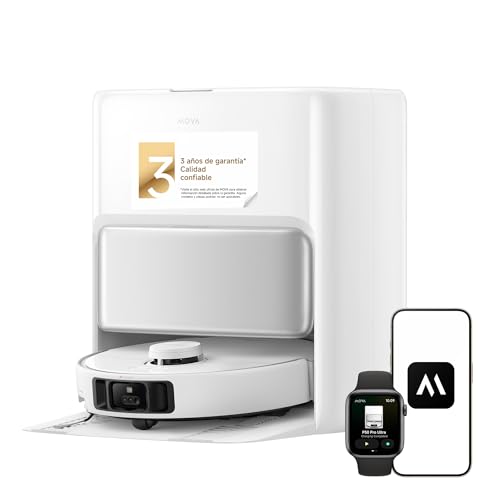
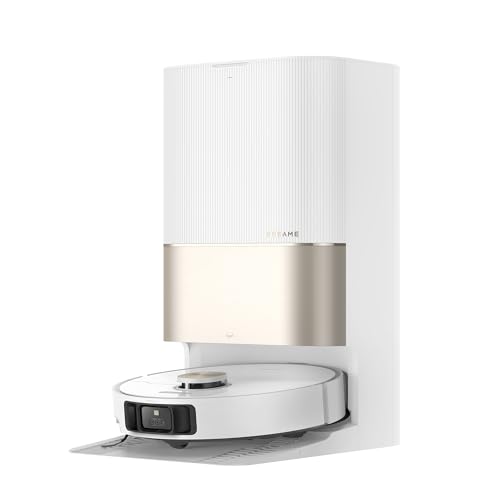
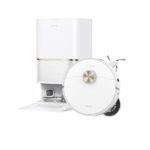
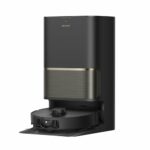
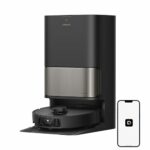
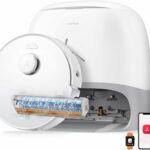
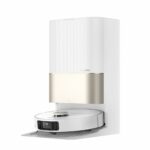
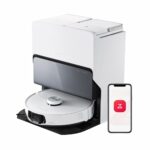
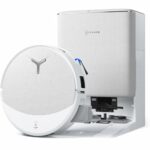
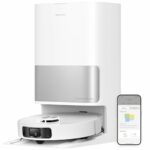
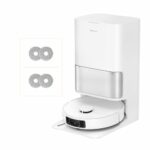
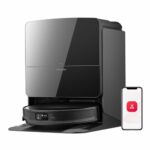
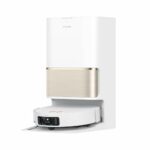
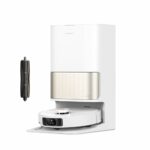
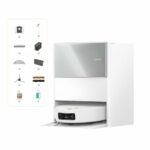
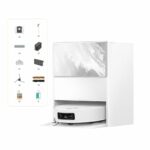
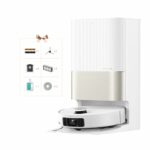
The Dreame L50 Pro Ultra and Mova P50 Pro Ultra represent the latest generation of robotic vacuum cleaners launched in 2025, whilst the Dreame X40 Ultra from 2024 remains a strong contender in the premium segment. All three models feature comprehensive multifunctional bases that handle both mop washing and drying, making them suitable for households seeking a hands-off cleaning experience.
These aren't entry-level devices. Each one combines high suction power with advanced AI navigation and dual rotating mops. The Dreame L50 Pro Ultra pushes boundaries with its retractable LiDAR system and impressive 19,500 Pa suction, whilst the Mova P50 Pro Ultra offers a more compact base design. The X40 Ultra, despite being a year older, maintains relevance with its proven technology and slightly lower price point in many markets.
For homes with multiple floor types, pets, or larger surface areas, these robots deliver serious cleaning capability. Understanding which model fits your specific needs requires looking beyond headline specifications.
Suction Power and Brushing
Suction performance separates these models quite clearly. The Dreame L50 Pro Ultra reaches 19,500 Pa, making it the most powerful of the three. The Mova P50 Pro Ultra follows closely at 19,000 Pa, whilst the X40 Ultra sits at 12,000 Pa. In practical terms, this matters most on carpets and rugs where embedded dirt requires stronger airflow to extract.
The main brush design takes different approaches. Dreame's L50 Pro Ultra employs a dual-brush configuration, which typically improves coverage and debris pickup in a single pass. The Mova P50 Pro Ultra uses TriCut 3.0 technology, combining bristles with cutting blades to slice through tangled hair before it wraps around the roller. The X40 Ultra sticks with a simpler single brush design that's proven effective across various floor types.
All three models lift their main brushes when mopping and feature extendable side brushes that swing out to reach corners more effectively. The side brushes also elevate during mopping to prevent flicking dirty water onto clean floors. Anti-tangle technology applies to both main and side brushes across the range, reducing maintenance time for households with long hair or pets.
Mopping System
Each robot uses dual rotating mops with extension capabilities for edge cleaning. The mops extend outwards and incorporate a swinging motion—Dreame's RoboSwing system—that pushes the pads slightly under furniture lips and skirting boards. This movement improves coverage compared to static mop designs.
Mop elevation reaches 10.5 mm on all three models, sufficient to clear most low-pile rugs without wetting them. When returning to the base, the robots automatically detach their mops, allowing pure vacuuming sessions without dragging dry pads across floors.
Dirt detection works at two levels. Sensors in the mops identify when the pads become heavily soiled, triggering an automatic return to the base for washing. Simultaneously, floor-level sensors detect stubborn marks or spills, prompting the robot to make additional passes over the same area. This dual detection ensures consistently clean results without manual intervention.
All three bases wash mops with hot water and dry them using warm air. The L50 Pro Ultra and P50 Pro Ultra feature third-generation self-cleaning baseplate systems, compared to the second-generation technology in the X40 Ultra. In practice, this means the newer models require less frequent manual cleaning of the washing mechanism itself.
Navigation and Intelligence
Navigation technology differs subtly but meaningfully. The Dreame L50 Pro Ultra uses a retractable LiDAR system that lowers the robot's profile to 89 mm—the lowest here. The Mova P50 Pro Ultra and X40 Ultra employ traditional LiDAR towers, resulting in heights of 103.8 mm and 97 mm respectively. For homes with low-clearance furniture, those millimetres determine whether the robot can clean underneath or must route around.
All three models combine LiDAR mapping with dual AI cameras and front-mounted 3D laser sensors. This triple-layer approach enables precise room mapping whilst actively avoiding obstacles. The L50 Pro Ultra recognises 180 different object types, the P50 Pro Ultra handles 160, and the X40 Ultra identifies 120. More recognised objects mean fewer instances where the robot becomes confused or stuck.
Pet detection works across all models, allowing the robots to identify and carefully navigate around animals. Curtain detection prevents the robots from becoming tangled in floor-length drapes. LED illumination enables the cameras to function effectively in dark rooms, and remote camera access lets you check on your home through the robot's eyes via the smartphone app.
The L50 Pro Ultra runs on Dreame's AI Sage 13.0 processor, whilst the X40 Ultra uses the earlier AI Sage 11.0 version. Processing power affects how quickly the robot adapts to changing environments and optimises cleaning routes. The Mova P50 Pro Ultra's processor specifications aren't detailed, though it shares the same CleanGenius AI cleaning intelligence found in both Dreame models.
Battery and Autonomy
Battery capacity varies between models. The Dreame L50 Pro Ultra and X40 Ultra pack 6,400 mAh cells, whilst the Mova P50 Pro Ultra contains 5,200 mAh. Despite the smaller battery, the P50 Pro Ultra achieves 210 minutes of runtime compared to 200 minutes for the L50 Pro Ultra and 194 minutes for the X40 Ultra. This suggests more efficient power management in the Mova model.
Runtime translates differently depending on cleaning mode. Maximum suction drains batteries faster than eco modes, and mopping requires additional power for pad rotation and water distribution. For typical mixed-mode cleaning, these runtimes comfortably handle homes up to 200-250 square metres on a single charge.
Smart Features
Obstacle climbing capability reaches 22 mm on both the Mova P50 Pro Ultra and Dreame X40 Ultra, allowing them to mount standard door thresholds and thick carpet edges. The L50 Pro Ultra handles simple steps without a specific measurement provided, though in practice this typically means similar threshold-crossing ability.
Voice control works differently across the models. The Dreame L50 Pro Ultra and Mova P50 Pro Ultra include built-in voice assistants, enabling direct commands without external smart speakers. The X40 Ultra lacks this feature but still integrates with Alexa and Google Home, as do the newer models. Having an onboard assistant proves convenient for quick commands without reaching for your phone.
Multifunction Base
All three bases handle automatic dust emptying into 3.2-litre bags, mop washing with hot water, and warm air drying. Each includes a detergent dispenser that adds cleaning solution during the mop washing cycle. None offer UV sterilisation or automatic mop replacement—features sometimes found in ultra-premium models.
Water tank sizes differ slightly. The Dreame L50 Pro Ultra holds 4.5 litres of clean water and 4 litres of dirty water, matching the X40 Ultra. The Mova P50 Pro Ultra carries 4 litres clean and 3.5 litres dirty. For larger homes, the extra half-litre means fewer refills during extended cleaning sessions.
The L50 Pro Ultra and X40 Ultra offer optional plumbing connection kits, sold separately, that allow the base to fill and drain automatically when connected to your home's water supply. The Mova P50 Pro Ultra doesn't support this option. Whilst plumbing kits represent an additional purchase and installation effort, they essentially eliminate manual water management for those willing to invest.
Baseplate self-cleaning reaches its third generation in the L50 Pro Ultra and P50 Pro Ultra, improving on the X40 Ultra's second-generation system. This advancement reduces the frequency of manual scrubbing needed to keep the washing mechanism hygienic.
Physical Dimensions
Robot diameter measures 350 mm across all three models, but height varies significantly. The Dreame L50 Pro Ultra measures just 89 mm tall thanks to its retractable LiDAR, the X40 Ultra stands 97 mm, and the Mova P50 Pro Ultra reaches 103.8 mm. That 14.8 mm difference between the L50 Pro Ultra and P50 Pro Ultra determines access under sofas, beds, and kitchen units. Measure your furniture clearances before choosing.
Base footprints take different shapes. The Dreame models (L50 Pro Ultra and X40 Ultra) measure 340 mm wide, 590.5 mm tall, and 456.7 mm deep. The Mova P50 Pro Ultra spreads wider at 420 mm but stands shorter at 470 mm, with nearly identical depth at 458 mm. The Mova base occupies more floor space horizontally but fits under lower shelving. Consider your available floor area and any overhead restrictions where you'll position the base.
Onboard dust bins differ too. The L50 Pro Ultra carries a 395 ml bin, whilst both the P50 Pro Ultra and X40 Ultra hold 300 ml. Given that all three empty automatically to the base, bin size matters less than in traditional robots, though a larger bin means the robot can continue cleaning slightly longer if the base becomes full.
Real-World Usage
For larger homes exceeding 150 square metres, the Dreame L50 Pro Ultra's superior suction and longer battery life prove advantageous. Its 89 mm height makes it ideal for homes with low furniture, and the 180-object recognition reduces intervention. The optional plumbing kit suits those wanting complete automation.
Pet owners benefit from any of these models thanks to anti-tangle brushes and strong suction. The L50 Pro Ultra's dual-brush system and highest suction give it a slight edge for homes with multiple shedding animals. All three detect pets and adjust behaviour accordingly, preventing disturbance during cleaning.
The Mova P50 Pro Ultra suits buyers prioritising a compact base footprint. Its lower, wider base fits spaces where the taller Dreame bases won't, and the TriCut 3.0 brush excels at preventing hair tangles. Slightly longer battery life compensates for the smaller capacity, making it viable for medium to large homes despite the reduced power cell.
Mixed flooring households—combining hard floors, rugs, and carpets—work well with all three models. Mop elevation prevents rug wetting, brush lifting stops carpet fibres from becoming tangled during mopping, and adjustable suction adapts to surface types. The X40 Ultra's lower suction still handles most carpets effectively, though deep-pile or heavily soiled carpets favour the newer models' extra power.
Conclusion: Which to Choose?
Choose the Dreame L50 Pro Ultra if you want the most powerful suction available here, need to clean under very low furniture, or plan to connect the base to your home's plumbing. Its 180-object recognition and built-in voice assistant add convenience, whilst the dual-brush system maximises pickup efficiency. Best for large homes with pets and varied furniture heights.
Choose the Mova P50 Pro Ultra if you need a shorter base that fits under shelving or in tighter spaces, or if you prefer the proven TriCut 3.0 brush technology. Its longer runtime despite the smaller battery demonstrates efficient engineering, and the slightly lower price in many markets offers excellent value. Ideal for medium-sized homes where base placement is constrained.
Choose the Dreame X40 Ultra if you're comfortable with 2024 technology at a reduced price point and don't require maximum suction power. It delivers solid performance across all core functions—mapping, mopping, and maintenance—with optional plumbing connectivity. Suitable for budget-conscious buyers seeking premium features without paying for the absolute latest specifications.