✨ VS Analyze · VacuumSpain comparison technology. AI-generated explanation based on verified technical data.
Introduction
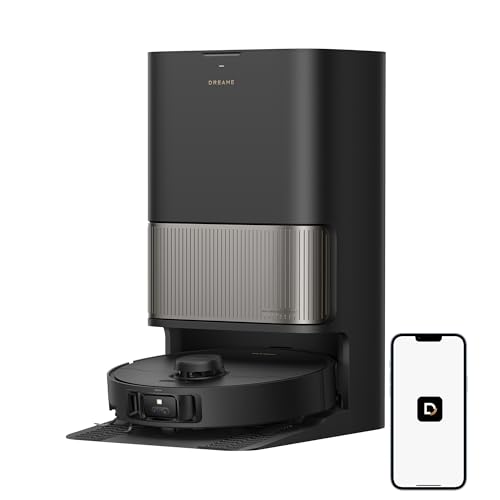
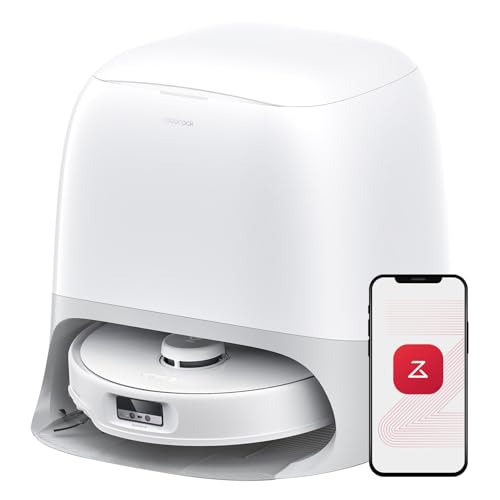
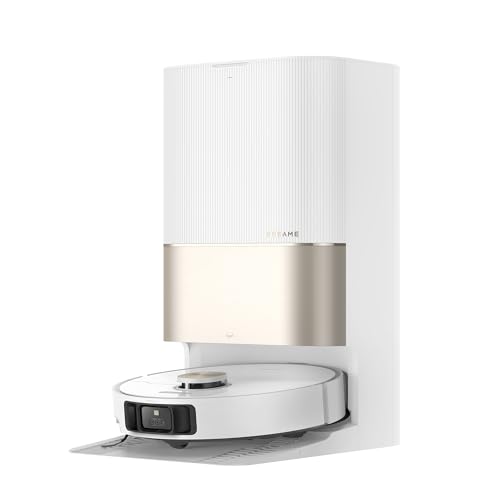
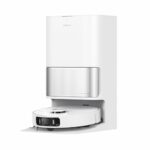
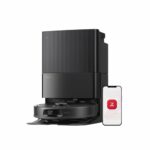
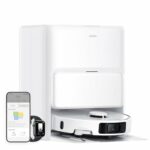
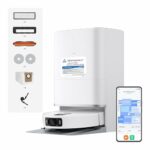
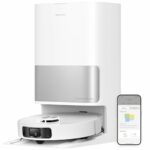
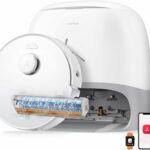
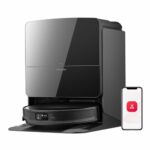
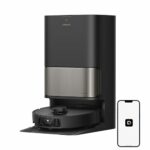
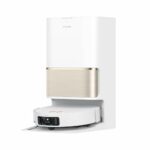
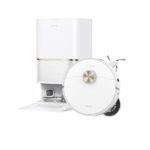
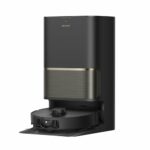
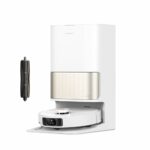
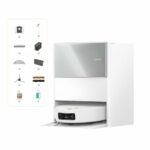
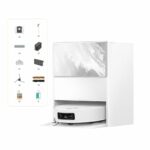
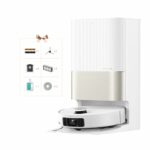
Choosing between three high-end robots such as the Dreame L40s Pro Ultra, the Roborock Qrevo Curv and the Dreame X40 Ultra requires a detailed analysis of the features each one offers. We are looking at devices with a complete multifunction base, capable of vacuuming and mopping with almost total autonomy. The Dreame L40s Pro Ultra arrives in 2025 with improvements over its predecessor, whilst the Roborock Qrevo Curv and the Dreame X40 Ultra were launched in 2024.
These models are designed for medium to large-sized homes where maximum delegation of cleaning tasks is desired. The difference between them is not only in suction power, but in details such as dustbin capacity, the intelligent navigation system or the way they manage mopping.
Power and Suction
Suction power marks important differences in this robot vacuum comparison. The Dreame L40s Pro Ultra leads with 19,000 Pa, a figure that slightly exceeds the 18,500 Pa of the Roborock Qrevo Curv. The Dreame X40 Ultra remains at 12,000 Pa, a power more than sufficient for most homes, but notably lower than its direct competitors.
As for the brushing system, the Dreame L40s Pro Ultra opts for a dual HyperStream brush designed to prevent hair tangles. The Roborock Qrevo Curv features the DuoDivide system, which pushes hairs towards the central gap to facilitate suction. The Dreame X40 Ultra uses a simple anti-tangle silicone brush. All three models lift the main brush during mopping to prevent it from getting wet.
The extendable side brush is present on all three devices, useful for better reaching corners. However, there is a relevant difference: the Roborock Qrevo Curv does not lift the side brush when mopping, something that both Dreame models do. This may result in the Roborock's brush getting wetter during mopping. All three incorporate anti-tangle technology in the side brush.
Mopping
All three robots use a dual rotating mop system, a standard in the current high-end range. All extend the mops to better reach edges, although both Dreame models also incorporate the Roboswing system, which performs a lateral movement to introduce the mop under furniture or ledges.
Mop lifting is essential for moving over carpets without wetting them. Here the Roborock Qrevo Curv offers between 10 and 20 mm of lift, whilst the Dreame L40s Pro Ultra and the X40 Ultra remain at 10.5 mm. That greater capacity of the Roborock can make the difference in homes with medium-pile carpets.
A practical function is the automatic detachment of mops at the base. The Dreame L40s Pro Ultra and the X40 Ultra do include it, allowing the robot to go out to vacuum without dragging the mops. The Roborock Qrevo Curv does not have this option, which requires removing them manually if you only want to vacuum.
All three models wash the mops with hot water at the base and dry them with hot air, as well as detecting dirt both on the mops themselves and on the floor to adjust cleaning intensity. The Dreame L40s Pro Ultra boasts the third generation of tray self-cleaning, the X40 Ultra the second generation and the Roborock version 2.0.
Navigation System
All three devices feature a LiDAR turret to map the home with precision. All incorporate dual camera with artificial intelligence, front 3D laser sensor and LED for night vision. Object recognition capacity varies considerably: the Dreame L40s Pro Ultra identifies up to 180 types of obstacles, the X40 Ultra recognises 120 and the Roborock Qrevo Curv remains at 62.
This difference can be especially noticeable in homes with many objects on the floor. Greater obstacle recognition translates into fewer manual interventions and greater real autonomy of the robot. All three detect pets and allow remote access to the camera for surveillance.
The Dreame L40s Pro Ultra and the X40 Ultra detect curtains, a function that prevents the robot from getting tangled in them. The Roborock Qrevo Curv does not include this capability. As for processing, the Roborock uses the RR Mason 11.0 algorithm, whilst the Dreame X40 Ultra features the AI Sage 11.0. All three models integrate AI-based intelligent cleaning systems.
Stain recognition using artificial intelligence is present in both Dreame models, but not in the Roborock Qrevo Curv. This allows Dreame models to identify particularly dirty areas and go over them automatically.
Autonomy and Battery
The Roborock Qrevo Curv is equipped with a 6,400 mAh battery that gives it up to 240 minutes of autonomy, the highest figure of the three. The Dreame X40 Ultra features the same battery capacity but offers 194 minutes of autonomy. The Dreame L40s Pro Ultra reduces capacity to 5,200 mAh with 220 minutes of operation.
In practice, these figures indicate that the Roborock can cover larger surfaces in a single run. For homes of more than 200 square metres, that extra autonomy can avoid intermediate recharges. The Dreame L40s Pro Ultra, despite having less battery capacity, efficiently manages the 220 minutes thanks to its superior suction power.
Intelligent Functions
The ability to overcome obstacles differs between models. The Dreame L40s Pro Ultra and the Roborock Qrevo Curv can navigate simple steps, although the exact height is not specified. The Dreame X40 Ultra overcomes obstacles of up to 22 mm, a specific figure that makes it easier to assess its ability to move between rooms with small level changes.
The Dreame L40s Pro Ultra and the Roborock Qrevo Curv incorporate their own voice assistant, as well as being compatible with Alexa and Google Home. The Dreame X40 Ultra only supports external assistants. This function can be convenient for those who prefer to control the robot using voice commands without relying on the mobile app.
Multifunction Cleaning Base
All three models include a multifunction base with auto-emptying of the dust container, mop washing with hot water and drying with hot air. The dust bag capacity is 3.2 litres in both Dreame models and 2.5 litres in the Roborock. This means that the Dreame models require fewer bag changes throughout the year.
As for water tanks, the Dreame L40s Pro Ultra and the X40 Ultra have 4.5 litres of clean water and 4 litres of dirty water. The Roborock Qrevo Curv reduces these figures to 4 and 3 litres respectively. The difference can be noticeable in large homes where mopping is frequent, as larger tanks extend the time between refills.
A relevant difference is the detergent tank. The Dreame L40s Pro Ultra and the X40 Ultra include it, allowing the base to add cleaning product during mop washing. The Roborock Qrevo Curv does not have this function. Additionally, both Dreame models offer an optional plumbing connection kit that is purchased separately, something the Roborock does not offer.
Dimensions
The robot's diameter is practically identical in all three: 350 mm in both Dreame models and 352 mm in the Roborock. Height marks more significant differences. The Dreame X40 Ultra measures 97 mm, which allows it to slip under low furniture more easily. The Roborock Qrevo Curv reaches 103 mm and the Dreame L40s Pro Ultra 103.8 mm.
Those few millimetres can determine whether or not the robot accesses under certain furniture. It is advisable to measure the clearance height of sofas and beds before deciding, especially if you want the robot to clean those areas without manual intervention.
The base dimensions also vary. The Roborock Qrevo Curv has a more compact and square base: 450 mm wide, high and deep. Both Dreame models share measurements: 340 mm wide, 590.5 mm high and 456.7 mm deep. The Roborock base takes up less floor space but is taller, whilst the Dreame bases are narrower but also taller.
Real-world experience
For large homes, the Roborock Qrevo Curv offers the greatest autonomy with its 240 minutes and a 6,400 mAh battery. Its water tanks are somewhat smaller, but efficient battery management compensates on extensive runs. The Dreame L40s Pro Ultra provides greater suction power and obstacle recognition, useful in homes with multiple rooms and objects on the floor.
If there are pets, all three models incorporate anti-tangle systems in the brushes. The dual HyperStream brush of the Dreame L40s Pro Ultra can facilitate maintenance by reducing hair tangles. The Roborock's DuoDivide system is also specifically designed for this purpose. The greater suction power of the L40s Pro Ultra helps collect more hair in each pass.
For homes with carpets, the mop lift of the Roborock Qrevo Curv reaches up to 20 mm, exceeding the 10.5 mm of the Dreame models. This allows moving over higher-pile carpets without wetting them. The Dreame X40 Ultra's ability to overcome 22 mm obstacles is also practical in homes with transitions between rooms.
Automatic mop detachment at the base is a convenience only offered by both Dreame models. It allows scheduling vacuum-only sessions without handling the robot. The detergent tank, also exclusive to the Dreame models, adds product during mop washing without manual intervention.
The height of the Dreame X40 Ultra (97 mm) makes it the best option for passing under low furniture. If the home has sofas or beds with little clearance, this detail makes the difference between cleaning those areas or leaving them uncovered.
Conclusion: Which one to choose?
Choose the Dreame L40s Pro Ultra if… you are looking for maximum suction power (19,000 Pa) and the widest obstacle recognition (180 types). It is ideal for homes with many objects on the floor, pets and the need for minimal manual intervention. The detergent tank and automatic mop detachment add convenience. Its water tanks and dust bag are the most generous. The third generation of tray self-cleaning and its own voice assistant complete a very comprehensive package.
Choose the Roborock Qrevo Curv if… you prioritise maximum autonomy (240 minutes) and have a large home. Its 6,400 mAh battery and efficient management allow covering more surface without recharges. The mop lift of up to 20 mm is the highest of the three, perfect for carpets