✨ VS Analyses · VacuumSpain comparison technology. Explanation created with AI from verified technical data.
Introduction
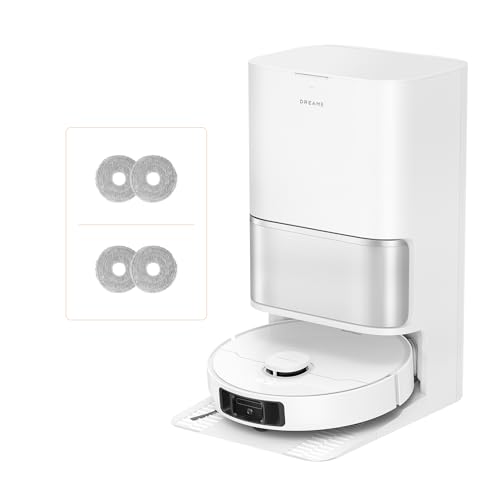
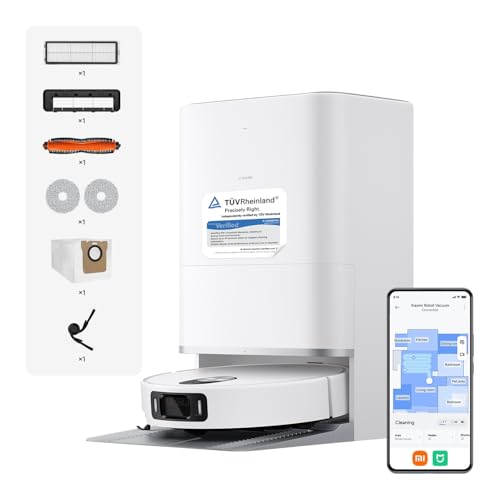
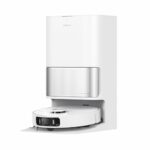
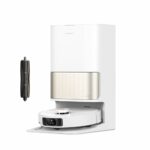
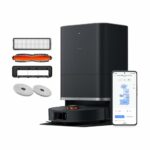
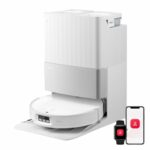
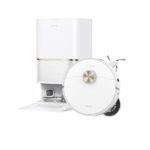
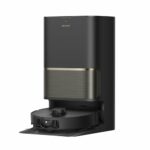
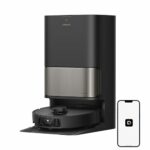
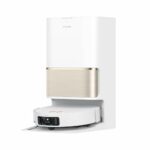
The Dreame L10s Ultra Gen 3 and Xiaomi Robot Vacuum 5 Pro represent two compelling approaches to automated home cleaning in 2025. Both models feature multifunctional bases that handle not just emptying but also mop washing and drying, placing them firmly in the premium segment of the market. The Dreame arrived in November 2025, whilst the Xiaomi launched earlier in the same year, giving consumers two well-equipped options from manufacturers known for their competitive pricing in the robot vacuum sector.
These aren't entry-level devices. Anyone considering either model should expect comprehensive cleaning capabilities across both vacuuming and mopping, with advanced navigation systems and substantial battery capacity. The question becomes which configuration suits your home better, particularly if you have specific requirements around suction power, autonomy, or intelligent features.
Suction Power and Brushing
The Dreame L10s Ultra Gen 3 delivers 25,000 Pa of suction, giving it a noticeable advantage over the Xiaomi Robot Vacuum 5 Pro's 20,000 Pa. That extra power can make a tangible difference on carpets or when dealing with embedded dirt, though both figures sit comfortably in the high-performance bracket.
Where things get interesting is the brush configuration. The Dreame uses a simpler brush design, whilst the Xiaomi employs TriCut 3.0 technology that combines bristles with cutting blades to reduce hair tangles. For homes with pets or long-haired occupants, this distinction matters. The Xiaomi also features an anti-tangle side brush, which the Dreame lacks.
The Xiaomi can elevate its main brush when mopping, preventing the brush from getting wet and ensuring cleaner separation between vacuuming and mopping modes. The Dreame doesn't offer this feature. Both models include extensible side brushes that reach into corners more effectively, a useful addition regardless of which you choose.
Mopping Capabilities
Both robots use dual rotating mops, but the implementation differs in meaningful ways. The Dreame incorporates Roboswing, a movement that allows the mop to reach slightly under furniture edges and skirting boards through a swaying motion. The Xiaomi offers standard mop extension without this particular movement pattern.
Mop elevation tells another part of the story. The Xiaomi lifts its mops 15 mm when transitioning to carpets or rugs, whilst the Dreame manages 10.5 mm. That extra height on the Xiaomi provides better protection for medium-pile rugs, though neither system removes the mops entirely at the base for pure vacuuming runs.
The Xiaomi brings dirt detection technology to the table, identifying soiled areas on floors and dirty mops, then adjusting its cleaning accordingly. The Dreame doesn't include this intelligence. In practice, the Xiaomi might make additional passes over particularly grubby patches, whilst the Dreame follows its programmed pattern regardless of dirt levels.
Mop washing happens with cold water on the Dreame but hot water on the Xiaomi. Hot water generally achieves better cleaning results, breaking down grease and grime more effectively. Both dry their mops with warm air, helping prevent odours and bacterial growth. The Dreame includes a detergent tank for adding cleaning solution during the mop washing cycle, something the Xiaomi omits entirely.
Navigation Systems
The Dreame uses a third-generation LiDAR turret for mapping and navigation, whilst the Xiaomi employs a retractable LiDAR system. Both include 3D laser sensors at the front for obstacle avoidance. The retractable design on the Xiaomi contributes to its lower profile, though both navigate accurately in typical home environments.
The Xiaomi Robot Vacuum 5 Pro stands out with its AI camera, enabling it to recognise up to 200 different obstacle types. It also features LED lighting for night vision and allows remote camera access through the app. The Dreame lacks a camera entirely, relying purely on laser-based navigation and obstacle detection.
For pet owners, the Dreame offers specific pet recognition features, whilst the Xiaomi doesn't highlight this capability despite its extensive object recognition database. Both models include AI-driven cleaning optimisation—CleanGenius on the Dreame and a comparable system on the Xiaomi—that adjusts cleaning patterns based on room type and floor conditions.
Battery and Autonomy
Both robots pack identical 5,200 mAh batteries, but runtime differs substantially. The Dreame achieves 231 minutes of operation, whilst the Xiaomi manages 140 minutes. That's a significant gap—over an hour and a half of additional cleaning time for the Dreame.
For larger homes, this distinction becomes critical. The extended autonomy means the Dreame can cover more ground in a single session, potentially completing the entire home without returning to recharge. The Xiaomi might need to pause and top up its battery in expansive properties, though 140 minutes still handles most average-sized homes comfortably.
Smart Features
Both robots can climb obstacles up to 20 mm, useful for transitioning between rooms with different flooring levels or navigating over door thresholds. Neither includes a robotic arm or proprietary voice assistant, though both integrate with external assistants like Alexa and Google Home for voice control.
The camera on the Xiaomi adds functionality beyond navigation. Remote access lets you check on your home whilst away, essentially using the robot as a mobile security camera. The Dreame offers no equivalent feature.
Multifunctional Base
Both bases handle the full suite of maintenance tasks: emptying the dust bin, washing the mops, and drying them afterwards. The Dreame washes mops with cold water, whilst the Xiaomi uses hot water for more thorough cleaning. Both employ warm air for drying.
The Dreame features third-generation automatic tray cleaning for the washing mechanism itself, reducing maintenance requirements. The Xiaomi also includes tray cleaning without specifying the generation. The Dreame's detergent tank dispenses cleaning solution during mop washing, enhancing cleaning effectiveness. The Xiaomi requires plain water only.
Dust bag capacity reaches 3.2 litres on the Dreame compared to 2.5 litres on the Xiaomi. Larger capacity means less frequent bag changes, particularly relevant for homes with heavy shedding pets or high dust levels. Clean water tanks measure 4.5 litres for the Dreame and 4 litres for the Xiaomi, whilst dirty water tanks hold 4 litres and 3.8 litres respectively. The differences are marginal but favour the Dreame slightly.
The Dreame offers an optional plumbing connection kit, purchased separately, that would allow direct water supply and drainage. The Xiaomi doesn't provide this option at all. Neither comes with integrated plumbing connections as standard.
Physical Dimensions
The Xiaomi Robot Vacuum 5 Pro measures 88 mm tall, making it 9 mm lower than the Dreame's 97 mm height. That might seem trivial, but it determines whether the robot fits under certain furniture pieces. If you have low-clearance sofas or bed frames, the Xiaomi's slimmer profile could prove decisive.
Both robots share a 350 mm diameter, standard for this category. Base dimensions differ slightly: the Dreame measures 340 mm wide, 457 mm deep, and 590 mm tall, whilst the Xiaomi comes in at 360 mm wide, 470 mm deep, and 572 mm tall. The Dreame base is narrower but deeper and taller; the Xiaomi spreads wider and deeper but sits lower. Neither requires dramatically more floor space than the other, though you'll want to measure your intended location to ensure a proper fit.
Real-World Usage Scenarios
For large homes, the Dreame L10s Ultra Gen 3 makes considerable sense. That 231-minute battery life covers extensive floor areas without interruption, and the higher suction power tackles demanding cleaning tasks across multiple rooms. The larger dust bag also suits properties that generate more debris.
Homes with pets benefit from the Xiaomi's TriCut 3.0 brush and anti-tangle side brush, which manage hair more effectively than the Dreame's simpler brush design. However, the Dreame's pet recognition features and higher suction might offset this advantage depending on your priorities.
If you value mopping performance above all else, the Xiaomi's hot water mop washing, dirt detection, and higher mop lift create a compelling package. The ability to identify dirty areas and adjust cleaning intensity delivers more thorough results, particularly in kitchens or high-traffic zones.
The Xiaomi's lower profile suits homes with tight clearances under furniture. If your cleaning challenges include reaching beneath low beds or sofas, those 9 mm matter. The Dreame's Roboswing helps compensate by extending mops into edges, but it won't help the robot physically fit where the Xiaomi can.
Remote monitoring through the Xiaomi's camera appeals to anyone wanting to check on their property whilst away, whether for security or simply to see what the cat's doing. The Dreame offers no visual feedback beyond the app's cleaning maps.
Conclusion: Which Should You Choose?
Choose the Dreame L10s Ultra Gen 3 if: you live in a larger home where extended battery life matters, you want maximum suction power for deep carpet cleaning, you prefer having a detergent tank for enhanced mop washing, or you value the larger dust bag capacity for reduced maintenance frequency. The optional plumbing kit also future-proofs your setup if you might want automatic water connection later.
Choose the Xiaomi Robot Vacuum 5 Pro if: you have low-clearance furniture requiring a slimmer robot, mopping performance is your priority and you want hot water mop washing plus dirt detection, you have pets and the TriCut 3.0 brush appeals for managing hair, or you want camera-based remote monitoring and advanced AI object recognition. The ability to lift the main brush during mopping also keeps things tidier if you frequently switch between cleaning modes.
Both represent solid investments for comprehensive automated cleaning. The Dreame emphasises power and autonomy, whilst the Xiaomi focuses on intelligent features and mopping refinement. Your home's size, layout, and specific cleaning challenges should guide the decision more than any single specification.