✨ VS Analyses · VacuumSpain comparison technology. Explanation created with AI from verified technical data.
Introduction
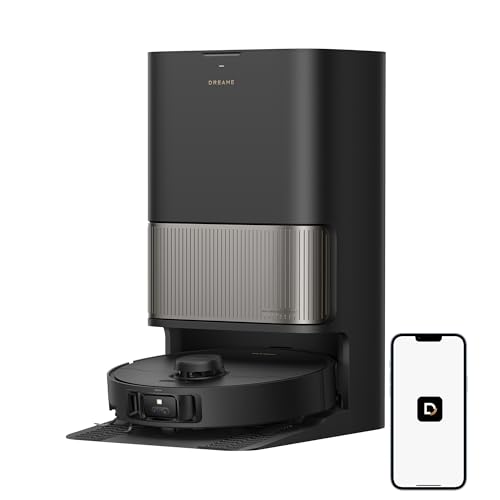
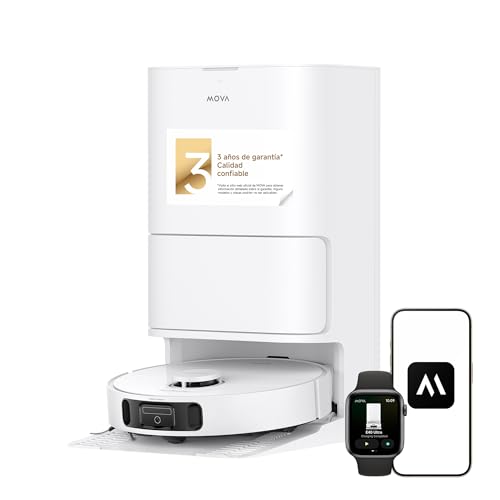
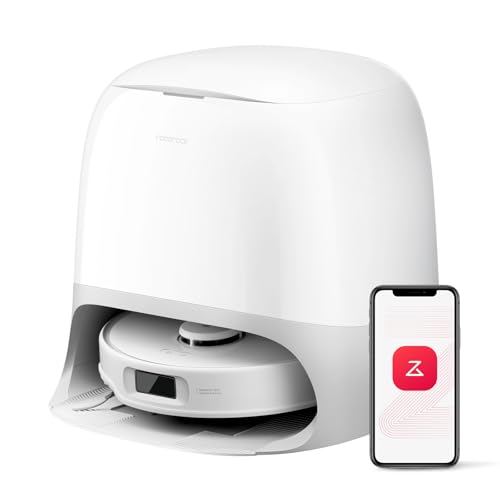
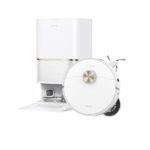
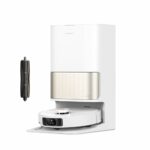
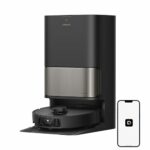
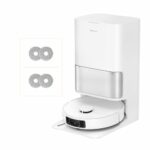
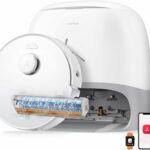
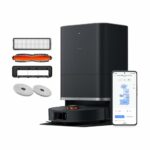
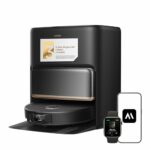
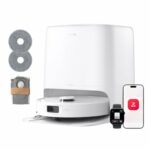
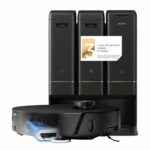
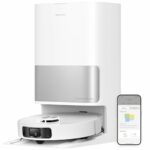
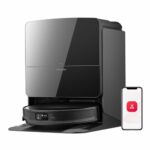
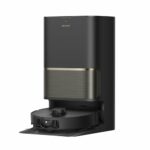
The Dreame L40s Pro Ultra, Mova E40 Ultra, and Roborock Qrevo Curv S5X represent three premium robot vacuum cleaners launched between 2024 and 2025. All three feature multifunctional bases with mop washing and drying capabilities, making them suitable for users who want comprehensive automated cleaning without constant manual intervention. The Dreame and Mova models share identical suction power at 19,000 Pa, whilst the Roborock delivers 18,500 Pa. These are high-end solutions designed for larger homes where autonomy, advanced navigation, and thorough mopping matter.
The Dreame L40s Pro Ultra stands out with its dual AI cameras and extensive smart features. The Mova E40 Ultra offers similar core specifications at what's likely a more accessible price point, being Dreame's second brand. The Roborock Qrevo Curv S5X brings the reputation of the world's leading robot vacuum manufacturer, with its proprietary DuoDivide anti-tangle brush and proven reliability.
Power and Suction
The Dreame L40s Pro Ultra and Mova E40 Ultra both deliver 19,000 Pa of suction, giving them a slight edge over the Roborock Qrevo Curv S5X's 18,500 Pa. In practice, this difference is marginal – all three provide more than enough power for deep carpet cleaning and hard floor debris pickup.
Where things diverge significantly is in the brush systems. The Dreame employs a dual-brush configuration (likely the HyperStream design with two independently anchored rollers), which minimises hair tangles. The Mova uses a simpler single brush, whilst the Roborock features its DuoDivide anti-tangle system that channels hair towards the central suction gap. All three have anti-tangle side brushes.
The Dreame's main brush can lift during mopping, preventing wet carpet contact. This elevating function isn't available on the Mova or Roborock. Similarly, the Dreame's side brush also lifts when mopping, avoiding dirty water streaks along skirting boards – a feature the other two lack. The Dreame and Roborock both extend their side brushes to reach into corners more effectively, whilst the Mova's side brush remains fixed.
For homes with pets or long-haired residents, these brush differences matter considerably. The Dreame's dual-brush system combined with elevation capabilities offers the most versatile approach.
Mopping
All three models use dual rotating mops that extend to clean edges. The Dreame and Mova both feature Roboswing technology, allowing the robot to shift its body slightly to push the mop further under furniture edges and overhangs. The Roborock achieves edge cleaning through mop extension alone.
Mop lift height is nearly identical: 10.5 mm for both Dreame and Mova, 10 mm for the Roborock. This ensures carpets stay dry during combined vacuum-mop sessions. What sets the Dreame apart is its ability to automatically remove the mops entirely at the base, enabling pure vacuuming without any mop assembly attached. If you regularly switch between carpeted and hard-floored areas, this saves manual intervention.
The bases wash mops with hot water (60°C for Dreame and Mova, the Roborock also uses hot water) and dry them with warm air. The Dreame takes this further with third-generation automatic tray cleaning, keeping the washing area itself hygienic. The Roborock has second-generation tray cleaning, whilst the Mova requires manual tray maintenance.
Dirt detection makes a difference during mopping. The Dreame identifies dirty mops and soiled floor areas, triggering rewashes or additional passes. The Roborock also detects dirt on both mops and floors. The Mova lacks these sensors entirely, following pre-programmed cleaning patterns without adapting to actual conditions. In homes with muddy paw prints or spill-prone kitchens, adaptive cleaning proves valuable.
Navigation System
All three use LiDAR turret navigation for accurate room mapping. The differences emerge in obstacle detection and AI capabilities.
The Dreame L40s Pro Ultra features dual AI cameras plus a front-facing 3D laser sensor, recognising 180 different object types including pets and curtains. The LED night vision allows it to navigate and identify obstacles even in darkness. Remote camera access turns the robot into a mobile home monitor when you're away.
The Mova E40 Ultra has the 3D laser sensor and can identify pets, but lacks cameras entirely. There's no remote viewing, no LED lighting, and fewer recognised obstacles overall. The Roborock relies on LiDAR and obstacle avoidance sensors without specifying exact object recognition numbers. It doesn't identify pets or curtains specifically, though it will avoid them as generic obstacles.
For households with pets, the Dreame's ability to recognise animals and adjust behaviour accordingly (avoiding food bowls, identifying pet mess) offers clear advantages. The Mova provides basic pet recognition, whilst the Roborock treats everything as generic obstacles.
Battery and Autonomy
All three pack 5,200 mAh batteries, yet runtime varies. The Dreame L40s Pro Ultra manages 220 minutes, the Mova E40 Ultra reaches 210 minutes, and the Roborock Qrevo Curv S5X delivers 180 minutes. These differences likely reflect varying efficiency in motor management and sensor power consumption.
In real-world terms, the Dreame can cover larger floor areas before returning to recharge. For homes exceeding 150 square metres, that extra runtime reduces mid-clean charging interruptions. The Roborock's shorter autonomy isn't problematic for most homes – it'll simply return to base more frequently during whole-home cleans.
Smart Features
All three can climb obstacles up to 20 mm, with the exception that the Dreame specifies "single-step climbing" capability, suggesting it handles individual thresholds rather than continuous ramps.
The Dreame L40s Pro Ultra includes its own voice assistant, allowing direct voice commands without external smart speakers. All three integrate with Alexa and Google Home for those who prefer ecosystem integration.
None of these models feature robotic arms for advanced object manipulation, keeping them focused on core cleaning rather than experimental features.
Multifunctional Base
All three stations auto-empty dust, wash mops with hot water, and dry them with warm air. The differences lie in maintenance and capacity.
The Dreame's third-generation automatic tray cleaning system actively maintains the washing area without manual scrubbing. The Roborock's 2.0 system provides some automatic cleaning, whilst the Mova requires you to clean the tray manually. Over weeks of use, this becomes noticeable – the Dreame's base stays fresher longer.
Detergent handling varies significantly. The Dreame includes a detergent tank as standard, automatically dispensing cleaning solution during mop washes. The Mova offers this as an optional extra purchase. The Roborock doesn't support detergent at all. For those wanting genuinely clean mops rather than just water-rinsed ones, the Dreame provides the most complete solution out of the box.
The Dreame offers an optional plumbing connection kit (purchased separately), enabling continuous water supply and drainage without refilling tanks. Neither the Mova nor Roborock support this, even as an add-on.
Capacity-wise, the Dreame and Mova share identical specifications: 3.2-litre dust bags, 4.5-litre clean water tanks, and 4-litre dirty water tanks. The Roborock has a smaller 2.5-litre dust bag, 4-litre clean water tank, and 3-litre dirty water tank. For larger homes or longer intervals between maintenance, the Dreame and Mova require less frequent emptying and refilling.
Dimensions
The Dreame L40s Pro Ultra stands 103.8 mm tall, making it the tallest of the three. The Mova measures 97 mm and the Roborock 98 mm. This 6-7 mm difference determines whether the robot fits under low-clearance furniture like certain sofas or kitchen cabinets. If you have furniture with minimal ground clearance, the Mova or Roborock will access spaces the Dreame cannot reach.
Diameter is nearly identical across all three: 350 mm for Dreame and Mova, 352 mm for Roborock. This won't affect manoeuvrability in any meaningful way.
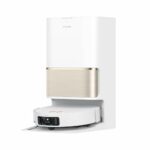
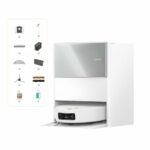
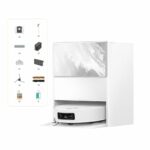
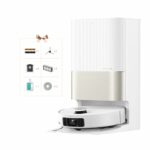
Base dimensions tell a different story. The Dreame and Mova stations measure 340 mm wide, 590.5 mm tall, and 456.7 mm deep – quite substantial vertical towers. The Roborock base is a 450 mm cube, significantly shorter and squarer. If you're tight on vertical space or prefer a less imposing base, the Roborock's compact design fits more discreetly. The taller Dreame and Mova bases do make tank access easier without bending down as far.
Real-World Use
For large homes with mixed flooring and pets, the Dreame L40s Pro Ultra delivers the most comprehensive feature set. The dual cameras identify pet mess before spreading it, the elevating brushes protect carpets during mopping, and the extended autonomy covers expansive floor plans. Automatic mop removal means you can run vacuum-only sessions on carpeted floors without manual intervention. The third-generation base tray cleaning keeps maintenance minimal even with heavy use.
The Mova E40 Ultra suits those wanting strong core performance without paying for advanced AI features. You get the same suction power, battery capacity, and tank sizes as the Dreame, with hot water mop washing and warm air drying. The lack of camera-based navigation and automatic tray cleaning means slightly more hands-on maintenance, but for homes without pets or complex obstacle courses, this represents excellent value.
The Roborock Qrevo Curv S5X brings proven reliability and a compact base footprint. The DuoDivide brush system handles pet hair effectively, and the dirt detection ensures thorough cleaning where it's needed. The shorter autonomy and smaller tank capacities suit medium-sized homes better than sprawling properties. Without detergent tank support or pet recognition, it's best for households prioritising brand reputation and space-efficient design over cutting-edge AI features.
All three handle hard floors and low-pile carpets effectively. The mop lift heights ensure medium-pile rugs stay dry. For homes with thick carpets, you'd likely use vacuum-only modes anyway, where the Dreame's automatic mop removal proves most convenient.
Conclusion: Which to Choose?
Choose the Dreame L40s Pro Ultra if you want the most advanced robot vacuum available in 2025. The dual AI cameras with remote access, 180-object recognition, automatic mop dismounting, and third-generation base tray cleaning justify the premium. Ideal for large homes over 150 square metres, households with pets, or anyone who values minimal maintenance and maximum automation. The taller body might restrict access under some furniture, but the comprehensive feature set compensates.
Choose the Mova E40 Ultra if you want flagship-level power and capacity without paying for AI camera systems. You get identical suction, battery size, and tank capacities to the Dreame, with hot water mop washing and warm air drying. Best for medium to large homes without pets, where manual tray cleaning and lack of remote monitoring aren't concerns. The lower height improves furniture clearance compared to the Dreame. Expect this to offer the best value proposition of the three.
Choose the Roborock Qrevo Curv S5X if you prioritise brand reliability, compact base design, and proven performance over experimental features. The square base footprint saves space, and Roborock's reputation for dependable operation and excellent app experience provides peace of mind. Best suited to medium-sized homes up to 120 square metres, hard floors and low-pile carpets, and users who prefer established brands. The lack of detergent support and shorter autonomy limit its appeal for larger properties or those wanting the absolute latest technology.