✨ VS Analyses · VacuumSpain comparison technology. Explanation created with AI from verified technical data.
Introduction
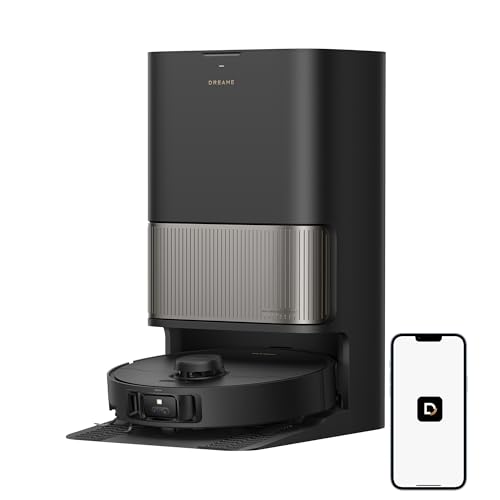
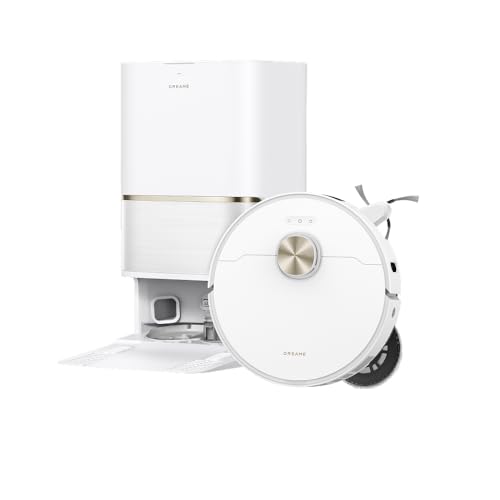
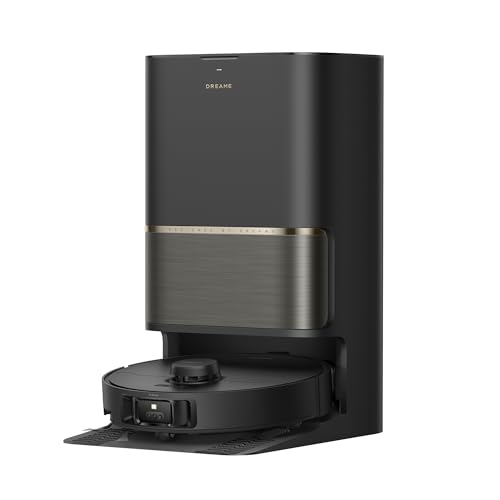
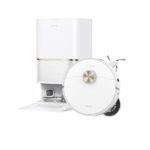
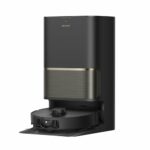
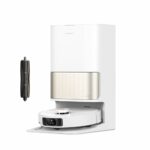
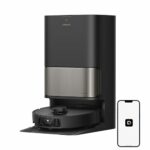
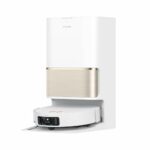
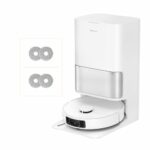
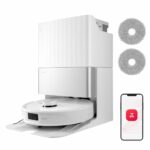
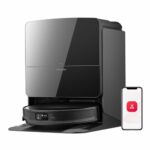
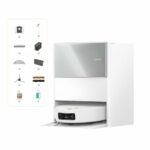
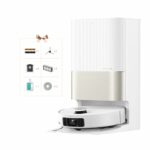
The Dreame L family has evolved remarkably in 2025 and 2026, establishing itself as one of the most competitive options within the robot vacuum market with multifunctional base. The Dreame L40s Pro Ultra arrived in 2025 as an advanced model, whilst the Dreame L50 Ultra AE appeared in March 2026 with a somewhat different approach. The Dreame L50s Pro Ultra, also from 2026, represents the most recent evolution of this range.
All three units feature a complete multifunctional base that washes and dries the mops with hot water and air, as well as auto-emptying the dust bin. This places them in a segment where maintenance is minimal and mopping reaches a professional level. However, there are important differences in suction power, navigation systems and intelligent functions that are worth analysing before deciding.
Power and Suction
Suction power marks notable differences in this robot vacuum comparison. The Dreame L50s Pro Ultra leads with 30,000 Pa, followed by the L50 Ultra AE with 28,000 Pa. The L40s Pro Ultra, with 19,000 Pa, falls considerably below, although it remains a sufficient figure for most homes.
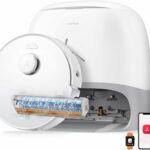
Regarding the main brush, we find two different philosophies. The L50 Ultra AE features the TriCut 3.0 system, which combines bristles with blades designed to cut tangled hair during vacuuming. The L40s Pro Ultra and the L50s Pro Ultra opt for a dual anti-tangle brush that effectively reduces hair accumulation.
All three models raise the main brush during mopping to prevent it from getting wet and dragging damp dirt. However, only the L40s Pro Ultra and the L50s Pro Ultra also raise the side brush in mopping mode, which improves edge cleaning without interference. The L50 Ultra AE keeps the side brush constantly active.
All feature an extendable and anti-tangle side brush, a useful characteristic for better reaching corners without accumulating hair.
Mopping
The mopping system is practically identical across all three robots: two rotating mops with side extension and Roboswing movement, which allows the mops to slightly reach under furniture and ledges. Mop lift reaches 10.5 mm in all cases, sufficient to climb over thin carpets without wetting them.
An important difference appears in dirt detection. The Dreame L40s Pro Ultra and the L50s Pro Ultra detect both dirt on the mops themselves and on the floor, automatically adjusting re-mopping when necessary. The L50 Ultra AE does not include this function, which means it does not adapt its behaviour according to the detected dirt level.
All three automatically remove the mops at the base when only vacuuming is desired, avoiding dragging them unnecessarily. Mopping is carried out with cold water on all models, although the base washes the mops with hot water and dries them with hot air, guaranteeing hygiene and absence of bad odours.
Navigation System
Here we find one of the most relevant differences in this Dreame robot comparison. The L40s Pro Ultra and the L50s Pro Ultra integrate dual AI camera that allows them to recognise objects with great precision: 180 obstacles in the case of the L40s Pro Ultra and 220 in the L50s Pro Ultra. Both include front LED for night vision and remote camera access from the app.
The Dreame L50 Ultra AE simplifies this section. It has no AI camera, lacks night LED and does not offer remote camera access. Neither does it recognise pets nor detect curtains, functions present in the other two models. This does not mean it navigates poorly, as it still features LiDAR turret and front 3D laser sensor to avoid obstacles, but its identification capability is lower.
In practice, this translates to the L40s Pro Ultra and the L50s Pro Ultra being able to avoid toys, cables, slippers or pet excrement with greater precision. The L50 Ultra AE relies more on physical sensors and may push light objects before detecting them.
Autonomy and Battery
All three robots feature a 5,200 mAh battery, a generous capacity that guarantees sufficient autonomy for large homes. The Dreame L40s Pro Ultra declares 220 minutes of autonomy, whilst the L50 Ultra AE and the L50s Pro Ultra do not specify this data in the table.
Considering that the suction power of the L50 Ultra AE and the L50s Pro Ultra is significantly higher, it is likely that their real autonomy is somewhat lower than the L40s Pro Ultra in maximum mode. Even so, with 5,200 mAh all should cover large surfaces without problems, automatically returning to the base if they need to recharge mid-cleaning.
Intelligent Functions
The Dreame L40s Pro Ultra and the L50s Pro Ultra can overcome simple steps, whilst the L50 Ultra AE specifies a capacity of 20 mm. This function is useful for overcoming small level differences between rooms or the edge of thick carpets.
Only the L40s Pro Ultra and the L50s Pro Ultra incorporate their own voice assistant, in addition to compatibility with Alexa and Google Home. The L50 Ultra AE is limited to external assistants. This may be relevant for those who prefer to control the robot using voice commands without depending on other devices.
Multifunctional Cleaning Base
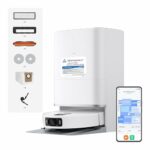
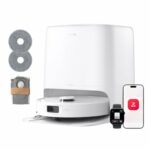
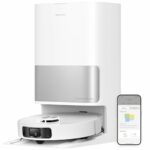
All three bases are practically identical. All auto-empty the dust bin into a 3.2-litre bag, wash the mops with hot water and dry them with hot air. The clean water (4.5 litres) and dirty water (4 litres) tanks have the same capacity across all three models.
They include third-generation washing tray self-cleaning and detergent tank, which allows adding cleaning product that is automatically dispensed during mop washing. None integrates UV disinfection nor direct connection to plumbing, although all three support an optional connection kit that is purchased separately.
In short, the experience with the base is equivalent in all three cases: minimal maintenance, automatic mop cleaning and drying, and autonomy of several weeks without manual intervention.
Dimensions
The diameter is identical across all three robots: 350 mm. The height varies slightly: the L50 Ultra AE measures 97 mm, whilst the L40s Pro Ultra and the L50s Pro Ultra reach 103.8 mm. Those nearly 7 mm of difference can be decisive if you need the robot to pass under low furniture, sofas or beds with little ground clearance.
The bases have practically identical dimensions: 340 mm wide, around 590 mm high and 457 mm deep. It is advisable to reserve an accessible space with a nearby power socket, preferably in an area where the robot can enter and exit without obstacles.
Real-World Usage Experience
For large homes, all three models work well thanks to their 5,200 mAh battery and bases with generous tanks. The L50s Pro Ultra, with its greater suction power and capacity to recognise 220 objects, offers the most complete experience in large spaces with multiple rooms.
If you live with pets, the L40s Pro Ultra and the L50s Pro Ultra come out ahead. Their dual AI camera recognises animals and can avoid excrement or toys with greater precision. Additionally, both detect dirt on the floor and adjust mopping, something useful when there are muddy footprints or food remains. The L50 Ultra AE can work well with pets, but without specific recognition nor adaptive dirt detection.
In homes with low furniture, the L50 Ultra AE has an advantage due to its 97 mm height. It can slip under more furniture than the other two models, which at 103.8 mm may be excluded from some tight spaces.
For those seeking total autonomy and minimal intervention, any of the three delivers. The multifunctional base with hot water and air mop washing and drying guarantees that the robot is always ready without needing to manually clean the mops or empty the dust daily.
Conclusion: Which to Choose?
Choose the Dreame L40s Pro Ultra if you seek a balance between advanced functions and price. It offers dual AI camera, pet recognition, dirt detection and remote camera access. Its 19,000 Pa power is sufficient for most homes, although it is not the highest in this robot vacuum comparison. It is a solid option if you value artificial intelligence without needing maximum suction power.
Choose the Dreame L50 Ultra AE if you prioritise suction power (28,000 Pa) and need a lower robot to pass under tight furniture. Its 97 mm height is the lowest of the three. It lacks AI camera and advanced recognition functions, but maintains LiDAR navigation and front 3D sensor. It is ideal for those seeking a best robot vacuum 2025 with great power and low profile, without needing extras such as remote camera access or pet detection.
Choose the Dreame L50s Pro Ultra if you want the most complete experience. With 30,000 Pa of power, recognition of 220 objects, dual AI camera, adaptive dirt detection and its own voice assistant, it is the most advanced of the three. It overcomes simple steps and offers all available intelligent functions. It is the best option for large homes, homes with pets, or users seeking maximum technology and performance without compromises. Its 103.8 mm height may limit access under some furniture, but it compensates with superior features in almost all areas.