✨ VS Analyses · VacuumSpain comparison technology. Explanation created with AI from verified technical data.
Introduction
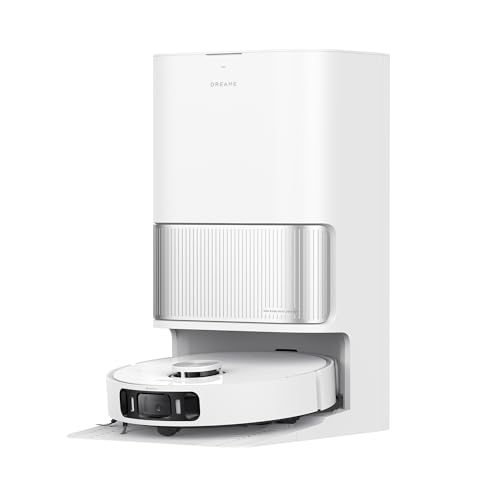
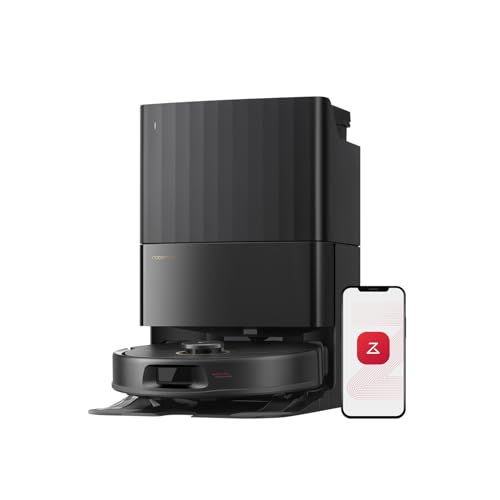
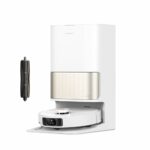
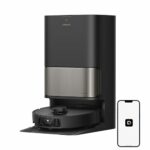
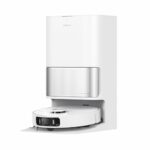
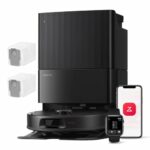
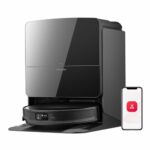
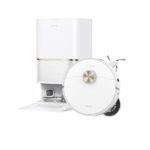
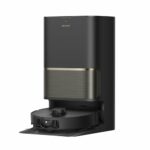
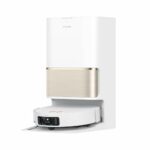
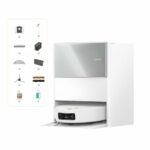
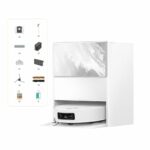
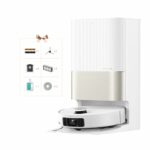
We're looking at two 2025 releases aiming to position themselves in the premium segment of robot vacuum cleaners with multifunctional base stations. The Dreame L40 Ultra AE arrives with a highly ambitious technical proposition, whilst the Roborock Qrevo S5V relies on the solidity of an established brand in the sector. Both units integrate self-emptying, mop washing and drying bases, designed for users seeking total autonomy in home cleaning.
The Dreame model is clearly aimed at those who prioritise raw power and advanced navigation functions with artificial intelligence. The Roborock, on the other hand, maintains a more balanced approach, with robust technical specifications and the reliability that characterises the brand. This robot vacuum cleaner comparison analyses the real differences between two propositions that, on paper, appear similar but conceal important nuances in their daily operation.
Power and Suction
The most evident difference in this robot vacuum cleaner comparison appears in suction power. The Dreame L40 Ultra AE reaches 19000 Pa in Turbo mode, a figure that significantly exceeds the 12000 Pa of the Roborock Qrevo S5V. In practice, this translates to greater capacity for extracting ingrained dirt from carpets or picking up heavy particles such as sand or food debris.
The brushing systems show different philosophies. The Dreame robot vacuum cleaner incorporates the TriCut 3.0, which combines bristles with blades designed to cut long hair and prevent tangles. The Roborock mounts the DuoDivide system, which pushes hair towards the central suction gap to minimise blockages. Both systems work well with pet hair, albeit with different technical approaches.
A clear advantage of the L40 Ultra AE is the main brush elevation during mopping, something the Qrevo S5V doesn't offer. This allows the Dreame to mop without dragging dry dirt with the brush, improving washing quality. In return, the Roborock robot vacuum cleaner features a side brush with anti-tangle system, a detail that the Dreame doesn't include in its side brush.
Mopping
Both models use dual rotating mop systems, but the differences in the washing process are significant. The Dreame L40 Ultra AE washes the mops with hot water at 75°C, a temperature that helps eliminate grease and bacteria more effectively. The Roborock Qrevo S5V doesn't incorporate heating in mop washing, although it does dry with hot air at 45°C, the same as the Dreame.
Both units lift the mops when detecting carpets: 10.5 mm for the L40 Ultra AE and 10 mm for the Qrevo S5V. Minimal differences that in practice function similarly. Both models extend the mops to reach edges and corners, albeit with different commercial denominations: RoboSwing 3.0 in the Dreame and FlexiArm in the Roborock.
Dirt detection marks another important difference. The Dreame robot vacuum cleaner identifies when the mops are dirty and when the floor requires a second mopping pass, automatically adjusting the cleaning process. The Roborock lacks these dirt detection sensors, maintaining more predefined cleaning patterns. For homes with young children or pets, where unexpected stains are frequent, this Dreame function can prove especially useful.
Navigation System
Here we find one of the most pronounced differences in this robot vacuum cleaner comparison. The Dreame L40 Ultra AE integrates a complete visual navigation system: front camera with AI, 3D laser sensor and LED for night vision. It recognises up to 120 different types of obstacles, including pets, and allows remote camera access from the mobile application.
The Roborock Qrevo S5V is limited to the 3D LIDAR turret for mapping and navigation, without front camera or additional laser sensors. It doesn't specify the number of recognised obstacles nor includes video surveillance functions. This doesn't mean it navigates poorly—Roborock has a solid reputation in this aspect—but it does lack the advanced visual recognition capabilities of the Dreame.
In practice, the Dreame robot vacuum cleaner system offers advantages in homes with complex layouts or many objects on the floor. The night LED allows the robot to identify obstacles even with lights off, something the Qrevo S5V cannot do. Both models include AI-based intelligent cleaning systems (CleanGenius in Dreame, SmartPlan in Roborock), which optimise routes according to room type and detected dirt level.
Autonomy and Battery
Both robots mount 5200 mAh batteries, identical capacity that should offer similar performance. The Roborock Qrevo S5V specifies 180 minutes of autonomy, whilst the Dreame L40 Ultra AE doesn't provide this data in the available specifications. With the same battery capacity, it's reasonable to expect comparable autonomy, although the higher consumption derived from the Dreame's 19000 Pa could slightly reduce its operating time in maximum mode.
Neither manufacturer specifies full charging times. As robots with multifunctional bases, battery management is usually automatic: they return to charge when necessary and resume cleaning from where they left off.
Intelligent Functions
Both models overcome obstacles up to 20 mm in height, sufficient to navigate most transitions between floors and small level changes such as thick carpets or sliding door guides. This capability is identical in both units and works well in homes with different types of flooring.
Multifunctional Cleaning Base
The multifunctional bases present relevant differences beyond mop washing. The Dreame L40 Ultra AE incorporates second-generation self-cleaning in the tray where the mops are washed, a system that keeps the base itself more hygienic. The Roborock Qrevo S5V has a sealed tray but without automated self-cleaning system.
The Dreame robot vacuum cleaner includes a detergent tank, allowing cleaning product to be added which is dispensed during mop washing. The Roborock doesn't have this tank, limiting itself to water for washing. Whilst not essential, detergent helps eliminate difficult stains and leaves a better smell after mopping.
In storage capacities, the L40 Ultra AE has the advantage: 3.2 L dust bag versus 2.7 L, 4.5 L clean water tank against 4 L, and 4 L dirty water tank versus 3.5 L. These are differences that are noticeable in large homes, reducing maintenance frequency. The Dreame also offers an optional kit for connection to water pipes, something the Qrevo S5V doesn't contemplate.
The robot's internal tanks also differ: 395 ml of dust in the Dreame against 330 ml in the Roborock. It may seem barely relevant given that both self-empty, but in very intensive cleaning sessions or if the base is far away, that extra capacity makes a difference.
Dimensions
The robot sizes are practically identical. The Dreame L40 Ultra AE measures 350 mm in diameter and 97 mm in height, whilst the Roborock Qrevo S5V has 353 mm in diameter and 96.5 mm in height. Half a millimetre less height in the Roborock doesn't represent any practical advantage; both access similar spaces under furniture.
The bases do show differences. The Roborock robot vacuum cleaner base is lower (521 mm versus 590.5 mm) but deeper (487 mm against 456.7 mm). The width is identical in both: 340 mm. Depending on the available space at home, a more compact base in height or depth may be of greater interest.
Real-World Usage Experience
For large homes, the Dreame L40 Ultra AE offers clear advantages: greater capacity in all tanks, superior suction power and intelligent dirt detection that optimises the process without manual intervention. The possibility of connecting the base to pipes via optional kit proves interesting in houses where emptying and filling tanks manually is a nuisance.
In homes with pets, both anti-tangle brush systems work well, albeit with different approaches. The Dreame's TriCut 3.0 actively cuts hair, whilst the Roborock's DuoDivide channels it towards the suction. The Qrevo S5V's anti-tangle side brush is a point in favour if pets shed a lot of hair in corners and edges. The L40 Ultra AE's greater power helps extract hair embedded in carpets.
For those who prioritise mopping, the Dreame's hot water mop washing represents a tangible improvement in eliminating grease and difficult stains. Dirt detection in mops and floor automatically adjusts the process, something the Roborock cannot do. This can be especially noticeable in kitchens or high-traffic areas.
The Dreame robot vacuum cleaner's advanced navigation, with camera and 3D laser sensors, offers better obstacle recognition in complex environments. Remote camera access adds video surveillance functionality that can prove useful. The Roborock maintains an effective but less sophisticated navigation system, sufficient for most homes without special requirements.
Conclusion: Which to Choose?
Choose the Dreame L40 Ultra AE if you're looking for: the maximum suction power available in 2025, advanced visual navigation system with camera and recognition of over 120 obstacles, mop washing with hot water at 75°C, automatic dirt detection in both mops and floor, greater capacities in all tanks, integrated detergent tank, advanced washing tray self-cleaning, or possibility of future connection to pipes via optional kit. It's the best robot vacuum cleaner 2025 for large homes with pets and users who value the most advanced technology.
Choose the Roborock Qrevo S5V if you prefer: the proven reliability of a leading brand in the sector, a DuoDivide brush system specifically designed for hair, side brush with anti-tangle system, more compact base in height, or simply a solid technical proposition without needing advanced functions such as front camera or hot water mop washing. It's the most balanced option for those seeking a complete and effective robot without paying for technology they may not need.
In short, this robot vacuum cleaner comparison reflects two strategies: Dreame opts to accumulate superior technical specifications and advanced functions, whilst Roborock maintains its proposition of proven quality with robust specifications. The choice will depend on whether you prioritise having the latest in technology or prefer the solidity of a brand with years of experience in the sector.