Introduction
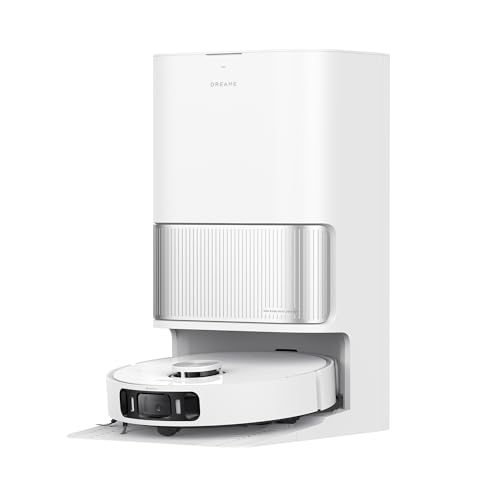
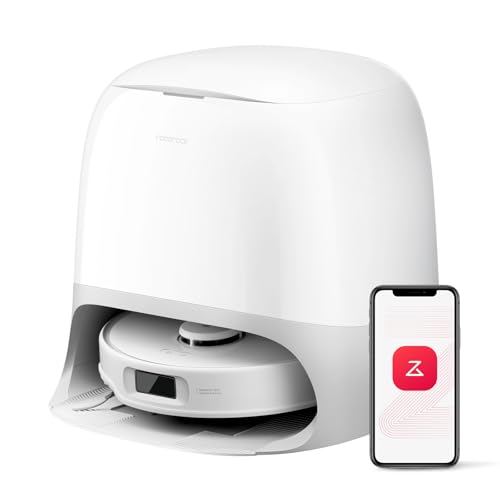
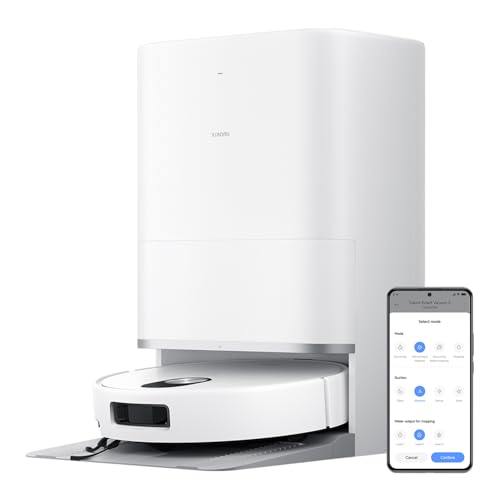
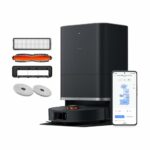
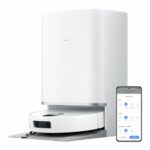
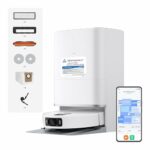
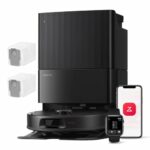
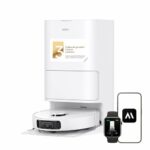
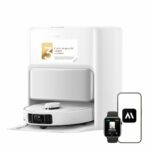
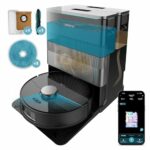
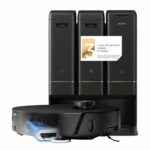
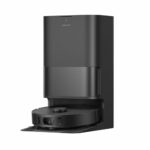
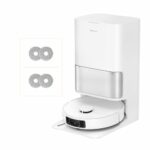
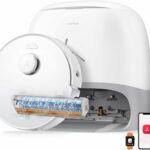
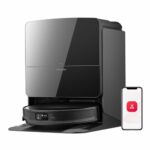
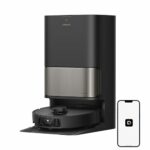
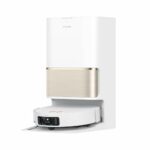
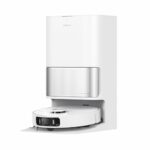
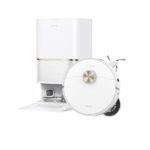
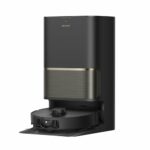
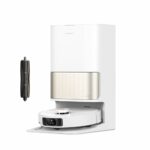
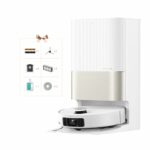
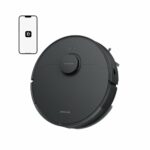
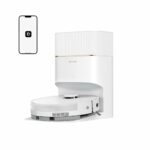
The Dreame L40 Ultra AE, Roborock Qrevo Curv S5X, and Xiaomi Robot Vacuum 5 represent three of the most advanced robot vacuum cleaners available in 2025. Each model comes equipped with a multifunctional base that handles automatic emptying, mop washing, and drying—features that separate basic robotic cleaning from truly autonomous floor care. The Dreame L40 Ultra AE arrives as a 2025 release, whilst the Roborock Qrevo Curv S5X launched in 2024, and the Xiaomi Robot Vacuum 5 joins the market this year as well.
These aren't entry-level devices. They're designed for households that demand comprehensive cleaning without constant intervention. All three models tackle both vacuuming and mopping, with intelligent navigation systems and substantial battery capacity. The real differences emerge when examining suction power, brush technology, AI capabilities, and base station specifications.
Suction Power and Brushing
The Xiaomi Robot Vacuum 5 delivers the highest suction at 20,000 Pa, giving it a slight edge over the Dreame L40 Ultra AE's 19,000 Pa and the Roborock Qrevo Curv S5X's 18,500 Pa. In practical terms, these differences matter most on carpets or when dealing with embedded dirt in textured flooring.
Brush technology reveals more significant variations. The Dreame L40 Ultra AE and Xiaomi Robot Vacuum 5 both utilise TriCut 3.0 main brushes, which combine bristles with cutting blades to reduce hair tangles. The Roborock Qrevo Curv S5X employs its DuoDivide Anti-Tangle brush, designed to push hair toward the central suction channel. All three approaches aim to minimise maintenance, particularly valuable for pet owners.
What sets the Dreame apart is its liftable main brush. When mopping, the brush elevates to prevent contaminating clean water with debris from the roller. Neither the Roborock nor Xiaomi offer this feature.
For edge cleaning, the Roborock Qrevo Curv S5X and Xiaomi Robot Vacuum 5 include extendable side brushes that reach into corners more effectively. Both also feature anti-tangle side brushes. The Dreame L40 Ultra AE lacks these refinements in its side brush system, which could affect performance along skirting boards and in room corners.
Mopping Performance
All three models use dual rotating mops. Each can extend its mops to reach edges better—the Dreame L40 Ultra AE adds a RoboSwing movement that angles the mop slightly under furniture overhangs and along walls.
Mop elevation differs notably. The Xiaomi Robot Vacuum 5 lifts its mops 15 mm when encountering carpets or returning to base, the highest clearance here. The Dreame L40 Ultra AE raises mops 10.5 mm, and the Roborock Qrevo Curv S5X manages 10 mm. For homes with thick rugs or raised door thresholds, the Xiaomi's extra clearance provides better protection against dragging damp mops across carpets.
Dirt detection technology separates the Dreame and Roborock from the Xiaomi. The Dreame L40 Ultra AE and Roborock Qrevo Curv S5X can detect when mops become soiled and when floors require additional passes. This allows them to return to the base for mop washing mid-clean or intensify mopping in particularly dirty zones. The Xiaomi Robot Vacuum 5 lacks these sensors, relying instead on pre-programmed cleaning patterns.
All three bases wash mops with hot water and dry them using heated air, preventing odours and bacterial growth. The washing systems are second-generation self-cleaning designs, meaning the base automatically cleans its own washing tray to avoid residue buildup.
Navigation Systems
Navigation technology varies considerably. The Dreame L40 Ultra AE features a LiDAR turret combined with an AI camera, 3D laser sensors, and LED illumination for night vision. This comprehensive sensor suite enables it to recognise up to 120 different obstacle types, including pets, and allows remote camera access through the app—useful for checking on animals or monitoring your home whilst away.
The Roborock Qrevo Curv S5X relies on its LiDAR turret and obstacle avoidance sensors but doesn't include a camera or 3D laser sensors. It runs the RR Mason 11.0 algorithm with SmartPlan AI for intelligent route planning, though it can't identify specific objects like pets or provide visual feedback.
The Xiaomi Robot Vacuum 5 uses a retractable LiDAR system paired with 3D laser sensors but, like the Roborock, omits camera-based AI. It can navigate effectively but won't recognise what objects it's avoiding.
For households with pets, the Dreame's ability to identify animals and provide camera access offers tangible advantages. The visual confirmation and object recognition make it easier to understand cleaning behaviour and adjust settings accordingly.
Battery Life and Autonomy
All three robots share identical 5,200 mAh batteries. Runtime claims differ where provided: the Roborock Qrevo Curv S5X states 180 minutes of operation, whilst the Xiaomi Robot Vacuum 5 specifies 140 minutes. Dreame hasn't published autonomy figures for the L40 Ultra AE.
In practice, actual runtime depends heavily on cleaning mode, floor type, and whether the robot is vacuuming only or mopping simultaneously. The Roborock's longer claimed autonomy suggests more efficient power management or less aggressive default settings. For larger homes, this could mean completing a full clean without returning to recharge mid-session.
Smart Features
Each model can climb obstacles up to 20 mm high, sufficient for most door thresholds and floor transitions. All three integrate with external voice assistants like Alexa and Google Home.
The standout intelligent feature belongs to the Dreame L40 Ultra AE: its CleanGenius AI system combines camera recognition, dirt detection, and adaptive cleaning strategies. The Roborock Qrevo Curv S5X offers SmartPlan AI for optimised routing. The Xiaomi Robot Vacuum 5 includes AI cleaning but without the visual recognition capabilities of the Dreame.
Multifunctional Base Stations
Base specifications reveal practical differences in capacity and convenience. The Dreame L40 Ultra AE's base holds the largest dust bag at 3.2 litres, compared to 2.5 litres for both the Roborock and Xiaomi. For clean water, the Dreame stores 4.5 litres, the Roborock 4 litres, and the Xiaomi 4 litres. Dirty water capacity: Dreame 4 litres, Xiaomi 3.8 litres, Roborock 3 litres.
These differences affect maintenance frequency. Larger capacities mean emptying and refilling less often, particularly valuable for larger homes or households running daily cleaning cycles.
The Dreame L40 Ultra AE includes a detergent dispenser integrated into its base, automatically adding cleaning solution during mop washing. Neither the Roborock nor Xiaomi offer this feature. Additionally, Dreame provides an optional water pipe connection kit for purchase separately, allowing permanent plumbing connection to eliminate manual refilling entirely. The Roborock and Xiaomi don't support plumbed connections even as an option.
Physical Dimensions
Robot height matters for furniture clearance. The Xiaomi Robot Vacuum 5 measures just 88 mm tall, noticeably lower than the Dreame L40 Ultra AE at 97 mm and the Roborock Qrevo Curv S5X at 98 mm. This 9-10 mm difference allows the Xiaomi to access spaces beneath low-clearance furniture where the others cannot reach.
Diameter remains similar across all three: Dreame and Xiaomi at 350 mm, Roborock at 352 mm. Base station footprints vary more significantly. The Roborock base forms a compact 450 × 450 × 450 mm cube. The Dreame measures 340 mm wide, 456.7 mm deep, and 590.5 mm tall—narrower but taller. The Xiaomi sits between them at 360 × 470 × 572 mm.
Consider where you'll position the base. The Roborock's square footprint and lower height suit spaces beneath counters or in cupboards. The Dreame's vertical design requires more overhead clearance but occupies less floor space.
Real-World Usage Scenarios
For pet owners, the Dreame L40 Ultra AE's camera-based pet recognition and remote viewing provide genuine benefits, alongside its anti-tangle TriCut 3.0 brush and dirt detection. The ability to check on animals remotely adds functionality beyond cleaning. The Roborock and Xiaomi clean effectively but can't identify pets specifically or provide visual confirmation.
Larger homes benefit from the Roborock Qrevo Curv S5X's 180-minute autonomy and efficient navigation, reducing the likelihood of mid-clean recharging. Its extendable side brush improves edge coverage in spacious rooms with long perimeters.
Homes with low furniture favour the Xiaomi Robot Vacuum 5. Its 88 mm height and 15 mm mop lift allow it to navigate beneath and around obstacles the taller models cannot reach. The highest suction power also helps on carpets and textured floors.
Minimal maintenance appeals most with the Dreame L40 Ultra AE. Its larger base capacities, detergent dispenser, and optional plumbing connection reduce hands-on involvement. The liftable main brush keeps mopping water cleaner for longer.
Conclusion: Which to Choose?
Choose the Dreame L40 Ultra AE if you want the most advanced AI features, including camera-based object recognition, remote viewing, and pet identification. The detergent dispenser, largest base capacities, and optional water pipe connection suit those seeking maximum automation. The liftable main brush improves mopping hygiene. Best for tech-focused households with pets and a preference for minimal maintenance.
Choose the Roborock Qrevo Curv S5X if you prioritise proven reliability, longer battery runtime, and a compact base footprint. The extendable, anti-tangle side brush improves edge cleaning. SmartPlan AI delivers efficient navigation without camera-based features. Ideal for larger homes where autonomy matters and where you value Roborock's established reputation for dependable performance.
Choose the Xiaomi Robot Vacuum 5 if you need to clean under low furniture and want the highest suction power available here. Its 88 mm height and 15 mm mop lift provide superior clearance. The combination of TriCut 3.0 brush and 20,000 Pa suction handles demanding floor types effectively. Best suited to homes with space constraints, thick carpets, and furniture with minimal ground clearance.