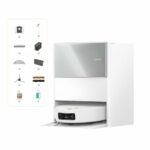
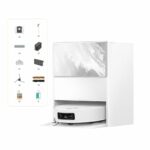
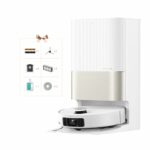
✨ VS Analyses · VacuumSpain comparison technology. Explanation created with AI from verified technical data.
Introduction
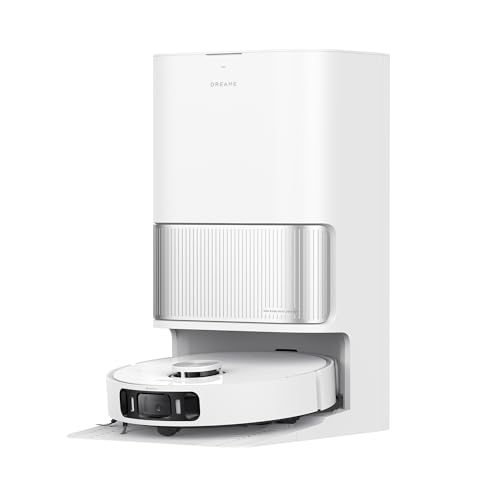
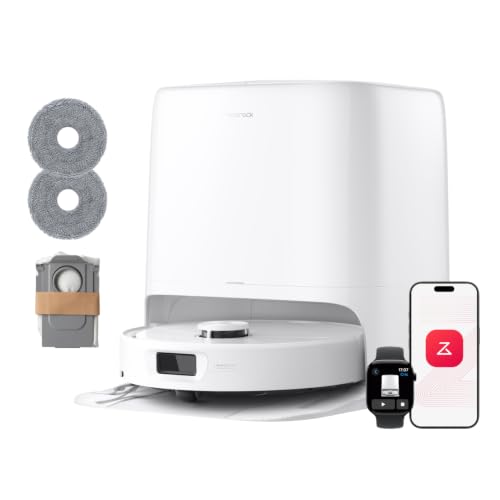
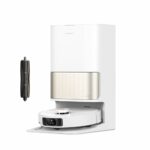
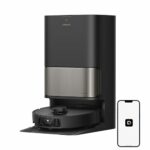
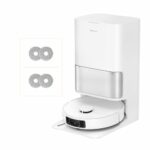
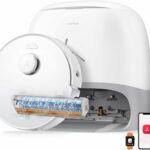
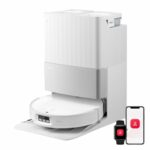
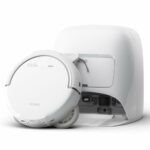
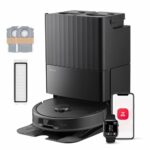
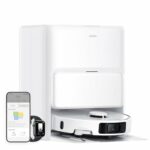
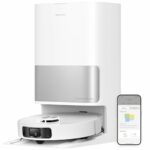
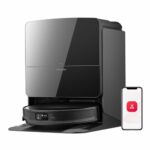
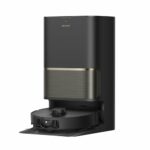
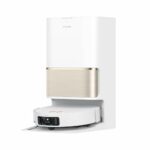
The Dreame L40 Ultra AE and Roborock Qrevo 2 Pro are two advanced robot vacuums in the multifunction-dock segment. The Dreame model arrived in 2025, while the Roborock was launched in August 2026. Both combine complete vacuuming and mopping systems with docks that automate dust emptying, hot-water mop washing and warm-air drying.
These robot vacuums are designed for users who want to automate home maintenance as much as possible. Differences in suction power, navigation systems and mopping capabilities will determine which model is better suited to each type of home and specific cleaning needs.
Suction Power and Vacuuming
The difference in suction power is significant. The Roborock Qrevo 2 Pro delivers 25,000 Pa, around 30% more than the 19,000 Pa of the Dreame L40 Ultra AE. In practice, this advantage can provide greater ability to extract embedded dirt from carpets or pick up heavier particles.
The main brush systems take different approaches. The Dreame uses a TriCut 3.0 brush, combining bristles with blades to cut tangled hair, and it can also lift while mopping. The Roborock uses the DuoDivide anti-tangle brush, specifically designed to push hair towards the central suction inlet and minimise tangles, although the brush itself does not lift.
The side brush also differs. The Qrevo 2 Pro uses a reversible anti-tangle design that reduces maintenance requirements. The Dreame uses a conventional side brush without these features. Neither model lifts the side brush while mopping.
Mopping
Both robot vacuums use two rotating mop pads, with similar speeds: 180 RPM on the Dreame and 200 RPM on the Roborock. Mop lifting creates a practical difference: the Qrevo 2 Pro reaches 15 mm compared with 10.5 mm on the Dreame. This allows the Roborock to cross short-pile carpets more effectively without wetting them.
The Dreame L40 Ultra AE features RoboSwing to extend the mop pads towards edges, using a specific movement that helps clean closer to skirting boards. The Roborock also extends its mop pads to improve edge coverage, although without this characteristic motion.
A major advantage of the Qrevo 2 Pro is its ability to automatically detach the mop pads at the dock when only vacuuming is required. The Dreame does not offer this feature, meaning the mop pads must be removed manually if you want to vacuum without mopping.
The Roborock mops with warm water, while the Dreame uses cold water. Both wash their mop pads at the dock with 75°C hot water and dry them with 45°C warm air. However, the Dreame detects dirt on both the mop pads and floor, allowing it to adjust cleaning intensity and re-clean dirtier areas. The Qrevo 2 Pro does not include these sensors.
Navigation System
Both models use a 360° LiDAR turret for mapping the home and front-facing sensors for obstacle avoidance. The Dreame complements its laser navigation with a front 3D sensor, while the Roborock uses structured light to detect objects.
The main difference is the AI camera on the Dreame L40 Ultra AE, which recognises up to 120 different obstacles and provides remote access for home monitoring. The camera also identifies pets and features a night-vision LED. The Qrevo 2 Pro does not include a camera, so it does not offer these visual recognition capabilities or remote camera access.
For intelligent cleaning, the Dreame uses CleanGenius 2.0 while the Roborock uses SmartPlan 3.0. Both systems optimise routes and adapt cleaning according to the type of surface detected.
Battery Life and Battery
Both models use 5,200 mAh batteries with fast charging. The Roborock Qrevo 2 Pro has a claimed runtime of 253 minutes, a figure that Dreame does not specify. This is enough to cover medium to large homes in a single session.
Both robot vacuums can cross obstacles up to 20 mm high, allowing them to handle thresholds and small level changes without difficulty.
Smart Features
Neither robot includes a robotic arm or its own built-in voice assistant. Both are compatible with Alexa, Google Home and the Matter protocol for integration into smart-home ecosystems.
The Dreame's ability to recognise pets and provide remote camera access adds value for homes with animals or users looking for additional monitoring features.
Multifunction Cleaning Dock
Both docks automatically empty the dustbin, wash the mop pads with 75°C hot water and dry them with 45°C warm air. The Dreame dock features second-generation washing tray self-cleaning, while the Roborock uses a removable tray that requires manual cleaning.
The Dreame L40 Ultra AE includes a detergent tank in the dock, automatically dispensing cleaning solution while washing the mop pads. The Qrevo 2 Pro does not offer this feature. Dreame also offers an optional plumbing connection kit sold separately, something the Roborock does not support.
In terms of capacity, the Dreame dock has the advantage with a 3.2-litre dust bag compared with 2.7 litres on the Roborock, a 4.5-litre clean-water tank versus 4 litres, and a 4-litre dirty-water tank versus 3 litres. These larger capacities mean longer intervals between maintenance tasks on the Dreame.
Dimensions
The robots have very similar dimensions. The Dreame measures 350 mm in diameter and 97 mm high, while the Roborock measures 352 mm in diameter and 96.6 mm high. This minimal difference has virtually no effect on their ability to fit underneath furniture.
The docks differ more noticeably: the Dreame measures 340 mm wide, 590.5 mm high and 456.7 mm deep. The Roborock measures 402 mm wide, 450 mm high and 494 mm deep. The Dreame is narrower but considerably taller, while the Roborock is wider and deeper but lower. It is worth measuring the available space before choosing.
Real-world user experience
For homes with pets, the Dreame L40 Ultra AE offers clear advantages thanks to its pet-recognition camera and TriCut 3.0 brush, which cuts hair. However, the Roborock's DuoDivide brush is specifically designed to prevent hair tangles, while its anti-tangle side brush also adds an advantage in this area.
In homes with carpets, the Qrevo 2 Pro's higher suction power can make a difference, especially on medium-pile carpets. Its greater mop lift also protects carpets more effectively while mopping.
For users who regularly switch between vacuuming and mopping depending on their needs, the Roborock is more practical because it automatically detaches the mop pads at the dock. The Dreame requires manual intervention for this task.
The Dreame's dirt detection on the mop pads and floor enables more adaptive mopping, making it particularly useful in kitchens or areas where stains are common. The detergent tank can also improve mopping results without requiring cleaning solution to be added manually.
The Dreame's larger tanks reduce maintenance frequency, which is relevant in large homes or when running several cleaning cycles each week. The Roborock, with its claimed 253-minute runtime, can cover large areas without intermediate charging.
Conclusion: Which one should you choose?
Choose the Dreame L40 Ultra AE if: You want longer intervals between maintenance thanks to its larger dock capacities. You value an AI camera with remote access and pet recognition. You want dirt detection for more intelligent mopping and have enough vertical space for a taller dock. The detergent tank and optional plumbing connection kit also add convenience if you are looking for greater long-term automation.
Choose the Roborock Qrevo 2 Pro if: You need maximum suction power for carpets or embedded dirt. You prefer a fully anti-tangle brush system, particularly useful in homes with pets. You value being able to switch easily between vacuuming and mopping thanks to automatic mop removal. Its higher mop lift offers better carpet protection, while warm-water mopping can slightly improve cleaning performance. The lower dock may also fit more easily into certain spaces.