✨ VS Analyses · VacuumSpain comparison technology. Explanation created with AI from verified technical data.
Introduction
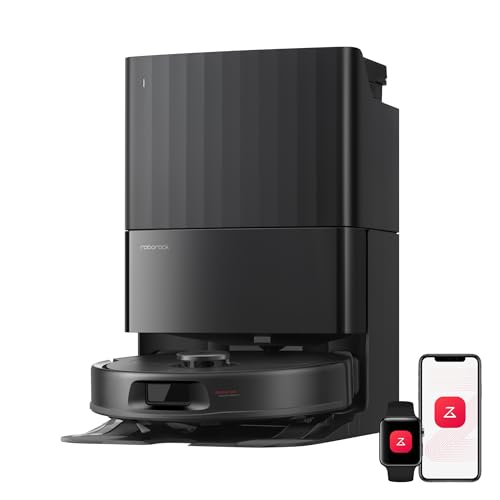
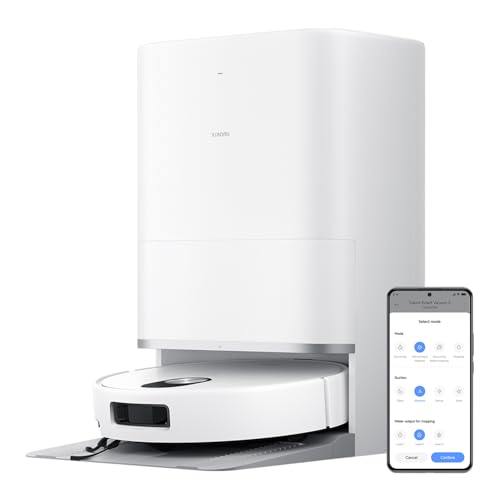
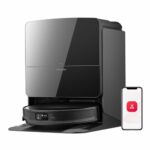
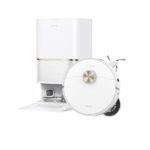
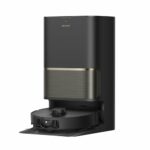
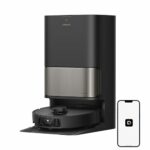
The Roborock Qrevo S Pro and the Xiaomi Robot Vacuum 5 represent two interesting propositions within the robot vacuum segment with multifunction base. The Roborock model arrived in April 2026, whilst the Xiaomi was launched in 2025. Both units are designed for users seeking to fully automate the cleaning of their homes, both in vacuuming and mopping, without needing to intervene in daily maintenance.
We're talking about robots with a complete base that washes and dries the mops with water and hot air, as well as automatically emptying the dust bin. This places them in a category where ease of use is a priority. The differences between both models lie in technical details that can make a difference to the experience depending on the type of home and specific cleaning needs.
Power and Suction
In suction power, the Xiaomi Robot Vacuum 5 sits slightly above with 20,000 Pascals, whilst the Roborock Qrevo S Pro reaches 18,500 Pascals. The difference isn't huge, but it can be noticeable on medium or long pile carpets, where those extra 1,500 Pascals help extract more ingrained dirt.
The brushing system presents important differences. The Roborock is equipped with a simple brush, whilst the Xiaomi mounts the TriCut 3.0 system, which combines bristles with blades designed to cut tangled hair. For homes with pets, this represents a clear advantage for the Xiaomi, reducing manual maintenance of the main brush.
Regarding the side brush, the Xiaomi Robot Vacuum 5 incorporates side extension, which allows it to sweep corners better and get closer to skirting boards. The Roborock doesn't have this function. Both models include an anti-tangle side brush, but neither offers lifting of the side brush or main brush during mopping.
Mopping
Both robots use a dual rotating mop system, which guarantees effective mopping on hard floors. The most relevant difference is in mop extension: the Xiaomi Robot Vacuum 5 can extend the mops to better reach edges and corners, whilst the Roborock Qrevo S Pro doesn't have this feature. In practice, this translates to more complete mopping in areas close to walls and furniture with the Xiaomi model.
Mop lifting also varies. The Xiaomi raises them up to 15 mm when it detects carpets, compared to the 10 mm of the Roborock. Those additional 5 mm can make the difference on higher pile carpets, preventing wet mops from touching them.
Both units wash the mops with hot water and dry them with hot air, which helps keep the mops hygienic and odour-free. However, the Xiaomi adds self-cleaning of the washing tray, a function the Roborock doesn't include. This reduces manual maintenance of the base, as the station itself takes care of cleaning the area where it washes the mops. Neither model automatically removes the mops at the base nor detects dirt on mops or floor to re-clean problematic areas.
Navigation System
Here we find interesting technical differences. The Roborock Qrevo S Pro uses a traditional LiDAR 3.0 turret, whilst the Xiaomi Robot Vacuum 5 opts for retractable LiDAR. The latter hides inside the robot's body, reducing the total height of the appliance. This explains why the Xiaomi measures 88 mm tall compared to the 96.5 mm of the Roborock.
The Xiaomi also incorporates a front 3D laser sensor for obstacle avoidance, something the Roborock doesn't have. This sensor improves detection of small objects on the floor, such as cables, socks or toys. Both models have obstacle avoidance systems, but the Xiaomi's additional sensor offers an extra layer of precision.
Both robots integrate intelligent AI cleaning. The Roborock specifies that it uses SmartPlan 2.0, whilst the Xiaomi also has intelligent functions without specifying a trade name. Neither includes a front camera, pet recognition, curtain detection, night vision LED nor remote camera access.
Battery Life and Battery
The battery capacity is identical in both: 5,200 mAh. However, the declared battery life differs quite a bit. The Roborock Qrevo S Pro achieves 180 minutes of continuous operation, whilst the Xiaomi Robot Vacuum 5 manages 140 minutes. Those extra 40 minutes of the Roborock can be decisive in large homes or with complex layouts.
In homes of more than 150 square metres, the Roborock's battery life allows complete cleans to be finished without needing to return to charge mid-cycle. The Xiaomi, with 140 minutes, is still sufficient for most homes, but may require an intermediate recharge on very large surfaces.
Smart Features
Both robots can overcome obstacles up to 20 mm in height, such as thick carpets or small level changes between rooms. Neither is equipped with a robotic arm nor its own voice assistant, although both are compatible with external assistants such as Alexa or Google Home for voice control.
Multifunction Cleaning Base
Both bases fulfil the essential functions: auto-emptying of the dust bin, washing mops with hot water and drying with hot air. The Roborock's dust bag has a capacity of 2.7 litres, slightly larger than the Xiaomi's 2.5 litres. In day-to-day use, this difference is barely noticeable, as both require a bag change every month or month and a half under normal usage conditions.
The clean water tanks are equal: 4 litres in both cases. The Roborock's dirty water tank is 3.5 litres, whilst the Xiaomi's reaches 3.8 litres. The difference is minimal and doesn't significantly affect maintenance frequency.
The Xiaomi Robot Vacuum 5's advantage is in the self-cleaning of the washing tray, which the Roborock doesn't offer. This reduces the need to manually clean the base, something that should be done weekly on models without this function. Neither includes a detergent tank, UV disinfection nor connection to water pipes.
Dimensions
The Xiaomi Robot Vacuum 5 measures 88 mm in height, which allows it to slip under low furniture more easily than the Roborock Qrevo S Pro, which reaches 96.5 mm. Those 8.5 mm of difference can be determining factors for accessing under sofas, beds or kitchen units with little clearance from the floor. The diameter is practically identical: 353 mm for the Roborock and 350 mm for the Xiaomi.
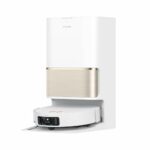
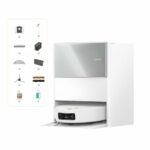
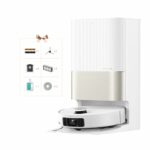
As for the bases, the Roborock measures 340 mm wide, 519 mm tall and 487 mm deep. The Xiaomi is somewhat wider (360 mm) and taller (572 mm), but less deep (470 mm). Both bases occupy considerable space, something to bear in mind if the installation location is tight.
Real-World Usage Experience
For large homes, the Roborock Qrevo S Pro offers greater battery life, which translates to complete cleans without interruptions. However, the Xiaomi Robot Vacuum 5 compensates with more suction power, extendable side brush, mop extension and better ability to get under low furniture.
In homes with pets, the Xiaomi's TriCut 3.0 system notably reduces hair tangling on the main brush, something that makes maintenance easier. The Roborock, with a simple brush, will require more manual attention in this regard.
If the priority is mopping edges and corners, the Xiaomi has a clear advantage with mop extension and the extendable side brush. For floors with high pile carpets, the Xiaomi's 15 mm lift also surpasses the Roborock's 10 mm.
The Xiaomi's front 3D laser sensor improves navigation in environments with many small obstacles, whilst the Roborock opts for a more traditional system but with greater battery life. The self-cleaning of the tray on the Xiaomi reduces base maintenance, something that can be especially valued if maximum automation is sought.
Conclusion: Which to Choose?
Choose the Roborock Qrevo S Pro if… your home exceeds 120-150 square metres and you need battery life to complete cleans without intermediate recharges. Also if you prefer a brand with an established track record and reputation for reliability in the sector. The larger dust bag capacity and extended battery life are its strong points.
Choose the Xiaomi Robot Vacuum 5 if… you have pets and want to reduce main brush maintenance, you value more complete mopping on edges and corners, or you need the robot to pass under low furniture. The greater suction power, front 3D laser sensor, self-cleaning tray and lower robot height make it a very complete option. Its navigation system with retractable LiDAR and the brush and mop extensions mark clear functional differences in daily use.