✨ VS Analyses · VacuumSpain comparison technology. Explanation created with AI from verified technical data.
Introduction
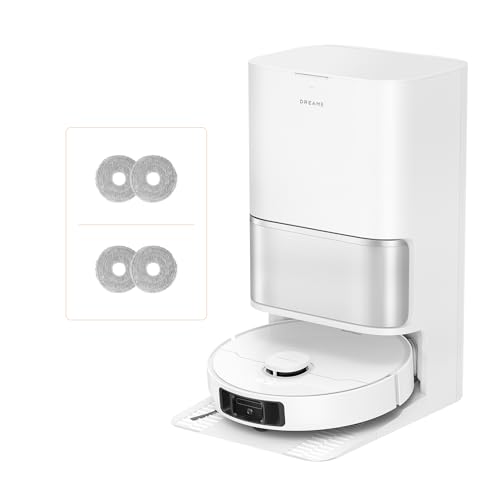
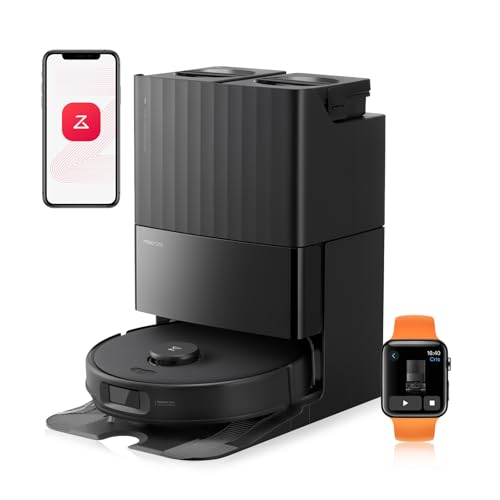
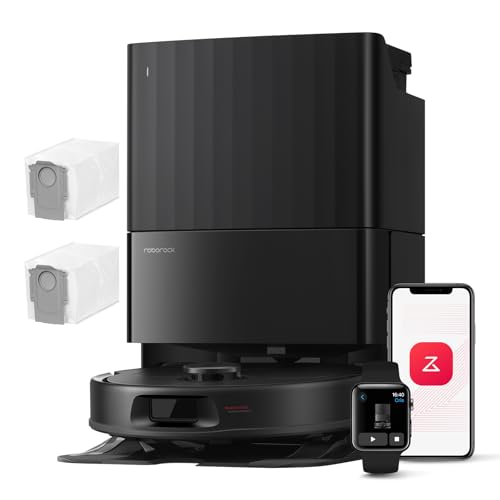
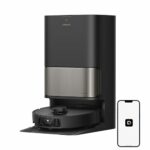
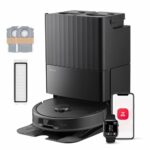
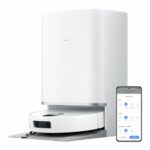
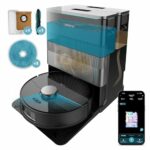
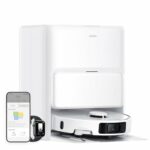
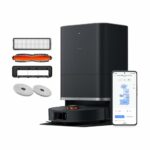
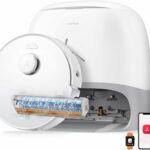
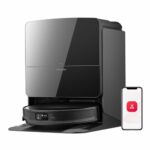
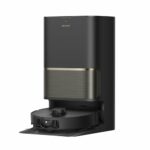
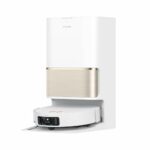
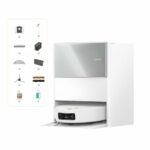
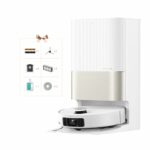
The Dreame L10s Ultra Gen 3, the Roborock Qrevo Edge S5A and the Roborock QV 35A represent three propositions within the robot vacuum segment with multifunction base, each with features that place them at different performance levels. The Dreame model, launched in November 2025, positions itself as the most powerful option of the trio, whilst the two Roborock units offer differentiated solutions: the Qrevo Edge S5A from 2024 stands out in cleaning intelligence, and the QV 35A from 2025 presents itself as a more accessible alternative without sacrificing essential functions.
These robots are designed for users seeking to completely automate home cleaning, with bases that handle self-emptying, washing and drying of mops. The choice between them will depend on factors such as the suction power required, the size of the home, the presence of pets or the importance given to advanced detection functions.
Power and Suction
The most evident difference between these models lies in suction power. The Dreame L10s Ultra Gen 3 develops 25,000 Pa, a figure that places it well above the Roborock Qrevo Edge S5A with its 18,500 Pa. The Roborock QV 35A remains at 8,000 Pa, a power that proves sufficient for daily maintenance but may fall short on carpets or when there are pets at home.
Regarding the brushing system, the Qrevo Edge S5A incorporates the DuoDivide Antienredos brush, a specific Roborock design that pushes hairs towards the central gap to facilitate suction and reduce tangles. Both the Dreame and the QV 35A mount simple brushes, although this doesn't necessarily mean worse performance, simply a different approach in design.
All three models can overcome obstacles up to 20 mm in height. The extendable side brush is present on the Dreame L10s Ultra Gen 3 and on the Qrevo Edge S5A, which allows them to sweep corners better by projecting the brush outwards. The QV 35A does without this function. Regarding the anti-tangle side brush, only the two Roborock models incorporate it, something to bear in mind if there are long-haired pets at home.
Mopping
All three units use a system of two rotating mops, the current standard in mid-to-high-range robots. Mop lifting varies slightly: the Dreame raises up to 10.5 mm, whilst both Roborock models reach 10 mm. These are minimal differences that in practice don't represent a significant change.
Where important differences do appear is in mop extension to reach edges. The Dreame L10s Ultra Gen 3 integrates the Roboswing system, which performs a swinging movement to get the mop under furniture or protrusions. The Qrevo Edge S5A features standard mop extension, effective but without that additional movement. The Roborock QV 35A doesn't have mop extension, which limits its ability to mop edges close to skirting boards or furniture.
Dirt detection is exclusive to the Roborock Qrevo Edge S5A, which can identify both dirt on the mops and on the floor, adjusting mopping accordingly. This function makes a real difference in the quality of the final result, especially in areas with higher traffic or persistent stains.
Navigation System
All three robots employ LiDAR turret as the basis of their navigation, guaranteeing precise mapping and orderly movement. All feature obstacle avoidance, although with different levels of sophistication.
The Dreame L10s Ultra Gen 3 incorporates a front 3D laser sensor that the Roborock models don't have, improving detection of small or low-height objects. Additionally, it includes specific pet recognition, a function that can prove useful for identifying areas where the animal spends more time and adjusting cleaning.
Regarding cleaning intelligence, the Dreame mounts CleanGenius whilst the Roborock models use SmartPlan. The Qrevo Edge S5A also incorporates the RR Mason 11.0 algorithm, an updated version of Roborock's software. None of the three includes a camera with remote access or LED for night vision.
Autonomy and Battery
All three models mount 5,200 mAh batteries, but performance varies. The Dreame L10s Ultra Gen 3 achieves 231 minutes of autonomy, compared to the 180 minutes of both Roborock models. That 51-minute difference can be decisive in large homes or when scheduling a complete clean with vacuuming and mopping.
In practice, the Dreame can cover larger surfaces without needing to return to the base to recharge mid-task. The Roborock models, with 180 minutes, still offer sufficient autonomy for most medium-sized homes, but may require an intermediate recharge in spaces exceeding 150 square metres with intensive cleaning.
Smart Functions
All three robots can overcome steps up to 20 mm, a standard capability that facilitates transit between different surfaces or small level changes. None incorporates a robotic arm or own voice assistant, although all are compatible with Alexa and Google Home for external voice control.
The Dreame stands out with its CleanGenius system, which automatically manages cleaning parameters. The Roborock models respond with SmartPlan, and in the case of the Qrevo Edge S5A, the RR Mason 11.0 processor provides an additional layer of optimisation in routes and cleaning decisions.
Multifunction Cleaning Base
All include a multifunction base with self-emptying, washing and drying of mops. Washing is carried out with hot water in all three cases, and drying with hot air, functions that guarantee clean mops without bad odours.
Washing tray self-cleaning presents significant differences. The Dreame L10s Ultra Gen 3 mounts the third generation of this system, the Qrevo Edge S5A the 2.0 version, and the QV 35A doesn't have this function. This means that with the QV 35A the tray will need to be cleaned manually more frequently.
The detergent tank is only present on the Dreame, allowing cleaning product to be added which is automatically dispensed during mop washing. The Roborock models require detergent to be added manually to the water tank if one wishes to use it.
Regarding capacities, the Dreame has the advantage with 3.2 litres of dust bag compared to the Roborock's 2.7 litres, 4.5 litres of clean water compared to 4 litres, and 4 litres of dirty water compared to 3.5 litres. These differences translate into less maintenance and greater autonomy between emptying and filling.
The Dreame also includes an optional kit for connection to plumbing, which is purchased separately. It's not an integrated connection, but can prove interesting for those who want to minimise manual interventions as much as possible. The Roborock models don't offer this possibility.
Dimensions
The differences in size are minimal. The diameter varies between the Dreame's 350 mm and the QV 35A's 353 mm, an imperceptible difference. The height ranges between the QV 35A's 96.5 mm and the Qrevo Edge S5A's 98 mm, with the Dreame positioned at 97 mm. Any of the three can pass under standard furniture with similar clearance.
The bases present more variation. The Dreame measures 590 mm in height compared to the 521 mm of both Roborock models, although it's less deep at 457 mm compared to the Roborock models' 487 mm. The width is identical on all three: 340 mm. It's advisable to measure the available space, especially in height, before deciding.
Real-world usage experience
For large homes, the Dreame L10s Ultra Gen 3 offers clear advantages: greater autonomy, larger tanks and superior power. The combination of 231 minutes of battery and 25,000 Pa makes it especially suitable for houses over 120 square metres or with thick carpets.
If there are pets, the Dreame's power proves decisive, although the Qrevo Edge S5A's DuoDivide Antienredos brush and its anti-tangle side brush partially compensate for that difference. The Dreame's specific pet recognition provides an added benefit in homes with animals.
The Roborock Qrevo Edge S5A stands out in cleaning intelligence thanks to its dirt detection on mops and floor, which translates into more efficient mopping without manual intervention. Its RR Mason 11.0 processor and 2.0 tray self-cleaning position it as a balanced option for those who prioritise mopping quality over raw power.
The Roborock QV 35A works well in small or medium flats without thick carpets or long-haired pets. Its 8,000 Pa power is sufficient for hard floors and daily maintenance, although it falls short in more demanding situations. The absence of mop extension and tray self-cleaning positions it as the most basic option of the trio.
Conclusion: Which to choose?
Choose the Dreame L10s Ultra Gen 3 if you're seeking maximum suction power and autonomy, you have a large home, you live with pets or you need to vacuum carpets regularly. The larger tanks, the Roboswing system for edges, the detergent tank and the third-generation tray self-cleaning justify its selection for those wanting to minimise maintenance. The 3D laser sensor and pet recognition add value in homes with animals.
Choose the Roborock Qrevo Edge S5A if you particularly value mopping quality and cleaning intelligence. Its dirt detection on mops and floor, the DuoDivide Antienredos brush and the RR Mason 11.0 processor make it a very complete option for medium-sized homes where mopping is a priority. The 18,500 Pa power proves sufficient for most situations, and the more compact base facilitates its placement.
Choose the Roborock QV 35A if your home is small or medium-sized, the floors are mainly hard, there are no long-haired pets and you're seeking an automated cleaning solution without needing the most advanced features. It's the most budget-friendly option of the three, maintaining essential functions such as a multifunction base with washing and drying of mops with hot air, although it requires more manual attention in tray cleaning.