✨ VS Analyses · VacuumSpain comparison technology. Explanation created with AI from verified technical data.
Introduction
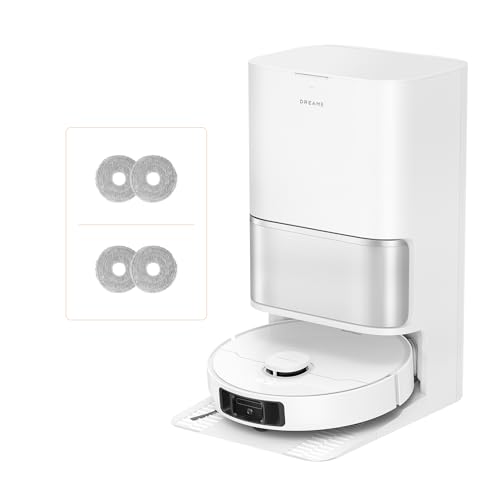
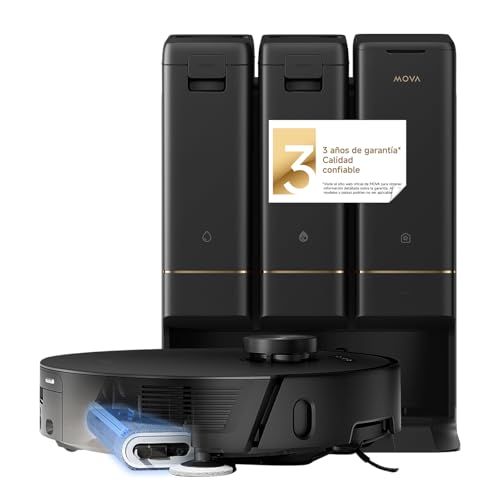
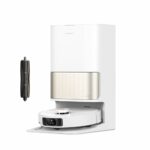
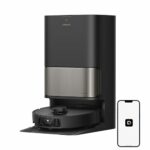
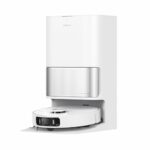
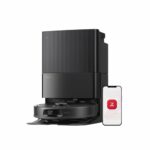
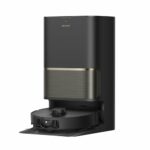
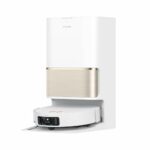
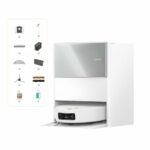
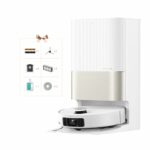
The Dreame L10s Ultra Gen 3 and the Mova Z50 Ultra represent two advanced propositions in the robot vacuum market with multifunction base stations. Both devices arrive in 2025 with complete solutions that combine vacuuming, mopping and automatic maintenance in the base, albeit with different technical approaches.
The Dreame model, launched in November 2025, focuses on suction power as its main selling point, whilst Mova integrates more developed artificial intelligence technologies and a different mopping system. This robot vacuum comparison analyses the real differences between both to help you decide which robot to choose according to your needs.
Power and Suction
The suction power marks a notable difference. The Dreame robot vacuum reaches 25,000 Pa, a figure higher than the 19,000 Pa of the Mova Z50 Ultra. In practice, this translates to greater capacity to extract ingrained dirt from carpets or vacuum heavy particles.
The brushing system shows different approaches. The Dreame L10s Ultra Gen 3 features a simple brush without anti-tangle specifications, whilst the Mova Z50 Ultra incorporates the TriCut 3.0 system that combines bristles with blades to cut hair. The latter can also raise the main brush during mopping, something the Dreame model doesn't offer.
Both robots include an extendable side brush to improve corner cleaning. However, the Mova Z50 Ultra adds two advantages: it can raise its side brush during mopping and features anti-tangle technology in this component. The Dreame lacks both of these functions.
Mopping
Here we find fundamental differences in design. The Dreame robot vacuum uses two rotating mops with Roboswing movement, which allows the robot to make a special movement to get the mop under furniture overhangs. The Mova Z50 Ultra opts for a 100 mm wide roller and adds a mini side mop for edges.
Mop lifting also varies: 10.5 mm in the Dreame L10s Ultra Gen 3 versus 7 mm in the Mova. This can make the difference when passing over thin carpets or transitions between floors.
The Mova Z50 Ultra mops with hot water at 38°C, whilst the Dreame uses cold water. Water temperature can influence the removal of more stubborn stains. Additionally, the Mova model incorporates dirt detection on both the mops and the floor, allowing it to re-clean particularly dirty areas or wash the mops when it detects they're too dirty. The Dreame doesn't have either of these detection functions.
Regarding mop washing in the base, the Dreame L10s Ultra Gen 3 washes with cold water whilst the Mova Z50 Ultra does so with hot water. Both dry the mops with hot air. Neither automatically removes the mops in the base to perform vacuum-only tasks.
Navigation System
Both robots use a 3D LiDAR turret and front 3D laser sensor for navigation and obstacle avoidance. Both recognise pets and are compatible with external voice assistants such as Alexa or Google Home.
The major difference lies in artificial intelligence capabilities. The Mova Z50 Ultra integrates a dual AI camera, recognises up to 160 types of obstacles, detects curtains, includes LED for night vision and allows remote camera access. The Dreame L10s Ultra Gen 3 doesn't have any of these functions. This means the Mova offers greater precision in object recognition and the possibility of remote surveillance.
The Mova Z50 Ultra also incorporates AI stain recognition and a proprietary voice assistant, functions absent in the Dreame model. Both feature CleanGenius AI intelligent cleaning.
Runtime and Battery
The Mova Z50 Ultra is equipped with a higher capacity battery: 6,400 mAh versus the 5,200 mAh of the Dreame L10s Ultra Gen 3. However, we only know the runtime of the Dreame: 231 minutes of continuous operation.
This Dreame robot vacuum runtime is sufficient for medium-large sized homes in a single cycle. The Mova's greater battery capacity suggests similar or superior runtime, although the data isn't available.
Smart Functions
The ability to overcome thresholds is slightly superior in the Mova Z50 Ultra, with 22 mm versus the 20 mm of the Dreame L10s Ultra Gen 3. Two millimetres may seem little, but in practice they determine whether the robot passes certain door thresholds or level changes between rooms.
The robot's water tank also differs: 80 ml in the Dreame versus 160 ml in the Mova. More capacity means fewer trips to the base to refill water during mopping of large surfaces. The dust bin is identical in both: 300 ml.
Multifunction Cleaning Base
Both bases perform auto-emptying of the dust bin, washing and drying of mops with hot air, and have a detergent tank. The clean water (4.5 litres) and dirty water (4 litres) tanks are the same.
The Mova Z50 Ultra's dust bag has greater capacity: 4 litres versus 3.2 litres of the Dreame. This means changing it less frequently.
An important difference: the Dreame L10s Ultra Gen 3 includes third-generation washing tray self-cleaning, a function the Mova doesn't have. This reduces manual maintenance of the base.
The Dreame offers an optional plumbing connection kit that's purchased separately. The Mova doesn't have this option. Neither includes integrated plumbing connection as standard nor UV disinfection.
Dimensions
The diameter is identical in both robots: 350 mm. The height marks a relevant difference: 97 mm in the Dreame L10s Ultra Gen 3 versus 111 mm in the Mova Z50 Ultra. Those additional 14 mm may prevent the Mova from passing under certain low furniture where the Dreame would fit.
The bases have similar dimensions but with variations. The Dreame's measures 340 mm wide, 590 mm high and 457 mm deep. The Mova's is wider (390 mm), less tall (545 mm) and slightly deeper (463.3 mm). It's advisable to measure the available space before deciding.
Real-world experience
For homes with thick carpets or pets that shed a lot of hair, the Dreame L10s Ultra Gen 3 offers greater suction power. Its lower height facilitates cleaning under low furniture. The tray self-cleaning reduces base maintenance.
The Mova Z50 Ultra excels in artificial intelligence and mopping. Hot water for both floor mopping and mop washing can improve results on difficult stains. Dirt detection allows re-cleaning of areas that need it without manual intervention. The 100 mm wide roller covers more surface area in each pass. The TriCut 3.0 brush and anti-tangle functions particularly benefit households with long-haired pets.
The Mova's dual AI camera recognises many more objects and allows remote surveillance, useful if you want to supervise cleaning from outside the home or monitor pets. The night LED improves navigation in dark areas.
The larger robot water tank in the Mova (160 ml versus 80 ml) reduces interruptions in homes with large hard floor areas. The 4-litre dust bag also requires fewer changes than the Dreame's 3.2-litre one.
Conclusion: Which to choose?
Choose the Dreame L10s Ultra Gen 3 if... you're looking for maximum suction power for carpets or difficult dirt, you need a robot that passes under low furniture, you value the Roboswing movement to reach under overhangs, you prefer greater mop lifting (10.5 mm) or you want a base with tray self-cleaning that minimises maintenance. The option to add plumbing connection may also interest you in the long term.
Choose the Mova Z50 Ultra if... you prioritise advanced artificial intelligence with dual camera and recognition of 160 obstacles, you need mopping with hot water both on the floor and in mop washing, you want dirt detection to automatically re-clean areas, you value the TriCut 3.0 brush with anti-tangle functions (ideal with pets), you're looking for remote camera access for surveillance, you prefer a wide mopping roller or you need greater capacity in the robot's water tank and in the base's dust bag. The proprietary voice assistant also adds convenience.
In short, this comparison between the Dreame robot vacuum and the Mova robot vacuum shows two different philosophies: raw power and reduced maintenance versus artificial intelligence and mopping versatility. Your choice will depend on whether you value suction capacity and reduced height more, or intelligent functions and the hot water mopping system.