✨ VS Analyze · VacuumSpain comparison technology. AI-generated explanation based on verified technical data.
Introduction
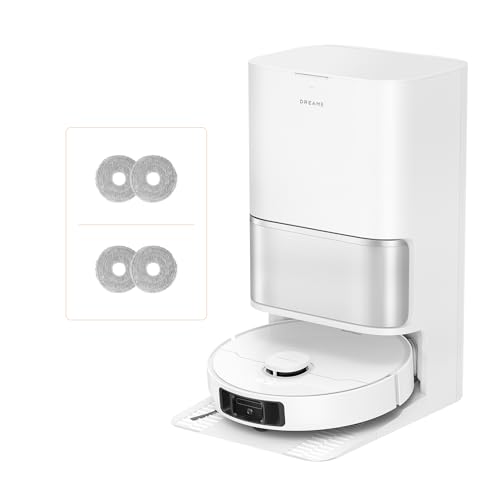
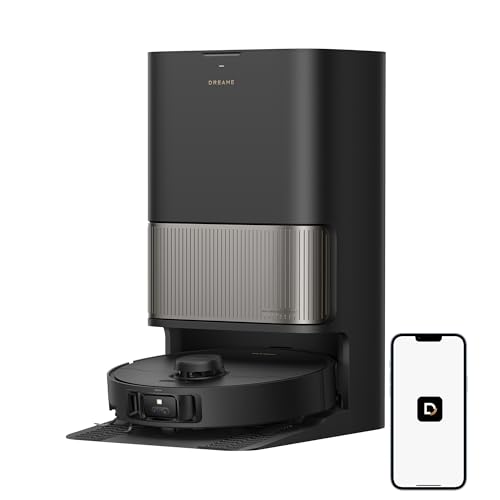
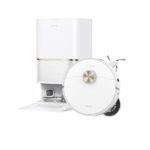
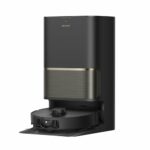
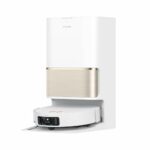
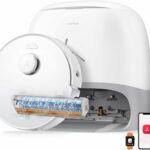
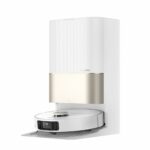
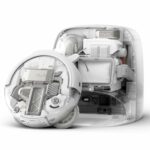
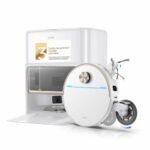
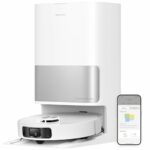
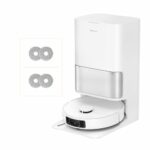
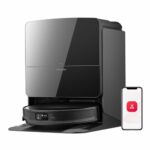
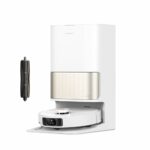
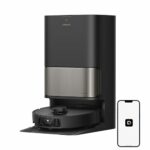
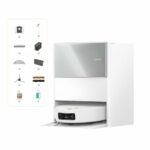
Dreame and Roborock present three high-end proposals that compete directly in the premium market segment. The Dreame L10s Ultra Gen 3 and the Dreame L40s Pro Ultra represent two levels within the same family, whilst the Roborock Saros Z70 brings the experience of the world's leading brand in robot vacuum cleaners. All three models arrived on the market during 2025, with the L10s Ultra Gen 3 launched specifically in November.
We're talking about robots with complete multifunction bases that wash and dry mops, vacuum with powers exceeding 19,000 Pa and feature advanced navigation systems. However, the technical differences are significant and result in quite distinct user experiences.
Power and Suction
The Dreame L10s Ultra Gen 3 clearly leads in raw power with 25,000 Pa, a figure that exceeds the L40s Pro Ultra by 6,000 Pa and the Saros Z70 by 3,000 Pa. This difference can be particularly noticeable on thick carpets or when there's significant dirt accumulation. The L40s Pro Ultra remains at 19,000 Pa, whilst the Roborock reaches 22,000 Pa, a more balanced figure.
Regarding the brushing system, the L10s Ultra Gen 3 features a traditional single brush. The L40s Pro Ultra incorporates a dual brush, a configuration that improves dirt collection in a single pass. The Saros Z70 opts for an anti-tangle brush, a practical solution for homes with pets or long hair.
All three models include an extendable side brush to improve corner cleaning. However, the L10s Ultra Gen 3 doesn't lift either the main brush or the side brush during mopping, whilst the L40s Pro Ultra and the Saros Z70 do. This prevents the brushes from getting unnecessarily wet and allows for more efficient mopping. Additionally, only these latter two are equipped with anti-tangle side brushes, reducing maintenance in homes with hair.
Mopping
All three robots mop with two rotating mops that extend to better reach edges. The L10s Ultra Gen 3 and the L40s Pro Ultra include Dreame's Roboswing system, a lateral movement that helps introduce the mop under furniture and overhangs. The Saros Z70 also extends its mops, although without specifying the same system.
Mop lifting reaches 10.5 mm on both Dreame models, sufficient to protect medium-thickness carpets. The Roborock goes further with variable lifting between 12 and 22 mm, adapting better to thicker carpets.
An important difference appears in the mopping water temperature. The Saros Z70 mops with warm water, which helps better dissolve grease and stubborn stains. The Dreame models use cold water. At the base, all three wash the mops with hot water and dry them with hot air, guaranteeing hygiene and preventing bad odours.
The L40s Pro Ultra and the Saros Z70 automatically detach the mops at the base when only vacuuming is needed. The L10s Ultra Gen 3 doesn't offer this function, which requires manual removal if you want to avoid dragging them in vacuum mode. Furthermore, these two models detect dirt both on the mops and on the floor, adjusting the cleaning process. The L10s Ultra Gen 3 lacks this intelligent detection.
Navigation System
The Dreame L10s Ultra Gen 3 navigates using a LiDAR turret and front 3D laser sensor, but doesn't incorporate a camera. This limits its visual recognition capabilities and doesn't allow remote access for surveillance. It recognises pets, but without the precision that an AI camera provides.
The L40s Pro Ultra takes a considerable leap with dual AI cameras, night vision LED and remote camera access. It recognises up to 180 different types of obstacles, detects curtains to avoid tangles and adjusts cleaning according to visually detected dirt. The Saros Z70 also features dual AI cameras with night LED and remote access, recognising 108 obstacles. Both models allow the robot to be used as a surveillance camera when not cleaning.
Roborock's StarSight 2.0 system and the RR Mason 12.0 algorithm offer particularly refined navigation, the result of years of the brand's experience in the sector. Dreame opts for its CleanGenius technology in both models, with a clear advantage for the L40s Pro Ultra thanks to its cameras.
Autonomy and Battery
The Roborock Saros Z70 is equipped with a 6,400 mAh battery, significantly superior to the 5,200 mAh of the two Dreame models. This extra capacity can translate into greater autonomy, especially useful in large homes or when several intensive mopping passes are needed.
In practice, the L10s Ultra Gen 3 offers 231 minutes of declared autonomy, whilst the L40s Pro Ultra reaches 220 minutes. The difference between them is minimal despite having the same battery, probably due to the additional consumption of the extra cameras and sensors of the L40s Pro Ultra. Roborock doesn't specify concrete minutes of autonomy, although its larger battery suggests similar or superior durations.
Smart Functions
All three robots overcome obstacles, although with differences. The L10s Ultra Gen 3 crosses up to 20 mm in height. The L40s Pro Ultra and the Saros Z70 can overcome simple steps, which in practice usually means similar or slightly superior capabilities.
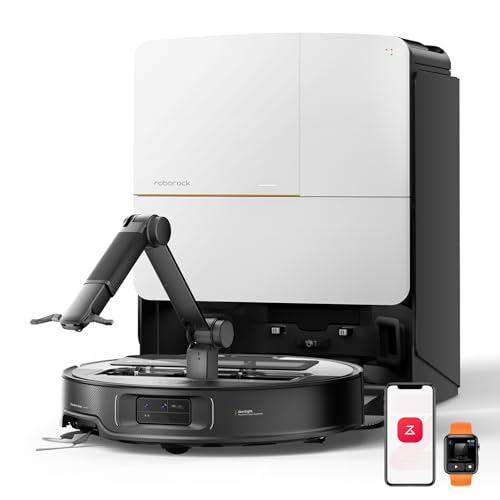
The big difference is marked by the Roborock Saros Z70 with its OmniGrip robotic arm, capable of picking up small objects from the floor before cleaning. Neither of the Dreame models offers this function, which can be especially useful in homes with children or habitual clutter.
The L40s Pro Ultra and the Saros Z70 integrate their own voice assistant, allowing commands to be given directly to the robot without needing to use the mobile. The L10s Ultra Gen 3 doesn't include this function, although all three are compatible with external assistants such as Alexa or Google Home.
Multifunction Cleaning Base
All three bases auto-empty the dust container, wash the mops with hot water and dry them with hot air. They also include a detergent tank and self-cleaning system for the washing tray. Dreame equips the third generation of this system in both its models; Roborock uses version 2.0.
The dust bag capacity reaches 3.2 litres in the Dreame models, compared to 2.5 litres for the Roborock. The clean water tanks are 4.5 litres in the Dreame models and 4 litres in the Saros Z70. For dirty water, the Dreame models offer 4 litres and the Roborock 3 litres. These differences can be noticeable in large homes, where greater capacity means fewer trips to empty or refill.
Dreame offers an optional plumbing connection kit that is purchased separately, allowing complete automation of water filling and emptying. Roborock doesn't have this option on the Saros Z70.
Dimensions
The Roborock Saros Z70 stands out with only 79.8 mm in height, making it the lowest of the three. This measurement allows it to slip under furniture where the others can't reach. The Dreame L10s Ultra Gen 3 measures 97 mm, already quite compact, but the L40s Pro Ultra reaches 103.8 mm due to the LiDAR turret and additional cameras.
In diameter they're practically identical: 350 mm for the Dreame models, 353 mm for the Roborock. Weight isn't specified for any of them.
The Dreame bases are taller (590 mm) than the Saros Z70 (488 mm), although the latter is somewhat wider (381 mm compared to 340 mm) and deeper (475 mm compared to 457 mm). It's advisable to measure the available space before deciding, especially if you're planning to place the base in a cupboard or specific recess.
Real-World User Experience
For large homes, the Roborock Saros Z70 provides the largest battery and reduced height that makes it easier to clean under more furniture. Its recognition capability with 108 obstacles and the robotic arm add versatility in complex spaces. The Dreame models compensate with larger water tanks and dust bag, reducing manual interventions.
In homes with pets, the anti-tangle brush of the Saros Z70 and the anti-tangle side brushes of the L40s Pro Ultra and the Saros Z70 clearly reduce maintenance. The L10s Ultra Gen 3, with its power of 25,000 Pa, compensates for the lack of these features with brute vacuuming force, although it will require cleaning the brush more frequently.
If there are thick carpets, the mop lifting of the Saros Z70 (up to 22 mm) offers a greater safety margin. For hard floors with grease or difficult stains, the Roborock's warm mopping water makes a difference compared to the cold water of the Dreame models.
The presence of AI cameras in the L40s Pro Ultra and the Saros Z70 substantially improves the experience: precise obstacle recognition, dirt detection, remote access as a surveillance camera and more intelligent navigation. The L10s Ultra Gen 3 forgoes all of this, simplifying the system but losing advanced capabilities.
Conclusion: Which One to Choose?
Choose the Dreame L10s Ultra Gen 3 if you're looking for maximum vacuuming power and prefer a simpler robot without cameras. It's suitable for homes where privacy is a priority or you simply don't need surveillance functions. Its price is usually more competitive than the L40s Pro Ultra, offering good value for money with a complete multifunction base. Ideal if you don't have very thick carpets or pets that shed a lot of hair.
Choose the Dreame L40s Pro Ultra if you value artificial intelligence applied to cleaning: dirt detection, recognition of 180 obstacles, automatic mop detachment and remote camera access. It's Dreame's most complete option, with anti-tangle side brush and brush lifting during mopping. Perfect for homes with pets, children or complex spaces where visual recognition makes the difference. Also interesting if you want to use the robot as an occasional surveillance camera.
Choose the Roborock Saros Z70 if you want the experience of the world's leading brand, with the reliability and app quality that characterises Roborock. Its OmniGrip robotic arm is unique amongst these three models, useful in homes with habitual clutter. The height of only 79.8 mm allows cleaning under practically any furniture, the 6,400 mAh battery offers greater autonomy and mopping with warm water improves results on difficult stains. Recommended for large homes, with thick carpets (thanks to its lifting of up to 22 mm) and users seeking the most refined technology on the market.