✨ VS Analyses · VacuumSpain comparison technology. Explanation created with AI from verified technical data.
Introduction
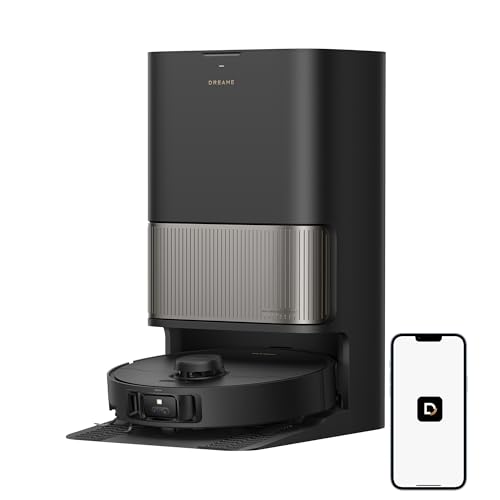
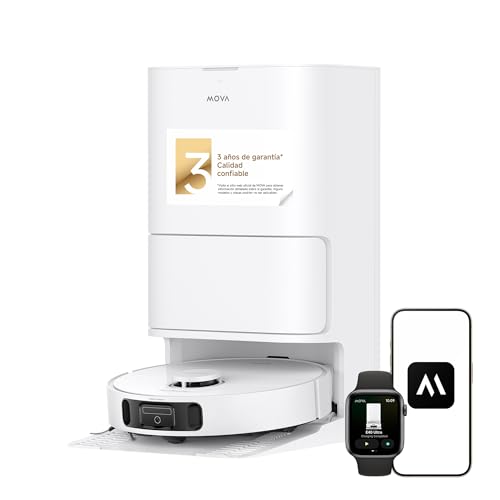
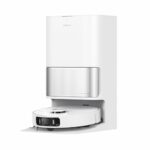
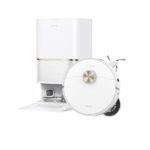
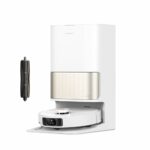
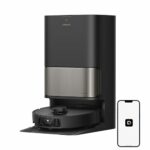
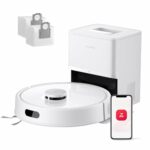
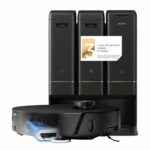
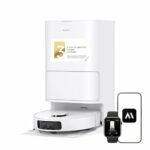
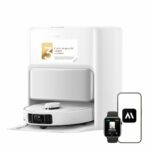
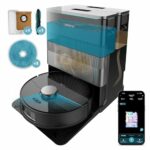
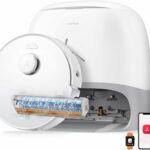
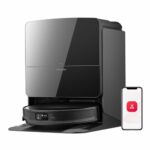
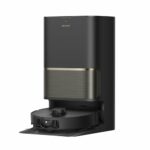
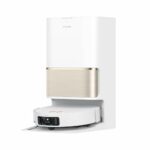
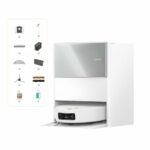
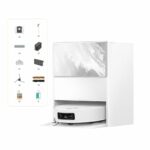
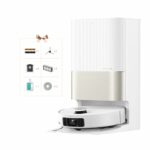
When choosing a high-end robot vacuum in 2025, Dreame's latest offerings present an interesting dilemma. The Dreame L10s Ultra Gen 2 arrived in 2024 as a solid mid-to-premium option, whilst the Dreame L40s Pro Ultra represents the brand's 2025 flagship with cutting-edge features. Meanwhile, Mova—Dreame's sister brand—enters the scene with the E40 Ultra, offering similar specifications at a potentially different price point.
All three robots feature multifunction bases that handle automatic emptying, mop washing with hot water, and hot air drying. They're designed for users who want minimal maintenance and effective mopping performance. The real question becomes whether the advanced features of the L40s Pro Ultra justify the likely price difference, or if the L10s Ultra Gen 2 and Mova E40 Ultra offer better value for most homes.
Suction Power and Brushing
The most striking difference in this comparison lies in raw suction capability. The Dreame L10s Ultra Gen 2 delivers 10,000 Pa, which handles everyday cleaning tasks competently. However, both the Dreame L40s Pro Ultra and Mova E40 Ultra nearly double that figure with 19,000 Pa. This isn't just marketing fluff—in practice, that extra power makes a tangible difference on carpets, rugs, and when dealing with embedded dirt in grout lines.
The brush configuration tells an equally interesting story. The L40s Pro Ultra employs a dual brush system, which increases the cleaning path width and improves debris pickup efficiency. The L10s Ultra Gen 2 and Mova E40 Ultra stick with single brushes. What's more, the flagship model can lift its main brush during mopping operations, preventing the transfer of wet debris back onto cleaned floors—a detail that matters when you're running combined vacuum and mop cycles.
Side brush technology also diverges significantly. The L40s Pro Ultra features an extendable side brush that reaches further into corners and along edges, plus it lifts during mopping to avoid flicking dirty water onto skirting boards. It also includes anti-tangle technology on the side brush. The Mova E40 Ultra offers anti-tangle side brushes as well, whilst the L10s Ultra Gen 2 lacks both features. For homes with long-haired occupants or pets, these details can reduce maintenance frequency considerably.
Mopping Systems
All three robots use dual rotating mopads with RoboSwing technology, allowing them to extend slightly under furniture edges and clean closer to walls. Each can lift its mops 10.5mm when encountering carpets or rugs, preventing cross-contamination. The water temperature for floor mopping remains cold across all models.
Where the L40s Pro Ultra pulls ahead is in intelligence and convenience. It can automatically remove its mops at the base when you want vacuum-only operation—no manual intervention required. This proves particularly useful for homes with multiple floor types where you might want pure vacuuming in carpeted bedrooms but full mopping in tiled bathrooms.
The flagship also incorporates dirt detection for both floors and mops. When sensors identify stubborn marks or heavily soiled areas, the robot increases cleaning intensity or makes additional passes. Similarly, if the mops become excessively dirty during cleaning, the robot returns to the base for an intermediate wash rather than spreading grime around. Neither the L10s Ultra Gen 2 nor the Mova E40 Ultra offer these adaptive capabilities—they follow predetermined patterns regardless of actual floor conditions.
Navigation and Intelligence
All three models use LiDAR towers for mapping and navigation, combined with 3D laser sensors at the front for obstacle avoidance. They recognise pets and can identify numerous household objects to navigate around them safely.
The Dreame L40s Pro Ultra distinguishes itself with dual AI cameras. These cameras enable the robot to recognise 180 different obstacle types—far more granular than the others. It can detect curtains and avoid tangling in them, a surprisingly common problem with robot vacuums. The cameras also support remote access, effectively turning your robot into a mobile home monitoring device when you're away. LED lighting enables the cameras to function effectively even in low-light conditions, something the other models cannot match without camera hardware.
In practice, this translates to fewer stuck incidents and more reliable unattended operation. The L10s Ultra Gen 2 and Mova E40 Ultra navigate competently but rely more heavily on physical sensors, which means they might occasionally get confused by unusual objects or lighting conditions.
Battery and Range
Battery capacity sits at 5,200 mAh across all three robots. Runtime estimates show 240 minutes for the L10s Ultra Gen 2, 220 minutes for the L40s Pro Ultra, and 210 minutes for the Mova E40 Ultra. The slightly reduced runtime on the newer models likely reflects their significantly higher suction power consuming more energy.
These figures suggest all three can handle large homes comfortably. Even the shortest runtime of 210 minutes should cover substantial floor areas before requiring a recharge. The robots automatically return to base when battery levels drop, recharge as needed, and resume cleaning where they left off.
Smart Features
Obstacle-climbing ability differs meaningfully. The L10s Ultra Gen 2 and Mova E40 Ultra can traverse obstacles up to 20mm high—adequate for most door thresholds and carpet edges. The L40s Pro Ultra, however, can climb simple steps, suggesting enhanced mobility in homes with split-level layouts or sunken living areas.
Voice control works differently across the range. All three integrate with Alexa and Google Home for external voice assistant compatibility. The L40s Pro Ultra goes further with its own built-in voice assistant, allowing direct voice commands without requiring a separate smart speaker. This proves convenient for quick instructions like "clean the kitchen" without pulling out your phone or shouting to a distant Echo device.
Multifunction Base Capabilities
Each robot comes with a comprehensive multifunction base measuring 340mm wide, 590.5mm tall, and 456.7mm deep. These bases automatically empty the robot's 300ml dustbin into a 3.2-litre bag, wash mops with hot water, and dry them using heated air to prevent odours and bacterial growth. Water tank capacities match across all models: 4.5 litres for clean water and 4 litres for dirty water.
The critical difference lies in the L40s Pro Ultra's third-generation self-cleaning tray. After washing the robot's mops, the base automatically cleans its own washing tray to prevent residue buildup and maintain hygiene standards. The other models require periodic manual cleaning of this component—not difficult, but an additional maintenance task.
Detergent dispensing appears on the L10s Ultra Gen 2 and L40s Pro Ultra as standard. The Mova E40 Ultra lists this as optional, meaning you'll need to purchase it separately if you want automated cleaning solution dispensing. For those who prefer using just water, this won't matter, but it's worth noting if you want the full automated experience from day one.
All three support optional plumbing connection kits sold separately, allowing the base to connect directly to water supply and drainage. This eliminates manual tank filling and emptying, though it requires professional installation and suitable plumbing access near the base location.
Physical Dimensions
Robot diameter measures 350mm across all models—a standard size that balances manoeuvrability with cleaning path width. Height varies slightly but meaningfully. The L10s Ultra Gen 2 and Mova E40 Ultra stand 97mm tall, whilst the L40s Pro Ultra measures 103.8mm. That extra 6.8mm might seem trivial, but it can determine whether the robot fits under certain sofas, beds, or kitchen cabinets. If you have low-clearance furniture, measuring beforehand becomes essential, particularly if considering the taller flagship model.
Base dimensions remain identical across all three, so you won't gain or lose floor space by choosing one over another. The footprint is substantial—roughly the size of a small bedside cabinet—so planning placement near a power outlet and away from high-traffic areas makes sense.
Real-World Performance Considerations
For larger homes, the 19,000 Pa suction of the L40s Pro Ultra and Mova E40 Ultra provides noticeably better carpet cleaning and faster debris pickup, reducing overall cleaning time. The L10s Ultra Gen 2's 10,000 Pa suffices for hard floors and low-pile carpets but may struggle with deep-pile rugs or ground-in dirt.
Pet owners benefit most from the L40s Pro Ultra's dual brush system, anti-tangle side brush, and superior suction. The dirt detection for mops also helps when paw prints or accidents occur, ensuring thorough cleaning rather than just spreading mess around. The Mova E40 Ultra's anti-tangle side brush offers some pet-hair management, whilst the L10s Ultra Gen 2 requires more frequent brush maintenance in multi-pet households.
Households wanting maximum automation should gravitate towards the L40s Pro Ultra. Automatic mop removal, self-cleaning base tray, and adaptive dirt detection minimise manual intervention. You can essentially ignore the robot for weeks aside from occasionally emptying the dustbag and refilling water tanks. The other models require a bit more hands-on maintenance, though they're still far more automated than basic robot vacuums.
The camera functionality on the L40s Pro Ultra serves dual purposes: better navigation and home monitoring. If you travel frequently or want to check on pets remotely, this adds genuine value beyond cleaning performance. Without cameras, the other models focus purely on cleaning tasks.
Conclusion: Which to Choose?
Choose the Dreame L10s Ultra Gen 2 if you want solid multifunction performance without paying for cutting-edge features you might not use. It suits smaller homes or apartments where 10,000 Pa handles cleaning needs adequately, and you don't mind slightly more frequent brush maintenance. The 97mm height helps it access low-clearance spaces, and the included detergent tank provides full automation out of the box.
Choose the Dreame L40s Pro Ultra if you want the best robot aspirador Dreame currently offers and can justify the premium. It excels in larger homes, with pets, or where you value maximum automation and minimal maintenance. The dual cameras, dirt detection, automatic mop removal, and self-cleaning base tray justify the investment for users who want to interact with their robot as little as possible. The built-in voice assistant and home monitoring capabilities add convenience beyond pure cleaning performance.
Choose the Mova E40 Ultra if you want flagship-level suction power and anti-tangle brushes at what's likely a more accessible price point. It makes sense for budget-conscious buyers who can live without cameras, automatic mop removal, and advanced dirt detection. Just remember you'll need to purchase the detergent tank separately if you want that feature. The 97mm height matches the L10s Ultra Gen 2 for fitting under low furniture, making it suitable for homes where clearance matters.
In this comparativa de robots aspiradores, your choice ultimately depends on budget and how much automation you value. The L40s Pro Ultra represents the pinnacle of current robot vacuum technology, whilst the other two offer excellent cleaning performance with fewer bells and whistles.