✨ VS Analyses · VacuumSpain comparison technology. Explanation created with AI from verified technical data.
Introduction
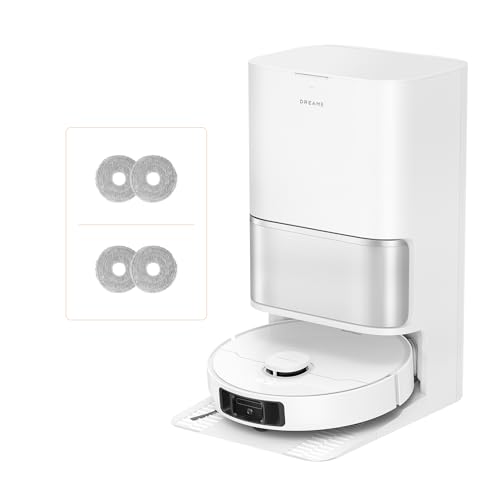
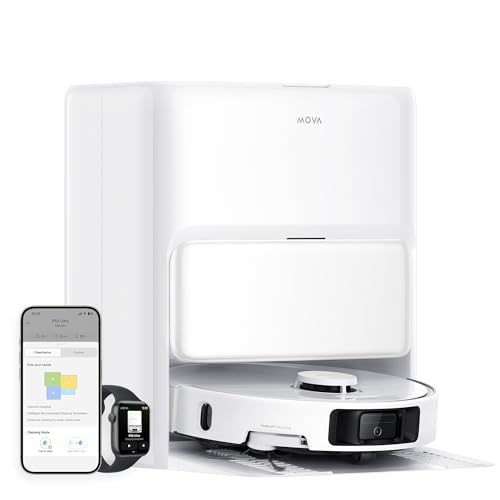
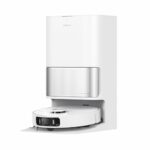
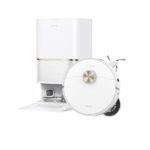
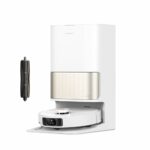
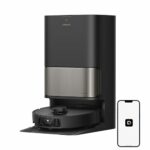
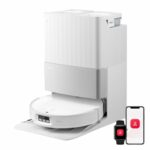
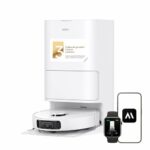
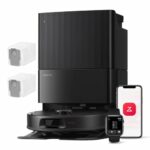
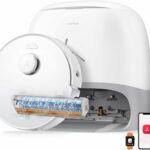
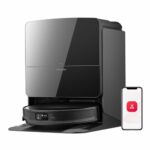
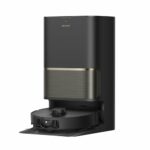
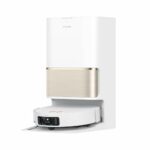
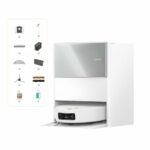
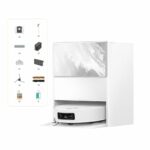
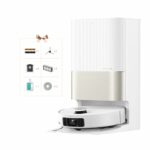
This comparison analyses three robot vacuum cleaners with multifunctional base stations launched between 2024 and 2025. The Dreame L10s Ultra Gen 2 arrived on the market in 2024 as a comprehensive solution to automate home cleaning. Its direct evolution, the Dreame L10s Ultra Gen 3, appeared in November 2025 with significant improvements in power and functionality. Completing the analysis is the Mova P50 Ultra from 2025, which belongs to Dreame's second brand and offers distinctive features worth considering.
All three models feature a multifunctional base station that performs auto-emptying of the dust bin, mop washing with hot water, and drying with hot air. This type of station makes the difference compared to robots with simple charging bases, as it ensures that the mops are always clean during mopping and dry properly afterwards to prevent bad odours.
Power and Suction
The most striking difference between these three units is in suction power. The Dreame L10s Ultra Gen 2 offers 10,000 Pa, a decent figure for typical domestic use. However, the generational leap of the Gen 3 is notable: it reaches 25,000 Pa, more than double its predecessor. The Mova P50 Ultra sits in the middle ground with 19,000 Pa, sufficient for most situations but clearly below the Gen 3.
Regarding the brushing system, all three models feature a Simplified HyperStream main brush, designed to reduce hair tangles. An important difference appears here: the Mova P50 Ultra has main brush lifting during mopping, something that neither the Gen 2 nor the Gen 3 incorporate. This allows the Mova robot to avoid staining the brush with dirty water whilst mopping.
The side brush also presents variations. The Dreame L10s Ultra Gen 2 has a standard side brush without additional functions. The Gen 3 incorporates side extension, which improves cleaning in corners and edges. The Mova P50 Ultra goes further: besides being extendable, it can lift during mopping and features anti-tangle technology. For homes with long-haired pets, these Mova features make a difference in daily maintenance.
Mopping
All three robots use a dual rotating mop system with edge extension and Roboswing movement, which allows the mop to slightly reach under furniture and ledges. Mop lifting is identical on all: 10.5 mm, sufficient to pass over thin rugs without wetting them.
Floor mopping is carried out with cold water on all three models. Each multifunctional base station washes the mops with hot water, which helps to better remove accumulated dirt during cleaning. Drying also uses hot air in all cases, speeding up the process and reducing bacterial growth.
None of the three automatically removes the mops at the base station when you only want to vacuum, nor do they incorporate dirt detection on the mops or floor to re-clean dirtier areas. These are functions usually reserved for higher-end ranges.
Navigation System
All three units navigate using a LiDAR turret and feature a front 3D laser sensor to avoid obstacles. None incorporates an AI camera, which limits visual recognition of specific objects.
An interesting difference appears in recognition capabilities. The Dreame L10s Ultra Gen 2 and Gen 3 can identify pets, useful for adjusting cleaning routes when there are animals at home. The Mova P50 Ultra does not recognise pets, but it does detect curtains, a function that the Dreame models don't have. In practice, pet recognition tends to be more versatile for most homes.
All three models integrate CleanGenius intelligent cleaning, a system that optimises routes and cleaning parameters according to the space. None allows remote camera access nor has LED for night vision.
Autonomy and Battery
Battery capacity is identical on all three: 5,200 mAh. The Dreame L10s Ultra Gen 2 declares 240 minutes of autonomy, whilst the Gen 3 indicates 231 minutes. The nine-minute difference is minimal and may be due to the Gen 3, with higher suction power, consuming slightly more energy. The Mova P50 Ultra does not specify autonomy in minutes.
With these figures, any of the three can clean medium-to-large homes in a single session. If the battery runs out during cleaning, the robot returns to the base, recharges as needed, and continues where it left off.
Smart Functions
The ability to overcome obstacles shows small differences. Both Dreame models can cross thresholds up to 20 mm, whilst the Mova P50 Ultra reaches 22 mm. Those extra two millimetres can prove useful in homes with uneven floor transitions or thicker rugs.
All three robots are compatible with external voice assistants such as Alexa or Google Home, but none incorporates its own voice assistant or robotic arm.
Multifunctional Cleaning Base
All three base stations perform auto-emptying of the dust bin, mop washing with hot water, and drying with hot air. Dust bag capacity is 3.2 litres in all cases.
A relevant difference appears in washing tray self-cleaning. The Dreame L10s Ultra Gen 2 doesn't include it, which means that area will need to be cleaned manually with some frequency. The Gen 3 incorporates third-generation tray self-cleaning, the same as the Mova P50 Ultra. This significantly reduces maintenance and prevents dirt accumulation in the base.
Water tanks show slight variations. The Dreame Gen 2 and Gen 3 have 4.5 litres of clean water and 4 litres of dirty water. The Mova P50 Ultra has 4 litres of clean water and 3.5 litres of dirty water. Minor differences that in practice barely affect daily use.
The detergent tank comes integrated on both Dreame models, dispensing product during mop washing. On the Mova P50 Ultra it's optional and purchased separately, something to consider if you value having everything included from the start.
The Dreame models offer a plumbing connection kit that is purchased separately. The Mova P50 Ultra doesn't have this option. Although it's an additional accessory, it may interest those seeking maximum autonomy without refilling tanks.
Dimensions
The size of the robots is identical: 350 mm diameter and 97 mm height. This 9.7 cm height allows any of the three to slip under most sofas and furniture without problem.
The base stations present more marked differences. The Dreame Gen 2 and Gen 3 measure 340 mm wide, 590 mm high, and 457 mm deep. The Mova P50 Ultra has a wider base (420 mm) but less tall (470 mm), with similar depth (458 mm). The Mova base occupies more horizontal space but gains in vertical discretion. It's advisable to measure the available space before deciding.
Real-World User Experience
For large homes, the Dreame L10s Ultra Gen 3 stands out for its 25,000 Pa suction power, capable of thoroughly vacuuming carpets and high-traffic areas. Its extendable side brush improves corner cleaning. Tray self-cleaning reduces maintenance, something appreciated in houses with large surface areas.
In homes with pets, the Mova P50 Ultra offers specific advantages: anti-tangle side brush, main and side brush lifting during mopping, and ability to overcome 22 mm obstacles. These features facilitate maintenance when there's abundant hair. However, it doesn't recognise pets like the Dreame models, which may limit automatic cleaning adjustments.
The Dreame L10s Ultra Gen 2 works well in medium-sized flats without pets. Its 10,000 Pa power is sufficient for hard floors and thin rugs. The absence of tray self-cleaning means somewhat more manual maintenance, but it remains a complete unit with a multifunctional base.
All three models mop with cold water, wash the mops with hot water, and dry them with hot air. This guarantees a good level of mopping on any of them, provided the multifunctional base is used correctly.
Conclusion: Which One to Choose?
Choose the Dreame L10s Ultra Gen 2 if you're looking for a complete robot with a multifunctional base at a more competitive price than later generations. Its 10,000 Pa power is adequate for flats without thick carpets or long-haired pets. Accept that you'll need to manually clean the washing tray more frequently as it doesn't have self-cleaning.
Choose the Dreame L10s Ultra Gen 3 if you need maximum suction power (25,000 Pa) for large homes, carpets, or very dirty areas. The extendable side brush and third-generation tray self-cleaning reduce maintenance. It recognises pets, useful if there are animals at home. It's the most advanced option of the three.
Choose the Mova P50 Ultra if you value features such as the anti-tangle side brush, main and side brush lifting, and ability to overcome 22 mm obstacles. Its base with tray self-cleaning and wider but less tall design may fit better in certain spaces. Bear in mind that the detergent tank is optional and that its 19,000 Pa power, although high, falls below the Gen 3. Curtain detection is specific but less versatile than the Dreame models' pet recognition.