✨ VS Analyses · VacuumSpain comparison technology. Explanation created with AI from verified technical data.
Introduction
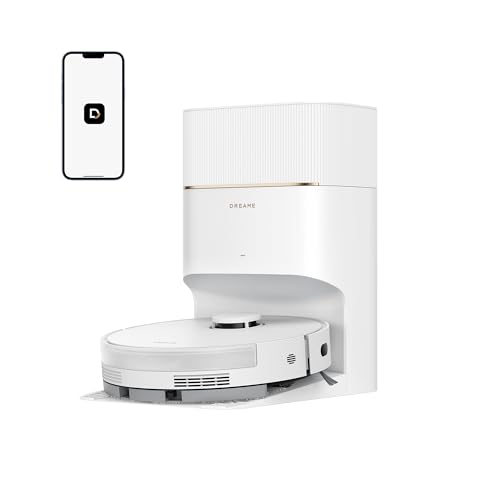
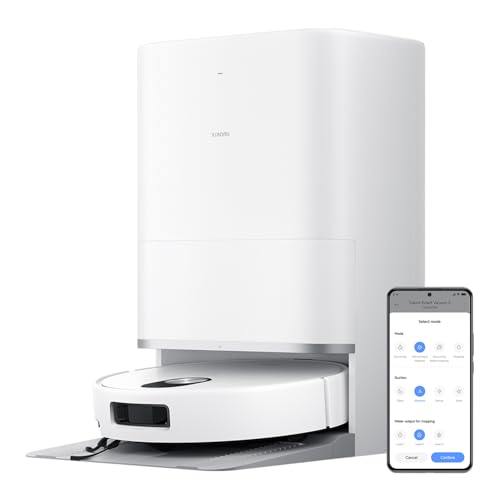
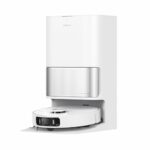
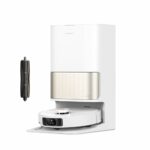
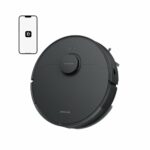
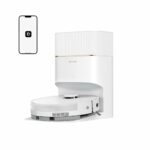
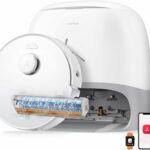
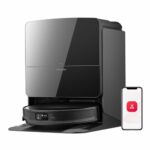
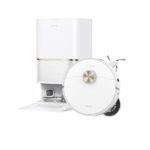
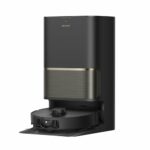
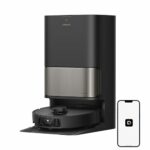
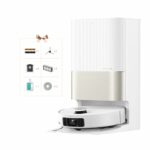
The Dreame D20 Pro Plus and Xiaomi Robot Vacuum 5 represent two fresh approaches to home cleaning from 2025. Both models come from manufacturers with strong ties—Dreame actually produces many of Xiaomi's robots—yet these two machines take distinctly different paths in their design philosophy.
The Dreame focuses on extended runtime and straightforward operation with its static mopping system and generous dust bag capacity. Meanwhile, the Xiaomi opts for a more comprehensive cleaning solution with rotating mops, a full multifunctional base, and AI-driven cleaning intelligence. Understanding which approach suits your home better depends largely on your cleaning priorities and how much automation you're after.
Suction Power and Cleaning Performance
The Xiaomi Robot Vacuum 5 brings considerably more muscle to the table with 20,000 Pa of suction—that's over 50% more than the Dreame's 13,000 Pa. In practical terms, this translates to better performance on carpets and more effective pickup of embedded dirt from textured surfaces.
Where things get interesting is the brush technology. The Dreame D20 Pro Plus features a Double HyperStream brush system, which uses two independently anchored brushes designed specifically to prevent hair tangles—a genuine advantage for pet owners. The Xiaomi counters with its TriCut 3.0 brush that combines bristles with integrated cutting blades to slice through tangled hair during operation.
Both models include an extendable side brush that reaches into corners more effectively, and both incorporate anti-tangle technology in their side brushes. Neither offers brush elevation during mopping or main brush lift functionality. The choice between these two systems really comes down to whether you prefer prevention (Dreame's design that resists tangles) or active management (Xiaomi's cutting approach).
Mopping Systems
This is where the comparison becomes quite stark. The Xiaomi Robot Vacuum 5 delivers a proper mopping solution with dual rotating mops that actively scrub floors rather than simply dragging across them. These mops can lift 15mm when the robot detects carpet or rugs, and they extend outward to reach closer to skirting boards.
The Dreame D20 Pro Plus uses a static mop without any lifting capability or edge extension. This means it can't transition automatically between hard floors and carpets without manual intervention, and it won't reach as close to walls and edges during mopping runs.
Neither robot offers heated water mopping on the floor itself—both use cold water for the actual cleaning process. However, the Xiaomi's base station washes its mops with hot water and dries them using heated air, which helps prevent bacterial growth and eliminates musty odours. The Dreame's base doesn't wash mops at all, so you'll need to handle that maintenance task yourself.
For homes where mopping matters, the Xiaomi's system represents a fundamentally different level of capability. The Dreame treats mopping as a secondary feature, whilst the Xiaomi integrates it properly into the cleaning routine.
Navigation Technology
Both robots employ LiDAR-based navigation, though with different implementations. The Dreame uses a traditional 360° LiDAR turret that protrudes from the top, whilst the Xiaomi features a retractable LiDAR system. Both include 3D laser sensors at the front for obstacle detection and can identify objects in their path.
The Xiaomi Robot Vacuum 5 adds AI-powered cleaning intelligence that the Dreame lacks. This allows it to adapt its cleaning patterns based on room recognition and dirt detection, potentially offering more efficient coverage. Neither robot includes a front-facing camera, pet recognition, curtain detection, or LED lighting for low-light operation.
Both models can overcome obstacles up to 20mm high, which handles most door thresholds and carpet edges without difficulty. They also both integrate with external voice assistants like Alexa and Google Home, though neither includes its own built-in voice assistant.
Battery Life and Runtime
Here's where the Dreame D20 Pro Plus really shines. With 285 minutes of runtime from its 5,200 mAh battery, it can cover extensive areas in a single session. That's more than double the Xiaomi's 140-minute runtime, despite both robots using identical battery capacity.
This dramatic difference likely stems from the simpler cleaning systems in the Dreame—the static mop and less powerful suction draw less energy. For larger homes or those with complex layouts requiring multiple rooms cleaned in one go, the Dreame's stamina becomes a significant advantage.
The Xiaomi's shorter runtime isn't necessarily problematic for most homes, as it can return to base and resume cleaning. However, the extended sessions mean more interruptions and longer total cleaning times for bigger properties.
Smart Features
The Xiaomi Robot Vacuum 5 incorporates AI-driven cleaning intelligence that analyses rooms and adjusts cleaning patterns accordingly. This represents a step beyond simple mapping and scheduled cleaning, potentially improving efficiency and coverage.
The Dreame D20 Pro Plus takes a more straightforward approach without AI cleaning features. It handles mapping and navigation competently but doesn't adapt its cleaning strategy based on learned patterns or room recognition.
Neither robot includes a robotic arm for reaching into tight spaces or an onboard voice assistant. Both can be controlled through their respective smartphone applications and respond to commands via external smart home systems.
Multifunctional Base Station
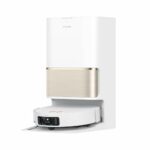
The base stations reveal perhaps the most fundamental difference between these two robots. The Xiaomi Robot Vacuum 5 includes a full multifunctional base that auto-empties dust, washes mops with hot water, dries them with heated air, and even cleans its own washing tray automatically. This represents genuine hands-off maintenance for weeks at a time.
The Dreame D20 Pro Plus base only handles dust auto-emptying. You'll need to manually remove and wash the mop pad after each cleaning session, and manage the water tank yourself. The trade-off comes in the dust capacity: Dreame's 5-litre bag holds twice as much as Xiaomi's 2.5-litre bag, meaning fewer bag changes even if you're handling other maintenance manually.
The Xiaomi's base includes 4-litre clean water and 3.8-litre dirty water tanks, supporting its automatic mop washing system. Neither base offers UV disinfection, detergent dispensers, or plumbed water connections (though neither offers an optional kit for this either).
Physical Dimensions
The Dreame D20 Pro Plus stands 96.8mm tall, whilst the Xiaomi Robot Vacuum 5 measures 88mm—nearly a centimetre lower. That difference matters when navigating under furniture, particularly low-clearance sofas and beds. Both robots share a standard 350mm diameter.
The Dreame's base station is notably more compact, measuring 298mm wide, 452mm tall, and 440mm deep. The Xiaomi's base is larger at 360mm wide, 572mm tall, and 470mm deep—the extra size accommodates the water tanks and mop washing mechanism. If floor space is limited, the Dreame's smaller footprint could prove advantageous.
The Dreame's robot houses a 500ml dust bin and 350ml water tank. The Xiaomi includes an onboard water reservoir but doesn't specify the dust bin capacity. Given the Xiaomi's more frequent base returns for mop washing, the smaller onboard capacity becomes less critical.
Real-World Usage Scenarios
For larger homes with primarily hard flooring and minimal mopping requirements, the Dreame D20 Pro Plus makes considerable sense. Its extended battery life means it can tackle sprawling floor plans in one go, and the larger dust bag reduces maintenance frequency. The lower profile helps it reach under more furniture, though you'll need to handle mop maintenance manually.
The Xiaomi Robot Vacuum 5 suits homes where proper floor washing matters. The combination of higher suction, rotating mops, and automatic mop maintenance delivers genuinely clean hard floors without manual intervention. The AI cleaning intelligence helps it work more efficiently, potentially offsetting the shorter battery life through smarter coverage patterns.
Pet owners face an interesting choice. The Dreame's HyperStream brush design actively prevents hair tangles, whilst the Xiaomi's higher suction and TriCut brush cut through them. Both approaches work, but the Dreame's prevention strategy may require less frequent brush cleaning.
For homes with mixed flooring including carpets, the Xiaomi's mop lift capability allows it to transition seamlessly between surfaces. The Dreame would require manual mop removal before carpet cleaning, adding a layer of inconvenience.
Conclusion: Which Should You Choose?
Choose the Dreame D20 Pro Plus if: you have a large home requiring extended cleaning sessions, mopping is an occasional rather than regular task, you prefer a more compact base station, you want maximum runtime between charges, or you're comfortable with manual mop maintenance in exchange for a lower price point. The larger dust bag capacity and anti-tangle brush design also benefit homes with heavy shedding pets.
Choose the Xiaomi Robot Vacuum 5 if: floor mopping is a priority and you want it done properly, you value fully automated maintenance including mop washing and drying, your home includes both hard floors and carpets requiring automatic mop lift, you want AI-driven cleaning intelligence for more efficient coverage, or you need maximum suction power for deep carpet cleaning. The lower profile also helps it reach under more furniture despite the larger base station.