✨ VS Analyses · VacuumSpain comparison technology. Explanation created with AI from verified technical data.
Introduction
Dreame presents two very different propositions within its 2024 catalogue. The Dreame D10 Plus Gen 2 is a robot vacuum with a self-emptying base that focuses on vacuuming, whilst the Dreame L10s Ultra Gen 2 is a top-of-the-range model with a complete multifunction base that integrates mop washing and drying. The difference between them isn't just about price: we're talking about two different cleaning philosophies.
The D10 Plus Gen 2 is designed for those seeking an effective vacuuming solution with reduced maintenance thanks to its 4-litre bag. The L10s Ultra Gen 2, on the other hand, is aimed at users who want to delegate both vacuuming and mopping, with a system that washes and dries the mops automatically after each use.
Power and Suction
The difference in suction power is considerable. The D10 Plus Gen 2 reaches 6,000 Pa, a decent figure for homes without thick carpets or pets that shed a lot of hair. The L10s Ultra Gen 2 goes up to 10,000 Pa, which translates into better performance on carpets and greater capacity to pick up ingrained dirt.
Both models feature a simple main brush, without advanced anti-tangle technologies like HyperStream. This means that if you live with long-haired pets, you'll need to clean the brush manually fairly frequently. Neither includes an extendable or liftable side brush, nor anti-tangle systems on the side.
In practice, the L10s Ultra Gen 2 offers deeper vacuuming, especially useful in homes with carpets or if there are animals in the house. The D10 Plus Gen 2 performs well on hard floors and thin carpets, but you'll notice the difference on more demanding surfaces.
Mopping
Here lies the most important difference between both robots. The Dreame D10 Plus Gen 2 incorporates a static mop that simply drags the damp cloth across the floor. There's no mop washing, no drying, no lifting. It's basic mopping, designed for light maintenance, but not for stubborn stains.
The Dreame L10s Ultra Gen 2 takes a qualitative leap with two rotating mops that also extend sideways to better reach edges. The mops lift 10.5 mm when the robot detects carpets, avoiding wetting them. During cleaning, the robot returns to the base to wash the mops with cold water, and upon finishing dries them with hot air. This system ensures that the mops are always clean whilst mopping, something that makes the difference between superficial mopping and truly effective mopping.
Additionally, the Ultra model includes a detergent tank in the base, which is dispensed during mop washing. This improves the removal of grease and adhered dirt. The D10 Plus Gen 2 lacks all of this: its 150 ml water tank in the robot is larger than the Ultra's 80 ml, but without a washing base, you'll need to clean the mop manually after each use if you want decent results.
Navigation System
Both units use a 3D LiDAR turret to map the home and plot efficient routes. However, the L10s Ultra Gen 2 adds a front 3D laser sensor that improves real-time obstacle detection. The D10 Plus Gen 2 doesn't include this sensor, which may result in the occasional bump against small objects or chair legs.
Pet recognition is another function exclusive to the Ultra model. This allows the robot to identify your dog or cat and adjust its behaviour, avoiding startling or running them over. The D10 Plus Gen 2 doesn't have this capability.
The L10s Ultra Gen 2 also incorporates intelligent cleaning with CleanGenius, a system that adjusts cleaning parameters according to the type of floor and detected dirt. The D10 Plus Gen 2 simply follows the map without this level of automatic adaptation. Neither includes a camera with remote access nor night vision LED.
Autonomy and Battery
Both robots feature a 5,200 mAh battery, but the declared autonomy differs. The D10 Plus Gen 2 reaches 285 minutes, whilst the L10s Ultra Gen 2 stays at 240 minutes. This difference is explained by the higher energy consumption of the more powerful suction system and the rotating mops of the Ultra model.
In medium-sized homes, this difference won't be decisive. For large houses, it's worth bearing in mind that the D10 Plus Gen 2 can cover more surface area in a single run before returning to charge, although the L10s Ultra Gen 2 compensates with greater cleaning efficiency.
Smart Features
Both models overcome obstacles up to 20 mm in height, sufficient to navigate expansion joints or small level changes. Neither includes a robotic arm nor its own voice assistant, but both are compatible with Alexa and Google Home for voice control.
The main smart difference has already been mentioned: the L10s Ultra Gen 2's CleanGenius system automatically adjusts cleaning according to detected conditions, whilst the D10 Plus Gen 2 requires you to manually configure parameters if you want to optimise results.
Multifunction Cleaning Base
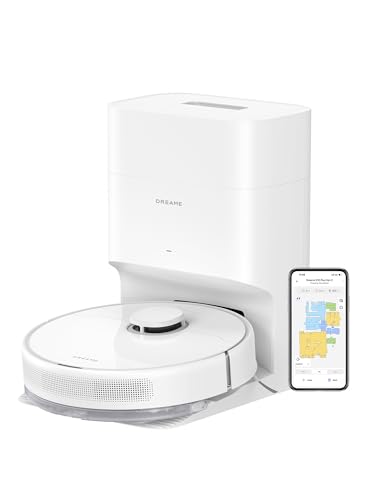
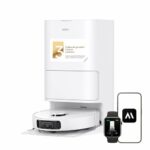
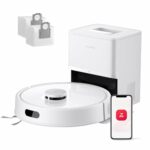
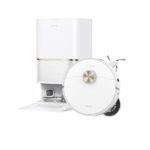
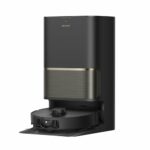
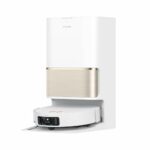
The Dreame D10 Plus Gen 2 has a self-emptying base with a 4-litre bag. This reduces dust bin maintenance to once every month or month and a half, depending on use. The base measures 298 mm wide, 427 mm high and 406 mm deep, compact dimensions that facilitate its placement.
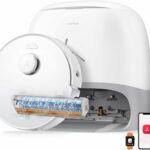
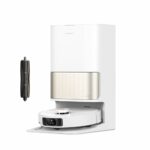
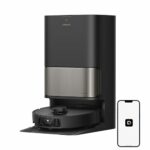
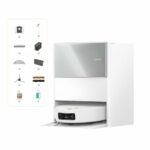
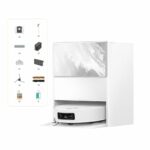
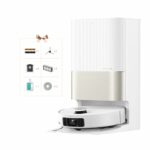
The Dreame L10s Ultra Gen 2 incorporates a complete multifunction base with self-emptying (3.2-litre bag), mop washing with cold water and drying with hot air. The clean and dirty water tanks are 4.5 and 4 litres respectively, sufficient for several mopping sessions without intervention. It includes a detergent tank and there's an optional kit for plumbing connection, although it must be purchased separately.
The L10s Ultra Gen 2's base is considerably larger: 340 mm wide, 590.5 mm high and 456.7 mm deep. It takes up more space, but in return completely automates mopping. If you only vacuum or mop occasionally, the D10 Plus Gen 2's base is more practical. If you mop frequently, the Ultra's justifies its size.
Dimensions
Both robots have a 350 mm diameter. The height is practically identical: 96.3 mm for the D10 Plus Gen 2 and 97 mm for the L10s Ultra Gen 2. This 0.7 mm difference is irrelevant in practice: both fit under furniture with a clearance of about 10 cm.
The robot's dust bin is 400 ml in the D10 Plus Gen 2 and 300 ml in the L10s Ultra Gen 2. As both self-empty into the base, this difference doesn't greatly affect daily use. The water tank in the robot does vary: 150 ml versus 80 ml, although in the case of the Ultra this matters less because the base manages the mopping water.
Real-World User Experience
The Dreame D10 Plus Gen 2 works well in small or medium-sized homes where mopping isn't a priority. Its 285-minute autonomy allows it to cover large surfaces, and the 4-litre bag reduces maintenance. If you have hard floors and are looking for a robot that vacuums effectively without complications, it performs perfectly. Mopping with a static mop serves for basic maintenance, but don't expect miracles with dried stains.
The Dreame L10s Ultra Gen 2 is designed for those who want to forget about mopping. The rotating mop system with automatic washing and drying really makes a difference: the robot keeps the floor clean without you having to touch the mops for weeks. The greater suction power and front 3D sensor make it more suitable for homes with pets, carpets or young children who generate more dirt. The base is large, but if you have space, the convenience compensates.
For homes with long-haired pets, neither includes advanced anti-tangle brushes, so you'll need to clean the main brush manually in both cases. The L10s Ultra Gen 2 at least recognises pets and adjusts its behaviour, something the D10 Plus Gen 2 doesn't do.
Conclusion: Which to Choose?
Choose the Dreame D10 Plus Gen 2 if: you're looking for an effective robot vacuum with reduced maintenance, you have a home without thick carpets, you don't mop very frequently or prefer to do it manually, you value a compact base that doesn't take up much space, and you want an economical solution focused on vacuuming. Also if your house is large and you value the greater autonomy.
Choose the Dreame L10s Ultra Gen 2 if: you want to completely delegate mopping as well as vacuuming, you have pets and need greater suction power, you mop several times a week and don't want to clean mops manually, you have space for a multifunction base, you value smart features like advanced obstacle detection and pet recognition, or you simply seek the best possible cleaning result without intervening. The investment is greater, but the difference in convenience and results is too.