✨ VS Analyze · VacuumSpain comparison technology. AI-generated explanation based on verified technical data.
Introduction
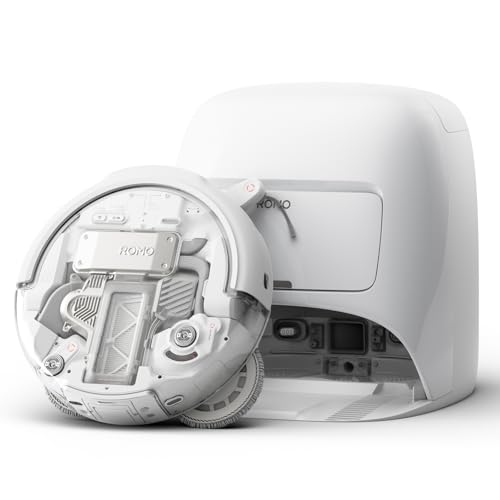
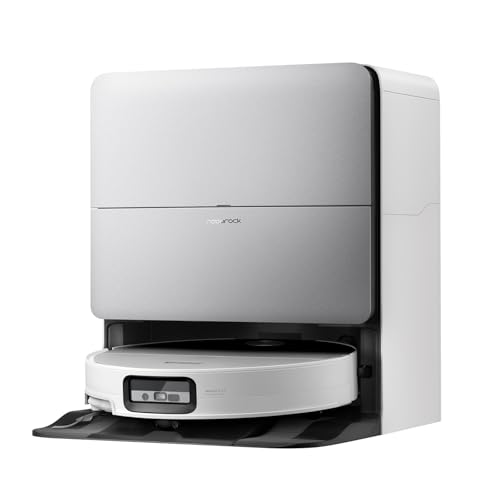
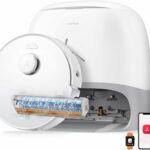
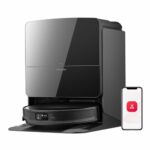
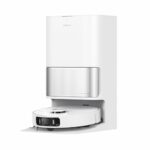
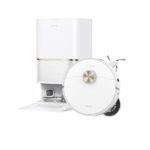
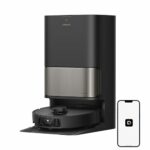
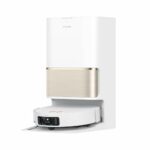
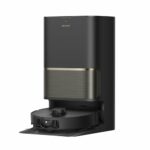
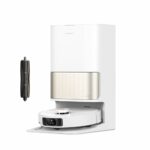
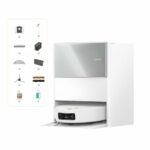
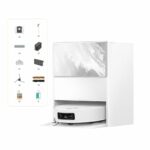
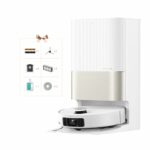
The robot vacuum market welcomes two ambitious proposals that represent different approaches to automated cleaning. The DJI Romo A, also known as the Transparent Robot, marks DJI's debut in this sector during 2025, bringing with it the experience of a renowned brand in navigation technology. The Roborock Saros 20 Sonic arrives in 2026 as part of the world's leading robot vacuum brand's catalogue, with specifications aimed at the high-end segment.
We're looking at two devices with complete multifunction bases, designed for homes seeking to fully automate both vacuuming and mopping. The difference in their design philosophies is reflected in specific technical aspects worth analysing.
Power and Suction
The difference in suction power is considerable. The DJI Romo A offers 25,000 Pa, a figure that allows daily cleaning to be tackled without problems, whilst the Roborock Saros 20 Sonic reaches 36,000 Pa. This difference of 11,000 Pa can be particularly noticeable on medium-pile carpets or when there's more persistent dirt accumulation.
Regarding brushing systems, both integrate anti-tangle technology in the main brush. The DJI opts for a Divided system, whilst Roborock equips its DuoDivide Anti-Tangle brush, designed to push hairs towards the central gap and minimise tangles. For homes with pets, this feature is fundamental for daily maintenance.
Both robots lift the main brush during mopping, preventing it from getting unnecessarily wet. However, there's an important difference in the side brush: the Roborock Saros 20 Sonic can lift its side brush when mopping, something the DJI Romo A doesn't do. This prevents the side brush from dragging dirty water across already mopped areas. Both feature an extendable side brush to improve corner cleaning, and both incorporate anti-tangle systems in this component, with the DJI utilising a dual side brush.
Mopping
Here we find different philosophies. The DJI Romo A uses two rotating mops, a system that applies constant pressure whilst the mops rotate on the floor. The Roborock Saros 20 Sonic employs sonic vibrating mop technology, which generates thousands of vibrations per minute to remove adhered dirt.
Both models extend their mops to better reach edges and lift the mops when they detect carpets or upon finishing mopping. The Roborock specifies a lift between 8 and 18 mm, adapting to the thickness of different carpets.
Temperature marks another relevant difference. The DJI Romo A mops with cold water, whilst the Roborock Saros 20 Sonic uses warm water for floor mopping. This difference can be useful for better dissolving certain types of dirt. For mop washing, the DJI washes with water at room temperature, but the Roborock uses hot water, which improves mop sanitisation after each session.
Mop drying is carried out with hot air in both cases, helping to prevent bad odours. Both devices detect the dirt level on both the mops and the floor to adjust cleaning intensity. The Roborock confirms it can automatically detach the mops at the base when only vacuuming is desired, a function about which the DJI doesn't specify clear information.
Navigation System
The DJI Romo A integrates a solid-state LiDAR to map the environment, whilst the Roborock Saros 20 Sonic uses a retractable LiDAR. The advantage of the retractable system is that it allows the robot's total height to be reduced when the laser isn't in active use.
In artificial intelligence, the Roborock incorporates dual AI camera compared to the DJI's single camera. The Saros 20 Sonic's system recognises up to 300 different types of obstacles and confirms specific pet detection, whilst the DJI doesn't specify these capabilities. An exclusive Roborock function is curtain detection, avoiding tangles with hanging fabrics.
Both robots feature a front 3D laser sensor, LED for night vision and remote camera access. The Roborock specifies its SmartPlan 3.0 system for intelligent AI cleaning, whilst the DJI also integrates intelligent cleaning functions although without specific denomination. Both recognise stains through artificial intelligence to reinforce cleaning in those areas.
Autonomy and Battery
Battery capacity clearly favours the Roborock Saros 20 Sonic with 6,400 mAh, surpassing the DJI Romo A's 5,000 mAh. This difference of 1,400 mAh translates into greater autonomy margin for large homes or intensive cleaning.
The DJI specifies 180 minutes of autonomy, a figure that allows the covered surface area to be calculated based on cleaning mode. The Roborock doesn't detail specific minutes of autonomy, although its greater battery capacity suggests superior performance in this section.
Smart Functions
In obstacle climbing, the DJI Romo A can overcome thresholds up to 20 mm in height. The Roborock Saros 20 Sonic specifies capability to overcome simple thresholds, although it doesn't specify the maximum height. In practice, this function is useful for moving between rooms with small level differences or climbing onto thick carpets.
The Roborock integrates its own voice assistant, allowing the robot to be controlled through direct commands without needing to open the app. The DJI doesn't specify whether it has this function. Both are compatible with external assistants such as Alexa or Google Home.
Multifunction Cleaning Base
Both bases offer complete functionality: auto-emptying of the dust container, mop washing and drying with hot air, and integrated detergent tank. The dust bag capacity is very similar: 2.4 litres in the DJI versus 2.5 litres in the Roborock.
The clean water tanks match at 4 litres for both models. For dirty water, the DJI stores 3.2 litres whilst the Roborock holds 3 litres, a minimal difference in practice.
The wash tray self-cleaning presents technical differences: the DJI uses an adjustable nozzle for this process, whilst the Roborock employs hot water to better sanitise the tray. This reduces manual maintenance and prevents dirt accumulation in the base.
Neither includes UV disinfection nor integrated plumbing connection, nor do they offer an optional kit for this function.
Dimensions
The robot's height marks an important functional difference. The DJI Romo A measures 98 mm tall, whilst the Roborock Saros 20 Sonic reaches 79.8 mm. Those 18.2 mm of difference can determine whether the robot accesses under certain furniture, sofas or beds or not. For homes with low furniture, the Roborock has a clear advantage.
The diameter is practically identical: 351 mm in the DJI and 353 mm in the Roborock, with no appreciable differences in manoeuvrability.
The bases differ in configuration. The DJI's measures 453 mm wide, 440 mm tall and 425 mm deep. The Roborock's is more compact in width at 409 mm, but taller at 470 mm and deeper at 440 mm. It's advisable to measure the available space before deciding, especially if planning to place the base in a tight space.
Real-World Usage Experience
For large homes, the Roborock Saros 20 Sonic's larger battery offers an advantage, although the DJI Romo A's 180 minutes also covers considerable surface areas. The Roborock's superior suction power is especially useful in homes with carpets or with greater dirt traffic.
In homes with pets, both robots integrate effective anti-tangle brushes. The Roborock's DuoDivide system and the DJI's dual side brush minimise maintenance related to tangled hair. The Roborock's side brush lift during mopping prevents dragging wet hair across freshly mopped floors.
If the home has low furniture, the height difference becomes important. The Roborock, at less than 80 mm, accesses spaces where the 98 mm DJI cannot reach. This can mean leaving important areas under sofas or beds uncleaned.
For those who prioritise mopping, the Roborock's warm water and hot water mop washing offer a superior level of hygiene. The sonic vibrating mop system can be more effective on adhered stains, whilst the DJI's rotating mops provide consistent cleaning for daily maintenance.
Conclusion: Which to Choose?
Choose the DJI Romo A (Transparent Robot) if: you're looking for a robot vacuum proposal from a renowned brand in navigation technology, you value the dual rotating mop system for mopping, and the space under your furniture allows for a 98 mm tall robot. Its specified 180-minute autonomy and dual anti-tangle side brush system make it suitable for medium-sized homes with pets. The 3.2-litre dirty water capacity can be practical if you prefer to empty the base less frequently.
Choose the Roborock Saros 20 Sonic if: you prioritise the maximum suction power available in this robot vacuum comparison, you need a robot that passes under low furniture thanks to its 79.8 mm height, or you value mopping with warm water and mop washing with hot water. Its 6,400 mAh battery, recognition of 300 different obstacles, specific pet and curtain detection, together with its own voice assistant, position it as the best robot vacuum for those seeking the most complete technology. The side brush lift during mopping and the SmartPlan 3.0 system add refinement to the user experience. For large homes, with pets, or where maximum autonomy and power are required, the Roborock represents the most technically advanced option in this comparison between the DJI robot vacuum and the Roborock robot vacuum.