✨ VS Analyze · VacuumSpain comparison technology. AI-generated explanation based on verified technical data.
Introduction
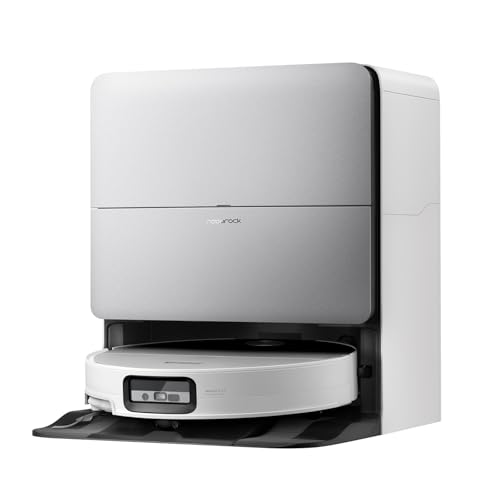
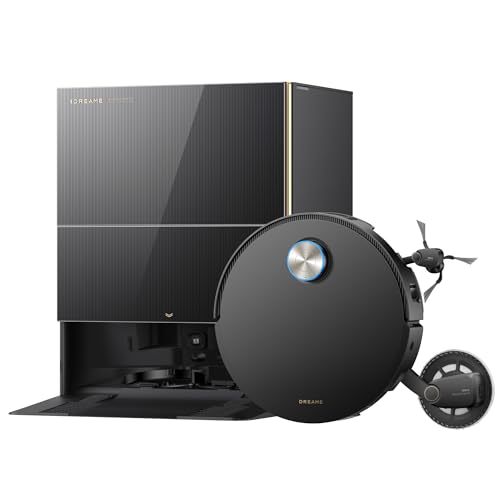
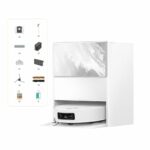
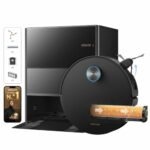
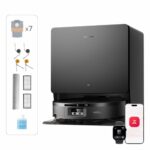
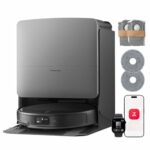
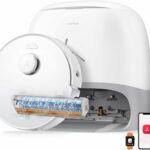
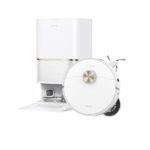
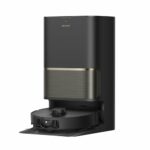
The Roborock Saros 20 Sonic and Dreame X60 Pro Ultra represent two premium robot vacuum cleaners launched in 2026, each packed with advanced features that push the boundaries of automated home cleaning. The Saros 20 Sonic, arriving in March 2026, showcases Roborock\'s latest innovations with their DuoDivide anti-tangle brush system and VibraRise 5.0 sonic mopping technology. The X60 Pro Ultra follows in May 2026, bringing Dreame\'s HyperStream 2.0 dual brush configuration and dual rotating mops with hot water floor mopping.
These aren\'t entry-level models. Both feature multifunctional bases that wash and dry mops with hot water, dual RGB cameras for AI-powered navigation, and obstacle recognition systems capable of identifying hundreds of objects. They\'re designed for users who want minimal intervention—homes where the robot handles everything from vacuuming to mopping without constant supervision.
Power and Suction
Suction power separates these models clearly. The Dreame X60 Pro Ultra generates 42,000 Pa, giving it a substantial advantage over the Roborock Saros 20 Sonic\'s 36,000 Pa. In practical terms, this extra power helps extract embedded dirt from carpets and handles larger debris more effectively.
The brush systems take different approaches to the same problem: preventing hair tangles. Roborock\'s DuoDivide design uses a split configuration that channels hair toward the central suction point, reducing the likelihood of wrap-around tangles. Dreame counters with their HyperStream 2.0 dual brush setup, featuring two brushes anchored at one end that naturally resist hair entanglement. Both manufacturers claim anti-tangle properties, and both systems lift their main brushes when mopping to avoid dragging wet fibres across cleaned floors.
The side brush configuration reveals a functional difference. Whilst both models extend their side brushes to reach into corners—the X60 Pro Ultra extending a full 12 cm—only Dreame\'s model can lift its side brush during mopping. The Saros 20 Sonic keeps its side brush active throughout all cleaning modes. The X60 Pro Ultra also includes a dedicated skirting board brush, a feature absent from the Roborock model.
Mopping
These robot vacuum cleaners adopt fundamentally different mopping philosophies. The Roborock Saros 20 Sonic uses a single vibrating mop pad with VibraRise 5.0 technology, applying 14N of pressure through high-frequency sonic vibrations. The Dreame X60 Pro Ultra takes the rotating mop approach—two pads spinning at 280 RPM with 15N of downward pressure.
Edge coverage matters for thorough floor cleaning. The X60 Pro Ultra extends its mops robotically by 18 cm to reach skirting boards and corners. The Saros 20 Sonic also extends its mop, though the specific extension distance isn\'t detailed in the specifications. When obstacles appear, both models lift their mops clear—the Dreame reaching 10.5 mm standard lift (21.5 mm with full chassis elevation), whilst the Roborock achieves 8 mm (18 mm with chassis lift).
Water temperature during floor mopping differs between models. The X60 Pro Ultra heats water to 40°C before applying it to floors, which can help dissolve stubborn marks. The Saros 20 Sonic uses warm water but doesn\'t specify the exact temperature. Back at their respective bases, both systems wash mops with 100°C water and auto-clean their washing trays at the same temperature, ensuring hygiene between cleaning sessions.
Mop drying uses hot air in both cases, though temperatures vary slightly: 55°C in the Roborock base versus 50°C in the Dreame station. Both models detect dirt on their mops and on floors, triggering additional passes when needed. They can also leave their mops at the base when you only want vacuuming, avoiding unnecessary wetness.
Navigation System
Navigation hardware appears remarkably similar. Both the Saros 20 Sonic and X60 Pro Ultra use retractable 360° LiDAR for room mapping, dual RGB cameras for AI-powered object recognition, and 3D laser sensors at the front for obstacle detection. LED lighting enables night vision, allowing the cameras to function in darkness.
The Dreame model recognises 320 different obstacle types, slightly more than the Roborock\'s 300. Whether this difference matters in daily use depends on how exotic your floor obstacles are—both systems identify common items like shoes, cables, pet waste, and furniture with confidence. The X60 Pro Ultra adds proactive illumination to its obstacle avoidance system, potentially improving detection accuracy in dim conditions.
Both models detect pets, navigate behind curtains, and allow remote camera access through their respective apps. The Saros 20 Sonic runs SmartPlan 3.0 for intelligent cleaning routines, whilst the X60 Pro Ultra uses CleanGenius 3.0. These AI systems learn room layouts, suggest cleaning schedules, and adapt suction or mopping intensity based on detected floor types and dirt levels.
Battery and Autonomy
Battery capacity tells an interesting story. The Roborock Saros 20 Sonic packs a 6,400 mAh cell—substantially larger than the 5,000 mAh battery in the Dreame X60 Pro Ultra. Despite this, the X60 Pro Ultra declares 232 minutes of runtime, though the Saros 20 Sonic doesn\'t specify its runtime in the available data.
Both models support rapid charging. The Dreame\'s PowerMaster system restores 24% battery capacity in just 5.5 minutes, which proves useful when the robot needs a quick top-up to finish a cleaning cycle. The Saros 20 Sonic also charges quickly, though specific recharge rates aren\'t detailed.
The larger battery in the Roborock model suggests it\'s engineered for extended cleaning sessions, particularly relevant given its lower suction power might allow more efficient energy use. The Dreame\'s smaller battery paired with higher suction and dual rotating mops likely demands more power, though its declared autonomy suggests efficient management.
Smart Features
Obstacle climbing capabilities differ measurably. The Dreame X60 Pro Ultra tackles single-step obstacles up to 52 mm high and can navigate double steps reaching 100 mm. The Roborock Saros 20 Sonic manages 45 mm single steps and 88 mm double steps. This affects how reliably each robot transitions between rooms with thresholds or handles uneven flooring.
Both models integrate their own voice assistants directly into the robot, allowing voice commands without external smart speakers. They\'re also compatible with Alexa and Google Home for users who prefer established ecosystems. Matter compatibility appears in both models, future-proofing them for smart home integration as the Matter standard develops.
Multifunctional Cleaning Base
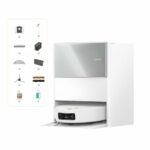
The bases share most core functions: automatic dust emptying, hot water mop washing at 100°C, hot air drying, and auto-cleaning of the washing tray. Both include detergent dispensers and separate tanks for clean and dirty water. The dirty water tanks match at 3 litres capacity, whilst clean water storage differs slightly—4 litres in the Saros 20 Sonic versus 4.2 litres in the X60 Pro Ultra.
Dust bag capacity gives the Dreame base an edge: 3.2 litres compared to 2.5 litres. This translates to less frequent bag changes, particularly relevant in homes with pets or high dust accumulation. Neither base offers UV disinfection or automatic mop pad replacement.
The X60 Pro Ultra base can be connected to household plumbing through a separately purchased kit, eliminating manual water tank filling and emptying. This option doesn\'t exist for the Roborock model, meaning you\'ll always need to handle water tanks manually.
Dimensions
Physical size impacts where these robots can clean. The Roborock Saros 20 Sonic stands 79.8 mm tall—low enough to slip under most furniture. The Dreame X60 Pro Ultra measures 89 mm when retracted, which might prevent access beneath lower-clearance sofas or beds. This 9.2 mm difference can determine whether a robot reaches under furniture or leaves those areas untouched.
Diameter measurements sit close together: 353 mm for the Roborock versus 350 mm for the Dreame. This marginal difference won\'t affect navigation through doorways or around furniture legs.
Base dimensions vary more noticeably. The Saros 20 Sonic base measures 409 mm wide, 470 mm tall, and 440 mm deep. The X60 Pro Ultra base is slightly narrower at 390 mm and deeper at 456 mm, but taller at 499 mm. Consider your available floor space when choosing—the Roborock base has a wider footprint, whilst the Dreame station stands taller.
Real-World Usage Experience
For homes with substantial floor areas, the Roborock Saros 20 Sonic\'s 6,400 mAh battery suggests longer uninterrupted cleaning sessions, though the X60 Pro Ultra\'s declared 232-minute runtime indicates it won\'t struggle with large spaces either. The Dreame\'s PowerMaster quick charging helps when the robot needs to recharge mid-clean and resume quickly.
Pet owners face a choice between brush systems. The Roborock\'s DuoDivide and Dreame\'s HyperStream 2.0 both target hair management, though their mechanisms differ. The X60 Pro Ultra\'s higher 42,000 Pa suction might extract more embedded pet hair from carpets, whilst the Saros 20 Sonic\'s 36,000 Pa still provides strong performance. Both models lift their main brushes when mopping, preventing wet hair from being dragged across floors.
Homes with varied flooring benefit from both robots\' mop lifting systems and carpet detection. The Dreame\'s 21.5 mm maximum mop lift (with chassis elevation) provides greater clearance over thick rugs compared to the Roborock\'s 18 mm. If you have substantial door thresholds or uneven transitions between rooms, the X60 Pro Ultra\'s superior obstacle climbing—52 mm versus 45 mm for single steps—reduces the risk of the robot becoming stranded.
The Roborock\'s lower 79.8 mm height proves advantageous for cleaning under furniture. If your beds, sofas, or cabinets have tight clearances, this model reaches spaces the taller Dreame cannot. Conversely, the X60 Pro Ultra\'s liftable side brush and dedicated skirting board brush improve edge cleaning, particularly along walls and in corners.
Maintenance frequency differs slightly. The X60 Pro Ultra\'s larger 3.2-litre dust bag means less frequent replacements compared to the Roborock\'s 2.5-litre capacity. The Dreame\'s optional plumbing connection kit (purchased separately) eliminates water tank maintenance entirely for users willing to invest in permanent installation.
Conclusion: Which to Choose?
Choose the Roborock Saros 20 Sonic if: you need a robot that fits under low-clearance furniture, with its 79.8 mm height accessing spaces taller models cannot reach. The larger 6,400 mAh battery suits homes where extended runtime matters, and the sonic vibrating mop system appeals if you prefer single-pad mopping over rotating designs. This model works well for users who want comprehensive features without the absolute maximum suction power, particularly in homes with standard thresholds and moderate carpet pile.
Choose the Dreame X60 Pro Ultra if: maximum suction power matters—its 42,000 Pa handles deeply embedded dirt and thick carpets more aggressively. The dual rotating mops with 40°C hot water floor mopping provide thorough wet cleaning, and the liftable side brush improves edge coverage. Homes with higher door thresholds benefit from its superior 52 mm obstacle climbing, and the larger 3.2-litre dust bag reduces maintenance frequency. The separately available plumbing connection kit suits users wanting permanent installation for truly hands-off operation. If your furniture clearances exceed 89 mm, this model\'s extra features justify the slightly taller profile.