✨ VS Analyze · VacuumSpain comparison technology. AI-generated explanation based on verified technical data.
Introduction
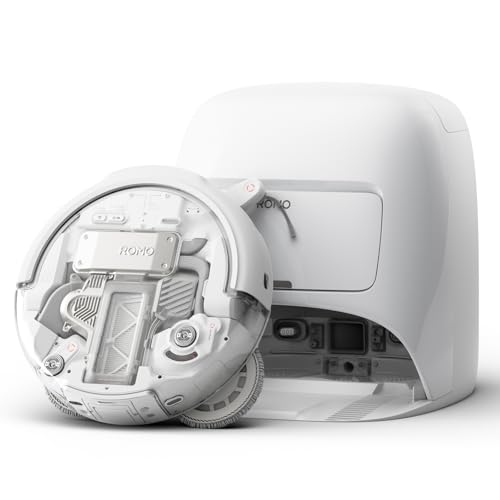
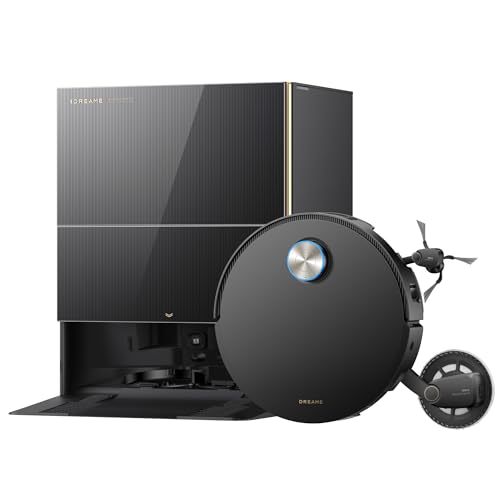
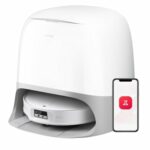
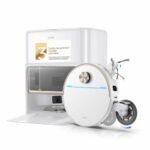
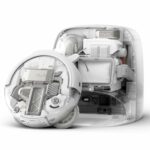
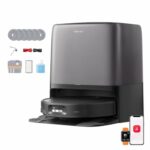
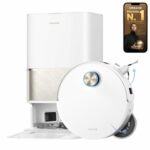
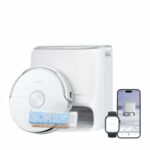
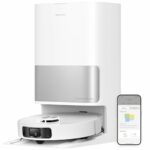
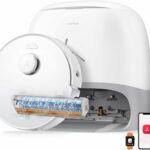
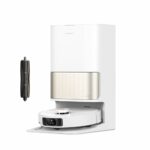
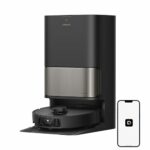
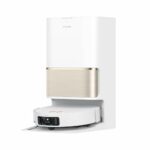
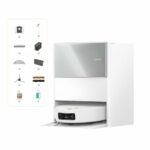
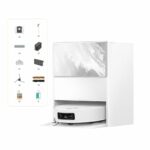
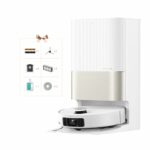
The DJI Romo A (Transparent Robot) and Dreame X60 Pro Ultra are two high-end options in the world of automated cleaning. Launched in 2025, the DJI model marks the well-known drone manufacturer’s entry into the robot vacuum cleaner market, featuring a transparent design that reveals its internal technology. The X60 Pro Ultra reaches the market in 2026 as one of Dreame’s most advanced models, from a brand that has consolidated its position by offering competitive features at keen prices.
Both models feature comprehensive multifunction docks, intelligent camera-based navigation and rotating mop systems. However, differences in suction power, obstacle-crossing ability and mopping-water temperature make them suitable for different types of users.
Suction power and vacuuming
The most obvious difference is suction power. The Dreame X60 Pro Ultra delivers 42,000 Pa, almost twice the 25,000 Pa of the DJI Romo A (Transparent Robot). This gap is particularly noticeable on thick carpets or in homes with pets that shed large amounts of hair.
As for the brushes, the DJI uses a split anti-tangle system, while the Dreame features the HyperStream 2.0 dual-brush system. Both designs aim to minimise hair tangles, which is essential in homes with pets. The X60 Pro Ultra also adds a dedicated skirting-board brush that is not included on the DJI model.
The Dreame’s side brush offers greater versatility: it extends robotically by up to 12 cm and can be lifted while mopping. The DJI also has an extendable side brush, but it cannot lift it. Both models include anti-tangle systems for the side brush, with the DJI using a dual-brush design for this purpose.
Both models can lift their main brush while mopping, preventing it from interfering with the mop pads. This feature is useful for keeping vacuuming and mopping tasks separate.
Mopping
Both robots mop with two rotating pads, but there are important differences. The Dreame X60 Pro Ultra applies 15 N of downward pressure at 280 RPM, while the DJI Romo A applies 12 N without specifying its rotation speed. The X60 Pro Ultra’s additional pressure helps to remove more stubborn stains.
Mop extension marks another significant difference. The Dreame robotically extends its mop pads by up to 18 cm to reach edges more effectively, while the DJI offers mop extension without specifying its exact reach. The X60 Pro Ultra can lift its mop pads by 10.5 mm, increasing to 21.5 mm when it also raises its chassis. The DJI model lifts its mop pads, but does not specify the height.
Hot water gives the Dreame a clear advantage: it mops the floor at 40°C, helping to dissolve grease and dirt more effectively. The DJI Romo A uses cold water, which limits its effectiveness on stubborn stains.
At the dock, the Dreame washes its mop pads with water at 100°C and dries them with hot air at 50°C. The DJI also washes and hot-air dries its mop pads, although it does not specify the temperatures. The X60 Pro Ultra’s high temperatures provide more thorough disinfection and faster drying, reducing the risk of unpleasant odours.
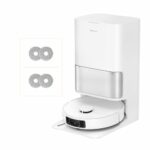
The Dreame can automatically detach its mop pads at the dock when only vacuuming is required. This feature has not been confirmed for the DJI. Both models detect dirt on the mop pads and the floor to adjust their cleaning behaviour.
Navigation system
The DJI Romo A (Transparent Robot) uses wide-angle solid-state LiDAR, while the Dreame X60 Pro Ultra uses retractable 360° LiDAR. The retractable system reduces the robot’s overall height when the sensor is not in use, making it easier to clean beneath low furniture.
Both models feature cameras with artificial intelligence, although Dreame specifies that its system uses two RGB cameras. Both also have a front 3D laser sensor and LED night vision, enabling accurate navigation even in low-light conditions.
The X60 Pro Ultra recognises up to 320 different objects, a figure that has not been specified for the DJI. This enables better obstacle identification and cleaning adapted to each type of object. Dreame confirms pet recognition and the ability to clean behind curtains, features that have not been confirmed for the DJI model.
The Dreame adds proactive lighting to improve obstacle avoidance. Both robots provide remote access to their cameras and feature AI-powered intelligent cleaning, with the X60 Pro Ultra using Dreame’s CleanGenius 3.0 system.
Runtime and battery
Both robots have 5,000 mAh batteries, but their performance differs. The Dreame X60 Pro Ultra reaches a runtime of 232 minutes, exceeding the 180 minutes offered by the DJI Romo A (Transparent Robot). This difference of almost an hour is significant in larger homes or when carrying out complete vacuuming and mopping cycles.
Both models support fast charging. Dreame specifies its PowerMaster technology, which replenishes 24% of the battery in just 5.5 minutes. This speed allows the robot to resume cleaning quickly if it needs to recharge partway through a task.
Smart features
Obstacle-crossing ability marks a crucial difference. The Dreame X60 Pro Ultra can overcome single steps up to 52 mm and double steps up to 100 mm, an impressive figure that allows it to cross thick carpets, high thresholds and small changes in floor level without difficulty. The DJI Romo A is limited to 20 mm, which is sufficient for most thin carpets but restrictive when facing larger obstacles.
The X60 Pro Ultra has its own integrated voice assistant and is also compatible with Alexa and Google Home. The DJI supports external assistants as well, although it is not specified whether it has its own built-in assistant. Both robots support Matter, with the DJI receiving compatibility through an OTA update.
Multifunction cleaning dock
Both docks automatically empty the robot’s dustbin and wash and dry its mop pads. The Dreame’s dust bag has a larger capacity: 3.2 litres compared with the DJI’s 2.4 litres. In large homes or households with pets, this difference reduces how frequently the bag needs to be replaced.
The water tanks have similar capacities: the Dreame holds 4.2 litres of clean water and 3 litres of dirty water, while the DJI holds 4 litres and 3.2 litres respectively. Both docks include a detergent tank and automatically clean the washing tray, with the DJI using a wide nozzle and the Dreame using water at 100°C.
The X60 Pro Ultra supports an optional plumbing connection kit, sold separately, which eliminates the need to fill and empty the water tanks manually. The DJI does not offer this option.
Dimensions
The Dreame X60 Pro Ultra is 89 mm tall with its LiDAR retracted, allowing it to fit beneath more furniture than the DJI Romo A, which is 98 mm tall. This difference of almost one centimetre may determine whether the robot can clean beneath low beds or certain sofas.
Their diameters are virtually identical: 350 mm for the Dreame and 351 mm for the DJI. The docks have different dimensions: the DJI dock is wider (453 mm compared with 390 mm), but shorter (440 mm compared with 499 mm) and shallower (425 mm compared with 456 mm). It is advisable to measure the available space before choosing.
Real-world user experience
In homes with pets, the Dreame X60 Pro Ultra offers clear advantages: greater suction power, a brush system designed to handle hair and specific pet recognition. The use of hot water both to mop the floor and wash the mop pads helps remove organic stains more effectively and provides better disinfection.
For larger homes, the Dreame’s longer 232-minute runtime and larger 3.2-litre dust bag reduce interruptions. With a runtime of 180 minutes, the DJI may need additional charging stops when cleaning extensive areas.
If you have thick carpets or high thresholds, the X60 Pro Ultra’s ability to overcome 52 mm obstacles, or 100 mm double steps, can be decisive. Limited to 20 mm, the DJI Romo A may become stuck when faced with larger obstacles.
In homes with low furniture, the Dreame’s height of 89 mm gives it access to more spaces than the DJI at 98 mm. The difference may appear small, but it can determine whether the robot is able to clean beneath certain pieces of furniture.
The Dreame’s hot-water mopping considerably improves results in kitchens and greasy areas. As the DJI uses cold water, it may require more passes over stubborn stains. The X60 Pro Ultra’s robotic 18 cm mop extension also covers edges more effectively than the DJI system.
Conclusion: which one should you choose?
Choose the DJI Romo A (Transparent Robot) if: you are interested in an established technology brand entering the robot vacuum cleaner market, value the transparent design that reveals its internal technology, have a home without significant obstacles or thresholds above 20 mm, do not need hot-water mopping and prefer a dock that is wider but shorter. It is a solid option for small or medium-sized homes without pets that shed large amounts of hair.
Choose the Dreame X60 Pro Ultra if: you need maximum suction power (42,000 Pa), have pets, thick carpets or high thresholds, value hot-water mopping at 40°C and mop washing at 100°C, want the longest possible runtime (232 minutes), need to clean beneath furniture with at least 89 mm of clearance, prefer a larger dust bag (3.2 litres) and are interested in connecting the dock directly to plumbing in the future. It is the more complete option for large homes, households with pets and users seeking maximum deep-cleaning performance.