✨ VS Analyze · VacuumSpain comparison technology. AI-generated explanation based on verified technical data.
Introduction
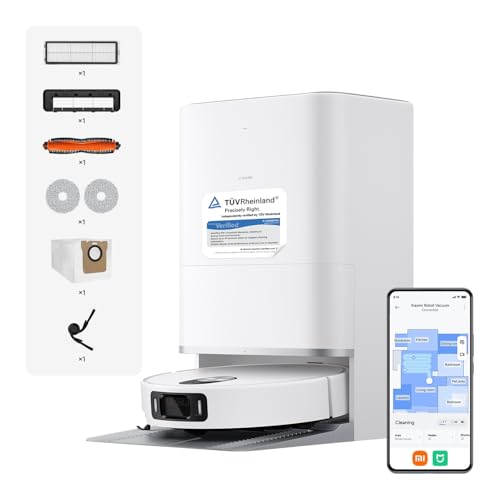
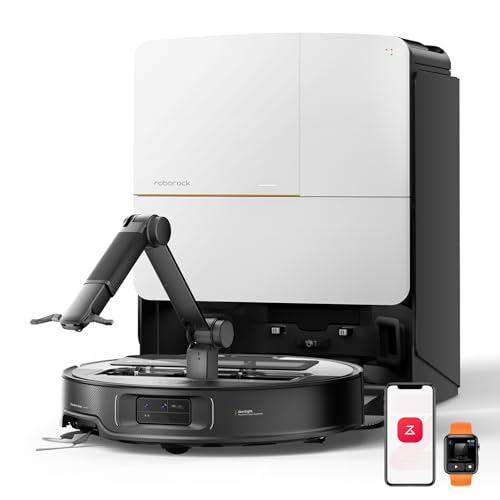
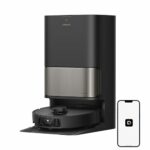
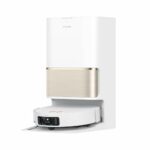
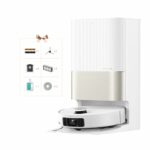
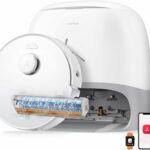
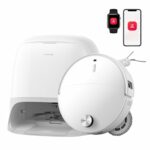
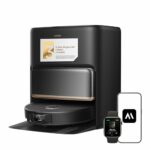
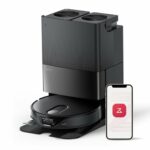
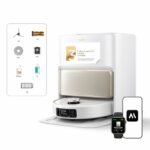
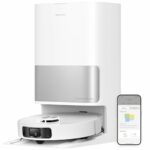
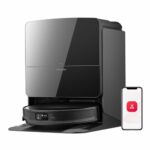
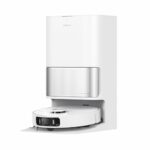
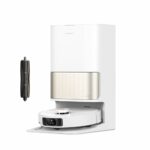
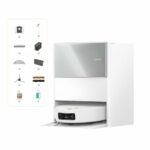
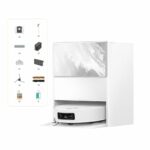
The Roborock Saros Z70 and the Xiaomi Robot Vacuum 5 Pro represent two high-end propositions within the robot vacuum market of 2025. Both devices offer a complete multifunction base with mop washing and drying, advanced AI camera navigation and features designed for demanding users seeking to fully automate the cleaning of their homes.
The main difference between these models lies in the advanced functions and level of automation. The Roborock model incorporates an OmniGrip Arm robotic arm that extends its capabilities beyond traditional cleaning, whilst the Xiaomi focuses on delivering solid performance in navigation and obstacle recognition. Both are designed for medium-to-large homes with frequent mopping needs.
Power and Suction
The Roborock Saros Z70 reaches 22,000 Pa of suction power, surpassing the 20,000 Pa of the Xiaomi Robot Vacuum 5 Pro. This difference can be particularly noticeable on medium-pile carpets or when there is accumulated ingrained dirt.
Regarding the brushing system, the Roborock opts for an anti-tangle brush, whilst the Xiaomi integrates the TriCut 3.0 system that combines bristles with blades to cut long hairs. Both models lift the main brush during mopping and feature an extendable side brush to improve corner cleaning.
An important difference: the Roborock's side brush can be lifted during mopping, a function the Xiaomi does not offer. This allows the Roborock model to prevent the side brush from interfering with the mops or dispersing dirty water. Both devices include anti-tangle side brushes.
Mopping
Both robots use a dual rotating mop system with extension to better reach edges. Mop lifting varies slightly: the Roborock can lift them between 12 and 22 mm depending on the situation, whilst the Xiaomi lifts them up to 15 mm.
Water temperature marks a clear difference. The Roborock Saros Z70 mops the floor with warm water, which improves the dissolution of grease and adhered dirt. The Xiaomi Robot Vacuum 5 Pro works with cold water.
Both bases wash the mops with hot water and dry them with hot air, ensuring hygienic maintenance. However, only the Roborock can automatically remove the mops at the base when it detects that it only needs to vacuum, avoiding dragging dry mops unnecessarily. Both models detect dirt on both the mops and the floor to adjust the cleaning process.
Navigation System
The Roborock uses the StarSight 2.0 system, whilst the Xiaomi incorporates retractable LiDAR. Both devices feature a front 3D laser sensor, AI camera and LED for night vision, as well as allowing remote camera access from the app.
The Xiaomi stands out for recognising up to 200 different obstacles, surpassing the Roborock's 108. In practice, this can translate into more precise avoidance of small or uncommon objects in the home.
The Roborock includes specific pet recognition, a function the Xiaomi does not offer. For homes with dogs or cats, this allows the robot to adapt routes and avoid disturbing the animals. The Roborock works with the RR Mason 12.0 algorithm and its SmartPlan 2.0 system to optimise intelligent cleaning.
Autonomy and Battery
The Roborock Saros Z70's battery reaches 6,400 mAh, compared to the Xiaomi Robot Vacuum 5 Pro's 5,200 mAh. This greater capacity translates into longer cleaning sessions without needing to recharge, especially useful in large homes or when maximum power mode is activated.
The Xiaomi specifies an autonomy of 140 minutes, data that the Roborock does not detail in the available information. In any case, the battery capacity difference suggests that the Roborock could offer greater endurance in prolonged combined vacuuming and mopping cycles.
Smart Functions
The Roborock Saros Z70 incorporates the OmniGrip Arm robotic arm, an exclusive function that extends the robot's capabilities beyond vacuuming and mopping. The Xiaomi Robot Vacuum 5 Pro does not include this technology.
Regarding obstacle-climbing ability, the Roborock can overcome simple steps, whilst the Xiaomi specifies that it overcomes up to 20 mm in height. Both figures indicate good ability to transit between different surfaces or overcome small level changes such as sliding door guides.
The Roborock features its own integrated voice assistant, in addition to compatibility with Alexa and Google Home. The Xiaomi only offers compatibility with external assistants.
Multifunction Cleaning Base
Both bases offer auto-emptying of the dust bin, mop washing with hot water and drying with hot air. Both include a 2.5-litre dust bag and a 4-litre clean water tank.
The main difference lies in the detergent tank: the Roborock includes it, allowing cleaning product to be added that is dispensed during mop washing. The Xiaomi does not offer this option.
The dirty water tank is slightly larger in the Xiaomi (3.8 litres) than in the Roborock (3 litres). Both bases feature self-cleaning of the washing tray, although the Roborock specifies that it uses version 2.0 of this system. Neither model includes UV disinfection nor plumbing connection.
Dimensions
The Roborock Saros Z70 measures 79.8 mm in height, notably less than the Xiaomi Robot Vacuum 5 Pro's 88 mm. This difference of more than 8 mm can prove decisive for accessing under low furniture, sofas or beds with little clearance from the floor.
The diameter is practically identical: 353 mm in the Roborock and 350 mm in the Xiaomi. As for the bases, the Roborock occupies 381 mm in width, 488 mm in height and 475 mm in depth. The Xiaomi measures 360 mm in width, 572 mm in height and 470 mm in depth. The Xiaomi's base is considerably taller, something to consider if vertical space is limited.
The Roborock includes a 180 ml dust bin in the robot, whilst the Xiaomi does not specify this capacity although it does confirm that it features a 69 ml water tank.
Real-World Usage Experience
For large homes, the Roborock Saros Z70 offers an advantage thanks to its greater battery capacity and superior suction power. The ability to mop with warm water improves results in kitchens or areas with grease, whilst automatic mop removal optimises mixed cleaning sessions.
In homes with pets, the Roborock proves more suitable due to its specific animal recognition and anti-tangle brush. The Xiaomi, with its TriCut 3.0 system, also handles hair well, but lacks the pet detection function.
The Roborock's lower height makes it a better option for spaces with low furniture. If navigation and comprehensive obstacle recognition are priorities, the Xiaomi stands out for identifying up to 200 different objects.
The Roborock's robotic arm adds versatility for users seeking functions beyond traditional cleaning. The detergent tank in its base also simplifies maintenance and improves mopping results without manual intervention.
Conclusion: Which to Choose?
Choose the Roborock Saros Z70 if: you seek maximum autonomy and power, you have pets at home, you need to access under low furniture, you value mopping with warm water and automatic mop removal, or you're interested in the robotic arm for additional functions. Also if you prefer to manage detergent automatically from the base.
Choose the Xiaomi Robot Vacuum 5 Pro if: you prioritise broader obstacle recognition (200 objects), you seek a competitive option in features with a focus more centred on traditional cleaning, or you don't need functions such as the robotic arm or detergent tank. Its larger dirty water tank may prove useful in intensive mopping sessions.