✨ VS Analyze · VacuumSpain comparison technology. AI-generated explanation based on verified technical data.
Introduction
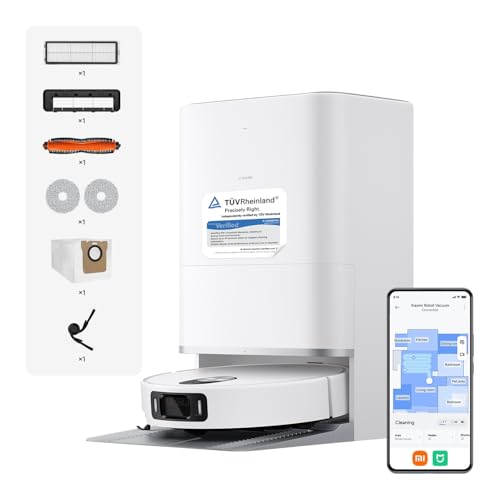
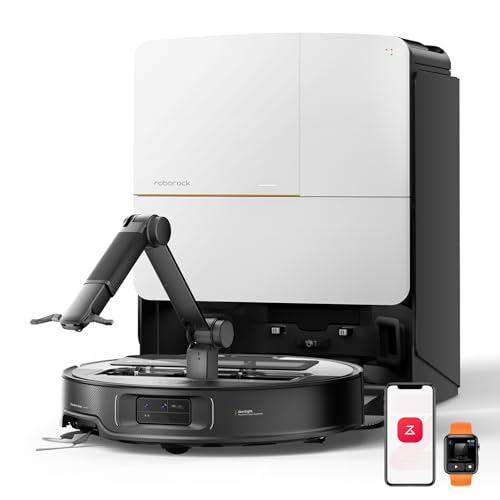
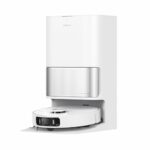
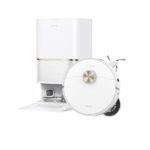
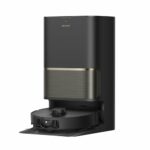
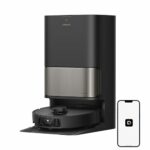
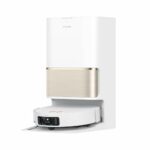
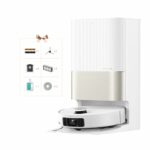
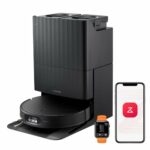
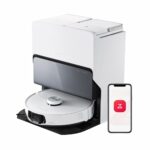
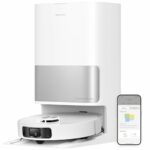
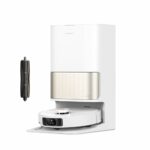
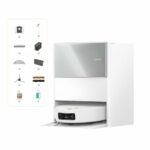
The Xiaomi Robot Vacuum 5 Pro, Roborock Saros Z70, and Dreame X50 Ultra Blanca represent three flagship models from 2025, each designed to deliver comprehensive automated cleaning with advanced mopping capabilities. All three feature multifunctional bases that handle both vacuuming and mopping tasks, making them suitable for households seeking minimal maintenance solutions.
These models target users with medium to large homes who value intelligent navigation and thorough floor care. The Xiaomi and Dreame share several design similarities, whilst the Roborock introduces unique features that set it apart in practical use. Understanding the differences becomes essential when deciding which model best suits specific cleaning requirements and household layouts.
Power and Suction
The Roborock Saros Z70 edges ahead with 22,000 Pa suction power, providing slightly more extraction force than the 20,000 Pa offered by the Xiaomi Robot Vacuum 5 Pro and Dreame X50 Ultra Blanca. In practical terms, this difference becomes noticeable when tackling deeply embedded dirt in carpet fibres or dealing with stubborn debris along skirting boards.
Brush technology varies across the range. The Xiaomi employs its TriCut 3.0 system, combining bristles with cutting blades to reduce hair tangles. The Roborock uses an anti-tangle design, whilst the Dreame features a dual brush configuration that prevents hair wrapping. All three models can elevate their main brushes during mopping to avoid cross-contamination.
Side brush functionality shows meaningful differences. The Roborock and Dreame can elevate their side brushes when mopping, preventing wet brushes from flicking water onto carpets or dry areas. The Xiaomi lacks this feature. All three extend their side brushes to reach into corners more effectively and include anti-tangle technology to minimise hair build-up.
Mopping Performance
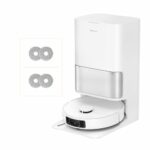
Each model uses dual rotating mopas that extend to reach edges more thoroughly. The Dreame X50 Ultra Blanca incorporates its distinctive swinging motion to push mopas slightly under furniture edges and protruding obstacles. Mopa elevation capabilities differ: the Xiaomi lifts to 15 mm, the Dreame to 10.5 mm, and the Roborock offers an adjustable range between 12 and 22 mm, providing more flexibility depending on carpet thickness.
Water temperature during mopping separates the Roborock from its competitors. The Saros Z70 uses warm water for floor cleaning, which can improve cleaning effectiveness on greasy residues. The Xiaomi and Dreame rely on cold water. All three detect dirt on both mopas and floors, triggering additional cleaning passes when necessary.
The Roborock introduces automatic mopa removal at the base, allowing the robot to vacuum without mopas attached when mopping isn't required. This prevents unnecessary wear on the mopping pads and avoids dragging damp mopas across carpeted areas during vacuuming-only sessions. The Xiaomi and Dreame don't offer this convenience, keeping mopas attached unless manually removed.
Cleaning Station Capabilities
All three bases automatically empty dust, wash mopas with hot water, and dry them using heated air to prevent odours. The Xiaomi and Roborock heat washing water to 60°C, whilst the Dreame reaches 70°C for more intensive sanitisation. Drying temperatures follow similar patterns: 45°C for Xiaomi, 40°C for Roborock, and 50°C for Dreame.
Self-cleaning of the washing tray differs in sophistication. The Xiaomi includes this function, the Roborock features version 2.0, and the Dreame boasts third-generation technology. The Dreame X50 Ultra Blanca uniquely includes UV disinfection within the base, adding an extra layer of sanitisation not found in the other models.
Detergent dispensing capabilities vary. The Roborock and Dreame include dedicated detergent tanks that automatically add cleaning solution during mopa washing. The Xiaomi Robot Vacuum 5 Pro doesn't provide this feature, requiring manual addition of detergent if desired. The Dreame also offers an optional plumbing connection kit (purchased separately) for continuous water supply, though this requires installation and isn't included as standard.
Storage capacity shows practical differences. The Dreame provides the largest dust bag at 3.2 litres compared to 2.5 litres in the Xiaomi and Roborock. For water, the Dreame holds 4.5 litres of clean water and 4 litres of dirty water, whilst the Xiaomi carries 4 litres clean and 3.8 litres dirty, and the Roborock stores 4 litres clean and 3 litres dirty. These differences affect how frequently you'll need to service the base.
Navigation Systems
All three models employ retractable LiDAR combined with AI-powered cameras and frontal 3D laser sensors. The Roborock uses its StarSight 2.0 system with dual cameras, as does the Dreame. The Xiaomi also features dual camera technology. Each includes LED illumination for navigation in darkness and allows remote camera access through their respective apps.
Object recognition databases differ significantly. The Xiaomi and Dreame identify up to 200 different obstacles, whilst the Roborock recognises 108. The Roborock and Dreame specifically detect pets, enabling features like pet monitoring or avoidance. The Xiaomi doesn't highlight this capability. Only the Dreame mentions curtain detection, helping prevent the robot from becoming entangled in hanging fabrics.
Processing power varies across the range. The Roborock runs RR Mason 12.0 algorithms, whilst the Dreame uses AI Sage 13.0 with Qualcomm 8 Core technology. The Xiaomi's specific processor isn't detailed. Each model features intelligent cleaning modes that adapt to room conditions and dirt levels automatically.
Battery and Autonomy
Battery capacity creates clear distinctions. The Xiaomi Robot Vacuum 5 Pro contains a 5,200 mAh battery providing 140 minutes of runtime. The Roborock Saros Z70 and Dreame X50 Ultra Blanca both pack larger 6,400 mAh batteries, with the Dreame specifically rated for 180 minutes of operation. The Roborock's runtime isn't specified, but the larger battery suggests extended cleaning sessions.
For households with expansive floor areas, the additional capacity in the Roborock and Dreame reduces the likelihood of mid-clean charging interruptions. The Xiaomi's smaller battery may require recharging during particularly lengthy cleaning cycles, though this remains adequate for most typical homes.
Advanced Features
Obstacle climbing ability shows variation. The Xiaomi manages 20 mm thresholds, whilst the Roborock and Dreame handle simple steps without specifying exact heights. This affects how easily each robot transitions between rooms with different flooring levels or navigates over door thresholds and thick carpet edges.
The Roborock Saros Z70 uniquely features an OmniGrip robotic arm, enabling it to manipulate small objects or interact with its environment in ways the other models cannot. This represents a significant technological advancement absent from the Xiaomi and Dreame.
Voice assistant integration differs. The Roborock and Dreame include their own built-in voice assistants alongside compatibility with external services like Alexa and Google Home. The Xiaomi Robot Vacuum 5 Pro supports external assistants but doesn't feature its own proprietary voice system.
Physical Dimensions
Height proves crucial for navigating under furniture. The Roborock Saros Z70 measures just 79.8 mm tall, making it the slimmest option and most capable of accessing low-clearance spaces beneath sofas and beds. The Xiaomi stands 88 mm tall and the Dreame 89 mm, both slightly taller and potentially restricted from tighter spaces.
Diameter remains similar across all three: 350 mm for the Xiaomi and Dreame, 353 mm for the Roborock. These minimal differences won't meaningfully affect manoeuvrability in typical home environments.
Base station footprints vary. The Xiaomi's base measures 360 mm wide, 572 mm tall, and 470 mm deep. The Roborock spans 381 mm wide, 488 mm tall, and 475 mm deep, making it the widest but shortest. The Dreame measures 340 mm wide, 590.5 mm tall, and 456.7 mm deep—the narrowest but tallest. Consider available floor space when positioning these stations.
Real-World Usage Scenarios
For large homes exceeding 150 square metres, the Roborock Saros Z70 and Dreame X50 Ultra Blanca offer superior battery endurance. The Dreame's 180-minute runtime and larger dust bag capacity reduce maintenance frequency in expansive properties. The Xiaomi suits smaller to medium homes where its 140-minute battery proves sufficient.
Households with pets benefit from the Roborock and Dreame's specific pet recognition features. All three models handle pet hair effectively through their anti-tangle brush designs, but the additional pet-aware navigation helps avoid disturbing animals or tracking their movements.
The Roborock's lower profile makes it ideal for homes with low-clearance furniture. If your sofas, beds, or cabinets sit close to the floor, those extra millimetres matter considerably. The warm water mopping also suits homes with tiled or sealed hard floors prone to greasy marks.
The Dreame X50 Ultra Blanca appeals to hygiene-conscious users through its UV disinfection and higher washing temperatures. The optional plumbing connection suits those wanting truly hands-off operation, though installation requirements should be considered.
Conclusion: Which Should You Choose?
Choose the Xiaomi Robot Vacuum 5 Pro if you have a smaller home under 120 square metres, want solid cleaning performance without premium features, and prefer a more compact base station. The TriCut 3.0 brush handles pet hair well, and the 15 mm mopa lift clears most carpet edges effectively.
Choose the Roborock Saros Z70 if you need the lowest profile robot to access tight spaces under furniture, value warm water mopping for better grease removal, or want automatic mopa removal for dedicated vacuuming sessions. The robotic arm adds unique capabilities, and the detergent dispenser reduces manual intervention. This represents the most technologically advanced option in this comparison of robot vacuum cleaners.
Choose the Dreame X50 Ultra Blanca if you prioritise maximum runtime for large properties, want the highest washing and drying temperatures for superior sanitisation, or value UV disinfection. The larger dust bag extends maintenance intervals, and the optional plumbing kit suits those seeking ultimate convenience. The swinging mopa motion improves edge cleaning around furniture legs and protruding obstacles.
Each model excels in different areas, making the best choice dependent on your specific home layout, cleaning priorities, and desired automation level. Consider which features align most closely with your daily cleaning challenges when selecting between these three capable robots.