✨ VS Analyze · VacuumSpain comparison technology. AI-generated explanation based on verified technical data.
Introduction
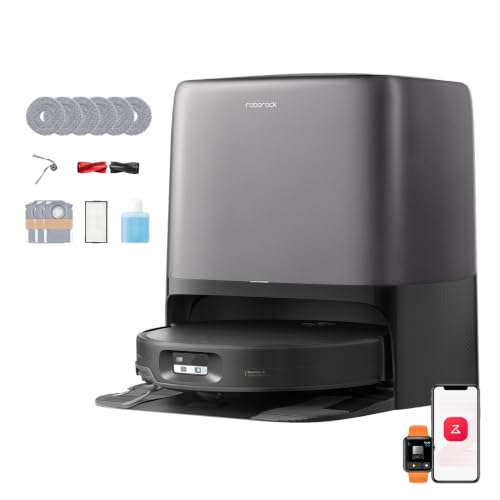
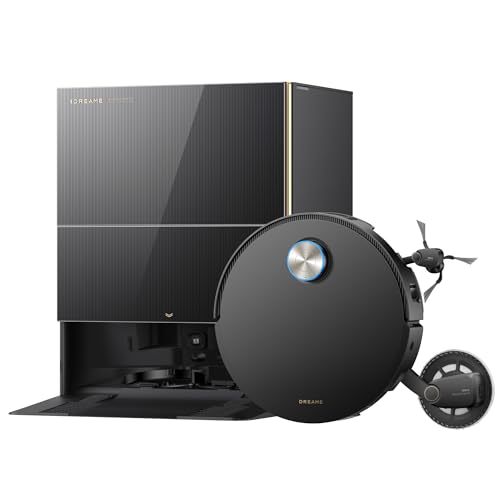
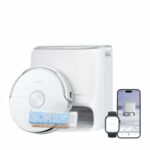
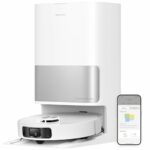
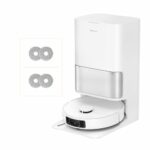
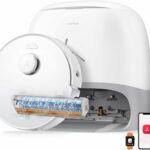
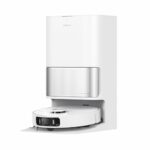
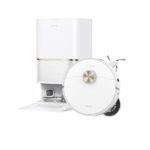
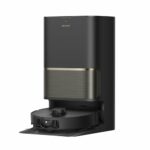
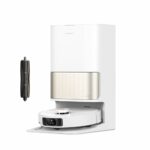
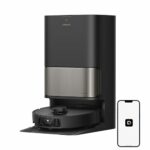
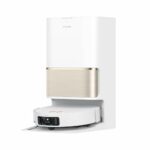
The Roborock Saros 20 Neo and Dreame X60 Pro Ultra are two high-end options in the market for robot vacuum cleaners with multifunction docks. Both reach the market in 2026 with advanced navigation technologies, rotating mop systems and docks that wash the mop pads with hot water at 100°C.
The Roborock model uses its DuoDivide anti-tangle brush system and has a larger battery, while the Dreame stands out for its greater suction power and dedicated features such as a skirting-board brush. Both are designed for homes requiring completely autonomous vacuuming and mopping, with minimal maintenance thanks to their multifunction docks.
Suction power and vacuuming
Suction power marks a noticeable difference between these two robots. The Dreame X60 Pro Ultra delivers 42,000 Pa, exceeding the Roborock Saros 20 Neo’s 36,000 Pa. This difference may be decisive on deep-pile carpets or where there is a significant accumulation of dirt.
As for their brush systems, both manufacturers have chosen anti-tangle technologies, albeit with different approaches. The Saros 20 Neo uses Roborock’s DuoDivide system, which directs hair towards the central opening to make it easier to vacuum up directly. The X60 Pro Ultra features the HyperStream 2.0 dual-brush system, with two brushes anchored at one end to minimise tangles. In practice, both systems work well with pet hair, although their designs differ.
The side brushes present more significant differences. Both models feature an extending side brush to reach corners more effectively, but the Dreame adds a robotic extension of 12 cm. In addition, only the X60 Pro Ultra can lift its side brush while mopping and has a dedicated skirting-board brush, improving the cleaning of edges and skirting boards. The Saros 20 Neo does not offer these features.
Mopping
Both models feature rotating mop systems, although their specifications differ. The Dreame X60 Pro Ultra rotates its mop pads at 280 RPM while applying 15 N of downward pressure, whereas the Roborock Saros 20 Neo reaches 200 RPM with 14 N. The Dreame’s greater speed and pressure may provide more intensive cleaning of stubborn stains.
Both robots extend their mop pads to reach edges more effectively, but the X60 Pro Ultra offers a robotic extension of 18 cm, exceeding that of the Saros 20 Neo. This feature is particularly useful in rooms with many corners or furniture positioned against the walls.
An important difference can be found in the mopping-water temperature. The Dreame mops the floor directly with hot water at 40°C, while the Roborock uses warm water without specifying its exact temperature. The X60 Pro Ultra’s hot water helps to dissolve grease and certain stains more effectively.
As for mop lifting, the Saros 20 Neo reaches 15 mm, increasing to 22 mm when it also lifts its chassis. The X60 Pro Ultra reaches 10.5 mm, extendable to 21.5 mm with chassis lifting. Both systems allow the robots to cross carpets without wetting them, although the Roborock provides slightly more clearance.
Both models automatically detach their mop pads at the dock when only vacuuming is required, detect dirt on both the mop pads and the floor to adjust cleaning and return to the dock during mopping to wash the pads. This ensures that they always mop with clean pads.
Navigation system
Both the Roborock Saros 20 Neo and Dreame X60 Pro Ultra use laser navigation with retractable LiDAR, allowing them to map the home accurately and plan efficient routes. Dreame specifies that its model uses retractable 360° LiDAR.
The main navigation difference lies in the cameras. The Saros 20 Neo has a single RGB camera, while the X60 Pro Ultra uses two RGB cameras. The Dreame’s dual-camera configuration improves spatial perception and obstacle recognition. The X60 Pro Ultra identifies up to 320 different objects, compared with 300 for the Roborock.
Both robots feature a front 3D laser sensor for obstacle avoidance. The Saros 20 Neo uses structured light, while the X60 Pro Ultra adds proactive illumination. Both models recognise pets, clean behind curtains, provide remote camera access and feature LED night vision.
For artificial intelligence, the Roborock uses SmartPlan 3.0 and the Dreame uses CleanGenius 3.0. Both systems analyse the floor type, recognise stains and automatically adjust cleaning parameters according to the detected requirements.
Runtime and battery
The Roborock Saros 20 Neo clearly stands out in this area with a 6,400 mAh battery providing a claimed runtime of up to 256 minutes. The Dreame X60 Pro Ultra has a 5,000 mAh battery and a runtime of 232 minutes. This difference of almost 30 minutes may be relevant in larger homes.
Both models support fast charging. The X60 Pro Ultra specifies its PowerMaster technology, which can recharge 24% of the battery in just 5.5 minutes. This speeds up the resumption of cleaning in larger homes when the battery runs out partway through the process.
Smart features
The Dreame X60 Pro Ultra has the advantage when overcoming obstacles. This model can cross single steps up to 52 mm and double steps up to 100 mm, while the Roborock Saros 20 Neo reaches 45 mm for single steps and 88 mm for double steps. The Dreame offers greater versatility in homes with pronounced changes in floor level between rooms or very thick carpets.
Both models have their own integrated voice assistant and are compatible with Alexa, Google Home and the Matter protocol, making them easy to integrate into existing smart-home ecosystems.
Multifunction cleaning dock
Both docks automatically empty the robot’s dustbin, wash the mop pads with hot water at 100°C and automatically clean the washing tray at the same temperature. Both use hot air to dry the mop pads, although the temperatures differ slightly: 55°C for the Roborock and 50°C for the Dreame.
The Saros 20 Neo has a 2.7-litre dust bag, while the X60 Pro Ultra offers 3.2 litres. The Dreame’s greater capacity reduces how frequently the bag needs to be replaced, which is particularly useful in homes with pets or high foot traffic.
As for the water tanks, the X60 Pro Ultra holds 4.2 litres of clean water, compared with 4 litres for the Saros 20 Neo. The dirty-water tank has a capacity of 3 litres on both models. Both also include a detergent tank that dispenses cleaning solution while washing the mop pads.
Only the Dreame X60 Pro Ultra supports an optional plumbing connection kit, which is sold separately. This option eliminates the need to fill and empty the water tanks manually, although it involves an additional cost and installation.
Dimensions
The robot’s height is the most relevant difference in this section. The Roborock Saros 20 Neo is 79.8 mm tall, allowing it to fit beneath low furniture, sofas and beds with limited floor clearance. The Dreame X60 Pro Ultra is 89 mm tall with its LiDAR retracted, restricting access beneath some furniture.
Their diameters are virtually identical: 352 mm for the Roborock and 350 mm for the Dreame. Neither has a significant advantage in narrow spaces.
The docks have similar dimensions. The Saros 20 Neo dock is 402 mm wide, 494 mm tall and 450 mm deep. The X60 Pro Ultra dock is 390 mm wide, 499 mm tall and 456 mm deep. It is advisable to reserve approximately half a square metre of space for either dock.
Real-world user experience
For larger homes, the Roborock Saros 20 Neo offers a longer runtime thanks to its 6,400 mAh battery, reducing interruptions for charging. The Dreame X60 Pro Ultra compensates with its PowerMaster fast-charging system, which recovers part of the battery in just a few minutes.
Both robots perform well in homes with pets thanks to their anti-tangle systems. The X60 Pro Ultra’s greater suction power of 42,000 Pa may be more effective on carpets where hair accumulates, while the Saros 20 Neo offers sufficient performance for most situations.
If the home has low furniture or beds with limited floor clearance, the Saros 20 Neo provides better access thanks to its height of 79.8 mm. At 89 mm, the X60 Pro Ultra may be unable to enter certain spaces.
For users seeking the best possible mopping performance, the Dreame X60 Pro Ultra delivers hot water at 40°C directly onto the floor, a higher mop speed of 280 RPM, greater downward pressure of 15 N and an 18 cm robotic extension. The skirting-board brush also provides an additional advantage when cleaning along edges.
In homes with changes in floor level between rooms, thick carpets or small steps, the X60 Pro Ultra overcomes obstacles up to 52 mm, or 100 mm for double steps, compared with 45 mm and 88 mm respectively for the Saros 20 Neo.
Maintenance is similar in both cases, although the Dreame’s 3.2-litre dust bag needs to be replaced less frequently. The X60 Pro Ultra’s plumbing connection option eliminates manual water management, but requires additional expenditure and installation.
Conclusion: which one should you choose?
Choose the Roborock Saros 20 Neo if... you live in a large home where runtime is critical, need the robot to fit beneath low furniture or beds with limited floor clearance or want a solid balance between vacuuming and mopping without requiring the most advanced features. Its 6,400 mAh battery and height of 79.8 mm are its main strengths.
Choose the Dreame X60 Pro Ultra if... you prioritise maximum suction power of 42,000 Pa for carpets or pet hair, want the best mopping system with hot water at 40°C on the floor and mop pads rotating at 280 RPM, need to overcome high obstacles up to 52 mm, value additional features such as the skirting-board brush and liftable side brush or are interested in connecting the dock directly to plumbing in the future. Its 3.2-litre bag and 4.2-litre clean-water tank also reduce maintenance.
Both robots offer intelligent navigation, advanced obstacle recognition, comprehensive multifunction docks and voice-assistant compatibility. The choice depends on whether you prefer the Roborock’s longer runtime and lower height or the Dreame’s greater power, more advanced mopping performance and superior obstacle-crossing ability.