✨ VS Analyze · VacuumSpain comparison technology. AI-generated explanation based on verified technical data.
Introducción
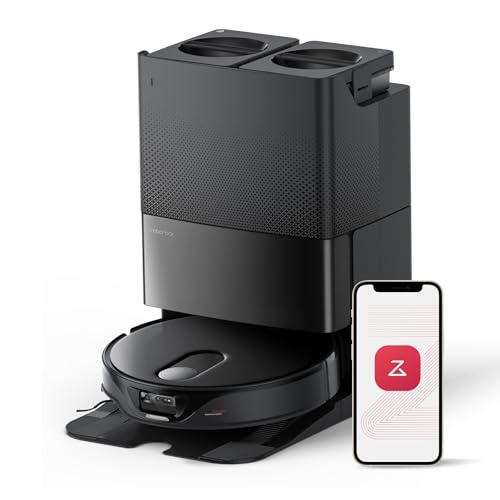
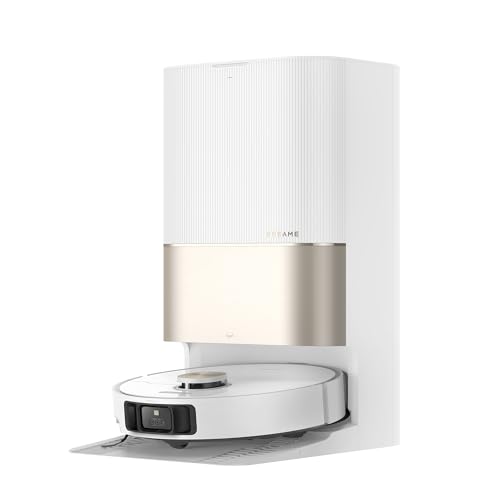
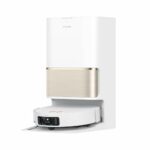
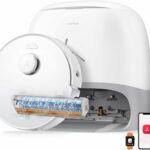
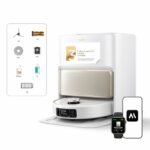
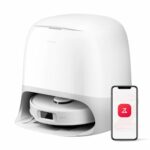
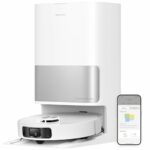
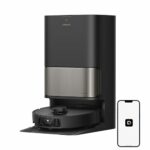
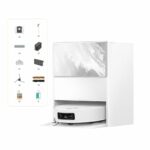
The Roborock Qrevo Slim and the Dreame X40 Ultra represent two premium cleaning solutions launched in 2024, both equipped with multifunctional bases that handle the entire cleaning cycle autonomously. These models sit firmly in the high-end segment, designed for users who want minimal intervention in their daily cleaning routines.
The Qrevo Slim stands out with its remarkably low profile at just 82 mm, making it one of the slimmest robot vacuum cleaners available. The X40 Ultra, slightly taller at 97 mm, compensates with higher suction power and a larger battery capacity. Both models incorporate advanced AI navigation, dual rotating mops, and hot water mop washing systems—features that differentiate them from mid-range alternatives.
These robots suit homes where thorough mopping matters as much as vacuuming. The multifunctional bases ensure mops stay clean throughout the process, washing them repeatedly during cleaning sessions and drying them afterwards to prevent odours.
Suction power and brushing systems
The Dreame X40 Ultra delivers 12,000 Pa of suction, edging ahead of the Qrevo Slim's 11,000 Pa. Whilst this difference might seem modest on paper, it can prove noticeable on high-pile carpets or when dealing with embedded debris in textile fibres.
More significant is the brush configuration. The Qrevo Slim employs a DuoDivide dual brush system, which channels hair and debris towards the central suction inlet, reducing tangles. The X40 Ultra uses a HyperStream single brush design with dual anchor points, also engineered to minimise hair entanglement. Both approaches work well for pet owners, though the mechanisms differ fundamentally.
The side brush tells an interesting story. Both models feature extendable side brushes that reach into corners more effectively. However, the X40 Ultra adds two refinements: it can lift the side brush when mopping to avoid contaminating clean water, and it incorporates anti-tangle technology. The Qrevo Slim's side brush remains fixed during mopping, which matters less given its dual rotating mops handle edges independently.
Both robots lift their main brushes when mopping, preventing carpet fibres from interfering with the wet cleaning process.
Mopping capabilities
Dual rotating mops feature on both models, spinning to scrub floors rather than simply dragging a damp cloth across surfaces. Each extends outwards to reach skirting boards and room edges—a feature that makes a tangible difference in real-world cleaning.
The X40 Ultra incorporates RoboSwing, allowing the robot to shift its body slightly and push the mop further under furniture overhangs and cabinet edges. This movement pattern isn't present on the Qrevo Slim, which relies on its extendable mop alone.
Mop elevation reaches 10 mm on the Qrevo Slim and 10.5 mm on the X40 Ultra—functionally identical for most carpets and rugs. What differs is automation: the X40 Ultra can detach its mops entirely at the base when you want pure vacuuming mode. The Qrevo Slim keeps mops attached, relying on elevation to keep them clear of carpets.
Both bases wash mops with hot water during cleaning sessions, ensuring the robot doesn't spread dirt from room to room. Hot air drying follows each session, preventing bacterial growth and unpleasant smells. The X40 Ultra features a second-generation self-cleaning tray system, whilst the Qrevo Slim uses version 1.0. In practice, both maintain hygiene effectively, though newer iterations typically improve water distribution and drainage.
Dirt detection works on both models, triggering additional passes or mop rewashes when sensors identify stubborn marks. The X40 Ultra adds AI-powered stain recognition, automatically adjusting cleaning intensity based on the type of mess detected.
Navigation intelligence
The Qrevo Slim employs StarSight 1.0 navigation, combining dual cameras with 3D laser sensors. The X40 Ultra uses a third-generation LiDAR turret alongside its dual camera array and frontal 3D sensors. Both systems map accurately and navigate efficiently, though the X40 Ultra's obstacle database extends to 120 recognised items versus 73 on the Qrevo Slim.
This expanded recognition includes curtain detection, which prevents the robot from becoming entangled in floor-length drapes—a feature absent from the Qrevo Slim. Both models identify pets, furniture, cables and common household objects, adjusting their cleaning paths accordingly.
LED illumination assists night-time navigation on both robots, and remote camera access lets you check on your home through the app. The Qrevo Slim runs RR Mason 11.0 processing, whilst the X40 Ultra uses AI Sage 11.0 Quad-Core architecture. Both deliver responsive mapping and route optimisation.
The SmartPlan 1.0 system on the Qrevo Slim learns cleaning patterns over time. The X40 Ultra's CleanGenius AI takes this further, analysing room types and adjusting suction, water flow and mopping intensity automatically.
Battery autonomy
The X40 Ultra's 6,400 mAh battery provides 194 minutes of runtime compared to 180 minutes from the Qrevo Slim's 5,200 mAh cell. For most homes, this translates to complete coverage in a single session, though larger properties benefit from the X40 Ultra's extended capacity.
Neither manufacturer specifies charging times in the available data, though both robots resume cleaning automatically after recharging if a session remains incomplete.
Smart features
Obstacle climbing reaches 20 mm on the Qrevo Slim and 22 mm on the X40 Ultra. This allows both models to mount door thresholds, thick rugs and minor floor transitions without assistance. The 2 mm difference rarely matters in typical homes.
The Qrevo Slim integrates its own voice assistant, enabling control without external smart speakers. The X40 Ultra lacks this built-in assistant but works seamlessly with Alexa and Google Home. Which approach suits you depends on your existing smart home ecosystem and preference for proprietary versus universal voice control.
Multifunctional base stations
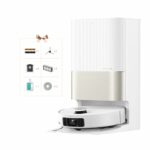
Both bases handle dust collection, mop washing with hot water, and hot air drying. The X40 Ultra adds a detergent tank, automatically dispensing cleaning solution during mop washing cycles. The Qrevo Slim requires plain water only, which simplifies maintenance but offers less deep-cleaning potential for heavily soiled mops.
Dust storage capacity differs: 2.7 litres on the Qrevo Slim versus 3.2 litres on the X40 Ultra. This translates to roughly 60 days and 75 days between bag changes respectively, assuming average household conditions.
Clean water tanks hold 4 litres and 4.5 litres, whilst dirty water capacities reach 3.5 litres and 4 litres. The X40 Ultra's slightly larger reservoirs extend the interval between manual refills, particularly useful in larger homes or when mopping frequently.
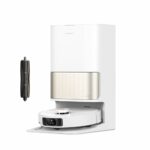
The X40 Ultra offers an optional pipe connection kit, allowing permanent plumbing integration for automatic water supply and drainage. This accessory requires separate purchase and professional installation, but it eliminates manual tank maintenance entirely. The Qrevo Slim doesn't support this option.
Physical dimensions
At 82 mm tall, the Qrevo Slim fits beneath furniture that blocks most robot vacuum cleaners. The X40 Ultra's 97 mm height remains competitive but won't clear low-clearance sofas and cabinets as reliably. If your home features furniture with minimal ground clearance, this 15 mm difference determines whether the robot accesses those spaces or leaves them untouched.
Diameter measurements sit virtually identical at 353 mm and 350 mm, so both navigate narrow passages and chair legs with equal ease.
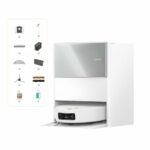
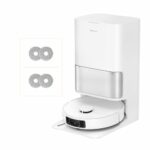
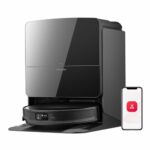
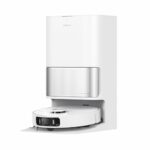
Base station footprints differ slightly. The Qrevo Slim's base measures 340 mm wide, 521 mm tall and 487 mm deep. The X40 Ultra's base spans 340 mm wide, 590.5 mm tall and 456.7 mm deep. The X40 Ultra's base stands taller but occupies less floor depth, which may influence placement in tight laundry rooms or alcoves.
Real-world performance considerations
For homes with low furniture, the Qrevo Slim's reduced height provides genuine access advantages. It cleans areas competitors simply cannot reach, reducing manual intervention.
Pet owners benefit from both models' anti-tangle brush systems, though the X40 Ultra's side brush lift prevents hair from contaminating mop water during wet cleaning cycles. The higher suction power also helps extract embedded fur from carpets and rugs.
Larger properties favour the X40 Ultra's extended battery life and bigger base reservoirs, reducing maintenance frequency. The detergent tank enhances mop hygiene for households with children or pets where floors endure heavier soiling.
The Qrevo Slim suits those prioritising furniture access and integrated voice control. Its compact base and straightforward water-only operation appeal to users who prefer simplicity over maximum automation.
Conclusion: which to choose?
Choose the Roborock Qrevo Slim if you need exceptional access beneath low-clearance furniture, value integrated voice assistance, or prefer a more compact base station. Its 82 mm profile opens cleaning zones unavailable to taller robots, whilst the DuoDivide brush system handles pet hair effectively. The straightforward water-only base operation suits those who want capable automation without managing detergent supplies.
Choose the Dreame X40 Ultra if you want maximum suction power, extended battery autonomy, and advanced AI cleaning intelligence. The detergent tank and second-generation self-cleaning tray elevate mop hygiene, whilst the optional pipe connection kit enables complete hands-off operation. Larger homes benefit from the increased dust bag and water tank capacities, and the expanded obstacle recognition database provides superior navigation in cluttered environments. The side brush lift and RoboSwing technology deliver more thorough edge cleaning, particularly valuable in homes with complex floor plans.