✨ VS Analyze · VacuumSpain comparison technology. AI-generated explanation based on verified technical data.
Introduction
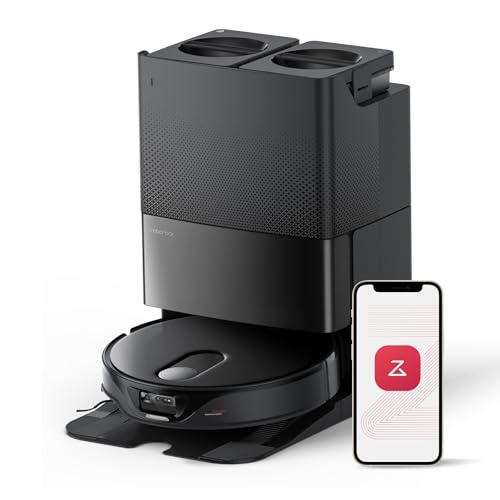
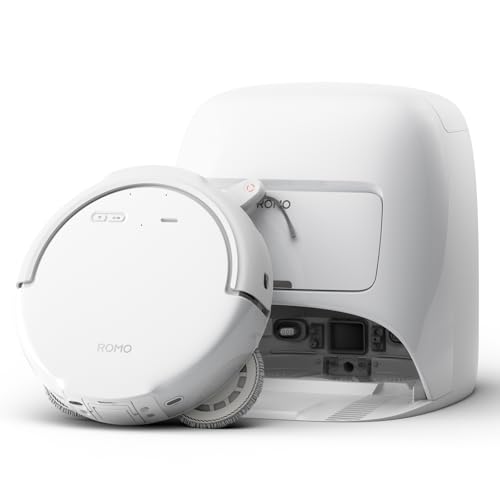
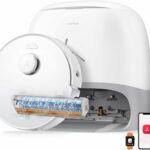
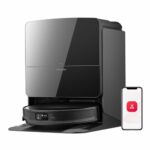
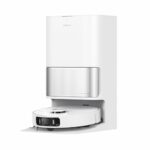
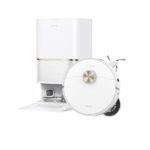
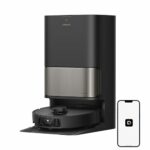
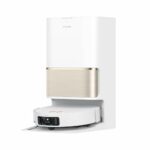
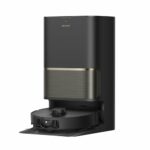
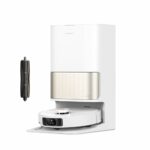
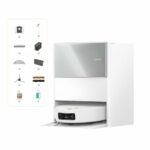
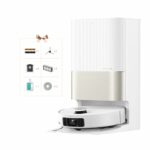
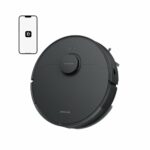
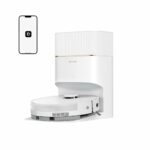
Choosing a high-end robot vacuum means analysing every technical detail. The DJI Romo S (White), launched in 2025, represents DJI's entry into the home cleaning market, whilst the Roborock Qrevo Slim from 2024 comes backed by Roborock's track record as a global leader in this sector. We're looking at two models that both feature a complete multifunction base, advanced navigation and rotating mopping, though with significant differences in power, design and functionality.
The Qrevo Slim stands out for its reduced height of 82 mm, designed to slip under low furniture. The DJI Romo S, at 98 mm tall, compensates with superior suction power and unique features that we'll examine below.
Power and Suction
The most notable difference between these models is in suction. The DJI Romo S reaches 25,000 Pa, more than double the 11,000 Pa of the Roborock Qrevo Slim. This power translates into superior capability for thick carpets and ingrained dirt.
Regarding the main brush, the DJI incorporates a Divided system, whilst the Qrevo Slim opts for a dual silicone brush. Roborock's silicone design facilitates hair cleaning and notably reduces tangling. Both models raise the main brush during mopping, preventing it from getting unnecessarily wet.
The side brush marks another important difference. The DJI Romo S integrates a dual anti-tangle side brush, a feature we don't find in the Qrevo Slim. This configuration improves dirt collection in corners without hair wrapping around. Both units feature an extendable side brush to better reach corners, though neither raises this brush during mopping.
Mopping
The mopping system is similar in concept: two rotating mops with edge extension in both cases. Both robots raise the mops when they detect carpets, though the Qrevo Slim specifies a 10 mm lift.
The major difference lies in mop washing. The Roborock Qrevo Slim washes the mops with hot water in the base, which improves the removal of grease and adhered dirt. The DJI Romo S uses cold water for this task. However, the DJI model incorporates a detergent tank in the base, something the Qrevo Slim doesn't offer. This function allows adding cleaning product that's dispensed during mop washing.
Mop drying works with hot air in both models, guaranteeing complete drying that prevents bad odours. Both include self-cleaning of the washing tray, with automatic nozzle in the DJI and 1.0 system in the Roborock. Dirt detection both on mops and on the floor is present in both, allowing additional scrubbing when necessary.
Navigation System
The DJI Romo S mounts a solid-state LiDAR, whilst the Qrevo Slim uses Roborock's StarSight 1.0 system. Both incorporate an AI camera with front 3D laser sensor and LED for night vision, allowing remote camera access from the app.
The Roborock specifies that it recognises up to 73 different types of obstacles, including pets specifically. The DJI Romo S doesn't detail the exact number of recognised obstacles, though it incorporates an exclusive function: AI stain recognition. This capability allows the robot to identify dirt on the floor and act accordingly.
Regarding cleaning intelligence, the Qrevo Slim integrates SmartPlan 1.0 and the RR Mason 11.0 algorithm. The DJI also features AI intelligent cleaning, though it doesn't specify particular names for these systems.
Runtime and Battery
Battery capacity is practically identical: 5,000 mAh in the DJI Romo S and 5,200 mAh in the Roborock Qrevo Slim. This minimal difference is reflected in an equal runtime of 180 minutes for both models.
In practice, this runtime allows covering large surfaces in a single cleaning session, though the DJI's greater suction power could consume more battery in maximum mode.
Smart Functions
Both robots overcome obstacles up to 20 mm in height, facilitating passage between rooms with small level changes or thick carpets.
The Roborock Qrevo Slim includes a built-in voice assistant, a function that adds convenience to daily use. Both models are compatible with external assistants such as Alexa and Google Home.
Multifunction Cleaning Base
Both bases offer auto-emptying of the dust bin, washing and drying of mops with hot air. We've already mentioned that mop washing is carried out with hot water in the Qrevo Slim and with cold water in the DJI Romo S. The DJI model compensates with the integrated detergent tank.
The dust bag capacity is 2.4 litres in the DJI versus 2.7 litres in the Roborock. The clean water tank is identical at 4 litres, whilst dirty water is stored in 3.2 litres in the DJI and 3.5 litres in the Roborock. Minimal differences that don't significantly affect maintenance.
Neither offers plumbing connection nor an optional kit for it.
Dimensions
The Roborock Qrevo Slim robot measures 82 mm in height, 16 mm less than the 98 mm of the DJI Romo S. This difference is relevant if you need the robot to pass under low furniture, sofas or beds with little clearance from the floor. The diameter is practically the same: 351 mm in the DJI and 353 mm in the Roborock.
Regarding the robot's tanks, the DJI has 260 ml for dust, exceeding the 220 ml of the Qrevo Slim. The Roborock specifies a 72 ml water tank in the robot.
The bases have different configurations. The DJI Romo S measures 453 mm wide, 440 mm tall and 425 mm deep. The Qrevo Slim is narrower (340 mm) but taller (521 mm) and deeper (487 mm). It's advisable to measure the available space before deciding.
Real-World Usage Experience
For homes with thick carpets or pets that shed a lot of hair, the 25,000 Pa power of the DJI Romo S makes a difference. The dual anti-tangle side brush also helps in homes with pets. The detergent tank adds an extra level of cleaning in mopping.
If the priority is passing under low furniture, the Roborock Qrevo Slim with its 82 mm height proves more versatile. Hot water mop washing improves results on floors with grease or adhered dirt. Specific pet recognition and identification of 73 types of obstacles provide security in navigation.
The DJI's stain recognition allows more precise cleaning when it detects localised dirt. The Roborock's built-in voice assistant facilitates control without needing to open the app.
Conclusion: Which to Choose?
Choose the DJI Romo S (White) if: You're looking for maximum suction power for thick carpets or if you have pets with heavy shedding. The integrated detergent tank and AI stain recognition are clear advantages. Also if you prefer a somewhat larger dust bin in the robot and the dual anti-tangle side brush configuration proves useful to you.
Choose the Roborock Qrevo Slim if: You need a robot that passes under low furniture thanks to its 82 mm height. Hot water mop washing improves results on hard floors with grease. Recognition of 73 obstacles, including pets specifically, and the built-in voice assistant add convenience. Roborock's reliability as a global leading brand is another factor to consider, especially if you value an established app and extensive technical support.