✨ VS Analyses · VacuumSpain comparison technology. Explanation created with AI from verified technical data.
Introduction
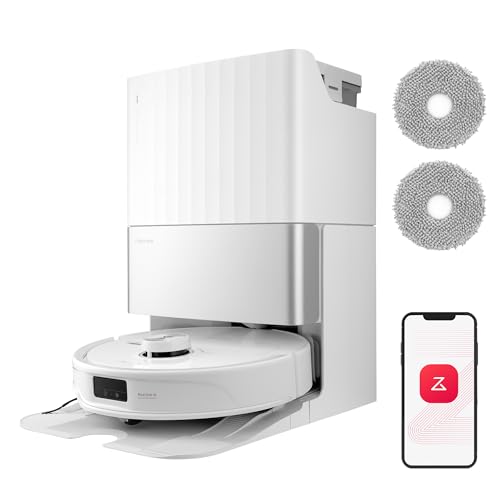
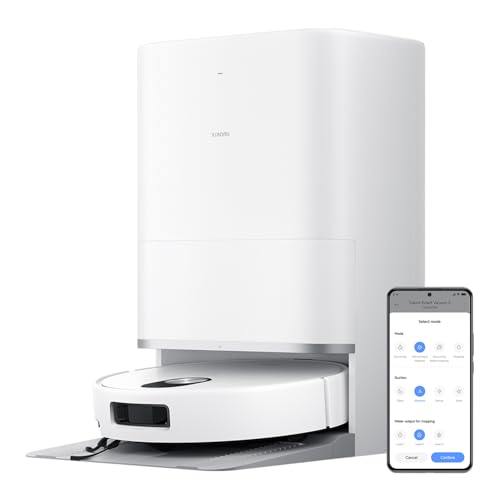
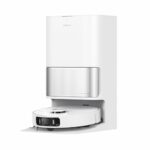
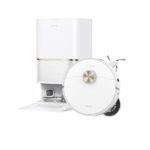
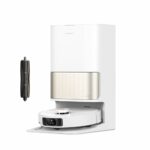
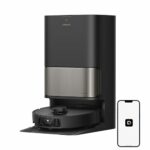
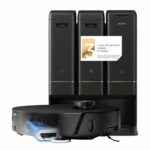
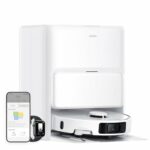
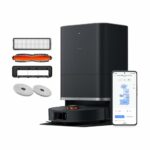
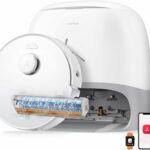
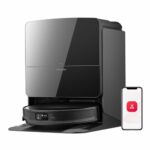
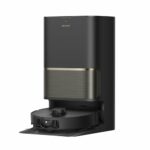
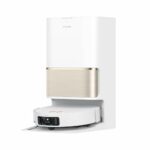
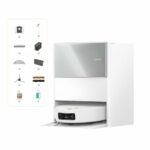
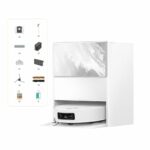
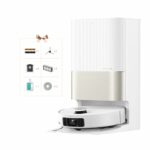
The Roborock Qrevo Master and Xiaomi Robot Vacuum 5 represent two distinct approaches to premium robot vacuum technology. The Roborock model arrived in 2024, whilst Xiaomi's offering is a 2025 release, suggesting the latest technological refinements. Both feature multifunctional bases with hot water mop washing and heated air drying, positioning them firmly in the high-end segment of the market.
These aren't entry-level devices. They're designed for users who want comprehensive floor care without manual intervention, particularly suited to larger homes with mixed flooring types. The question is which one delivers better value for different household scenarios.
Suction Power and Brushing
The suction difference is substantial. Xiaomi's 20,000 Pa doubles the Roborock's 10,000 Pa output, which translates to noticeably stronger pickup on carpets and better performance with embedded dirt. For homes with rugs or high-pile carpets, this advantage matters.
Where brush design is concerned, the approaches diverge. The Roborock Qrevo Master employs a dual DuoDivide brush system that channels hair towards the central suction point, reducing tangles. Xiaomi opts for TriCut 3.0, which combines bristles with cutting blades to slice through tangled hair. Both systems address the pet hair problem, just differently.
A significant practical difference: the Roborock can lift its main brush when mopping. This prevents the brush from getting soaked and dragging dirty water across floors. Xiaomi lacks this feature, meaning the brush remains in contact with wet floors during mopping cycles.
Both models extend their side brushes to reach corners more effectively. However, Xiaomi's side brush includes anti-tangle technology, whilst Roborock's does not. For homes with long hair or pet fur, this could reduce maintenance frequency on the Xiaomi.
Mopping Performance
Both use rotating mops that extend to clean edges, and both bases wash mops with hot water before drying them with heated air. The execution, though, differs in meaningful ways.
Xiaomi lifts its mops 15 mm when transitioning to carpets or rugs, compared to the Roborock's 10 mm elevation. That extra 5 mm provides better clearance for thicker rugs and reduces the risk of damp contact with carpet fibres.
The Roborock Qrevo Master, however, includes dirt detection for both mops and floors. When sensors identify particularly soiled areas, the robot automatically re-cleans those zones. The Xiaomi Robot Vacuum 5 lacks this capability entirely, relying instead on pre-programmed cleaning patterns without adaptive response to visible dirt.
In practice, this means the Roborock can handle unexpected spills or high-traffic areas more intelligently, whilst the Xiaomi delivers consistent but less adaptive mopping. For households with children or messy cooking habits, the Roborock's dirt detection offers tangible benefits.
Navigation Systems
Navigation is where the Roborock pulls decisively ahead. Its dual AI cameras enable recognition of 62 different obstacle types, including pets. The system can distinguish between a shoe and a charging cable, adjusting its path accordingly. Xiaomi relies on a retractable LiDAR system paired with 3D laser sensors but has no AI camera whatsoever.
The practical consequence: the Roborock identifies your dog, cat, or other pets and can even stream live video to your phone via remote camera access. The Xiaomi simply detects obstacles as physical objects without contextual understanding. If you want to check on pets whilst away, only the Roborock enables that.
The Roborock also includes LED lighting for improved vision in darker areas. Xiaomi has no such feature. For homes with poorly lit corners or under-furniture spaces, this helps maintain navigation accuracy.
Xiaomi's retractable LiDAR does offer one advantage: it contributes to the robot's lower profile. Whether that trade-off against AI vision is worthwhile depends on your priorities.
Battery Life and Coverage
The Roborock Qrevo Master runs for 180 minutes on a 5,200 mAh battery, whilst the Xiaomi Robot Vacuum 5 manages 140 minutes from an identically sized cell. That 40-minute difference is significant for larger properties.
In real terms, the Roborock can cover more ground before returning to recharge, reducing the total time needed to clean expansive floor plans. For homes exceeding 150 square metres, the extended runtime minimises interruptions and speeds up completion.
Smart Features
Both robots can climb obstacles up to 20 mm high, handling door thresholds and thick rugs without issue. This capability is standard at this price point and performs identically on both models.
The Roborock includes its own voice assistant, allowing direct voice commands to the robot itself. Xiaomi does not have a proprietary assistant but supports external platforms like Alexa and Google Home. The Roborock also integrates with these services, offering more flexibility overall.
Multifunctional Base
Both bases auto-empty dust, wash mops with hot water, and dry them with heated air. The Roborock's base holds a 2.7-litre dust bag compared to Xiaomi's 2.5 litres—a minor difference that translates to slightly less frequent bag changes. Clean water tanks are identical at 4 litres, whilst the Roborock's dirty water tank is 3.5 litres versus Xiaomi's 3.8 litres.
The Roborock base features a self-cleaning wash tray, designated as version 1.0. Xiaomi also includes tray self-cleaning but without version specification. Both lack UV disinfection, detergent dispensers, and plumbing connections, so maintenance remains manual for refilling water and emptying waste.
Physical Dimensions
Height is the critical dimension here. The Xiaomi Robot Vacuum 5 stands 88 mm tall, whilst the Roborock Qrevo Master measures 103 mm. That 15 mm difference determines whether the robot fits beneath low-clearance furniture like sofas, beds, or cabinets.
If your furniture leaves less than 10 cm of clearance, the Xiaomi will access spaces the Roborock cannot. Diameter is nearly identical—353 mm for the Roborock, 350 mm for the Xiaomi—so manoeuvrability in tight spaces is comparable.
Base dimensions vary slightly. The Roborock base is 340 mm wide, 521 mm tall, and 487 mm deep. Xiaomi's base measures 360 mm wide, 572 mm tall, and 470 mm deep. The Xiaomi base is taller and wider but shallower, so consider your available floor space accordingly.
Real-World Usage Scenarios
For larger homes, the Roborock Qrevo Master's 180-minute runtime and dirt detection make it better suited to covering extensive areas with variable cleanliness levels. Its dual cameras and pet recognition also benefit households with animals, providing both obstacle avoidance and remote monitoring.
The Xiaomi Robot Vacuum 5 excels in homes with low furniture. Its 88 mm height grants access to spaces the Roborock simply cannot reach. The doubled suction power also makes it the stronger choice for deep-pile carpets or homes with heavy foot traffic that grinds dirt into flooring.
If you value adaptive cleaning—where the robot responds intelligently to spills or high-traffic zones—the Roborock's dirt detection delivers that. The Xiaomi follows efficient but fixed patterns, which works well for routine maintenance but lacks the same responsiveness.
Maintenance considerations differ too. Xiaomi's anti-tangle side brush may require less frequent cleaning if you deal with long hair. The Roborock's elevating main brush keeps it dry during mopping, potentially extending brush lifespan and reducing odour issues.
Conclusion: Which One to Choose?
Choose the Roborock Qrevo Master if: you have a larger home requiring extended runtime, want AI-powered dirt detection for adaptive cleaning, need pet recognition and remote camera access, or prefer a robot that lifts its main brush to keep it dry during mopping. It's the more intelligent option for complex households.
Choose the Xiaomi Robot Vacuum 5 if: you have low-clearance furniture the robot must fit beneath, need maximum suction power for thick carpets, want higher mop elevation for thicker rugs, or prefer the latest 2025 technology. It's the more physically capable option for challenging floor layouts and heavy-duty vacuuming.
For pet owners who want monitoring capabilities, the Roborock is clearly superior. For homes where furniture clearance is tight and suction power is paramount, the Xiaomi makes more sense. Budget permitting, your specific home layout and cleaning priorities should drive the decision.