✨ VS Analyze · VacuumSpain comparison technology. AI-generated explanation based on verified technical data.
Introduction
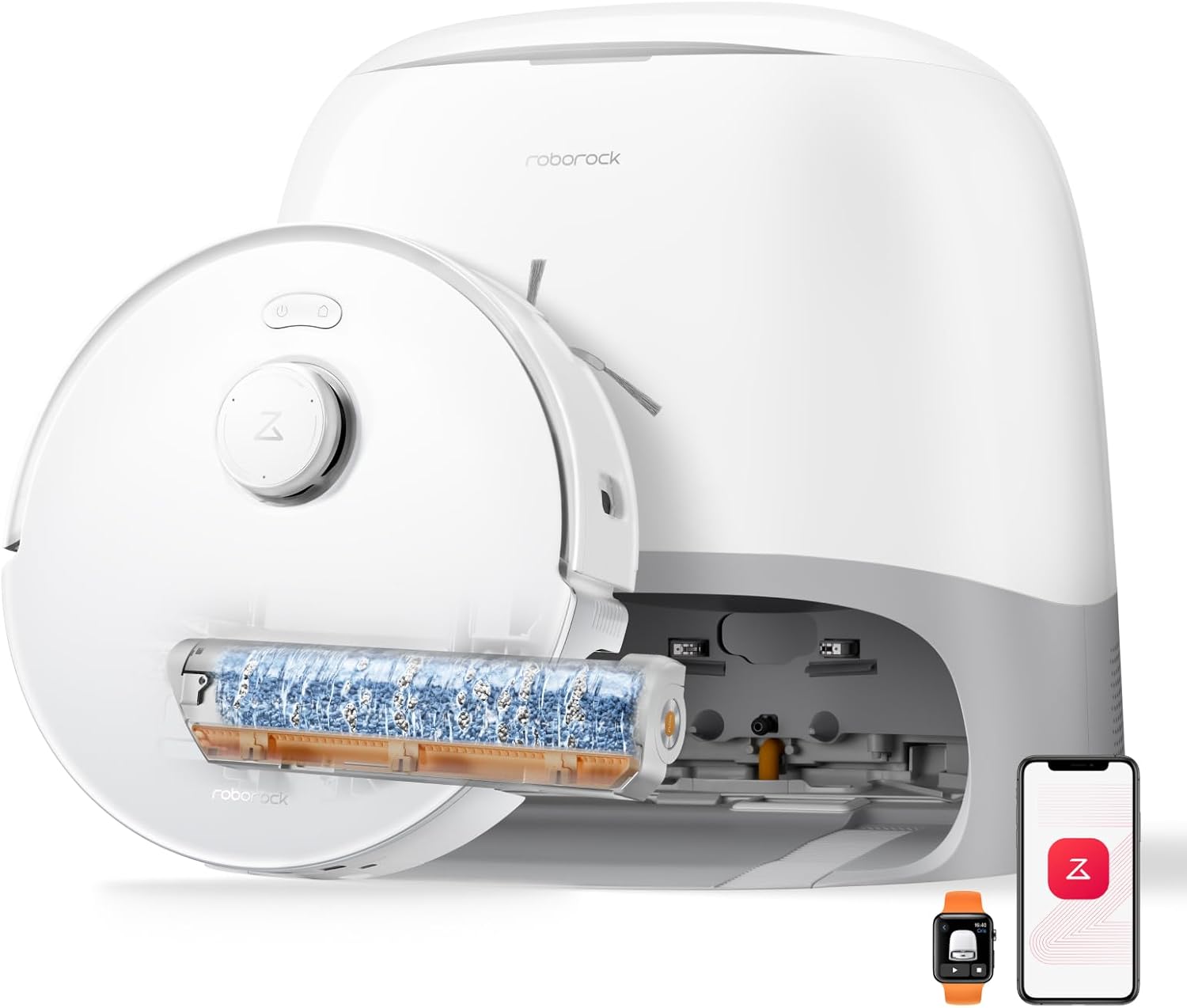
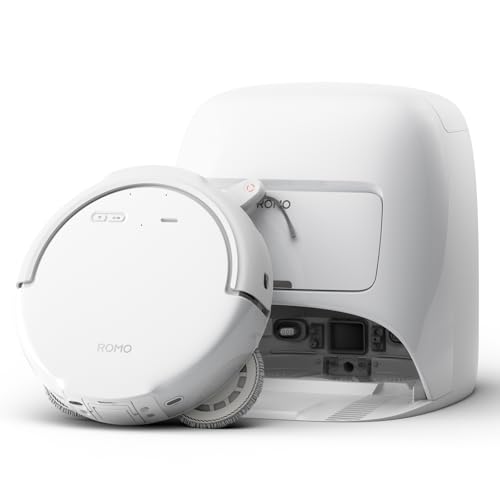
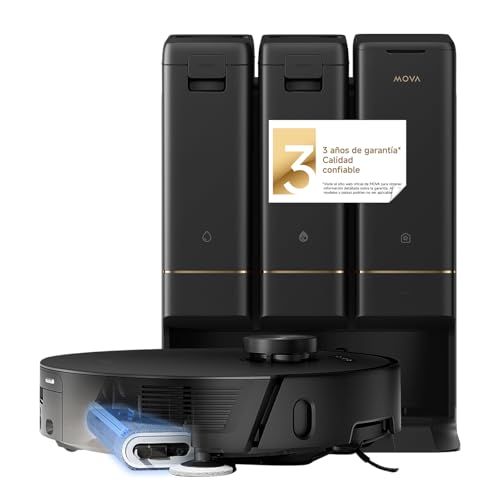
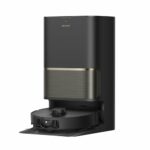
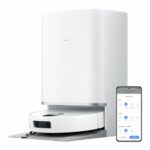
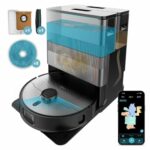
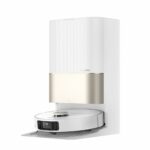
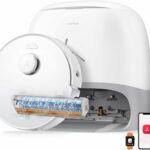
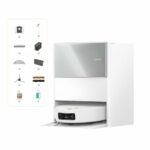
We're looking at three high-end robots launched between 2025 and 2026 that represent the most advanced in autonomous cleaning. The Roborock Qrevo Curv 2 Flow arrives in February 2026 as the latest offering from the world's leading brand in the sector. Facing it, the DJI Romo S (Blanco) marks DJI's entry into this market during 2025, bringing their experience in navigation technology. The Mova Z50 Ultra completes the trio as a representative of Dreame under its second brand, also from 2025.
All three units incorporate complete multifunction bases with mop washing and drying, advanced laser navigation and mopping systems with edge extension. However, differences in suction power, battery capacity, brushing systems and mopping temperature mark quite distinct usage profiles. We're talking about solutions designed for medium and large homes seeking total autonomy in daily maintenance.
Power and Suction
The most striking difference in this section is marked by the DJI Romo S with its 25,000 Pa of suction power, positioning itself as the most powerful of the three. The Roborock Qrevo Curv 2 Flow reaches 20,000 Pa, whilst the Mova Z50 Ultra remains at 19,000 Pa. In practice, this advantage of the DJI model can be particularly noticeable on long-pile carpets or when there's accumulated ingrained dirt.
The brushing systems reveal different philosophies. The Roborock opts for its DuoDivide Antienredos brush, designed to push hairs towards the central suction gap and minimise tangles. The DJI uses a Cepillo Dividido that also seeks to reduce hair accumulation. The Mova equips the TriCut 3.0, which combines bristles with blades to cut tangled hairs. All three systems lift the main brush during mopping to avoid spreading wet dirt.
In the side brush we find an important difference: the Roborock is the only one that can lift this brush during mopping, preventing it from interfering with the mops. However, both the DJI and the Mova incorporate an extendable side brush to better reach corners, a function the Roborock doesn't have. All three models feature a double anti-tangle side brush, which is practical in homes with pets or long hair.
Mopping
The mopping system shows different approaches. The Roborock Qrevo Curv 2 Flow uses a 270 mm roller that rotates to clean, whilst the DJI Romo S equips two circular rotating mops. The Mova Z50 Ultra opts for a wide roller combined with a mini side mop for edges, offering broader coverage.
All extend the mops to better reach edges and skirting boards, although with different systems. Mop lifting varies: the Roborock can lift them 15 mm plus an additional system, the DJI also lifts them although without specifying exact millimetres, and the Mova reaches 7 mm. This difference matters when there are carpets or transitions between floors.
The major difference lies in mopping temperature. The Mova Z50 Ultra mops with hot water at 65°C from the robot's internal tank, which improves the dissolution of grease and dried stains. Both the Roborock and the DJI use cold water to mop the floor. All three models detect dirt on the mops and on the floor to adjust cleaning, washing the mops again or scrubbing specific areas when necessary.
Navigation System
Navigation is based on LiDAR turret in the Roborock and the Mova, whilst the DJI uses solid-state LiDAR without a visible turret. All three incorporate a camera with artificial intelligence and front 3D laser sensor to avoid obstacles with precision.
The Roborock stands out with recognition of up to 200 different objects, whilst the Mova identifies 160. Both confirm specific pet recognition to adapt cleaning. The Mova adds curtain detection, a function that doesn't appear in the other two models. All three allow remote access to the camera and feature LED for night vision.
Both the Roborock and the Mova confirm their own integrated voice assistant, in addition to compatibility with Alexa and Google Home. All three units use artificial intelligence to plan cleaning and recognise stains that require special attention.
Autonomy and Battery
The Mova Z50 Ultra incorporates the largest battery with 6,400 mAh, clearly surpassing the Roborock's 5,200 mAh and the DJI's 5,000 mAh. However, real autonomy measured in minutes favours the Roborock Qrevo Curv 2 Flow with 242 minutes of continuous operation, compared to the DJI Romo S's 180 minutes.
This difference can be decisive in large homes. The Roborock can clean larger surfaces without needing to recharge mid-cycle, which reduces total cleaning time. The Mova's greater battery capacity suggests good autonomy, although the exact figure in minutes of operation isn't specified.
Smart Functions
All three robots can overcome obstacles of considerable height. The Mova Z50 Ultra reaches 22 mm, whilst both the Roborock and the DJI overcome steps of 20 mm. In practice, this capability allows them to navigate thick carpets, door profiles or small level changes without getting stuck.
Multifunction Cleaning Base
All three bases perform auto-emptying of the dust container, mop washing and drying. The Roborock washes the mops with hot water at 75°C and dries them with hot air at 55°C. The DJI uses hot air for drying without specifying exact washing temperature. The Mova washes with hot water at 70°C and dries with hot air at 60°C.
Self-cleaning of the washing tray is present in the Roborock and the DJI, which also includes a specific rinse nozzle. The Mova doesn't incorporate this function, which means periodic manual cleaning of the tray. Only the DJI and the Mova include a detergent tank in the base to add product during mop washing; the Roborock doesn't have this tank.
Storage capacity varies notably. The Mova equips a 4-litre dust bag, 4.5-litre clean water tank and 4-litre dirty water tank. The Roborock has a 2.7-litre bag, 4-litre clean water tank and 3.5-litre dirty water tank. The DJI has a 2.4-litre bag, 4 litres of clean water and 3.2 litres of dirty water. The Mova requires fewer emptyings and refills, something to consider in large homes or with pets.
Dimensions
The diameter is practically identical in all three: 353 mm for the Roborock, 351 mm for the DJI and 350 mm for the Mova. Height marks important differences. The DJI Romo S measures only 98 mm, making it the lowest and capable of slipping under furniture with little space. The Mova reaches 111 mm and the Roborock 119 mm, which may limit access under sofas or low beds.
The bases also differ in size. The Roborock's measures 450 x 450 x 450 mm, forming an almost perfect cube. The DJI's occupies 453 x 440 x 425 mm, being somewhat lower. The Mova's has 390 x 545 x 463.3 mm, with less width but greater height. It's advisable to measure the available space before deciding, especially if the base will be located under furniture or in a cupboard.
Real-World Usage Experience
For large homes, the Roborock Qrevo Curv 2 Flow offers the best autonomy with 242 minutes of continuous operation, sufficient to clean more than 200 m² without interruptions. The Mova Z50 Ultra compensates with the largest dust bag and greater water tanks, reducing maintenance frequency. The DJI Romo S provides the greatest suction power, useful in homes with carpets or lots of daily dirt.
In homes with pets, all three incorporate effective anti-tangle systems and specific animal recognition. The Roborock identifies up to 200 objects, which means better capability to dodge toys, cables or food bowls. The DJI's extra power helps pick up hair embedded in textiles.
For hard floors and parquet, the Mova stands out with hot water at 65°C during mopping, better dissolving grease and dried stains. The wide roller with mini side mop covers more surface in each pass. The Roborock and DJI mop with cold water, although both wash the mops with hot water in the base to keep them clean during the process.
If you need to pass under low furniture, the DJI Romo S with its 98 mm height accesses where the others can't reach. The Roborock, at 119 mm, may have problems with sofas very close to the floor. The Roborock's liftable side brush prevents it from interfering with mopping, whilst the DJI and Mova's extendable brush better reaches corners during sweeping.
Conclusion: Which to Choose?
Choose the Roborock Qrevo Curv 2 Flow if you're looking for maximum cleaning autonomy and trust in an established brand with excellent application. Its 242 minutes of continuous operation, recognition of 200 objects and liftable side brush during mopping make it a complete option for large homes. Self-cleaning of the washing tray reduces manual maintenance. Ideal if you value proven reliability and don't need hot water in floor mopping.
Choose the DJI Romo S (Blanco) if you prioritise maximum suction power and need a robot that can slip under low furniture. With 25,000 Pa and only 98 mm in height, it accesses where others can't and vacuums with more force on carpets. The extendable side brush improves corner cleaning. Includes detergent tank in the base and self-cleaning with rinse nozzle. Good option if you have furniture with little space underneath and carpets requiring powerful suction.
Choose the Mova Z50 Ultra if you want to mop with hot water at 65°C from the robot and minimise base maintenance. Its 4-litre bag and larger water tanks allow cleaning for more days without intervention. The 6,400 mAh battery and capability to overcome 22 mm obstacles make it versatile in homes with thick carpets. The wide roller with mini side mop covers more surface. Perfect for homes with pets, greasy floors or difficult stains that benefit from hot water during mopping.