✨ VS Analyses · VacuumSpain comparison technology. Explanation created with AI from verified technical data.
Introduction
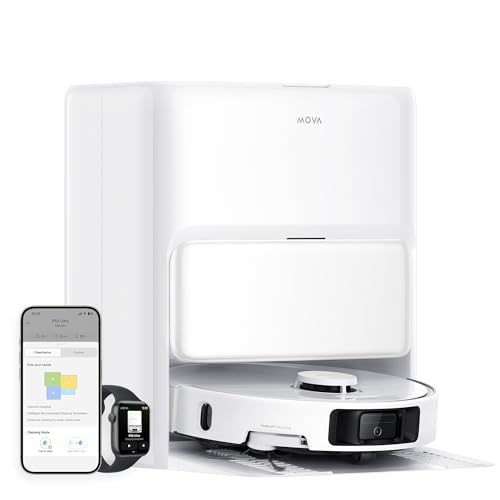
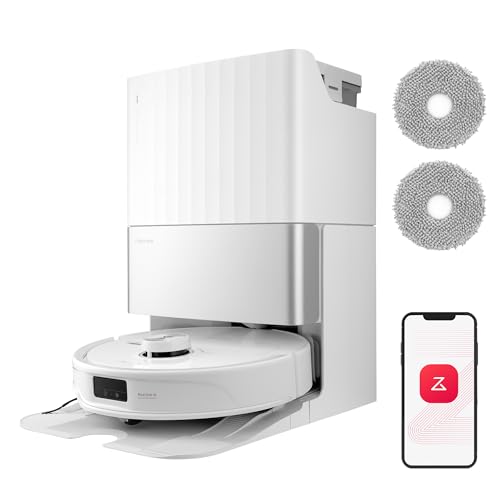
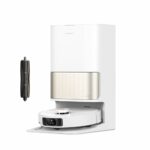
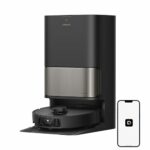
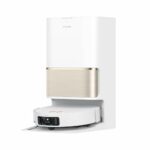
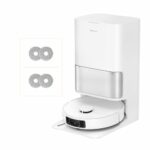
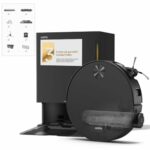
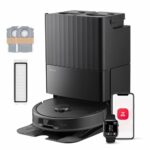
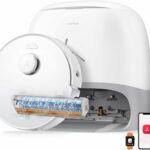
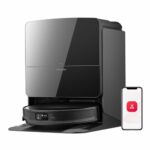
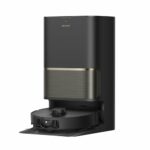
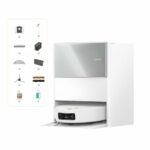
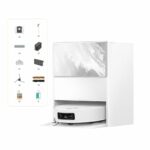
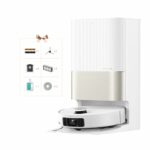
The Mova P50 Ultra and Roborock Qrevo Master represent two distinct approaches to premium robot vacuum technology. The Mova P50 Ultra arrives in 2025 as part of Dreame's secondary brand lineup, whilst the Roborock Qrevo Master launched in 2024 from the world's leading manufacturer in this category. Both models feature comprehensive multifunctional bases that handle emptying, mop washing with hot water, and hot air drying—essential elements for proper floor mopping rather than just surface wiping.
These aren't entry-level machines. The P50 Ultra pushes boundaries with exceptional suction power, whilst the Qrevo Master leans heavily into artificial intelligence with dual cameras and extensive object recognition. For larger homes requiring thorough cleaning across multiple floor types, either model delivers serious capability.
Power and Suction
The Mova P50 Ultra dominates this category with 19,000 Pa of suction—nearly double the Qrevo Master's 10,000 Pa. This substantial difference matters particularly in homes with thick carpets or when dealing with embedded debris. The Roborock's figure remains respectable for everyday use, but the Mova's raw power gives it a clear advantage for deep cleaning sessions.
Brush design reveals contrasting philosophies. The P50 Ultra employs a single main roller, whilst the Qrevo Master uses Roborock's DuoDivide system—two brushes that push hair towards the central suction channel. This design minimises tangling, which proves valuable in households with long hair or pets. The Mova doesn't specify anti-tangle technology for its main brush.
Both models lift their main brushes when mopping to avoid dragging dirt across wet floors. The side brush story differs: the P50 Ultra both extends and lifts its side brush during mopping, and includes anti-tangle features. The Qrevo Master's side brush extends for better edge coverage but doesn't lift during mopping and lacks specific anti-tangle design. For homes with pets or long-haired residents, these details influence maintenance frequency.
Mopping
The Mova P50 Ultra uses two rotating mops with a movement system that allows slight lateral shifting—useful for reaching under cabinet toe kicks and furniture edges. The Qrevo Master also employs rotating mops with edge extension. Both lift their mops approximately 10 mm (10.5 mm for the Mova, 10 mm for the Roborock) when transitioning to carpets, preventing unwanted dampness.
Neither model offers hot water mopping of floors themselves—both use cold water during actual cleaning. The hot water comes into play at the base during mop washing, where both stations heat water to clean the pads thoroughly between passes and after completion.
A significant distinction emerges in dirt detection. The Roborock Qrevo Master can identify when mops become excessively soiled and when floor areas require additional attention, triggering automatic rewashing or refregado. The P50 Ultra lacks this capability, following programmed cleaning patterns without adaptive adjustment based on detected dirt levels. In practice, this means the Roborock can respond to unexpected messes more intelligently.
Neither model automatically removes mops at the base for vacuum-only operation, requiring manual intervention if you want to disable mopping temporarily.
Navigation System
Both robots use 3D LiDAR turrets for mapping and navigation, complemented by frontal 3D laser sensors for obstacle detection. The fundamental difference lies in camera implementation. The Roborock Qrevo Master incorporates dual AI cameras that recognise 62 different obstacle types, including specific pet recognition. This allows the robot to identify your dog or cat and adjust behaviour accordingly—potentially capturing photos or avoiding disturbance during rest periods.
The Mova P50 Ultra operates without cameras, relying purely on laser-based detection. It doesn't specify how many objects it recognises. Interestingly, the P50 Ultra can detect curtains—useful for avoiding entanglement—whilst the Qrevo Master doesn't list this capability despite its superior camera system.
Remote camera access works exclusively on the Roborock, letting you check on your home through the robot's viewpoint via the app. The Qrevo Master also includes LED lighting for night vision, absent on the Mova. For those wanting home monitoring functionality alongside cleaning, the Roborock delivers considerably more capability.
Both models feature AI-driven cleaning intelligence: CleanGenius on the Mova and SmartPlan 1.0 on the Roborock, optimising routes and adjusting settings based on room type and detected conditions.
Battery and Autonomy
Identical 5,200 mAh batteries power both robots. The Roborock Qrevo Master specifies 180 minutes of runtime, whilst the Mova P50 Ultra doesn't provide this figure. Given the P50 Ultra's significantly higher suction power, it likely consumes more energy at maximum settings, potentially resulting in shorter runtime despite the identical battery capacity. For most homes under 200 square metres, either should complete cleaning on a single charge, returning to base as needed for mop washing before resuming.
Smart Functions
The Mova P50 Ultra climbs obstacles up to 22 mm high, slightly exceeding the Qrevo Master's 20 mm capability. This 2 mm difference might seem trivial but can determine whether the robot successfully navigates certain door thresholds or thick rug edges without assistance.
Voice control differs between models. The Roborock includes its own voice assistant alongside compatibility with Alexa and Google Home. The Mova relies entirely on external assistants. For users preferring to operate without connecting to Amazon or Google ecosystems, the Roborock offers more flexibility.
Multifunctional Base Station
Both bases handle the essential trio: automatic dust emptying, hot water mop washing, and hot air mop drying. The Mova P50 Ultra features third-generation automatic tray cleaning, whilst the Roborock uses version 1.0 of this technology. Newer iterations typically improve cleaning effectiveness and reduce manual maintenance.
The P50 Ultra offers an optional detergent dispenser purchased separately—not a standard inclusion. The Qrevo Master doesn't support detergent addition at all. For those wanting cleaning solution automatically added during mop washing, only the Mova provides this option, albeit at extra cost.
Dust bag capacity favours the Mova at 3.2 litres versus 2.7 litres for the Roborock. This translates to less frequent bag changes—perhaps every two to three months rather than monthly in typical households. Both stations hold 4 litres of clean water and 3.5 litres of waste water, requiring refilling every week or two depending on mopping frequency and home size.
Neither model includes integrated plumbing connections or offers connection kits, meaning manual water management remains necessary.
Dimensions
The Mova P50 Ultra stands 97 mm tall compared to 103 mm for the Qrevo Master. That 6 mm difference can prove decisive for furniture clearance—the Mova slips under slightly lower sofas and bed frames. Diameter measurements are nearly identical: 350 mm for the Mova versus 353 mm for the Roborock.
Base station footprints differ more noticeably. The Mova measures 420 mm wide, 470 mm tall, and 458 mm deep. The Roborock is narrower at 340 mm but taller at 521 mm and deeper at 487 mm. The Mova's wider, squatter profile might suit spaces with horizontal room but limited height, whilst the Roborock's slimmer width fits better in tighter alcoves despite its increased height.
Real-World Usage Experience
For homes with multiple pets or long-haired occupants, the Roborock Qrevo Master's DuoDivide brush system and specific pet recognition offer practical advantages. The dual-camera system identifies animals and adjusts behaviour, whilst the brush design genuinely reduces hair tangling. The Mova counters with substantially higher suction that can extract more embedded pet hair from carpets, plus its side brush anti-tangle feature and lifting capability during mopping.
Larger properties benefit from the Mova's bigger dust bag, reducing maintenance frequency. The extra suction power also speeds up cleaning sessions, potentially offsetting any battery life disadvantage from the higher power consumption.
The Qrevo Master's dirt detection makes it more autonomous—it identifies problems and responds without instruction. This suits users wanting minimal intervention. The remote camera access and home monitoring capability add security functionality beyond cleaning.
Both robots handle hard floors and carpets effectively. The Mova's lower profile gives it access to more furniture, whilst its curtain detection prevents a common entanglement issue. The Roborock's superior AI and object recognition mean fewer stuck situations requiring rescue.
Conclusion: Which to Choose?
Choose the Mova P50 Ultra if: maximum suction power matters most to you, particularly for deep carpet cleaning or homes with heavy debris. The lower profile helps if you have furniture with minimal clearance. The larger dust bag reduces maintenance, and the optional detergent system appeals if you want that capability. You're comfortable with laser-only navigation and don't need camera-based features.
Choose the Roborock Qrevo Master if: you value intelligent adaptability through dirt detection and AI-driven adjustments. Pet owners benefit from specific recognition features and the DuoDivide anti-tangle brush. Remote camera access and home monitoring add security functionality. You want the most advanced object recognition available and prefer Roborock's established reliability and app experience. The integrated voice assistant matters if you avoid external smart home ecosystems.
The P50 Ultra delivers brute-force cleaning capability at a lower height, whilst the Qrevo Master provides superior intelligence and adaptability. Your priorities around raw power versus smart features ultimately determine the better fit.