✨ VS Analyses · VacuumSpain comparison technology. Explanation created with AI from verified technical data.
Introduction
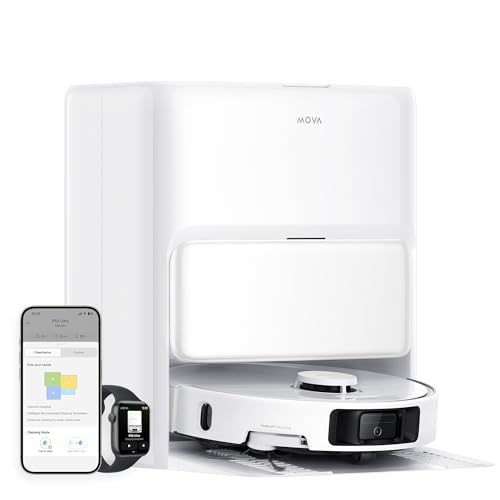
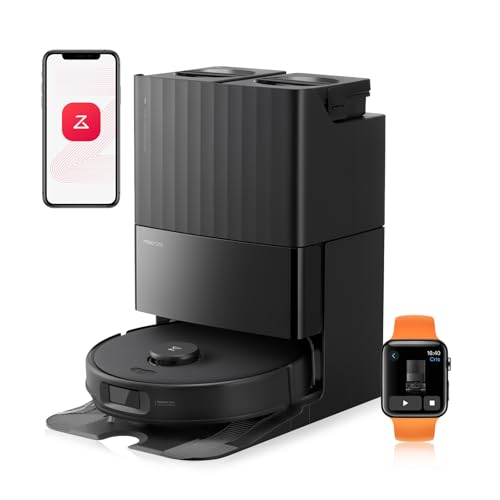
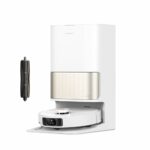
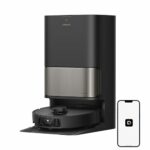
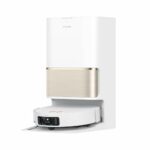
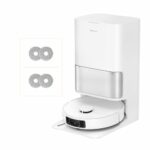
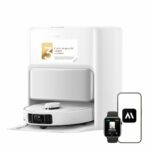
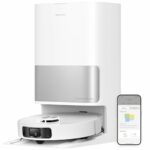
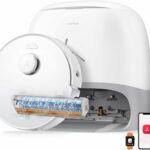
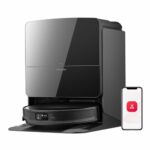
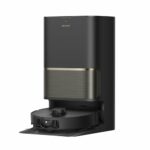
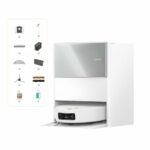
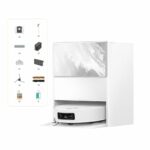
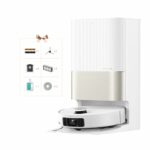
The Mova P50 Ultra and the Roborock Qrevo Edge S5A represent two compelling options in the premium robot vacuum segment, both designed to handle the full cleaning cycle without constant intervention. The Mova model arrives in 2025 as part of Dreame's secondary brand lineup, whilst the Roborock launched in 2024 and carries the reputation of the world's leading robot vacuum manufacturer.
These aren't basic vacuums. Both feature multifunctional bases that wash and dry their mops, auto-empty dust bins, and pack serious suction power alongside rotating mops for wet cleaning. They're built for homes where you want comprehensive floor care handled automatically, whether that's a flat with hard floors or a larger property with mixed surfaces.
Power and Suction
The Mova P50 Ultra edges ahead with 19,000 Pa suction compared to the Roborock's 18,500 Pa. In practice, that 500 Pa difference won't revolutionise your cleaning, but it does give the Mova a slight advantage when tackling embedded dirt in carpets or textured hard floors.
Where things get more interesting is the brush design. Roborock equips the Qrevo Edge S5A with its DuoDivide anti-entanglement system, which channels hair towards the centre suction point to minimise tangling. The Mova uses a simpler roller design without specific anti-tangle features. For households with long hair or pets, that DuoDivide system can genuinely reduce maintenance time.
The Mova counters with something unusual: it lifts both its main brush and side brush when mopping. This prevents wet brushes dragging across your floors during the mopping cycle, keeping things cleaner and potentially extending brush life. The Roborock doesn't elevate either brush type during wet cleaning.
Both models feature an extendable side brush to reach into corners more effectively, and both claim anti-tangle properties for the side brush. This helps when cleaning room edges and skirting boards.
Mopping Performance
Both robots use dual rotating mops for wet cleaning, but their approach to edges differs slightly. The Mova extends its mops with a swinging motion to reach closer to walls and furniture legs. The Roborock extends its mops too, just without that additional swing movement.
Mop lift is nearly identical: 10.5 mm on the Mova versus 10 mm on the Roborock. Either height clears most low-pile rugs and prevents soaking carpets when the robot transitions between surfaces.
The Roborock pulls ahead with dirt detection technology. It identifies soiled areas on both the mops themselves and the floor surface, triggering additional cleaning passes where needed. The Mova doesn't include this feature, so it follows your scheduled cleaning pattern without adapting to visible mess.
Both bases wash mops with hot water and dry them using heated air, which matters for hygiene and odour prevention. The Mova's base features third-generation self-cleaning for the wash tray, whilst Roborock uses version 2.0. These systems keep the base itself from becoming a source of smells.
The Mova offers an optional detergent tank that you purchase separately. The Roborock has no provision for cleaning solution at all. If you want to add detergent to your mopping routine, that's something to consider.
Navigation System
Both models navigate using LiDAR turrets combined with 3D obstacle avoidance. They'll map your home accurately and dodge common obstacles like cables, shoes, and furniture legs.
The Mova adds a laser 3D sensor at the front, giving it an extra layer of spatial awareness. It also detects curtains specifically, which helps prevent the robot from becoming tangled in floor-length drapes. The Roborock lacks both features.
Neither robot includes an AI camera for visual object recognition or remote viewing. They also don't offer LED lighting for night-time navigation or pet-specific recognition features. What you get is reliable LiDAR-based mapping without the privacy concerns that come with onboard cameras.
The Mova runs CleanGenius AI for intelligent cleaning decisions, whilst Roborock uses SmartPlan 2.0 powered by its RR Mason 11.0 processor. Both systems learn your home layout and optimise cleaning routes, though the exact capabilities aren't directly comparable without real-world testing.
Battery and Autonomy
Battery capacity is identical at 5,200 mAh. The Roborock specifies 180 minutes of runtime, whilst Mova doesn't publish an autonomy figure. In practical terms, both should handle large homes without multiple recharging cycles, though the Roborock's confirmed runtime gives you clearer expectations.
Neither manufacturer provides charging time data, so you'll need to plan for the robot to spend several hours docked between cleaning sessions.
Smart Features
The Mova can climb obstacles up to 22 mm high, compared to 20 mm for the Roborock. That extra 2 mm helps with slightly taller door thresholds or thick floor transitions, though neither robot will manage substantial steps.
Both integrate with external voice assistants like Alexa and Google Home, but neither includes its own voice assistant. You'll control them through their respective apps or via your existing smart home ecosystem.
Multifunctional Base
The bases handle the same core tasks: auto-emptying dust, washing mops with hot water, and drying them with heated air. Neither offers UV disinfection or integrated plumbing connections, though both lack even the optional plumbing kit.
Dust bag capacity differs noticeably. The Mova holds 3.2 litres versus 2.7 litres in the Roborock. That's roughly 18% more capacity, which translates to fewer bag changes over the year, particularly if you have a dusty home or pets.
Clean water tanks are identical at 4 litres, and dirty water tanks match at 3.5 litres. You'll refill and empty at similar intervals regardless of which model you choose.
Dimensions
The robots themselves are virtually identical in size. The Mova measures 350 mm diameter and 97 mm tall, whilst the Roborock comes in at 352 mm diameter and 98 mm height. That single millimetre height difference won't affect which furniture they can clean beneath.
Base footprints differ more substantially. The Mova base is wider at 420 mm versus 340 mm for the Roborock, but shorter at 470 mm compared to 521 mm. The Roborock base is also deeper: 487 mm versus 458 mm. If you're tight on floor space, the Roborock's narrower footprint might fit better, though you'll need more vertical clearance.
Real-World Use
For homes with pets or long hair, the Roborock's DuoDivide brush should require less frequent detangling, though you lose the benefit of brush elevation during mopping that the Mova provides. If you vacuum and mop frequently, that brush-lifting feature keeps things tidier.
The Roborock's dirt detection makes sense for families with young children or high-traffic areas where spills and mess concentrate in specific spots. The robot will spend extra time where it's actually needed rather than treating the whole floor uniformly.
Larger homes benefit from the Mova's bigger dust bag, which extends maintenance intervals. The confirmed 180-minute runtime on the Roborock provides peace of mind for substantial floor areas, though the Mova's identical battery likely performs similarly.
If you want to use cleaning solution in your mopping water, only the Mova accommodates this, albeit with an additional purchase. The Roborock relies solely on hot water for cleaning.
Conclusion: Which to Choose?
Choose the Mova P50 Ultra if: you want the highest suction power available between these two, value brush elevation during mopping to keep things cleaner, prefer a larger dust bag for less frequent changes, or want the option to add detergent to your mopping routine. The laser 3D sensor and curtain detection add useful safety features, and the ability to climb 22 mm obstacles suits homes with slightly taller thresholds.
Choose the Roborock Qrevo Edge S5A if: you prioritise the DuoDivide anti-tangle brush system for easier maintenance with hair, want dirt detection that adapts cleaning intensity to actual mess levels, prefer a narrower base footprint that fits tighter spaces, or trust Roborock's established reputation and app ecosystem. The confirmed 180-minute runtime removes uncertainty about coverage in larger properties.
For pet owners dealing with shedding, the Roborock's brush technology edges ahead despite the Mova's higher suction. Families with young children benefit from the Roborock's dirt detection. Those who want maximum automation with minimal intervention might lean towards the Mova's larger dust capacity and optional detergent system, accepting the trade-off of more frequent brush maintenance.