✨ VS Analyses · VacuumSpain comparison technology. Explanation created with AI from verified technical data.
Introduction
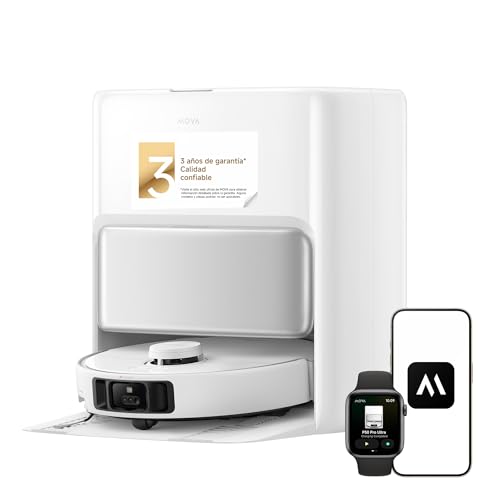
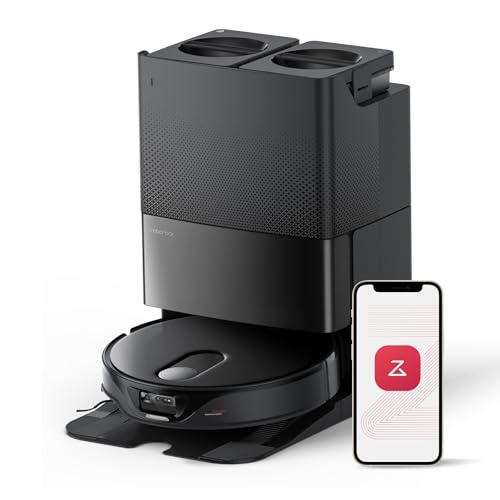
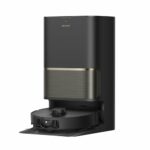
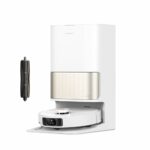
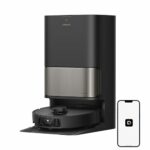
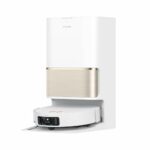
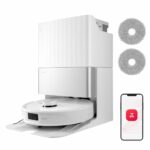
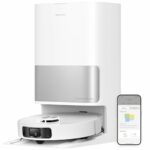
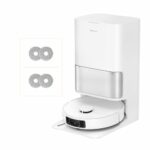
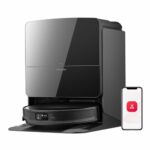
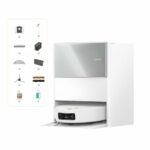
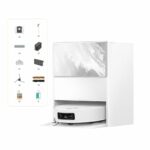
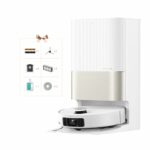
The Mova P50 Pro Ultra and Roborock Qrevo Slim represent two distinct approaches to high-end robotic cleaning. The Mova model arrives in 2025 as a powerhouse designed for demanding homes, whilst the Roborock Qrevo Slim launched in 2024 with a focus on ultra-low profile design. The Mova delivers exceptional raw power with 19,000 Pa suction, making it suitable for larger properties with mixed flooring and heavy debris loads. The Qrevo Slim, at just 8.2 cm tall, prioritises access under furniture with its remarkably slim chassis, paired with 11,000 Pa suction that still handles most household cleaning tasks effectively.
Both feature multifunctional bases that wash and dry mops, but they differ significantly in autonomy, navigation intelligence, and edge cleaning capabilities. Choosing between them depends largely on whether you need maximum cleaning power and advanced features, or whether squeezing under low-clearance furniture matters more for your home layout.
Power and Suction
The difference in suction capability is substantial. The Mova P50 Pro Ultra's 19,000 Pa represents nearly double the force of the Qrevo Slim's 11,000 Pa. In practice, this translates to noticeably better performance on carpets, particularly medium-pile rugs where embedded dirt and pet hair require more aggressive extraction. For homes with predominantly hard floors, the Roborock's suction remains perfectly adequate for daily maintenance.
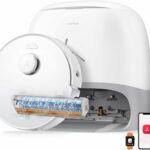
The brush systems take fundamentally different approaches. Mova's TriCut 3.0 combines bristles with integrated cutting blades to slice through tangled hair as it cleans, whilst Roborock's DuoDivide system uses two counter-rotating brushes that channel debris towards the central suction point. The DuoDivide design proves particularly effective at preventing hair wrap, though the TriCut's active cutting mechanism also delivers strong anti-tangle performance.
Both models lift their main brushes when mopping to avoid dragging damp debris across cleaned floors. However, the Mova goes further by also elevating its side brush during wet cleaning – a detail that prevents the side brush from flicking water onto skirting boards or furniture legs. The Mova's side brush also features anti-tangle design, which the Qrevo Slim lacks. Both extend their side brushes to reach into corners more effectively.
Mopping
Both robots use dual rotating mop pads that spin to scrub floors rather than simply dragging across surfaces. The Mova extends its mops outward and incorporates roboswing – a subtle wiggling motion that helps the pads reach slightly under furniture overhangs and cabinet toe kicks. The Roborock extends its mops but without the additional swinging movement, though it still achieves good edge coverage.
Mop lift height differs slightly: 10.5 mm for the Mova versus 10 mm for the Qrevo Slim. That half-millimetre might seem trivial, but combined with the Mova's ability to automatically detach its mops entirely at the base when you want vacuum-only operation, it offers more flexibility. The Qrevo Slim keeps its mops attached, relying solely on the 10 mm lift to clear carpets and rugs.
Both bases wash mops with hot water and dry them using heated air to prevent bacterial growth and odours. Each system detects dirty mops and soiled floors, triggering additional cleaning passes when needed. The key distinction lies in the Mova's detergent tank, which automatically dispenses cleaning solution during mop washing cycles. The Roborock requires manual addition of detergent to the clean water tank if you want anything beyond plain water cleaning.
Navigation System
The Mova P50 Pro Ultra employs third-generation LiDAR housed in a raised turret, paired with dual AI cameras and 3D laser sensors at the front. This combination enables recognition of 160 different obstacle types – more than double the Qrevo Slim's 73. In real-world terms, the Mova demonstrates more nuanced behaviour around complex household items, correctly identifying and avoiding things like weighing scales, pet bowls, and trailing cables with greater reliability.
Roborock's StarSight 1.0 system similarly combines LiDAR with dual cameras and 3D sensing, but with a smaller recognition database. It still handles common obstacles like shoes, furniture legs, and pet waste effectively. The Mova adds curtain detection, allowing it to navigate around hanging fabric without becoming tangled – useful if you have floor-length drapes or room dividers.
Both include LED illumination for night-time navigation and offer remote camera access through their respective apps, letting you check on your home whilst the robot cleans. The Mova's CleanGenius AI and Roborock's SmartPlan 1.0 both learn room layouts and adjust cleaning strategies over time, though the Mova's stain recognition AI actively identifies concentrated dirt patches and increases cleaning intensity in those specific spots.
Battery and Runtime
Identical 5,200 mAh batteries power both robots, yet the Mova P50 Pro Ultra achieves 210 minutes of operation compared to the Qrevo Slim's 180 minutes. The 30-minute advantage likely reflects more efficient power management rather than battery capacity alone. For typical homes under 150 square metres, either runtime suffices for complete cleaning cycles. Larger properties approaching 200 square metres benefit from the Mova's extended endurance, particularly when deep cleaning carpets at maximum suction or performing thorough mopping routines that require multiple base returns for mop washing.
Smart Features
The Mova P50 Pro Ultra can climb obstacles up to 22 mm high, whilst the Roborock Qrevo Slim manages 20 mm. This 2 mm difference affects performance on thick carpet transitions, door thresholds, and raised floor registers. The Mova handles these transitions more confidently without getting stuck or requiring manual intervention.
Both robots include onboard voice assistants and integrate with external systems like Alexa and Google Home. Neither model features a robotic arm for object manipulation – they rely on avoidance rather than physical interaction with obstacles.
Multifunctional Base Station
Both bases automatically empty the robot's dustbin, wash mops with hot water, and dry them using heated air. The Mova's base includes third-generation self-cleaning for the wash tray itself, compared to the Roborock's first-generation system. In practice, this means the Mova's base requires less frequent manual cleaning of the mop washing area, as it more thoroughly rinses and flushes the tray after each cycle.
The Mova's integrated detergent dispenser represents a genuine convenience advantage. It automatically doses cleaning solution during mop washing, maintaining consistent cleaning chemistry without user intervention. The Qrevo Slim requires you to manually add detergent to the clean water tank when desired.
Dust bag capacity favours the Mova at 3.2 litres versus 2.7 litres for the Roborock. Assuming typical household debris, this translates to approximately 8-10 weeks between bag changes for the Mova compared to 6-8 weeks for the Roborock. Both use 4-litre clean water tanks and 3.5-litre dirty water reservoirs – sufficient for around 200 square metres of mopping before refilling becomes necessary.
Neither base offers UV disinfection, automatic mop pad replacement, or plumbing connections, though neither includes even an optional kit for water line integration.
Physical Dimensions
The Roborock Qrevo Slim's defining characteristic emerges here: at 8.2 cm tall, it slides under furniture that the 10.38 cm Mova P50 Pro Ultra simply cannot access. This 2.18 cm difference determines whether the robot fits beneath sofas, beds, cabinets, and radiators. Measure your furniture clearances carefully – if you have low-profile pieces around 9-10 cm clearance, the Qrevo Slim accesses spaces the Mova must navigate around.
Diameter differs minimally: 35 cm for the Mova versus 35.3 cm for the Roborock. Both navigate standard doorways and furniture arrangements without difficulty. The Mova weighs slightly more due to its larger battery and additional hardware, though neither manufacturer provides specific weight figures in the comparison data.
Base station footprints vary considerably. The Mova's base measures 42 cm wide, 47 cm tall, and 45.8 cm deep. The Roborock base is narrower at 34 cm but taller at 52.1 cm and deeper at 48.7 cm. Choose based on your available floor space – the Mova requires more width, whilst the Roborock needs more vertical clearance and depth.
Real-World Usage Scenarios
The Mova P50 Pro Ultra suits homes where cleaning performance outweighs furniture access concerns. Its 19,000 Pa suction excels in properties with medium-pile carpets, multiple pets, or heavy foot traffic that tracks in substantial dirt. The 210-minute runtime handles larger floor plans without interruption, whilst the automatic mop removal and detergent dispenser reduce maintenance involvement. The expanded obstacle recognition and stain detection AI deliver more autonomous operation with less need for pre-cleaning preparation.
The Roborock Qrevo Slim targets homes with abundant low-clearance furniture where a standard-height robot would miss significant floor area. Its 8.2 cm profile accesses spaces others cannot, making it ideal for modern furniture designs with minimal ground clearance. The 11,000 Pa suction handles hard floors and low-pile carpets effectively, whilst the DuoDivide brush system proves excellent for pet owners dealing with hair accumulation. Properties under 150 square metres work well within its 180-minute runtime.
For homes with mixed flooring – hard surfaces plus area rugs or carpeted bedrooms – the Mova's superior suction and obstacle-climbing ability provide more thorough cleaning. The Qrevo Slim performs well on predominantly hard floors with occasional rugs, especially when those rugs sit relatively flat without thick edges.
Conclusion: Which Should You Choose?
Choose the Mova P50 Pro Ultra if: You need maximum suction power for carpets and heavy debris. Your home exceeds 150 square metres and benefits from extended runtime. You want automatic detergent dispensing and mop removal for truly hands-off operation. Your furniture sits high enough (above 11 cm) that robot height doesn't limit coverage. You value advanced AI features like stain recognition and expanded obstacle detection. You have pets that shed heavily and require aggressive suction. You prefer longer intervals between dust bag changes.
Choose the Roborock Qrevo Slim if: Low-profile furniture dominates your home and you need an 8.2 cm robot to access those spaces. Your property consists mainly of hard floors with minimal carpeting where 11,000 Pa suction suffices. You prioritise a compact base station that fits tighter spaces. Your home is under 150 square metres where 180 minutes provides adequate coverage. You want proven Roborock reliability with excellent app integration. You don't mind manually adding detergent to the water tank. The DuoDivide brush system appeals for its hair management without cutting mechanisms.
In essence, this comparison between robot vacuum models comes down to power versus profile. The Mova delivers superior cleaning capability with more advanced features, whilst the Roborock Qrevo Slim sacrifices some performance for exceptional access under furniture. Measure your lowest furniture pieces and assess your flooring types – those two factors will likely determine which robot aspirador better suits your specific home environment.