✨ VS Analyses · VacuumSpain comparison technology. Explanation created with AI from verified technical data.
Introduction
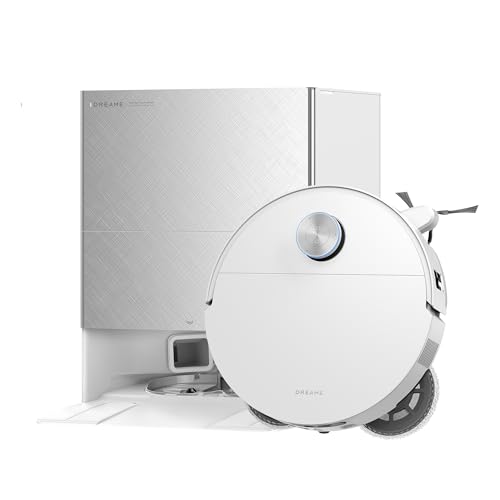
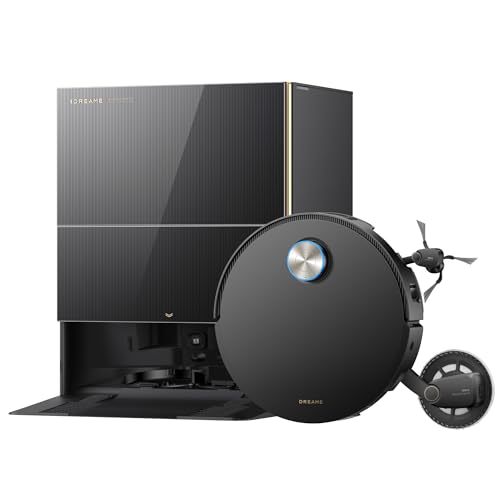
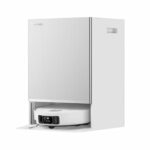
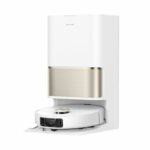
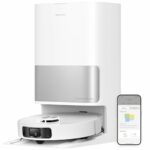
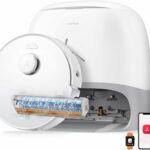
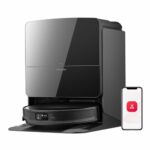
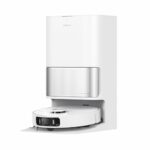
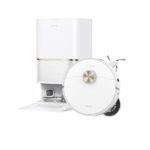
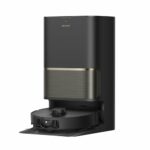
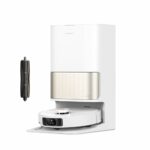
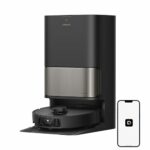
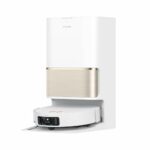
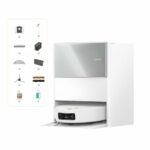
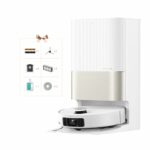
The Dreame X50s Ultra and Dreame X60 Pro Ultra represent two high-end robot vacuum cleaners from the same manufacturer, both launched in May 2026. These models sit firmly in the premium segment, equipped with multifunctional bases that handle automatic dust emptying, hot water mop washing, and hot air drying. Both feature Dreame\'s distinctive HyperStream 2.0 dual brush system, designed to prevent hair tangles, and incorporate advanced AI navigation with dual RGB cameras for obstacle recognition.
These robots target users seeking comprehensive automated cleaning with minimal intervention. The presence of hot water mopping, retractable LiDAR, and extendable components suggests they\'re built for homes where thorough edge cleaning and autonomous operation matter. The differences between them, whilst subtle in some areas, reveal distinct approaches to suction power, battery capacity, and physical design that could influence performance in real-world conditions.
Power and Suction
Suction power marks one of the clearest dividing lines here. The Dreame X60 Pro Ultra reaches 42,000 Pa, giving it a noticeable advantage over the X50s Ultra\'s 35,000 Pa. In practical terms, this translates to better performance on carpets and rugs, where higher suction helps extract embedded dirt and pet hair from fibres. For homes with multiple floor types, especially medium to high-pile carpets, this difference becomes relevant.
Both models share the same dual HyperStream 2.0 anti-tangle main brush, which uses two brushes anchored at one end to minimise hair wrapping. This design works well for households with long hair or pets. The main brush lifts during mopping on both units, preventing wet dirt from transferring back onto cleaned floors.
The side brush setup shows more variation. Whilst both have extendable and liftable side brushes with anti-tangle properties, the X60 Pro Ultra adds a robotic extension mechanism that stretches 12 cm outward. This helps sweep debris from corners and along edges more effectively. The X60 Pro Ultra also includes a dedicated skirting board brush, absent on the X50s Ultra, which targets dust accumulation where walls meet floors.
Mopping
Both robots use dual rotating mops applying 15N downward pressure, but they differ in rotation speed and edge reach. The X60 Pro Ultra spins its mops at 280 RPM compared to 200 RPM on the X50s Ultra. Faster rotation generally improves stain removal and cleaning efficiency, particularly on stubborn marks.
Edge mopping takes different approaches. The X50s Ultra employs RoboSwing, a movement where the robot shifts its body to push the mop slightly under furniture edges and skirting boards. The X60 Pro Ultra instead uses an 18 cm robotic mop extension, physically stretching the mop pad outward to reach baseboards and tight spaces. This mechanical extension typically provides more consistent edge coverage than body movement alone.
Mop lifting capabilities diverge significantly. The X50s Ultra raises its mops 10.5 mm when transitioning to carpets or returning to the base. The X60 Pro Ultra matches this at 10.5 mm but can extend to 21.5 mm by lifting the entire chassis. This additional clearance proves useful for thicker rugs and prevents accidental dampening of carpeted areas during mixed-floor cleaning.
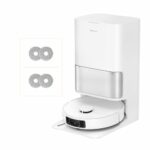
Both models mop with 40°C heated water from an internal tank, improving grease dissolution. Their bases wash mops with 100°C water, and they share identical dirt detection on both mops and floors, automatically re-cleaning areas when sensors detect remaining soil. Automatic mop removal at the base allows pure vacuuming sessions without manual intervention.
Navigation System
Navigation hardware appears largely identical. Both use retractable 360° LiDAR for room mapping combined with dual RGB cameras for AI-powered obstacle recognition. The sensor suite includes 3D laser sensors at the front and LED illumination for low-light operation, plus proactive lighting to identify obstacles even in darkness.
The X60 Pro Ultra recognises 320 different obstacle types against 280 on the X50s Ultra. Whilst both handle common household objects, pets, and even detect curtains to clean behind them, the broader recognition library on the X60 Pro Ultra may reduce false stops and improve navigation around unusual items. Both offer remote camera access through the app, allowing users to check on pets or view rooms whilst away.
CleanGenius 3.0 AI runs on both models, adjusting suction power, water flow, and cleaning patterns based on room type, floor material, and detected dirt levels. This adaptive cleaning helps optimise battery life and cleaning effectiveness without manual programming.
Autonomy and Battery
Battery specifications reveal an interesting trade-off. The X50s Ultra carries a larger 6,400 mAh battery compared to the X60 Pro Ultra\'s 5,000 mAh cell. Despite this, the X60 Pro Ultra achieves a declared runtime of 232 minutes, whilst the X50s Ultra\'s autonomy isn\'t specified in available data.
The X60 Pro Ultra features PowerMaster rapid charging, restoring 24% battery capacity in just 5.5 minutes. This quick top-up capability benefits larger homes where the robot might need a mid-clean recharge. The X50s Ultra supports fast charging but without the detailed specifications provided for its sibling.
For multi-room homes, the combination of runtime and rapid charging on the X60 Pro Ultra suggests it\'s designed for extensive coverage without lengthy interruptions. The X50s Ultra\'s larger battery may compensate through longer single-charge operation, though without declared runtime figures, direct comparison proves difficult.
Smart Functions
Obstacle climbing reveals a substantial difference. The X60 Pro Ultra clears single steps up to 52 mm and double steps reaching 100 mm. The X50s Ultra manages 45 mm and 88 mm respectively. These figures matter for homes with raised thresholds between rooms, bathroom lips, or transitions between flooring types. The extra clearance on the X60 Pro Ultra reduces the likelihood of the robot becoming stranded.
Both models include an integrated voice assistant, responding to spoken commands without requiring external smart speakers. They\'re also compatible with Alexa and Google Home for users preferring established ecosystems. Matter support ensures future-proofing as smart home standards evolve.
Multifunctional Cleaning Base
The bases share most core functions: automatic dust emptying into 3.2-litre bags, 100°C hot water mop washing, and hot air drying. Water tank capacities match at 4.2 litres for clean water and 3 litres for dirty water. Both include detergent dispensers that add cleaning solution during mop washing cycles.
The X60 Pro Ultra specifies 50°C air temperature for mop drying, whilst the X50s Ultra simply confirms hot air drying without a stated temperature. Hot air drying prevents odours and bacterial growth better than ambient air drying, keeping mops fresh between cleaning sessions.
Base self-cleaning differs slightly in description. The X50s Ultra uses a third-generation self-cleaning system for the wash tray, whilst the X60 Pro Ultra cleans its tray with 100°C water. Both approaches aim to prevent residue build-up in the washing mechanism, reducing maintenance frequency.
Neither model includes integrated plumbing connection, but both support optional kits purchased separately for automatic water refilling and drainage. This upgrade suits users wanting to eliminate manual tank maintenance entirely.
Dimensions
Height differences affect furniture clearance. The X50s Ultra stands 79.5 mm tall, making it 9.5 mm lower than the X60 Pro Ultra\'s 89 mm retracted height. This seemingly small difference determines whether the robot fits under sofas, beds, and low cabinets. Homes with furniture clearances between 80-90 mm will find the X50s Ultra accesses spaces the X60 Pro Ultra cannot reach.
Diameter remains nearly identical at 352 mm versus 350 mm, so both navigate doorways and around furniture legs similarly. Base dimensions match in width (390 mm) and height (499 mm), but the X60 Pro Ultra\'s base extends 33 mm deeper at 456 mm compared to 423 mm. This extra depth requires slightly more floor space for installation.
Real-World Use Experience
For homes with thick carpets or multiple rugs, the X60 Pro Ultra\'s higher suction and enhanced mop lifting make it the stronger choice. The 42,000 Pa suction extracts more embedded debris from carpet fibres, whilst the 21.5 mm chassis lift prevents mop contact with taller rugs.
Pet owners benefit from the anti-tangle brushes on both models, but the X60 Pro Ultra\'s greater suction helps with embedded pet hair. Both recognise pets and adjust behaviour accordingly, avoiding disturbance where possible.
Large homes spanning multiple floors favour the X60 Pro Ultra\'s rapid charging and obstacle recognition breadth. The ability to quickly top up the battery during extended cleaning sessions reduces total cleaning time. The X50s Ultra\'s larger battery may provide sufficient single-charge coverage for moderately sized homes without requiring mid-clean recharging.
Low-clearance furniture scenarios clearly suit the X50s Ultra better. At 79.5 mm, it accesses spaces the taller X60 Pro Ultra simply cannot enter. For homes where under-sofa and under-bed cleaning matters significantly, this height advantage outweighs other specification differences.
Edge cleaning performance tilts toward the X60 Pro Ultra through its combination of robotic side brush extension, 18 cm mop reach, and dedicated skirting board brush. Homes with extensive perimeter areas, complex room shapes, or visible dust accumulation along baseboards will see clearer results from these features.
Conclusion: Which to Choose?
Choose the Dreame X50s Ultra if: you have low-clearance furniture requiring a robot under 80 mm tall, prioritise accessing tight spaces beneath sofas and beds, want the larger 6,400 mAh battery for potentially extended single-charge operation, or have a smaller installation area for the base. This model suits homes where furniture clearance presents the primary challenge and where the lower profile delivers tangible access benefits.
Choose the Dreame X60 Pro Ultra if: you need maximum suction power for carpets and rugs, want the most effective edge cleaning through robotic extensions and dedicated skirting brush, require enhanced obstacle climbing for thicker thresholds, value rapid charging for large-area coverage, or need the extra mop lifting range for thicker floor coverings. This model fits homes with demanding floor types, extensive perimeter cleaning needs, or where the additional specifications justify the likely price premium over the X50s Ultra.