✨ VS Analyses · VacuumSpain comparison technology. Explanation created with AI from verified technical data.
Introduction
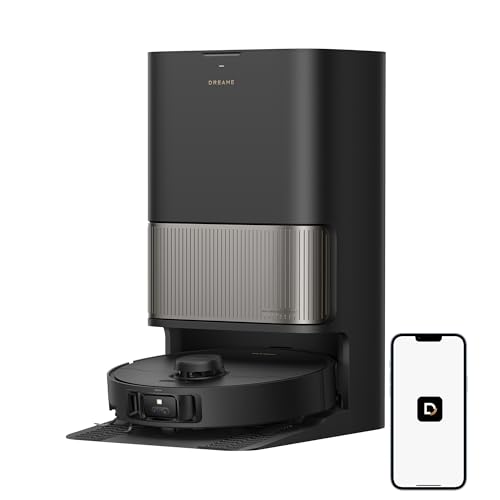
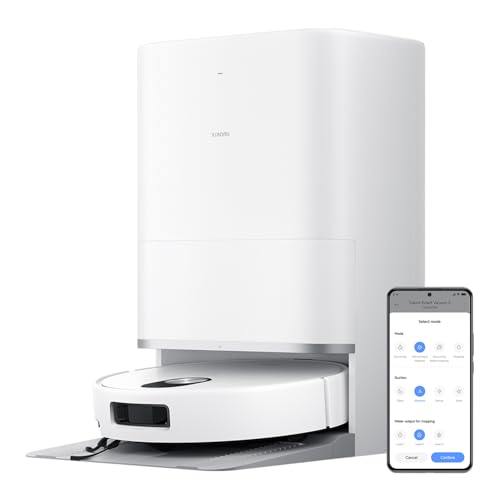
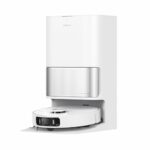
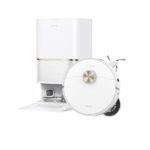
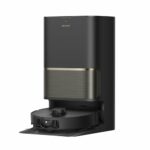
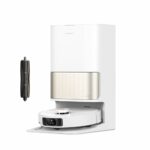
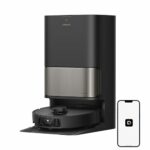
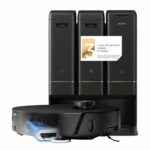
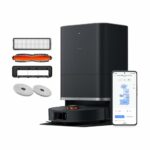
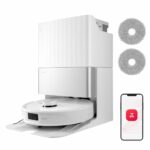
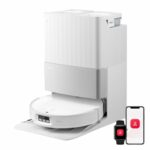
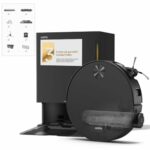
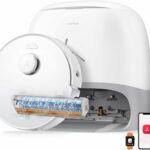
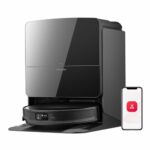
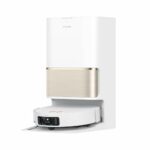
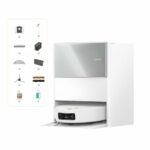
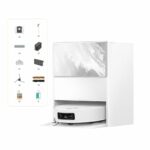
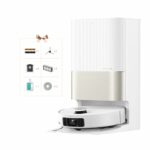
The Dreame L40s Pro Ultra and the Xiaomi Robot Vacuum 5 represent two high-end offerings launched in 2025 that aim to provide a complete cleaning solution with a multifunctional base. Both units are designed for users seeking to maximise home maintenance automation, with advanced mopping systems, intelligent navigation and hot water mop self-cleaning capabilities.
The Dreame model focuses on a more complete integration of intelligent functions, whilst the Xiaomi unit stands out for its suction power and obstacle-climbing ability. For homes with pets, mixed flooring or the need to clean under low furniture, the technical differences between these robots can make a notable difference in day-to-day use.
Power and Suction
The Xiaomi Robot Vacuum 5 takes the lead in raw power with its 20000 Pa of suction, slightly exceeding the Dreame L40s Pro Ultra's 19000 Pa. This difference can be particularly noticeable on medium-pile carpets or when there is significant dirt accumulation in floor joints.
The brushing system presents different approaches. The Dreame features a dual anti-tangle brush, whilst the Xiaomi incorporates the TriCut 3.0 system, which combines bristles with blades to cut hair and reduce tangles. In practice, both systems are designed to avoid constant maintenance, although the Dreame's dual brush design tends to be more effective with long pet hair.
An important difference appears in the main brush lift: the Dreame can raise it during mopping, something the Xiaomi does not do. This prevents the brush from getting unnecessarily wet and allows for cleaner mopping without dragging wet dirt. Both models raise the side brush during mopping and feature an extendable side brush to better reach corners.
Mopping
Both robots use a dual rotating mop system, but the Xiaomi lifts the mops up to 15 mm when it detects carpets, compared to the Dreame's 10.5 mm. For homes with high-pile carpets, this difference can prevent the mops from touching the textile surface.
The Dreame incorporates the 3.0 mop extension with Roboswing system, which allows the robot to make a lateral movement to get the mops under furniture and overhangs. The Xiaomi also extends the mops for edges, although it does not specify the lateral movement system.
Regarding mop washing, the Xiaomi raises the temperature up to 80°C, five degrees higher than the Dreame's 75°C. Both dry the mops with hot air, although the Dreame specifies a drying temperature of 45°C. The Dreame model adds a function that the Xiaomi does not have: it can leave the mops at the base automatically to perform vacuuming only, without needing to remove them manually.
The Dreame also detects dirt both on the mops and on the floor, automatically adjusting the washing and scrubbing process. This additional intelligence makes a difference on floors that get dirty unevenly.
Navigation System
Here appears one of the most significant differences. The Dreame L40s Pro Ultra features a 3D Lidar turret along with dual AI camera that recognises up to 180 different types of obstacles. It includes remote camera access, LED for night vision, pet recognition and curtain detection. The Xiaomi, on the other hand, uses a retractable Lidar with front 3D laser sensor, but does not integrate an AI camera.
This absence of a camera in the Xiaomi limits advanced functions such as pet tracking or remote home viewing. The Dreame allows you to see in real time what the robot is detecting, something useful for basic surveillance or to check that it has properly cleaned specific areas.
Both feature AI-based intelligent cleaning, although the Dreame adds its CleanGenius system and specific stain recognition to focus on problem areas.
Battery Life and Battery
Both robots share a 5200 mAh battery, but the performance is radically different. The Dreame L40s Pro Ultra achieves 220 minutes of battery life, almost double the Xiaomi Robot Vacuum 5's 140 minutes. This difference can be explained by energy management and motor efficiency.
For large homes or flats over 150 square metres, the Dreame's battery life allows complete cleaning sessions without the need for intermediate recharges. The Xiaomi, with its 140 minutes, may require a pause in large homes, although its automatic recharge and resume system resolves this aspect.
Intelligent Functions
The Dreame L40s Pro Ultra can overcome obstacles between 22 and 40 mm thanks to an extra lifting system, whilst the Xiaomi remains at 20 mm. This means the Dreame better navigates thick carpets, door profiles or small floor level changes.
The Dreame model incorporates a simple proprietary voice assistant, although it is not an advanced system. The Xiaomi does not include its own voice assistant, although both can integrate with the usual home assistants.
Multifunctional Cleaning Base
Both bases offer self-cleaning of the washing tray, but the Dreame specifies that it features the third generation of this system, presumably with improvements in efficiency and waste reduction.
The Dreame includes a detergent tank in the base, something the Xiaomi does not offer. This allows the robot to automatically dispense cleaning product during mop washing, improving hygiene without manual intervention. The Dreame also features an optional kit for plumbing connection, although it must be purchased separately.
The Dreame's dust bag has greater capacity: 3.2 litres compared to the Xiaomi's 2.5. The clean and dirty water tanks are also larger in the Dreame: 4.5 and 4 litres respectively, compared to the Xiaomi's 4 and 3.8 litres. In practice, this translates to fewer manual emptying and filling operations.
Dimensions
The Xiaomi Robot Vacuum 5 is notably lower: 88 mm compared to the Dreame's 103.8 mm. This difference of almost 16 mm can be decisive for passing under low sofas, beds with little clearance or kitchen units with reduced plinths. Both share the same diameter of 350 mm.
The bases have similar sizes, although the Dreame is slightly taller (590.5 mm compared to 572 mm) and the Xiaomi somewhat wider (360 mm compared to 340 mm). It is advisable to measure the available space before deciding, especially if the base will go in a cupboard or specific recess.
Real-World Usage Experience
The Dreame L40s Pro Ultra is designed for users seeking maximum automation and control. Its dual camera, advanced dirt detection and ability to leave the mops at the base make it an ideal choice for homes with pets, young children or people with little time to supervise cleaning. The 220-minute battery life allows cleaning large homes without interruptions.
The Xiaomi Robot Vacuum 5 stands out for its reduced height and greater suction power. For homes with low furniture or the need to vacuum thick carpets frequently, this model offers clear advantages. The 15 mm mop lift also better protects carpets during mopping.
In homes with pets, the Dreame provides specific recognition and dual anti-tangle brush, whilst the Xiaomi relies on its TriCut 3.0 system. Both systems work well, but the Dreame adds the advantage of being able to see through the camera where the pet is or what the robot is doing at any given moment.
For mixed floors with parquet, tiles and carpets, the Dreame better adjusts cleaning thanks to its dirt detection on floor and mops. The Xiaomi, without this function, maintains more standard cleaning patterns.
Conclusion: Which to Choose?
Choose the Dreame L40s Pro Ultra if you seek maximum battery life and intelligent control, have pets at home, value remote camera access or need a robot that detects and reacts to different levels of dirt. Also if you prefer the robot to automatically manage mop detachment or want to dispense detergent automatically from the base. For large homes, its 220-minute battery life is unbeatable.
Choose the Xiaomi Robot Vacuum 5 if you need a robot that passes under very low furniture thanks to its 88 mm height, prioritise maximum suction power for demanding carpets or seek superior mop lift to protect textiles. Also if you prefer a model with higher temperature mop washing (80°C) and do not need camera functions or advanced object recognition. Its value for money may be more suitable for medium-sized homes without pets.