✨ VS Analyses · VacuumSpain comparison technology. Explanation created with AI from verified technical data.
Introduction
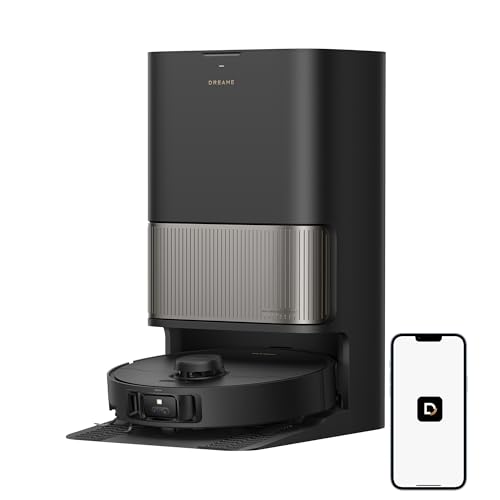
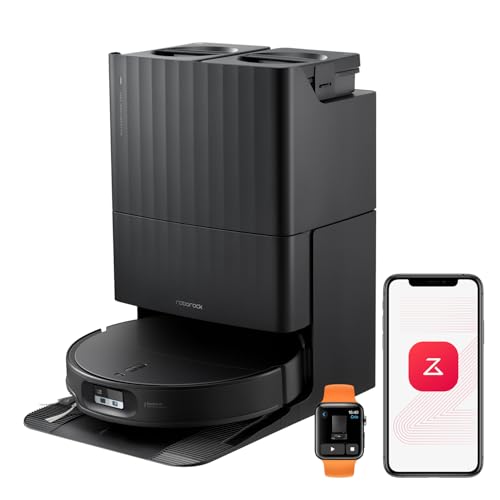
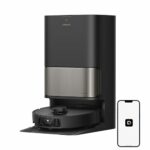
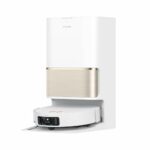
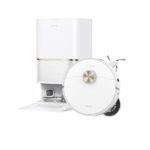
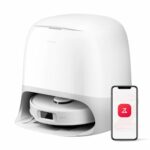
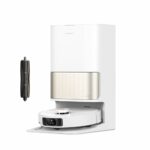
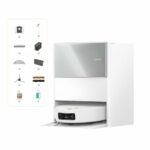
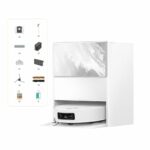
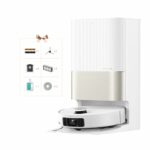
The Dreame L40s Pro Ultra and the Roborock Qrevo Edge 2 represent two high-end propositions within the robot vacuum market with multifunction base. The Dreame model arrived on the market in 2025, whilst the Roborock saw the light in May 2026. Both are designed for users seeking maximum automation in home cleaning, with capacity for both vacuuming and mopping, and intelligent systems that minimise manual maintenance.
The Roborock unit stands out especially for its compact design, with barely 79.8 mm in height, which allows it to access under furniture where other robots cannot reach. The Dreame, at 103.8 mm, opts instead for greater capacity in its tanks and additional functions in the base. Both models are intended for medium to large-sized homes, with mixed floors and frequent mopping needs.
Power and Suction
Suction power marks a notable difference between these models. The Roborock Qrevo Edge 2 reaches 25,000 Pa, exceeding the Dreame L40s Pro Ultra by 6,000 Pa. This difference can be noticed especially on high-pile carpets or in homes with pets that shed a lot of hair.
Regarding the brushing system, we find different philosophies. The Dreame mounts a double HyperStream brush, a design with two brushes anchored at one end that significantly reduces hair tangles. The Roborock uses its DuoDivide Anti-Tangle system, which pushes hairs towards the central gap to facilitate direct suction. Both systems work well in practice, albeit with different approaches.
A clear advantage of the Dreame L40s Pro Ultra is its liftable side brush, which can rise when not needed or during mopping. The Roborock Qrevo Edge 2 does not have this function, although it does maintain the extendable side brush to better reach corners. Both models have anti-tangle side brushes and a liftable main brush, which helps avoid dragging hairs during mopping.
Mopping
Both robots use a system of two rotating mops, but with important differences in their implementation. The Dreame L40s Pro Ultra incorporates mop extension with Roboswing movement, a system that makes the robot perform a slight lateral movement to introduce the mop under ledges and furniture. The Roborock also features mop extension, although without that specific movement.
Mop lift reaches 10.5 mm on the Dreame and 12 mm on the Roborock. Those additional 1.5 mm of the Roborock model can prove useful in homes with medium-thickness carpets, although in practice both values are sufficient for most domestic carpets.
A relevant difference lies in the mopping water temperature. The Roborock Qrevo Edge 2 uses warm water to mop the floor, which helps dissolve greasy dirt better. The Dreame L40s Pro Ultra mops with cold water. In washing the mops at the base, however, both employ hot water, and dry the mops with hot air to prevent bad odours.
Both models automatically detach the mops at the base when only vacuuming is needed, and feature dirt detection both on the mops and on the floor to reinforce cleaning where necessary. This ensures more efficient mopping without manual intervention.
Navigation System
The Roborock Qrevo Edge 2 mounts a retractable LiDAR system, which contributes to its reduced height of 79.8 mm. The Dreame L40s Pro Ultra uses a more traditional 3D LiDAR turret, which adds height but also offers excellent mapping precision.
Both robots integrate a camera with artificial intelligence and a front 3D laser sensor to avoid obstacles. The Dreame incorporates a dual camera, whilst the Roborock uses a single one. Regarding object recognition, the Roborock Qrevo Edge 2 identifies up to 280 different obstacles, widely exceeding the Dreame's 180. This translates into more precise navigation in complex environments with many objects on the floor.
Both models recognise pets, detect curtains to avoid tangling, and allow remote access to the camera from the mobile. They also feature LED for night vision. The Dreame uses its CleanGenius system for intelligent cleaning, whilst the Roborock opts for SmartPlan 3.0. Both recognise stains with AI and adjust cleaning according to the type of dirt detected.
Autonomy and Battery
Battery capacity is identical in both models: 5,200 mAh. However, real autonomy differs. The Dreame L40s Pro Ultra reaches 220 minutes of continuous operation, versus the 188 minutes of the Roborock Qrevo Edge 2. This 32-minute difference can be explained by the Roborock's greater suction power, which consumes more energy.
For homes of up to 150-180 square metres, either of the two offers sufficient autonomy to complete cleaning in a single session. In larger houses, the Dreame has an advantage due to those additional minutes of operation.
Intelligent Functions
Regarding obstacle-crossing capability, the Roborock Qrevo Edge 2 can overcome steps of up to 20 mm. The Dreame L40s Pro Ultra overcomes simple steps without specifying the exact height. This capability proves useful in homes with small level differences between rooms or when crossing thick carpets.
Both robots include their own voice assistant, in addition to compatibility with Alexa and Google Home. This allows controlling the robot through voice commands and configuring cleaning routines without needing to open the application.
Multifunction Cleaning Base
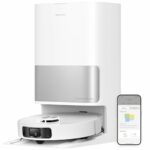
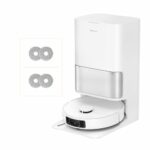
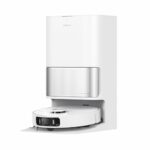
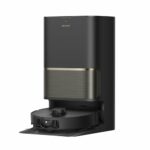
Both bases are complete multifunction: they auto-empty the robot's dust tank, wash the mops with hot water and dry them with hot air. The Dreame L40s Pro Ultra incorporates third-generation washing tray self-cleaning, whilst the Roborock uses version 2.0. Both are effective at keeping the base clean without frequent manual intervention.
An important difference lies in the detergent tank. The Dreame includes a specific tank for cleaning product, which is automatically dispensed during mop washing. The Roborock Qrevo Edge 2 does not have this function, which requires manually adding detergent to the water if one wishes to use it.
Dust bag capacity is greater in the Dreame: 3.2 litres versus 2.7 litres for the Roborock. In practice, this means emptying the bag every 8-10 weeks instead of every 6-8 weeks. The clean and dirty water tanks are also somewhat more generous in the Dreame (4.5 and 4 litres) than in the Roborock (4 and 3.5 litres).
The Dreame offers an optional plumbing connection kit, which is purchased separately and allows connecting the base directly to the water supply and drainage. The Roborock does not have this option. This is worth considering if total automation is sought, although it requires additional installation.
Dimensions
Height is the most relevant dimensional difference. The Roborock Qrevo Edge 2, at 79.8 mm, can access under furniture, beds and sofas where the Dreame L40s Pro Ultra, at 103.8 mm, cannot reach. This difference of more than 24 mm proves decisive in homes with low furniture.
Diameter is practically identical: 350 mm on the Dreame and 352 mm on the Roborock. Both navigate through standard spaces without problems. The robot's dust tank is larger in the Dreame (300 ml versus 240 ml), whilst the water tank also favours the Dreame (80 ml versus 67 ml).
The bases have similar dimensions in width (340 mm both), but differ in height and depth. The Dreame base measures 590.5 mm in height and 456.7 mm in depth. The Roborock's is lower (521 mm) but deeper (487 mm). Depending on available space, one or the other may fit better.
Real-World Usage Experience
In homes with low furniture, the Roborock Qrevo Edge 2 makes the difference. Its height of 79.8 mm allows it to clean under spaces inaccessible to the Dreame. This is especially useful in bedrooms with low beds or living rooms with low-height sofas.
For homes with pets, the Roborock's greater suction power (25,000 Pa) and its ability to recognise more obstacles (280 versus 180) offer clear advantages. The DuoDivide system also works well with animal hair. The Dreame, however, has greater autonomy and larger tanks, which reduces maintenance frequency.
In large houses, the Dreame's 220-minute autonomy can prove more practical than the Roborock's 188. The larger tanks in the base also space out maintenance tasks. The Dreame's automatic detergent tank adds convenience, especially if mopping frequently.
The Roborock's warm water mopping improves results on floors with greasy dirt, such as kitchens. The Dreame compensates with its Roboswing system to better reach edges and with the liftable side brush, which avoids dispersing dirt during mopping.
Conclusion: Which to Choose?
Choose the Dreame L40s Pro Ultra if you have a large home where you value the extended autonomy of 220 minutes. Also if you seek maximum tank capacity to reduce maintenance, or if you prefer having an automatic detergent tank. The liftable side brush and the option of a plumbing connection kit (although purchased separately) add points in favour. It's a good option for those who prioritise convenience and lower frequency of manual intervention.
Choose the Roborock Qrevo Edge 2 if you need a robot that accesses under low furniture, thanks to its 79.8 mm height. The suction power of 25,000 Pa proves ideal for homes with pets or demanding carpets. Its ability to recognise 280 different obstacles guarantees more precise navigation in complex environments. Mopping with warm water improves results in kitchens and areas with greasy dirt. It's the right choice if reduced height and maximum power are priorities in your case.