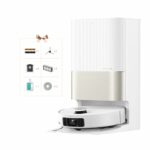
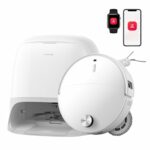
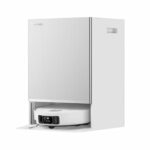
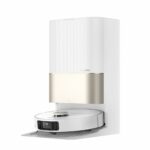
✨ VS Analyses · VacuumSpain comparison technology. Explanation created with AI from verified technical data.
Introduction
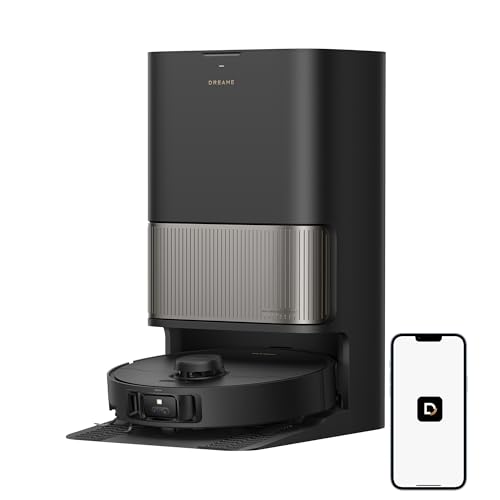
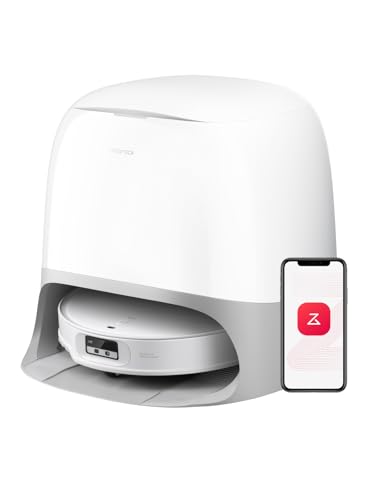
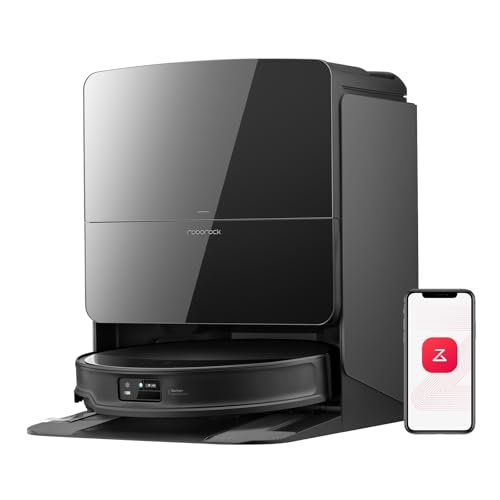
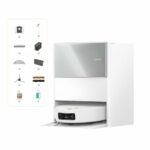
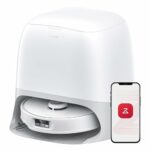
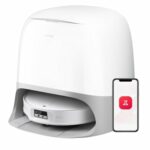
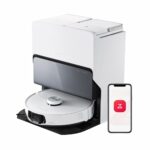
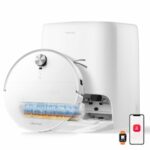
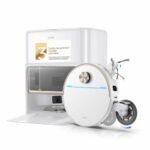
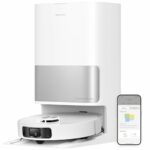
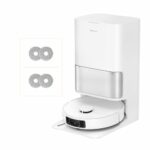
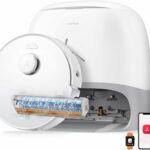
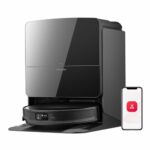
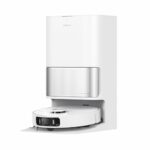
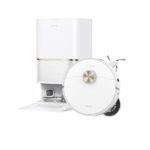
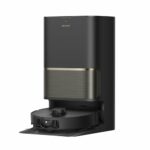
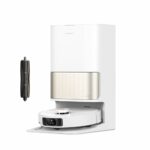
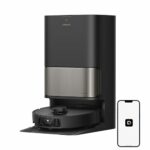
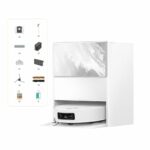
We're looking at three high-end proposals launched in 2025 that represent the latest in autonomous cleaning technology. The Dreame L40s Pro Ultra arrives as the most recent offering from a brand that has successfully positioned itself by providing competitive features, whilst Roborock presents two very different models: the Qrevo CurvX and the Saros 10R, each with distinct approaches to design and functionality.
All three units incorporate complete multifunction bases, advanced navigation with camera and artificial intelligence, and mopping systems with rotating mops. However, differences in suction power, robot height, tank capacity and specific functions mark quite distinct usage profiles. Depending on the type of home and specific needs, one may adapt better than the others.
Power and Suction
Suction power is one of the aspects where these models differ most. The Roborock Qrevo CurvX leads with 22,000 Pa, a figure that proves especially useful on thick carpets or when there are pets that shed a lot of hair. The Dreame L40s Pro Ultra stays at 19,000 Pa, more than sufficient power for most situations, and the Saros 10R closes with 18,500 Pa.
Regarding the brushing system, the Dreame features a dual HyperStream brush specifically designed to prevent hair tangles, whilst both Roborock models incorporate the DuoDivide system, which pushes hairs towards the central gap to facilitate suction. Both approaches work well, although the dual brush concept may prove more effective in homes with several pets.
All three lift the main brush during mopping to avoid dragging wet dirt. The extendable side brush is present in all, but there's an important difference: the Qrevo CurvX doesn't lift its side brush when mopping, whilst the Dreame L40s Pro Ultra and the Saros 10R do. This can make a difference on delicate floors where you don't want the side brush touching the wet surface.
Mopping
All incorporate two rotating mops, a system that offers better results than static mops. Lateral mop extension is also present in all three, although the Dreame adds the Roboswing system, which performs a lateral movement to better reach edges and get the mop under furniture or overhangs.
Mop lift varies considerably. The Dreame reaches 10.5 mm, the Qrevo CurvX offers a variable range between 7 and 17 mm, and the Saros 10R reaches up to 12-22 mm. In practice, the greater the lift, the better it will avoid wetting carpets or mats during mopping sessions.
A key difference appears in water temperature. The Saros 10R mops with warm water, which improves the dissolution of grease and adhered dirt. The other two models use cold water, although their bases wash the mops with hot water.
Automatic mop detachment at the base is another differentiating function. The Dreame L40s Pro Ultra and the Saros 10R can remove the mops automatically when only vacuuming is needed, preventing them from getting wet unnecessarily. The Qrevo CurvX doesn't have this option, which means removing them manually if you want to prevent the mops from touching the floor during vacuuming.
All three detect dirt both on the mops and on the floor, adjusting washing and scrubbing as necessary. This function proves especially useful in kitchens or high-traffic areas.
Navigation System
The Dreame L40s Pro Ultra features a traditional LiDAR turret, whilst the Qrevo CurvX incorporates a retractable LiDAR that reduces the robot's total height. The Saros 10R uses the StarSight 2.0 system, also with a laser sensor integrated in a more compact form.
All include dual camera with artificial intelligence, front 3D laser sensor and LED for night vision. The difference lies in recognition capability: the Dreame identifies up to 180 different types of obstacles, whilst the Roborock models recognise 108. This can translate into more precise navigation in complex environments with many small objects.
The Dreame L40s Pro Ultra is the only one capable of detecting curtains, a detail that prevents the robot from getting tangled or trying to climb them. All three recognise pets and allow remote camera access for surveillance or checking cleaning status.
Regarding processing, the Roborock models run on the RR Mason 11.0 algorithm, whilst the Dreame doesn't specify the exact processor in the available documentation. The Saros 10R adds AI stain recognition, a function that the Dreame also has but which doesn't appear on the Qrevo CurvX.
Autonomy and Battery
The battery of the Roborock Qrevo CurvX and the Saros 10R reaches 6,400 mAh, a capacity superior to the Dreame L40s Pro Ultra's 5,200 mAh. However, in declared autonomy, the Dreame and the Qrevo CurvX match at 220 minutes, whilst the Saros 10R stays at 180 minutes.
This difference in autonomy despite having the same battery may be due to different energy management modes or the consumption of the Saros 10R's warm water system. In large homes, those extra 40 minutes can prove decisive for completing cleaning in a single session.
Smart Functions
All three models can overcome simple steps, a useful capability for navigating small level changes between rooms or when accessing thick carpets. All incorporate their own voice assistant in addition to compatibility with Alexa and Google Home, which allows controlling them via voice commands without needing to open the app.
Multifunction Cleaning Base
All three bases perform auto-emptying of the dust container, mop washing with hot water and drying with hot air. Self-cleaning of the washing tray is present in all, although with different generations: the Dreame and the Qrevo CurvX feature version 3.0, whilst the Saros 10R uses 2.0.
The detergent tank appears in the Dreame L40s Pro Ultra and in the Saros 10R, but not in the Qrevo CurvX. This means these two models can automatically dispense cleaning product during mop washing, improving disinfection and removal of adhered dirt.
In storage capacity, the Dreame offers a 3.2-litre dust bag compared to the Roborock models' 2.5 litres. The Dreame's clean water tank reaches 4.5 litres, whilst the Roborock models have 4 litres. For dirty water, the Dreame stores 4 litres and the Roborock models 3 litres. These differences can translate into fewer weekly emptying and filling operations.
Only the Dreame L40s Pro Ultra offers an optional kit for connection to water pipes, although it's sold separately and doesn't come integrated from the factory. None of the three includes direct connection to pipes as part of the standard equipment.
Dimensions
Height is probably the most relevant dimensional difference. The Dreame L40s Pro Ultra measures 103.8 mm due to its traditional LiDAR turret, whilst the Roborock Qrevo CurvX and Saros 10R reach just 79.8 mm thanks to their integrated navigation systems. Those more than 24 mm can be decisive for passing under sofas, low beds or kitchen units with little clearance from the floor.
In diameter there are barely any differences: the Dreame has 350 mm and the Roborock models 353 mm, practically identical in manoeuvrability.
The bases present very different designs. The Dreame's measures 340 mm wide, 590.5 mm high and 456.7 mm deep, with a more vertical form. The Qrevo CurvX has a more compact and square base: 450 x 450 x 450 mm. The Saros 10R sits in a middle ground with 381 x 488 x 475 mm. Depending on available space, a more vertical or more cubic configuration may fit better.
Real-World Usage Experience
For homes with low ceilings or furniture with little clearance from the floor, the Roborock Qrevo CurvX and Saros 10R prove clearly more versatile. The Dreame L40s Pro Ultra, despite its greater height, compensates with larger tank capacity and broader obstacle recognition.
In homes with pets, the Dreame's dual HyperStream brush may offer advantages over Roborock's DuoDivide, although both systems are specifically designed to prevent tangles. The Qrevo CurvX's 22,000 Pa power also helps in these cases, especially with long or abundant hair.
The Saros 10R's warm water mopping makes a real difference in kitchens with grease or floors requiring deeper cleaning. If combined with the detergent tank, the result improves noticeably compared to cold water.
The ability to automatically detach mops on the Dreame and the Saros 10R facilitates alternating between vacuum-only sessions and complete sessions without manual intervention. The Qrevo CurvX requires doing this by hand, which can prove inconvenient if you frequently change modes.
In large homes, the 220-minute autonomy of the Dreame and the Qrevo CurvX allows covering more surface area without interruptions. The Saros 10R, with 180 minutes, remains sufficient for most flats, but may need intermediate recharging in homes over 150 square metres.
Conclusion: Which to Choose?
Choose the Dreame L40s Pro Ultra if you're looking for the greatest tank capacity in base and robot, you value broad obstacle recognition (180 types), you need an integrated detergent tank and you prefer the dual HyperStream brush system. Also if height isn't a problem in your home and you're interested in the future possibility of adding the pipe connection kit. It's a balanced option with a good relationship between features and price.
Choose the Roborock Qrevo CurvX if the priority is maximum suction power (22,000 Pa), you need a very low robot to pass under furniture (79.8 mm) and you value 220 minutes of autonomy with high-capacity battery. Bear in mind that it doesn't detach mops automatically nor includes a detergent tank, but it offers Roborock's reliability and technological maturity with a compact base and very refined design.
Choose the Roborock Saros 10R if you want mopping with warm water for better results on grease and adhered dirt, you need reduced height (79.8 mm) and you value automatic mop detachment together with a detergent tank. The mop lift up to 22 mm is the highest of the three, ideal if you have tall carpets. AI stain recognition adds a bonus in problematic areas. Although it has less autonomy (180 minutes), it compensates with specific functions that improve mopping quality.